



Table of Contents
- Direct answer: sample in stages, and approve function before decoration
- What each cosmetic packaging sample is meant to prove
- Stock component and fit samples
- Prototype and mold-trial samples
- Decorated and production approval samples
- The cosmetic packaging sampling process step by step
- Brief, industrial design, and specification review
- Mold, material, color, and component confirmation
- Filling-line, dispensing, assembly, and decoration review
- Sample approval table: checks, owners, and release decisions
- What an approved reference or golden sample record should contain
- When to request another sample instead of approving production
- Information to include in a custom packaging inquiry
- FAQ: cosmetic packaging samples and prototypes
- CTA: submit a packaging brief for a project-specific sampling plan
A reliable cosmetic packaging sampling process separates fit, function, tooling, decoration, and production approval so buyers can make decisions with fewer costly changes.
Direct answer: sample in stages, and approve function before decoration
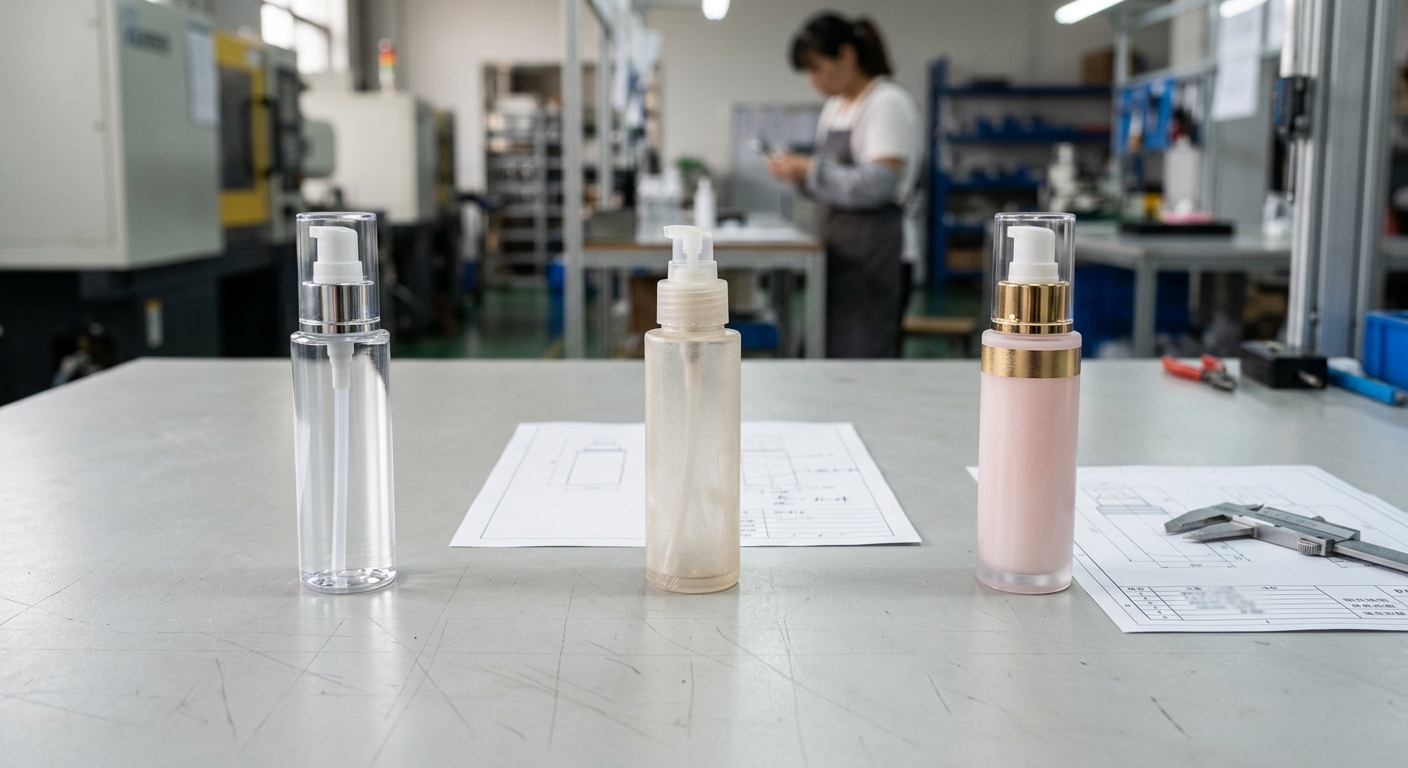
Direct answer: The cosmetic packaging sampling process should move from fit and function to tooling and material validation, then to decoration and production approval. Approve each stage against a written specification; do not treat a visually attractive decorated prototype as proof that the package will run on a filling line.
- Stock or fit sample: confirms the basic container, closure, dimensions, and assembly relationship.
- Prototype or mold-trial sample: confirms the intended shape, material, tooling details, and functional behavior.
- Decorated production approval sample: confirms the appearance and manufacturing version to be released.
A neck finish is the opening geometry, thread, and dimensions that allow a pump, dropper, or cap to fit the container. A dosage is the amount dispensed per actuation. Both require project-specific confirmation because formula viscosity, component design, and filling conditions affect the result. Use a bottle neck finish guide when reviewing closure fit.
What each cosmetic packaging sample is meant to prove
Samples are decision tools, not simply presentation pieces. Each one should have a stated purpose, an identification code, and a list of checks. A buyer may approve one attribute while leaving another open: for example, the bottle shape may be approved while the pump dosage and decoration remain pending.
Ask the supplier to label whether a sample is stock, visual prototype, mold trial, functional trial, decorated proof, or production approval sample. This avoids a common misunderstanding: a sample made from different material or tooling may demonstrate appearance but not final production behavior.
The approval record should also identify the formula context, fill temperature if relevant, closure torque or assembly method, decoration route, and destination requirements. Compatibility, leakage, dosage, tooling, quantity, price, production time, and shipping remain dependent on the project and approval status.
Stock component and fit samples
A stock component is an existing bottle, jar, tube, cap, pump, or dropper that a supplier already offers. It is usually the quickest way to test the package concept before committing to a custom mold. A fit sample is used to check how components meet physically.
- Confirm nominal capacity, usable fill volume, overall height, diameter, and base stability.
- Check the neck finish, thread engagement, gasket or seal, and closure alignment.
- Assemble the pump, cap, dropper, or applicator with the intended container.
- Fill with the actual formula or a representative formula when checking handling and dispensing.
Stock samples can shorten development, but they may limit brand-specific proportions, decoration area, and component choices. If a stock part is later replaced by a custom version, repeat the relevant fit and filling checks.
For component selection, review available cosmetic pump and cap options alongside the container drawing.
Prototype and mold-trial samples
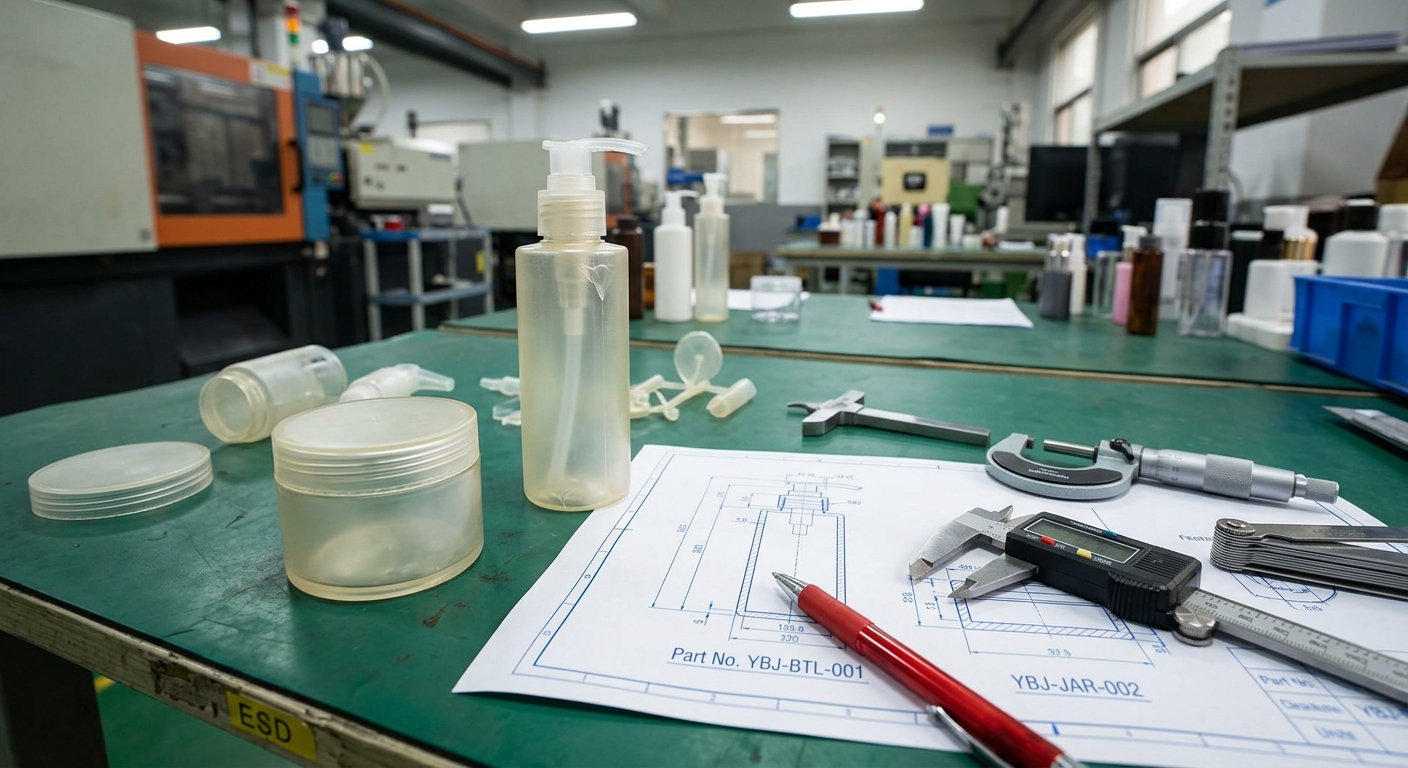
A cosmetic packaging prototype represents the proposed form, but it may not use the final resin, mold, surface treatment, or production process. It is useful for reviewing proportions, grip, shelf presence, component arrangement, and artwork placement.
A custom packaging mold sample is produced after a tool has been developed or adjusted. It should be checked for wall shape, parting lines, gate or molding marks, threads, fit, weight, clarity or opacity, and assembly. Early mold-trial parts can reveal changes that are needed before the tool is released for regular production.
Do not approve mass production only because the prototype looks correct. Confirm whether the sample used production-intent material and tooling. If not, record which characteristics remain open and request a functional trial where appropriate.
Decorated and production approval samples
Decoration should be reviewed after the underlying container and component function are sufficiently stable. Screen printing, hot stamping, labeling, coating, and other methods can differ in color, registration, coverage, texture, durability, and suitability for a particular surface.
A packaging approval sample should show the agreed artwork, color reference, decoration position, finish, and component assembly. A production approval sample should, where practical, use the intended mold, material, decoration process, and assembly method. The sample is then compared with the approved drawing and artwork, not judged only from a screen image.
Keep an approved physical reference, often called golden sample packaging, together with its revision record. A golden sample is a reference for future comparison; it is not automatically a regulatory approval, compatibility result, or guarantee that every project detail is correct. Review decoration options in a cosmetic packaging decoration guide.
The cosmetic packaging sampling process step by step
A controlled sampling route reduces the risk of approving the wrong version. A practical sequence is:
- Define the product, formula context, pack format, capacity, dimensions, material, closure, decoration, quantity, destination, and target date.
- Review drawings, component interfaces, filling requirements, and the choice between stock parts and custom tooling.
- Approve the design direction and fit sample before mold development or decoration.
- Inspect mold-trial parts and confirm material, weight, color, surface, neck finish, and assembly.
- Run the relevant filling, dispensing, leakage, assembly, and decoration checks under agreed conditions.
- Sign the production approval sample and reference record, or document required changes before release.
YBJ Packaging states that it provides one-stop support from consultation and design through mold development, material selection, manufacturing, assembly, quality checks, and worldwide shipping. Its website also describes more than 20 years of cosmetic-packaging experience, a 10,000 m² intelligent facility, a Class 10,000 cleanroom, 12 automated assembly lines, and 23 Toshiba all-electric injection machines. These are company-stated capabilities. Whether a specific project uses a particular facility, machine, line, or cleanroom area depends on the product, process, material, quantity, and approval requirements.
A cleanroom is a controlled production area with limits on airborne particles. Its relevance and required handling conditions should be confirmed for the formula, components, and assembly process rather than assumed from the sample alone.
Brief, industrial design, and specification review
Start with one controlled brief rather than separate instructions spread across email threads. The industrial design should be translated into measurable requirements: dimensions, capacity, tolerances where known, component interfaces, decoration zones, and packaging orientation.
Include the formula or viscosity context, filling method, target dosage, expected user operation, and any contact points between formula and package. If the formula is not final, identify what may change. A representative liquid can help with early handling review, but it does not replace final compatibility confirmation.
Ask the supplier to return a specification summary showing open decisions, assumptions, sample type, and the next approval gate. This creates a clear record before tooling or decoration costs are evaluated.
Mold, material, color, and component confirmation
Before approving a mold trial, confirm which material and process the sample represents. Different resins can change clarity, stiffness, weight, surface appearance, and interaction with a formula. For example, a sample made from PETG, PET, AS, PP, or another proposed material should be identified rather than described only as plastic. Glass and plastic also create different weight, handling, decoration, and shipping considerations.
Review the custom mold for dimensions, draft, parting lines, gate marks, wall consistency, neck finish, and component fit. Confirm whether the tool is still being adjusted and whether the sample represents all cavities when a multi-cavity tool is used.
For color, specify the reference standard, translucency or opacity, surface finish, viewing conditions, and acceptable variation. Color approval on one surface or one material may not predict the appearance of a different substrate or decoration process.
Filling-line, dispensing, assembly, and decoration review
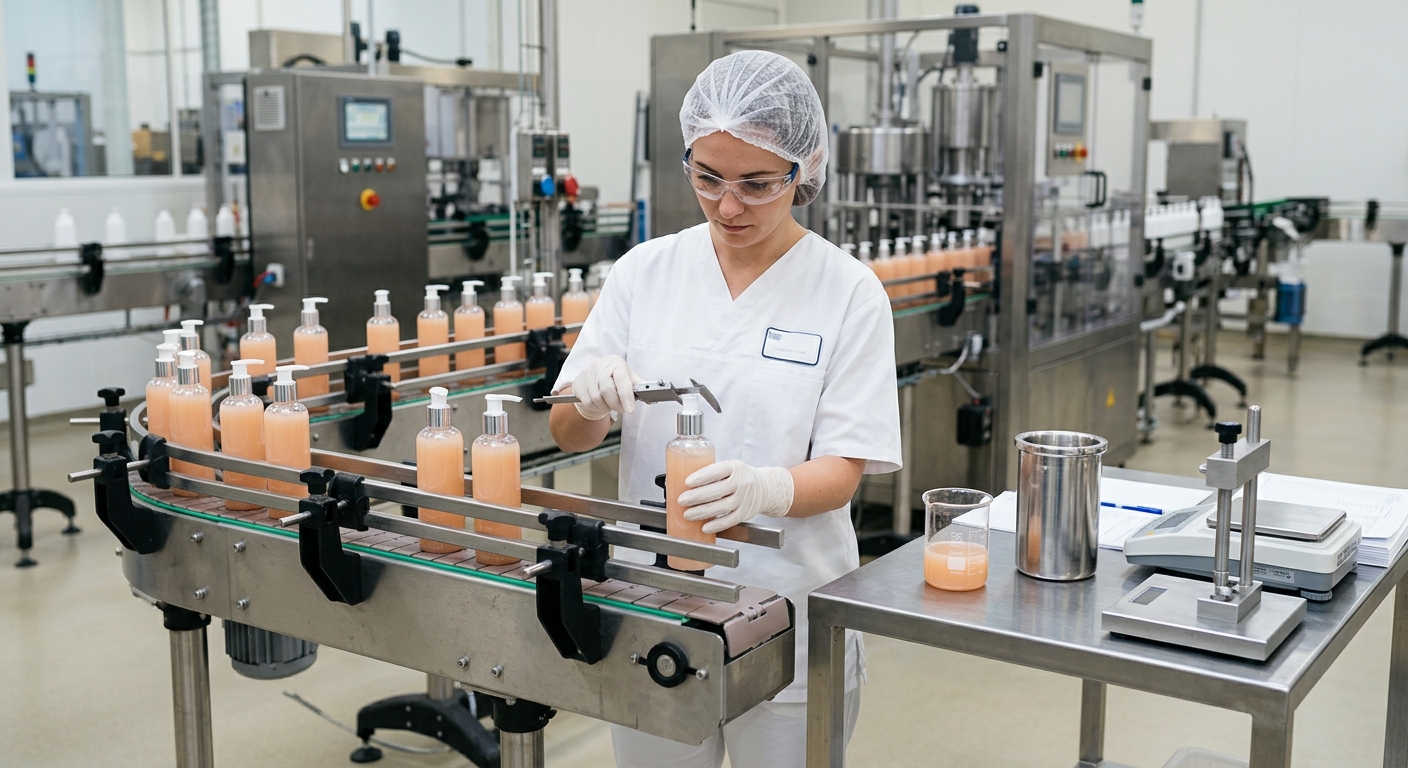
Functional review should reflect the intended filling and assembly environment. Where possible, check the actual formula or a representative formula with similar viscosity, fill temperature, and dispensing behavior. Record the equipment, settings, closure method, and test conditions so a result can be understood later.
- Confirm container handling, orientation, fill opening, line clearance, and label or decoration position.
- Check pump priming, actuator feel, dropper operation, cap engagement, or tube dispensing as applicable.
- Measure dosage using a defined method; dosage depends on the pump or applicator, stroke, formula, temperature, and test technique.
- Inspect assembly, seal integrity, visible leakage, torque or fit, and package appearance after handling.
Decoration and function can interact. A coating may change surface friction, a label may affect line sensing, and a closure may require a specific assembly force. Treat any change to formula, equipment, material, component, mold, or decoration as a reason to review whether another sample is needed.
Sample approval table: checks, owners, and release decisions
Use the table below to assign ownership. The final approval route may include the brand, packaging engineer, filling partner, quality team, and supplier, depending on the project.
| Sample stage | What it should prove | Typical checks | Primary owners | Release decision |
|---|---|---|---|---|
| Stock or fit sample | Basic format and component relationship | Dimensions, capacity, neck finish, closure fit, handling | Brand and packaging team | Continue with stock route or revise the brief |
| Visual prototype | Design direction and proportions | Shape, grip, shelf appearance, artwork placement | Brand and design team | Approve concept only; function may remain open |
| Mold-trial sample | Production-intent geometry and material | Weight, wall form, molding marks, color, fit, assembly | Supplier, brand, and technical team | Adjust tool or proceed to functional review |
| Functional sample | Filling, dispensing, and assembly behavior | Line handling, dosage, leakage, closure, formula contact | Filling partner, brand, and supplier | Resolve issues or approve the tested configuration |
| Decorated production approval sample | Release version for manufacture | Artwork, color, finish, position, assembly, reference record | Brand, quality, and supplier | Release only the documented version |
What an approved reference or golden sample record should contain
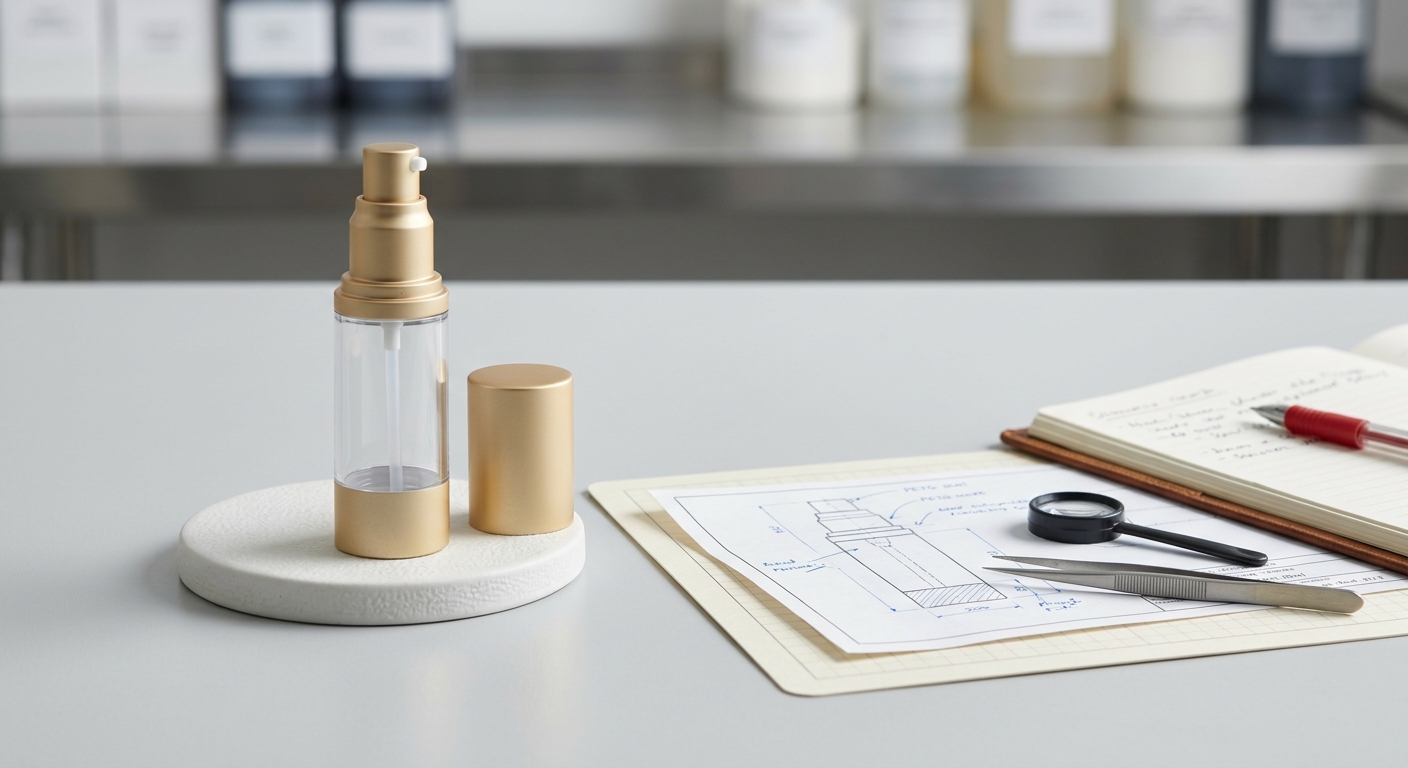
A golden sample is a physical reference retained for comparison with later production. It becomes useful only when its identity and acceptance limits are documented. Do not rely on an unmarked sample or a photograph without version control.
- Sample ID, date, revision, project name, and supplier contact.
- Approved drawings, dimensions, material, color reference, weight, capacity, neck finish, and component specification.
- Artwork file revision, decoration process, decoration position, surface finish, and any approved exceptions.
- Formula or viscosity context, filling equipment, assembly method, dosage test method, and observed results.
- Photos from consistent angles plus physical signoff by the responsible parties.
- Tool, cavity, component lot, or process information when relevant to the project.
- A clear disposition: approved, approved with listed exceptions, or not approved.
Store the reference where it will not be damaged by handling, heat, light, or contamination. If the design changes, issue a new revision instead of silently replacing the reference.
When to request another sample instead of approving production
Request another sample when the current sample does not represent the version you intend to buy or when a key condition has changed. Typical triggers include:
- A different resin, glass type, color system, coating, decoration method, or surface treatment.
- Changes to the mold, cavity, wall thickness, dimensions, neck finish, or component supplier.
- A new pump, dropper, cap, tube shoulder, seal, or actuator.
- A formula change that affects viscosity, fill temperature, chemical contact, or dispensing.
- A different filling line, assembly setting, closure torque, or packaging configuration.
- Artwork, color, position, or finish changes after decoration approval.
- A mismatch between the approved drawing, golden sample, and supplier’s current part.
Put production release on hold, record the change, ask the supplier to explain its impact, and agree which checks must be repeated. A small visual difference may be acceptable only when it falls within a documented tolerance and is explicitly approved.
Information to include in a custom packaging inquiry
A complete inquiry helps the supplier recommend the right sampling route and identify what must be confirmed before tooling. Include:
- Product type, such as serum, cream, lotion, cleanser, makeup, or personal-care product.
- Formula or viscosity context, ingredient-contact concerns, and whether the formula is final.
- Target capacity, fill volume, overall dimensions, and any existing drawing or reference package.
- Preferred material and any required transparency, opacity, weight, or surface appearance.
- Closure, pump, dropper, tube, applicator, or other dispensing component.
- Decoration requirements, artwork status, color references, finish, and labeling area.
- Estimated quantity, filling application, destination market, shipping requirements, and target date.
- Which tests or checks matter most: fit, dosage, leakage, filling-line handling, decoration, or shipping.
- Whether you need a stock sample, cosmetic packaging prototype, mold-trial part, decorated proof, or production approval sample.
Also ask the supplier to separate confirmed specifications from recommendations. Compatibility, MOQ, tooling, pricing, production time, and shipping depend on the formula, quantity, mold, decoration, destination, and approval sample. For more preparation guidance, review these common cosmetic packaging ordering mistakes.
FAQ: cosmetic packaging samples and prototypes
Is a cosmetic packaging prototype the same as a production approval sample?
No. A prototype may use different material, tooling, or decoration and is mainly used to review design direction. A production approval sample should represent the documented manufacturing version as closely as practical.
Can decoration be approved before the mold is final?
You can review artwork direction or a preliminary decoration proof, but final color, registration, coverage, and surface appearance should be checked on the intended container, material, and decoration process.
What does golden sample packaging mean?
It means an identified physical sample retained as a comparison reference. It should be linked to drawings, revisions, materials, decoration, and signoffs. It is not a substitute for formula compatibility or market-specific review.
Who should sign the packaging approval sample?
The responsible brand and packaging or quality representatives should sign it, with input from the filling partner and supplier when their processes are affected. The exact approval group depends on the project.
CTA: submit a packaging brief for a project-specific sampling plan
YBJ Packaging can review your packaging brief and help map the appropriate route from stock or prototype samples to mold trials, functional checks, decoration review, and production approval. Send the product type, formula or viscosity context, capacity, dimensions, material, closure or pump, decoration, estimated quantity, filling application, destination, and target date.
Ask to discuss sample requirements and formula-package compatibility before approving tooling or production. The final sampling plan, MOQ, tooling, pricing, production time, shipping method, and approval requirements will depend on the project specifications and review.
Request a project-specific cosmetic packaging sampling plan
Share your product type, formula or viscosity context, capacity, dimensions, material, closure or pump, decoration, estimated quantity, filling application, destination, and target date. YBJ Packaging can review the brief and discuss the appropriate prototype, fit, mold-trial, functional, decoration, or production approval sample. Compatibility, tooling, MOQ, pricing, production time, and shipping require project review and approval.

 English
  Français
  Español