



Table of Contents
- Direct Answer: Confirm the Neck Finish Before Choosing the Closure
- What Is a Cosmetic Bottle Neck Finish?
- Neck Finish, Bottle Opening and Thread: Plain-English Definitions
- Dimensions and Terms a Packaging Supplier Needs
- Pump, Dropper and Screw Cap Compatibility Compared
- When a Pump Is the Better Dispensing Route
- When to Consider a Dropper or Screw Cap
- How to Verify Bottle and Closure Fit Before Mass Production
- Request a Matching Technical Drawing and Physical Sample
- Check Seal, Assembly, Torque and Dispensing Function
- Bottle and Closure Details to Include in a Quote Request
- Related YBJ Product Options
- FAQ: Cosmetic Bottle Neck Finish Questions
A cosmetic bottle neck finish determines whether a pump, dropper or screw cap can be assembled and sealed correctly. This guide explains the dimensions, drawings, samples and functional checks buyers should review before approving a bottle-and-closure combination.
Direct Answer: Confirm the Neck Finish Before Choosing the Closure
Confirm the bottle’s complete neck finish before selecting a pump, dropper or screw cap. A similar-looking diameter or nominal thread description does not by itself establish compatibility; the bottle and closure must also match in thread geometry, sealing surface, engagement, height and manufacturing tolerance.
Ask the supplier to provide matching technical drawings and assembled samples. Test those samples with the intended formula and filling process before mass-production approval. Pump output, dip-tube length, liner or gasket selection, application torque and shipping conditions are project-dependent.
What Is a Cosmetic Bottle Neck Finish?
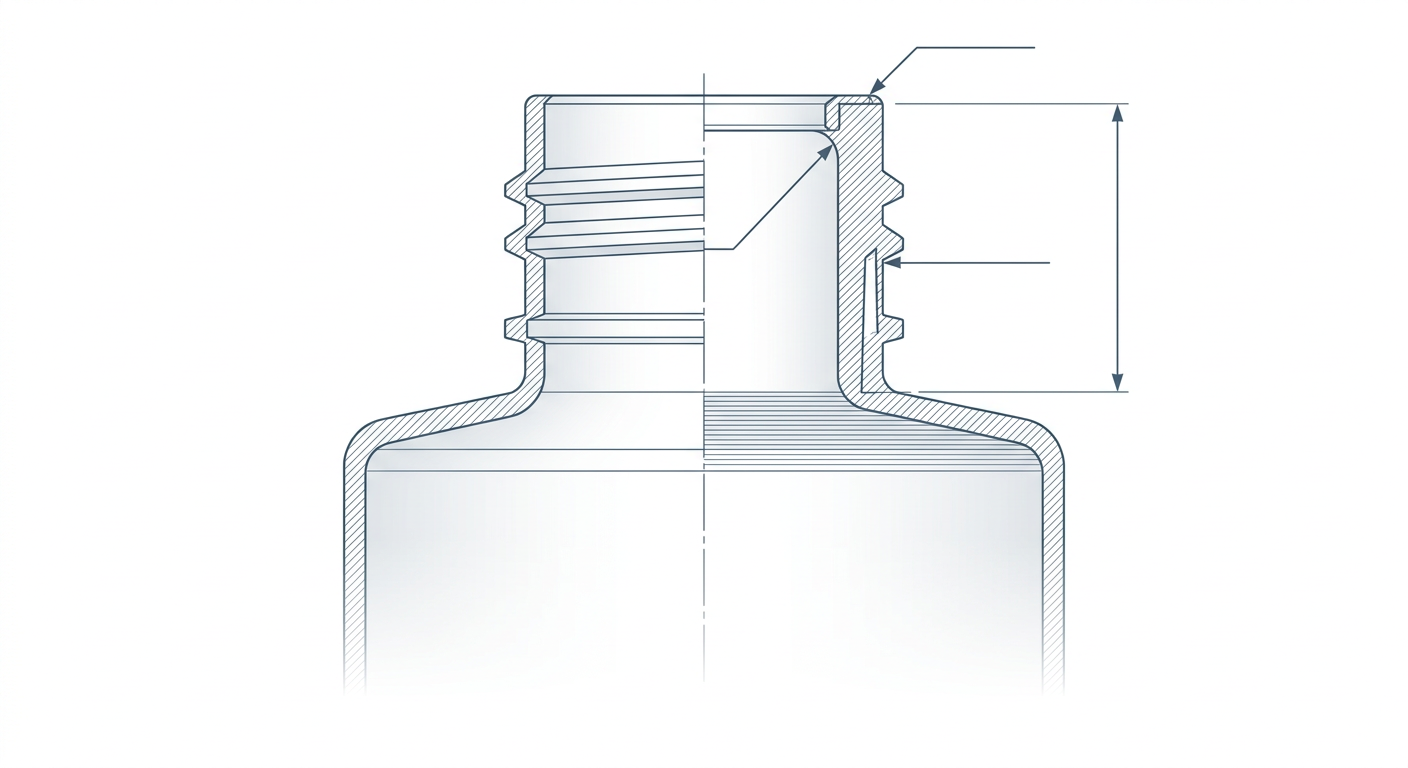
A cosmetic bottle neck finish is the engineered upper portion of a bottle that receives and seals with a closure. It includes the opening, sealing land, threads or snap-fit features, neck height and dimensional tolerances.
Buyers sometimes treat the cosmetic bottle thread size as the complete specification. In practice, a nominal designation is only a starting point. Two components can share a nominal diameter yet differ in thread start, pitch, profile, sealing method or dimensional tolerance. The bottle material also matters because molded plastic, glass and multi-component bottles are manufactured differently.
Neck Finish, Bottle Opening and Thread: Plain-English Definitions
- Neck finish: The complete closure-connection area at the top of the bottle.
- Bottle opening or orifice: The passage through which the formula is filled or dispensed.
- Thread: The raised helical feature that allows a screw closure to engage the bottle.
- Sealing surface or land: The area that contacts a liner, gasket, plug or other sealing element.
- Neck finish compatibility: The ability of the selected bottle and closure to assemble, seal and function within approved specifications.
- Dosage: The nominal amount a pump is designed to dispense per full actuation. Actual delivery can be affected by formula viscosity, priming and use conditions.
Dimensions and Terms a Packaging Supplier Needs
A useful specification identifies more than the outside neck diameter. Provide the nominal neck-finish designation if known, opening diameter, thread outside diameter, thread profile or standard family, thread pitch, thread starts, neck height and sealing-surface dimensions. State whether the closure uses a liner, gasket, plug seal or another sealing design.
For a pump, also provide the target dosage, actuator style, lock type, dip-tube material and required dip-tube length. For a dropper, identify the bulb, collar, pipette material, pipette length and wiper or insert requirements. Final dimensions should come from approved technical drawings rather than measurements taken only with a ruler.
Pump, Dropper and Screw Cap Compatibility Compared
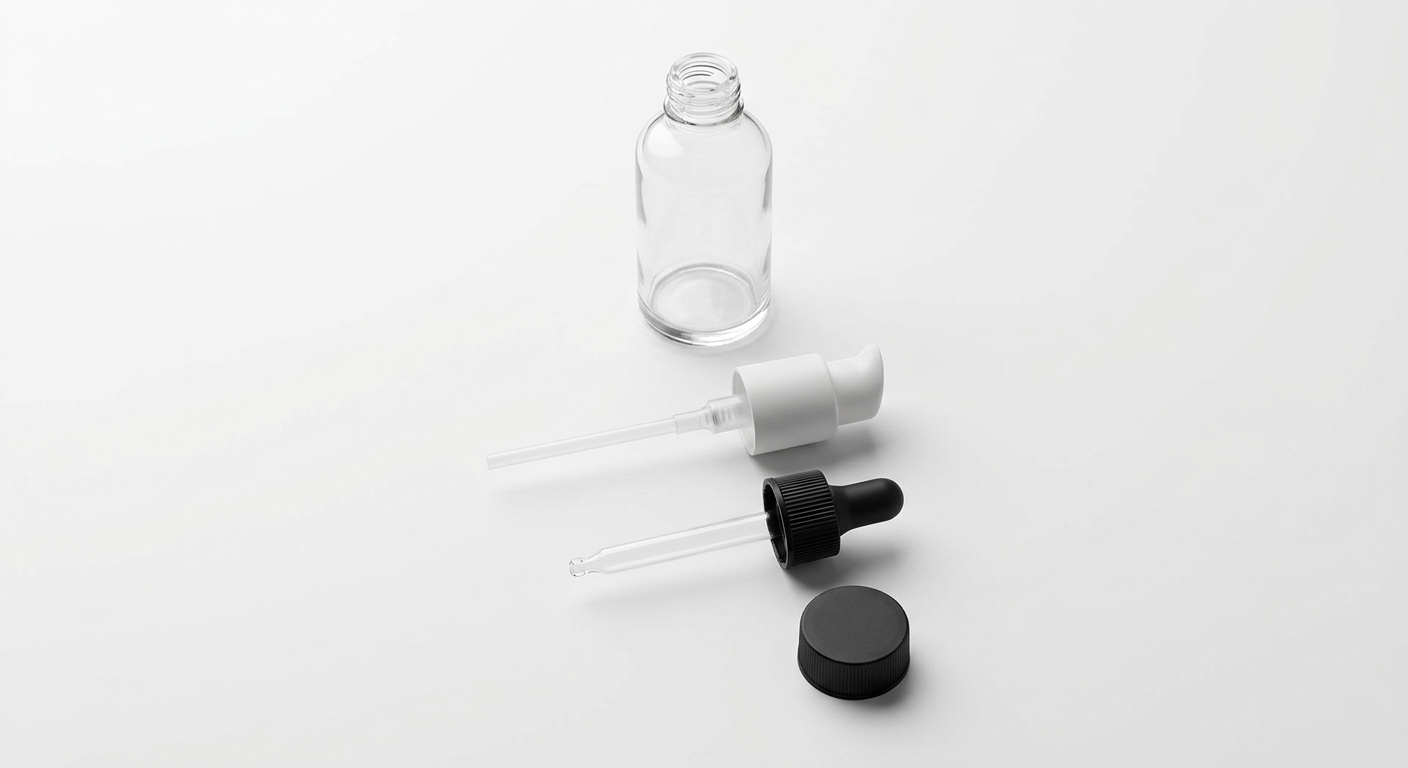
Each closure route places different demands on the cosmetic bottle neck finish. A pump needs mechanical engagement, a reliable seal, suitable dip-tube geometry and functional compatibility with the formula. A dropper requires the collar to seal while positioning the pipette correctly. A screw cap may be mechanically simpler, but its liner, plug or sealing land must still match the bottle.
- Pump: Appropriate when controlled dispensing and one-handed use are priorities. Evaluate dosage, priming, viscosity, actuator clearance and dip-tube reach.
- Dropper: Often considered for oils, serums or other products where direct, user-controlled dispensing is desired. Evaluate pipette reach, bulb recovery, wiper fit and formula interaction.
- Screw cap: Useful when the consumer pours the formula or accesses it through a reducer, plug or separate applicator. Evaluate liner compression, opening control and application torque.
These are sourcing considerations, not guaranteed use cases. Formula compatibility and functional performance require project-specific testing.
When a Pump Is the Better Dispensing Route
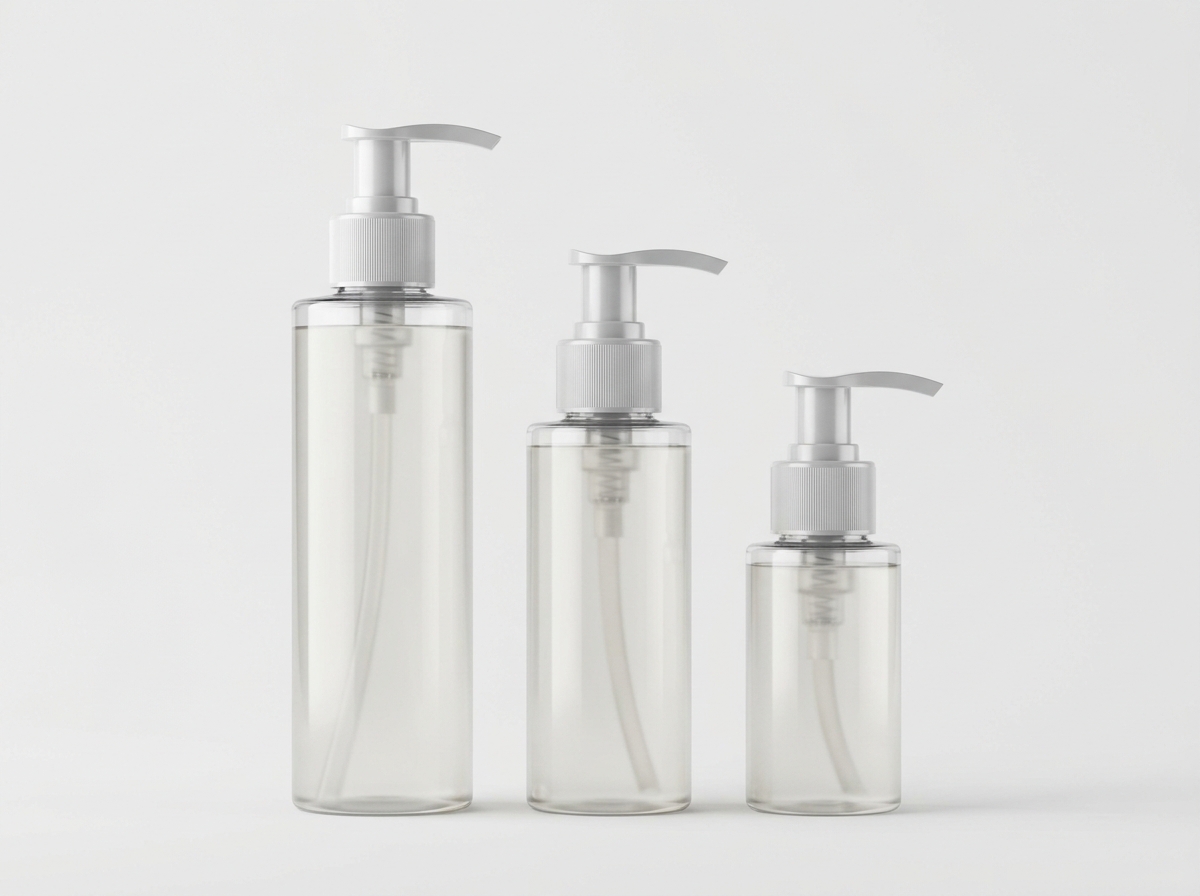
Consider a pump when the project requires repeatable dispensing behavior, reduced direct access to the bottle opening or convenient one-handed use. Pump and bottle compatibility depends on more than the threaded collar: the formula must move through the pump pathway, and the dip tube must be cut for the bottle’s internal height and base geometry.
Ask whether the pump is supplied with a gasket, whether it locks for shipping and how its nominal dosage is specified. Thick formulas, suspended particles or volatile ingredients may require a different dispensing route. Review YBJ’s cosmetic bottle with pump options as a starting point, then confirm the exact neck finish and pump configuration for the project.
When to Consider a Dropper or Screw Cap
A dropper may be considered when visual dosing and direct application are part of the user experience. Dropper cap compatibility requires the collar thread, gasket or sealing feature, pipette diameter and pipette length to work as a system. The pipette should not interfere with the bottle base or shoulder during assembly.
A screw cap can reduce dispensing-component complexity, but it does not remove the need for fit testing. Confirm whether the formula will be poured, used with an orifice reducer or accessed with a separate applicator. The cap’s liner or plug must suit the bottle’s sealing surface and the formula. Buyers comparing several formats can review YBJ’s cosmetic bottles and jars before requesting a matched closure.
How to Verify Bottle and Closure Fit Before Mass Production
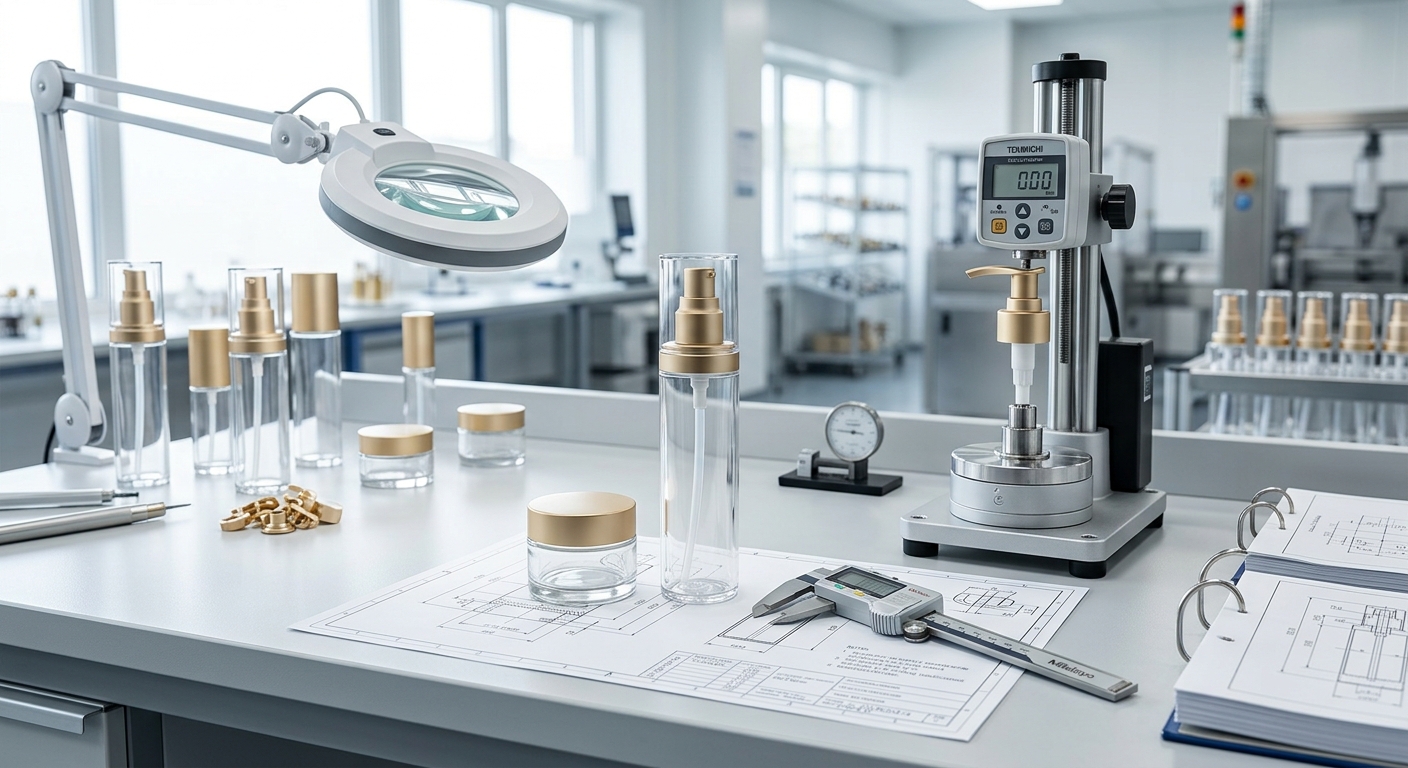
Verify fit through documented drawings, representative samples and functional testing with the intended formula. Visual inspection alone cannot confirm sealing or dispensing performance.
- Confirm the bottle and closure identification, materials and technical drawings.
- Review critical neck, thread, seal and internal-height dimensions.
- Obtain assembled samples from the proposed production configuration.
- Fill samples using a process representative of the planned filling line.
- Check assembly, sealing, dispensing and user operation.
- Evaluate samples under relevant storage, handling and transportation conditions.
- Approve a signed reference sample and controlled specification before production.
Acceptance methods and limits should be agreed for the individual project. Changing a bottle mold, closure source, gasket, decoration or formula can require renewed evaluation.
Request a Matching Technical Drawing and Physical Sample
The bottle and closure drawings should identify revision status and critical dimensions. Compare the proposed components as a set rather than approving each part independently. A physical sample then allows the buyer, filler and packaging supplier to evaluate assembly and operation.
YBJ Packaging states that it provides one-stop support covering consultation, design, mold development, material selection, manufacturing, assembly, quality checks and worldwide shipping. Its website also describes more than 20 years of cosmetic-packaging experience, a 10,000 m² intelligent facility, a Class 10,000 cleanroom, 12 automated assembly lines and 23 Toshiba all-electric injection machines. Buyers should confirm which capabilities, equipment and cleanroom operations apply to their specific bottle-and-closure project.
Check Seal, Assembly, Torque and Dispensing Function
Functional checks should reflect the selected closure. For screw components, assess application torque, removal torque, thread engagement, cross-threading risk and liner or gasket compression. Torque means the rotational force used to tighten or remove a closure; the suitable range depends on the materials, neck design, sealing system and assembly equipment.
For pumps, check priming, full-stroke operation, nominal dosage, leakage, lock operation and dip-tube position. For droppers, inspect collar sealing, bulb recovery, pipette retention and interaction with any wiper. Decoration can also affect fit if coatings or metallized parts add material near an assembly interface. Testing plans and acceptance criteria must be approved for the actual formula, fill quantity, components and destination.
Bottle and Closure Details to Include in a Quote Request
A complete inquiry helps the supplier evaluate neck finish compatibility without assuming critical specifications. Include:
- Product type and formula or viscosity context
- Nominal capacity, fill quantity and bottle dimensions
- Preferred bottle material and color
- Known neck-finish designation or an existing technical drawing
- Pump, dropper, screw cap, reducer or other closure type
- Target pump dosage or dropper-pipette requirements
- Decoration, color matching and surface-finish requirements
- Estimated order quantity
- Filling method and application equipment
- Destination market, packing needs and target date
Compatibility, tooling, MOQ, pricing, production time and shipping depend on the approved design and project details. YBJ’s broader cosmetic bottle packaging options can help buyers identify a starting format before drawings and samples are reviewed.
Related YBJ Product Options

These product pages can provide a visual and format starting point. Their inclusion does not confirm a particular neck finish, material, pump, dropper or cap for every project; request the current drawing and available configuration.
| Product option | Useful sourcing purpose | What to confirm |
|---|---|---|
| Customizable glass cosmetic bottle for skincare packaging | Discussing a configurable glass-bottle presentation | Glass neck dimensions, closure match, decoration and sample availability |
| Cosmetic bottle with pump | Starting a pump-dispensing inquiry | Neck finish, pump dosage, dip tube, gasket and formula suitability |
| Cosmetic bottles and jars | Comparing container formats for a coordinated range | Material, capacity, closure system, decoration and component availability |
FAQ: Cosmetic Bottle Neck Finish Questions
Does the same nominal thread size guarantee compatibility?
No. Nominal size does not confirm thread profile, pitch, starts, sealing geometry or tolerance. Review matching drawings and assembled samples.
Can one pump fit glass and plastic bottles with the same listed neck size?
Possibly, but it should not be assumed. Material-specific tolerances, sealing surfaces, bottle height and dip-tube requirements can differ.
Should compatibility be tested with the actual formula?
Yes. Formula viscosity and ingredient interaction can affect sealing, pump priming, dosage, gaskets, bulbs, tubes and other components.
What is a Class 10,000 cleanroom?
It is a controlled production environment with airborne-particle limits associated with its stated classification. YBJ states that it has a Class 10,000 cleanroom; buyers should confirm whether the relevant components or assembly steps for their project are handled there.
Request a Project-Specific Bottle and Closure Recommendation
Send YBJ Packaging your product type, formula or viscosity context, capacity, dimensions, preferred material, closure or pump requirements, decoration, estimated quantity, filling application, destination and target date. The team can review bottle-and-closure options and discuss drawings, samples and compatibility testing. MOQ, tooling, pricing, production time, compatibility and delivery are confirmed only after the project details and approval requirements have been reviewed.

 English
  Français
  Español