



Table of Contents
- When a Mini Trigger Spray Bottle Is the Right Format
- What Counts as a Mini Trigger Spray Bottle?
- Mini Trigger, Fine Mist and Standard Trigger Comparison
- Critical Specifications for Small Spray Bottles
- Ergonomics and Stability at Small Sizes
- Formula and Filling-Line Considerations
- Mini Trigger Sprayer Product Options
- Development Steps From Sample to Production
- Mini Spray Bottle Inquiry Checklist
- Frequently Asked Questions About Mini Trigger Bottles
- Request a Mini Spray Bottle Quote
Learn how to source mini trigger spray bottles by comparing dispensing formats, bottle materials, neck finishes, ergonomics, filling-line requirements and customization options.
When a Mini Trigger Spray Bottle Is the Right Format
Mini trigger spray bottles are a practical choice when a beauty or personal-care product needs broader coverage than a small push-button mist pump can comfortably provide, while remaining more portable than a household-size trigger bottle. They are commonly evaluated for travel formats, trial packs, hair products, body sprays and other low- to moderate-viscosity formulas.
The format is most useful when the consumer needs a finger-operated trigger, a relatively secure grip and repeated spraying. It may be less appropriate when the desired experience is an especially fine facial mist, a single-hand pocket spray or controlled application to a very small area.
Bottle size alone does not establish suitability. The formula, spray pattern, output per actuation, intended use orientation and closure compatibility must be tested as a complete package.
What Counts as a Mini Trigger Spray Bottle?
“Mini” is a sourcing description rather than a universal technical standard. It generally refers to a compact bottle and reduced-size trigger assembly intended for portable, travel or sample size spray bottles. Buyers should specify an actual capacity, bottle dimensions and sprayer drawing instead of relying on the word alone.
A mini trigger package typically includes the bottle, threaded or snap-on sprayer, gasket or sealing interface, dip tube, nozzle, actuator and a lock or protective feature where available. The trigger should be proportioned to the bottle so the assembled package remains comfortable to hold and stable when placed on a surface.
Capacity, Trigger Size and Intended Use
Capacity should be selected together with the overall package dimensions. Two bottles with the same nominal fill volume can have different heights, widths, label panels and base footprints. A short, wide bottle may offer better stability, while a narrow bottle may fit more easily in a bag or retail carton.
Trigger size affects grip, visual balance and leverage. Ask for the actuator dimensions and output data, then evaluate filled samples with representative users. Travel suitability also depends on the lock design, leakage resistance and applicable carrier or destination rules; a small nominal capacity does not automatically make a package travel compliant.
Mini Trigger, Fine Mist and Standard Trigger Comparison
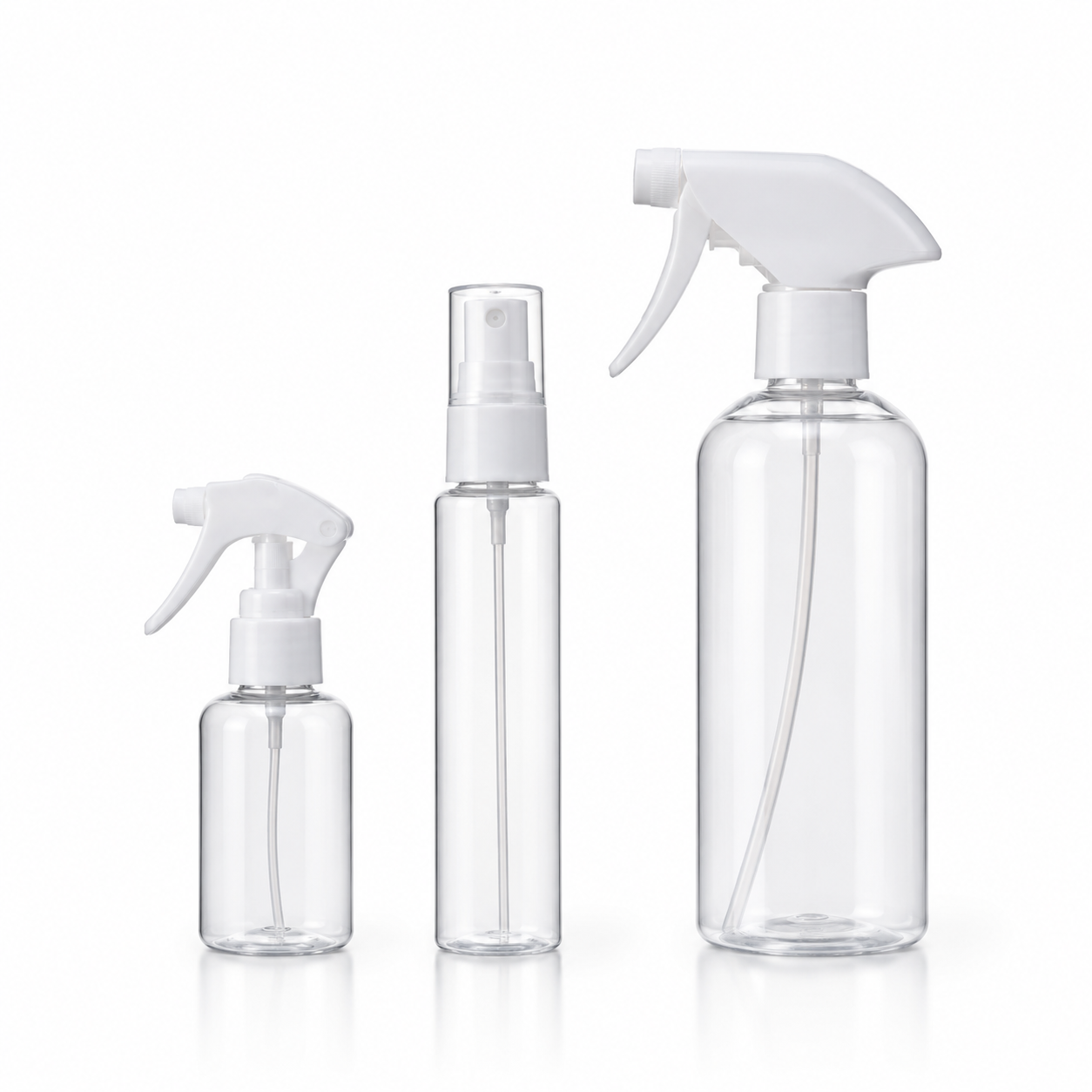
Choose the dispensing system according to the required spray experience, not simply the bottle capacity. A mini trigger balances portability and hand leverage; a fine mist pump prioritizes compactness and a lighter spray; a standard trigger is better suited to larger bottles and repeated broad application.
| Format | Typical use-case fit | Main advantage | Key limitation |
|---|---|---|---|
| Mini trigger | Travel hair care, body care and compact personal-care spray packaging | Trigger grip with a smaller package | Top-heavy proportions may affect stability |
| Fine mist pump | Facial, hair or body applications requiring a lighter mist | Compact profile and refined spray presentation | May require more actuations for broad coverage |
| Standard trigger | Larger bottles and repeated wide-area spraying | Grip, leverage and broad coverage | Less portable and visually dominant on small bottles |
These are general format characteristics. Actual pattern, droplet size and dosage depend on the sprayer design, formula and test method.
Coverage, Portability, Grip and Output Trade-Offs
Dosage means the measured amount dispensed by one complete actuation. It should not be inferred from bottle size. A higher output can cover an area more quickly but may wet hair or skin more heavily; a lower output offers more gradual application but can require additional strokes.
Request samples to compare spray width, distribution, priming strokes, trigger force and consistency during repeated use. Test the bottle upright and at the angles expected in normal use. Most dip-tube systems are not designed to spray reliably in every orientation.
Critical Specifications for Small Spray Bottles
The bottle and sprayer must be specified as one container-closure system. The supplier needs enough information to confirm mechanical fit, sealing, formula contact materials, decoration space and filling-line handling.
| Specification | Why it matters | What to confirm |
|---|---|---|
| Bottle material | Affects clarity, squeeze resistance, chemical compatibility and appearance | Resin grade, color, wall construction and formula contact |
| Neck finish | Controls how the bottle and sprayer connect | Thread or snap dimensions, sealing surface and matching closure |
| Dip tube | Draws formula from the bottle to the sprayer | Length, cut style, curvature and clearance from the base |
| Locking feature | Helps reduce accidental actuation | Lock type, user operation and assembled shipping condition |
| Decoration area | Determines printable or labelable space | Panel dimensions, artwork limits and registration tolerance |
PET can provide good clarity and rigidity for many applications, while HDPE is generally more opaque and can offer a different compatibility profile. PP is commonly used in sprayer components. Material selection remains formula- and component-dependent, so it requires sample and compatibility review.
Bottle Dimensions, Neck Finish, Dip Tube and Locking Feature
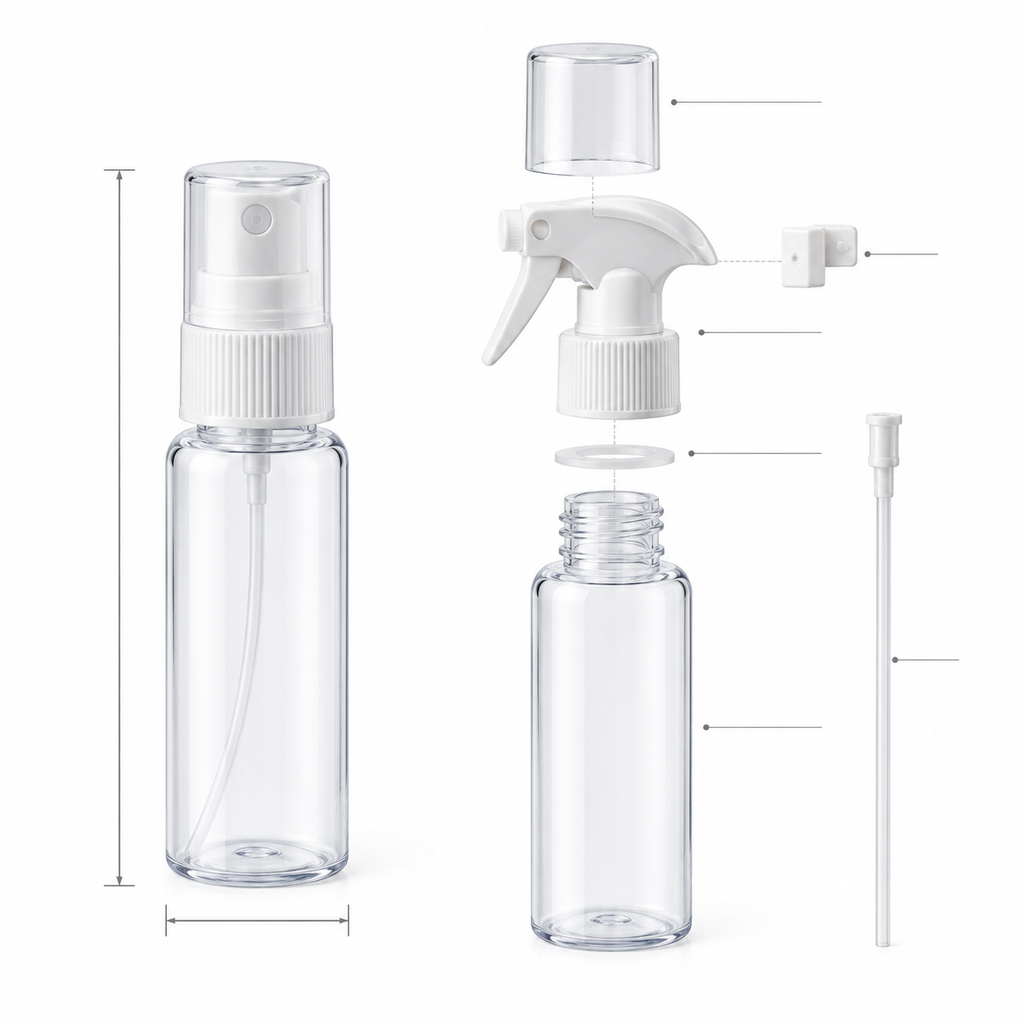
A neck finish is the dimensional standard describing the bottle opening and the features that engage with a cap or sprayer. A matching nominal description is not enough; thread geometry, sealing surfaces and tolerances must align.
Dip-tube length should be established for the selected bottle and closure. A tube that is too short can leave excessive residual product, while one that is too long may press against the base and restrict flow. For portable packages, compare clip locks, twist locks or nozzle locks where available. Evaluate whether the consumer can clearly identify the locked and open positions.
Ergonomics and Stability at Small Sizes
A compact bottle can become unstable if the trigger is wide or heavy relative to the base. Review the assembled center of gravity, base diameter, shoulder shape and trigger overhang. Stability should be checked with the bottle full, partly used and empty because weight distribution changes during use.
For ergonomics, assess finger clearance, trigger reach, required force and whether the bottle rotates in the hand. Also check if the trigger interferes with a label, carton insert or shelf display. A visually attractive narrow profile may reduce grip comfort or create filling-line handling challenges, so physical samples are more informative than renderings alone.
Formula and Filling-Line Considerations
Formula compatibility must be assessed using the complete decorated package, including the bottle, sprayer, gasket, internal components, dip tube and colorants. Viscosity, alcohol content, oils, solvents, suspended particles and fragrance components can influence material behavior or spray performance.
Run filled-package trials under relevant storage, handling and shipping conditions. Observe leakage, panel distortion, discoloration, stress cracking, odor transfer, decoration changes and dispensing consistency. YBJ recommends project-specific review rather than assuming that a package suitable for one formula will suit another. See the cosmetic packaging compatibility testing guide for a pre-production framework.
Headspace, Foaming, Capping and Priming
Headspace is the unfilled space above the formula. It must accommodate the package design, filling tolerance and displacement created when the sprayer and dip tube are inserted. Overfilling can cause overflow during assembly or leave product around the neck seal.
Foaming formulas may need slower filling, a different nozzle position or a settling interval before capping. Confirm closure application method and torque or assembly settings with the component supplier and filler. Finally, establish acceptable priming behavior: some pumps require several initial strokes before producing a stable spray, and the result can vary with viscosity and dip-tube geometry.
Mini Trigger Sprayer Product Options
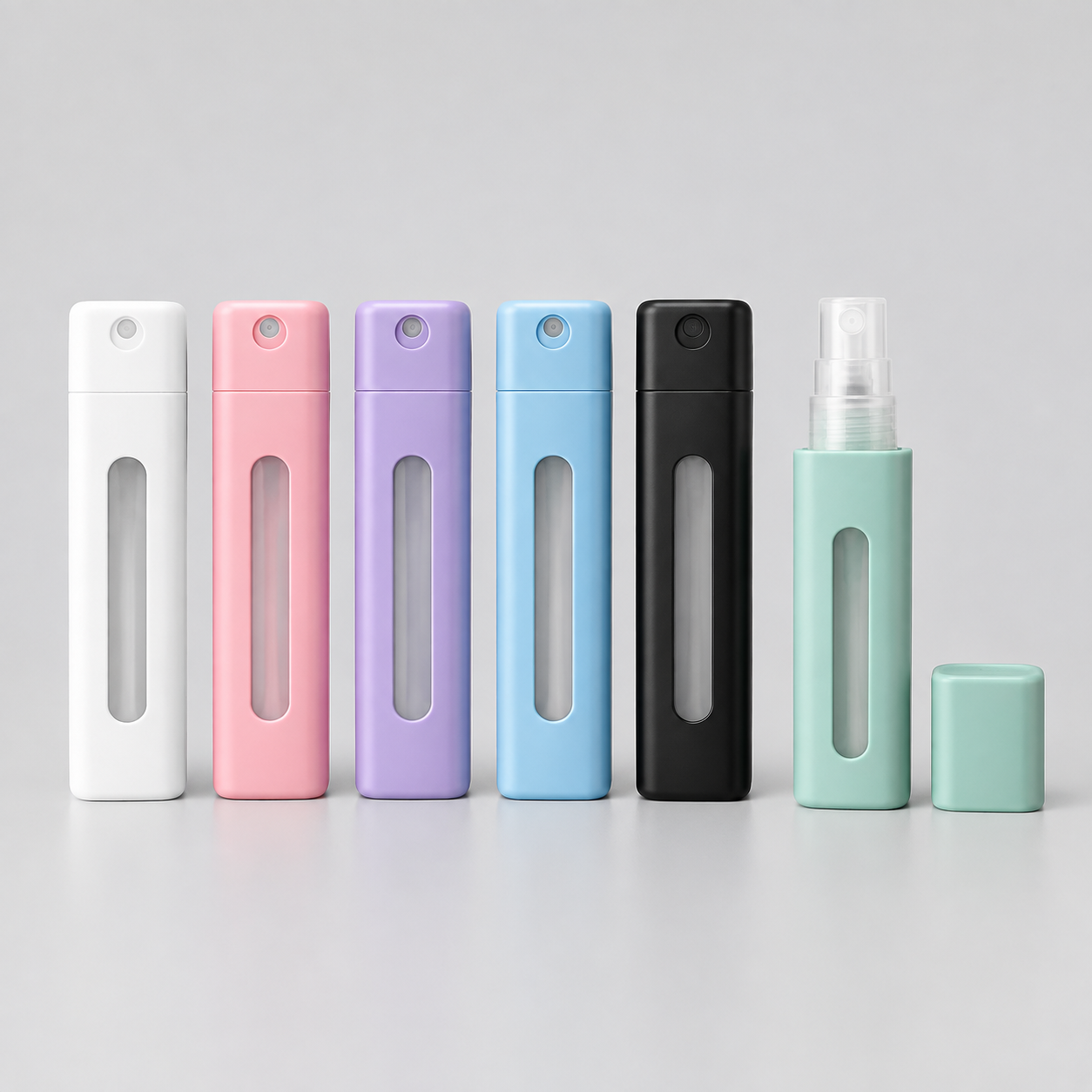
Available concepts can be used to begin a sourcing discussion, but the listed product format should not be treated as confirmation of formula compatibility, exact capacity, material, neck finish or availability. Request current drawings and samples for the intended project.
| Reference option | Format to evaluate | Buyer review points |
|---|---|---|
| Mini trigger sprayer plastic bottle | Compact bottle with finger-trigger dispenser | Grip, stability, output, neck fit and lock |
| Portable mini spray bottle | Flat, compact spray package | Spray mechanism, filling method, decoration area and formula suitability |
| Compact mist bottle reference | Small push-actuated mist format | Application method, actuator hygiene, output and intended market requirements |
Product names describe the referenced pages, not approval for a particular cosmetic, sanitizer or regulated application.
Standard, Custom-Color and Fine Mist Alternatives
A standard bottle and sprayer can reduce development complexity when the available geometry, material and decoration area meet the brief. Custom color can create stronger brand alignment but requires color matching, resin and decoration review, and an approved physical sample. Exact quantity requirements depend on the component and project.
A custom mold may be appropriate when the brand needs a unique silhouette, grip, neck configuration or decoration panel. Tooling cost, development time and manufacturability must be evaluated before approval. If a trigger appears oversized or delivers more product than desired, compare a fine mist pump rather than forcing the trigger format into the brief.
Development Steps From Sample to Production
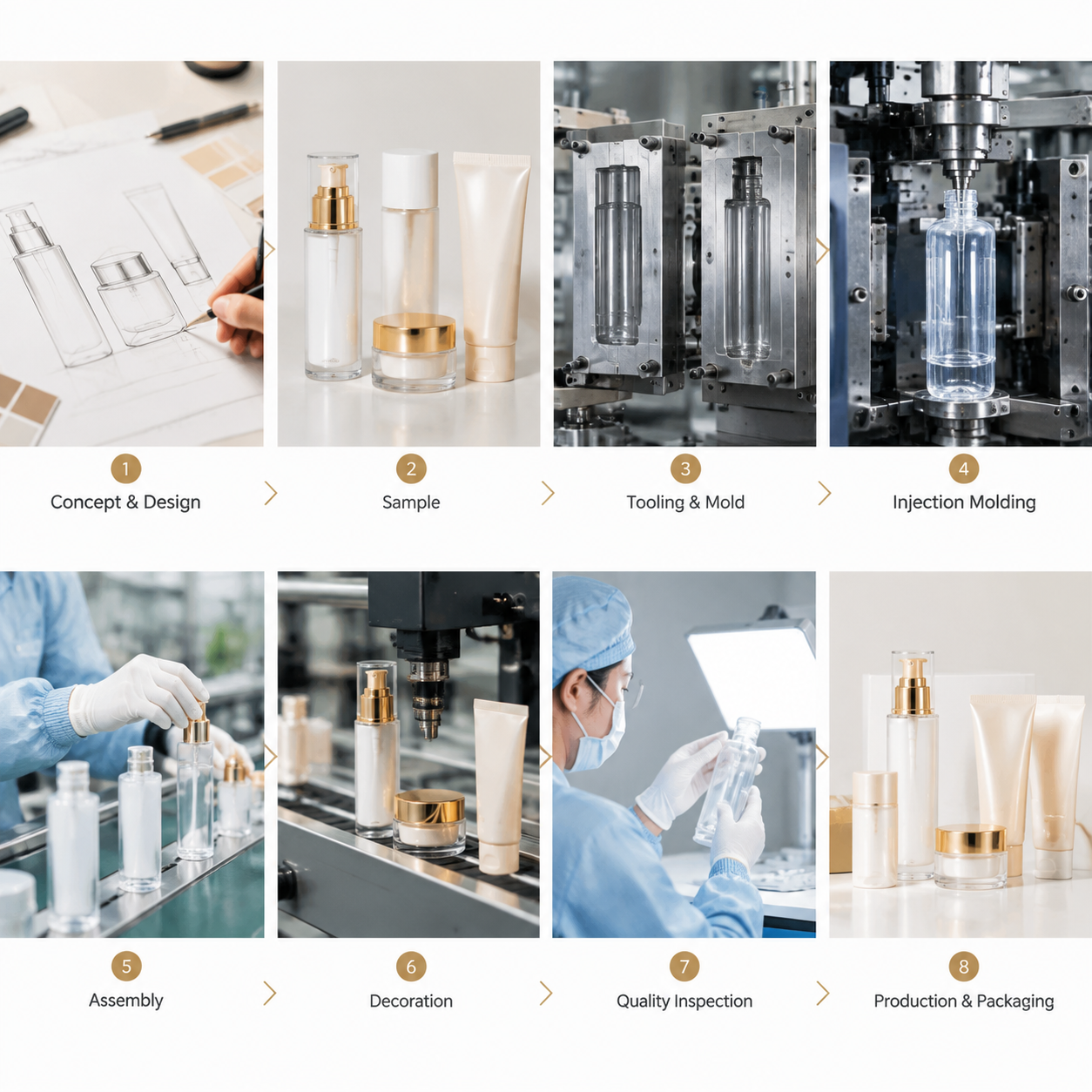
A structured approval process separates visual preferences from mechanical and formula-related requirements.
- Define the brief: document capacity, dimensions, formula context, spray experience, destination and target date.
- Select components: compare bottle materials, neck finishes, triggers, dip tubes, locks and decoration methods.
- Review drawings and samples: confirm fit, grip, stability, label area and filling-line dimensions.
- Run formula and filling trials: test the filled, assembled and decorated package under relevant conditions.
- Approve decoration: review color, artwork position and adhesion on physical samples.
- Confirm quality criteria: agree on drawings, approved samples, inspection points and packaging configuration.
- Authorize production: proceed only after commercial terms and approval documents are reviewed.
The YBJ Packaging website states that the company provides OEM and ODM support from consultation and design through mold development, material selection, manufacturing, assembly, quality checks and worldwide shipping. It also describes more than 20 years of packaging experience, a 10,000 m² intelligent facility, a Class 10,000 cleanroom, 12 automated assembly lines and 23 Toshiba all-electric injection machines. A cleanroom is a controlled production space designed to limit airborne particles. Buyers should confirm which facility, process and cleanliness controls apply to their specific package. The cosmetic packaging sampling process explains staged approvals in more detail.
Mini Spray Bottle Inquiry Checklist
Send a detailed brief so the trigger sprayer supplier can identify realistic stock, modified or custom options.
- Product type and intended application
- Formula description, viscosity and relevant ingredient context
- Nominal fill capacity and required headspace
- Maximum bottle and assembled dimensions
- Preferred bottle and sprayer materials
- Required neck finish, closure, trigger or mist pump
- Target dosage and spray pattern
- Dip-tube and locking requirements
- Color, printing, labeling or other decoration
- Estimated order quantity
- Filling equipment, capping method and line constraints
- Shipping destination and target date
- Required sample, compatibility and approval stages
Compatibility, MOQ, tooling, pricing, production time and shipping arrangements depend on the final component selection, quantity, decoration, destination and approved sample.
Frequently Asked Questions About Mini Trigger Bottles
The questions below address common sourcing decisions concerning portability, formula viscosity, locks, customization and dispensing alternatives. Final specifications should be confirmed through drawings, representative samples and filled-package testing.
Request a Mini Spray Bottle Quote
For a useful quotation, define the complete bottle-and-sprayer assembly rather than requesting only a generic small trigger bottle. YBJ Packaging can review standard and custom mini spray bottle requirements after receiving the formula context, dimensions, dispensing expectations, decoration plan and commercial details.
FAQ
Are mini trigger spray bottles suitable for thick formulas?
They are generally evaluated for low- to moderate-viscosity liquids, but viscosity alone does not determine performance. Particles, oils, foaming behavior and the internal sprayer design can also affect priming and spray quality. Test the actual formula in the selected assembly before production.
Is a mini trigger better than a fine mist pump?
Neither is universally better. A mini trigger can provide more grip and broader repeated application, while a fine mist pump offers a compact profile and may provide a lighter spray. Compare filled samples for output, pattern, user effort and portability.
Can small trigger spray bottles be custom colored?
Custom color may be available for the bottle, sprayer or both, depending on the selected components and quantity. Color matching, resin behavior and decoration compatibility require project review and approval samples.
Does a locking nozzle guarantee leak-free travel?
No. A lock helps reduce accidental actuation, but leakage also depends on the neck seal, gasket, formula, capping, temperature, pressure changes and shipping orientation. Test filled packages in the intended distribution configuration.
What should be approved before mass production?
Approve the component drawings, materials, bottle and sprayer fit, dip-tube length, spray performance, decoration, filled compatibility, filling-line handling, quality criteria and packing configuration. Commercial terms and the final approval sample should also be documented.
Discuss Your Mini Trigger Spray Bottle Project
Request a project review by providing your product type, formula or viscosity context, capacity, dimensions, preferred material, closure or pump, decoration, estimated quantity, filling application, shipping destination and target date. YBJ Packaging can then discuss samples, compatibility evaluation and available customization. MOQ, tooling, pricing, timing and shipping can be confirmed only after the specifications and approval requirements are reviewed.

 English
  Français
  Español