



Table of Contents
- What a Custom Spray Bottle Project Involves
- Stock Customization vs. New Mold Development
- Custom Spray Bottle Decision Table
- Step 1: Define the Product and User Experience
- Step 2: Select the Bottle and Sprayer System
- Step 3: Confirm Material, Color and Decoration
- Step 4: Review Samples and Compatibility
- Step 5: Approve Specifications Before Manufacturing
- YBJ Packaging Spray Bottle Product References
- What YBJ Packaging States About Its Manufacturing Support
- Custom Spray Bottle RFQ Checklist
- Frequently Asked Questions About Custom Spray Bottle Projects
- Discuss Your Custom Cosmetic Packaging
A custom spray bottle project requires more than selecting a bottle shape. Buyers must define the formula, spray experience, neck finish, sprayer output, materials, decoration and approval tests before manufacturing.
What a Custom Spray Bottle Project Involves
A custom spray bottle manufacturer should develop the bottle, sprayer and decoration as one packaging system. The process normally moves from a technical brief through component selection, samples, formula compatibility review and an approved specification before manufacturing.
Customization may involve a stock bottle in a custom color, a matched fine-mist sprayer, printed graphics or a completely new bottle mold. The appropriate route depends on the formula, intended spray pattern, capacity, shape, filling process, estimated quantity, budget and target date. A component that sprays water successfully is not automatically suitable for a finished cosmetic formula.
For clarity, dosage means the approximate amount discharged with each full actuation. A neck finish is the standardized or proprietary geometry at the bottle opening that must fit the sprayer closure. Both must be defined during development.
Stock Customization vs. New Mold Development
Stock customization uses an existing bottle and closure platform, while new mold development creates new component geometry. A stock platform is generally the first route to evaluate because the basic tooling already exists, but its dimensions, neck finish and decoration area are constrained.
New tooling may support a distinctive silhouette, integrated grip or project-specific capacity. It also adds engineering review, mold construction, trial production and sample approval stages. Tooling feasibility, cost, ownership, maintenance, minimum quantity and development time must be quoted after YBJ Packaging reviews the design.
When Color and Decoration May Be Enough
Use an existing bottle when its capacity, shape, neck and filling-line fit already meet the brief. Custom color spray bottles can then be differentiated with molded color, coating, screen printing, hot stamping, labeling or another available finish.
Each decoration method has limits. Screen printing requires a suitable print area; hot stamping can be sensitive to tight curves; coatings can change appearance and surface behavior; and labels need enough panel area and adhesion. Color targets should be reviewed on the actual material because resin, wall thickness and lighting can affect perception. Approve a physical decorated sample rather than relying only on a digital rendering.
When Custom Geometry May Require Tooling
Consider spray bottle mold development when no existing platform can meet a required silhouette, capacity, panel layout, base profile, grip or component integration. The design still has to support molding, dimensional control, filling, capping, packing and transport.
A practical tooling review should address draft angles, wall distribution, parting lines, decoration zones, bottle stability and the interface with the selected sprayer. A custom bottle does not automatically require a custom sprayer; using a proven compatible closure may reduce development variables. Final recommendations remain project-dependent and require drawings, samples and manufacturing review.
Custom Spray Bottle Decision Table
The fastest way to define a spray packaging project is to separate the decisions that affect appearance from those that affect dispensing and compatibility. The following table provides a starting point, not a final specification.
Bottle, Sprayer, Material, Finish and Development Implications
| Decision | Typical options | Use-case fit | Development implication |
|---|---|---|---|
| Bottle format | Stock cylindrical, shaped stock bottle or custom geometry | Existing formats suit faster development; custom geometry supports a specific brand form | Custom geometry may require drawings, tooling and mold trials |
| Sprayer | Fine mist, treatment spray or trigger sprayer | Fine mist suits broad light application; triggers suit higher-volume household or personal-care dispensing | Output, pattern, priming and formula handling require testing |
| Material | PET, PE-family plastic or glass, subject to availability | PET offers clarity; PE-family plastics offer different squeeze and chemical-contact characteristics; glass provides weight and clarity but is breakable | Formula contact, filling conditions and transport risks must be reviewed |
| Finish | Molded color, coating, printing, hot stamping or label | Selected according to brand appearance, artwork and surface geometry | Color and adhesion should be approved on production-representative parts |
| Development route | Stock decoration, component matching or new mold | Depends on how much of the package must be unique | MOQ, price and timing depend on the selected route and approval stages |
Step 1: Define the Product and User Experience
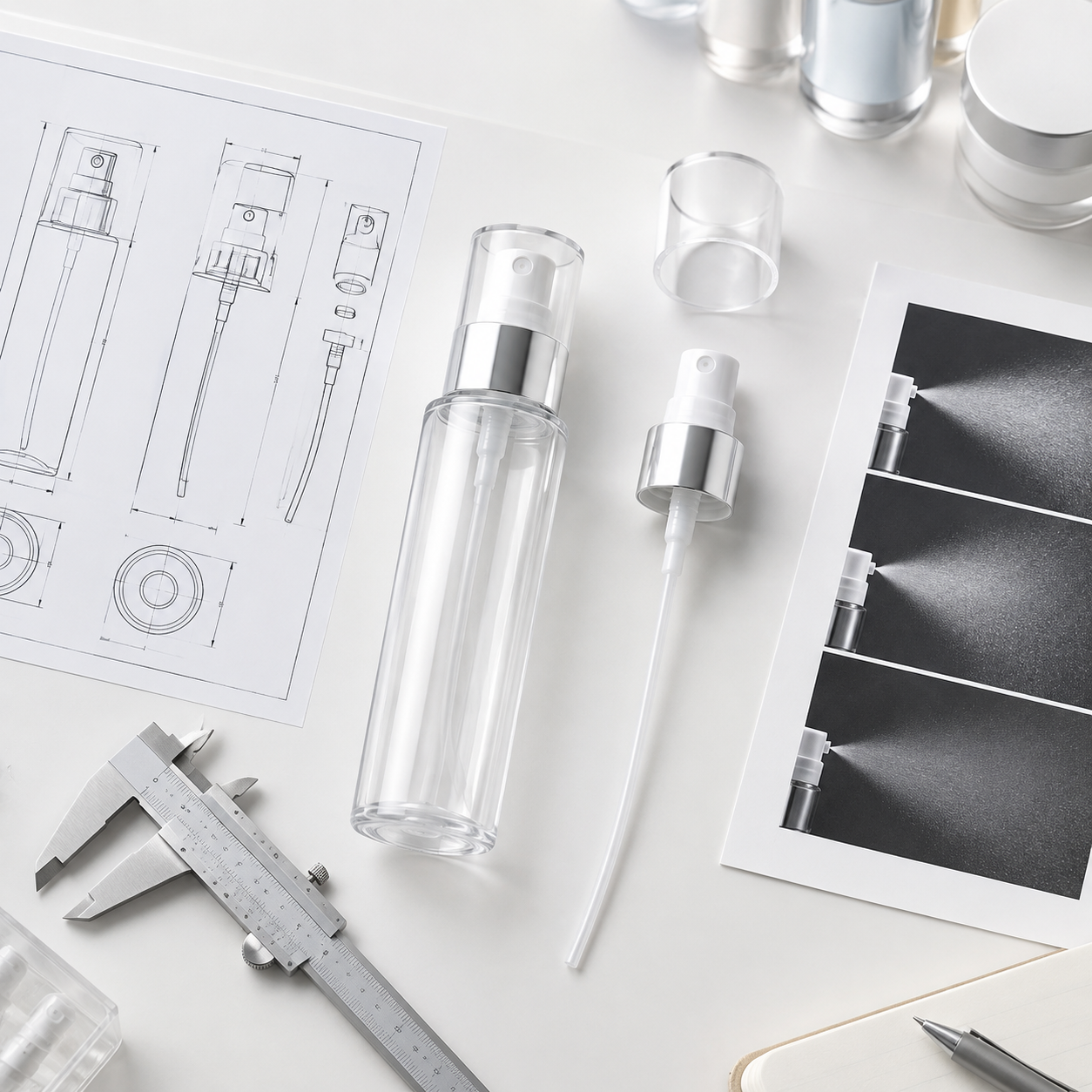
Begin with the product and application, not the bottle appearance. Tell the supplier whether the package is intended for a facial mist, hair product, body spray or another cosmetic or personal-care application. Provide formula viscosity context and note alcohol, oils, suspended particles or other characteristics that may affect the flow path.
Define how the user should hold, unlock and actuate the package. State whether the desired discharge is a broad fine mist, a narrower spray or a higher-volume trigger output. Include capacity, approximate use duration, target dimensions, travel-lock needs and whether the bottle must operate at different angles. These requirements help the spray bottle OEM screen components before samples are prepared.
Step 2: Select the Bottle and Sprayer System
Select the bottle and sprayer together. A visually suitable bottle can fail in use if the neck, gasket, dip tube, actuator or closure torque does not suit the system. Custom mist spray bottles typically prioritize atomization and pattern consistency, while a custom trigger spray bottle generally prioritizes higher output and repeated hand actuation.
Ask for a complete component description covering the bottle, sprayer, cap or lock, gasket where applicable, and dip tube. The formula-contact materials inside the sprayer matter as much as the visible bottle material. Component availability and recommended combinations must be confirmed for the actual project.
Neck Finish, Dip Tube, Output and Locking Options
The neck finish defines how the sprayer attaches and seals to the bottle. Matching the nominal neck description is not enough; thread geometry, sealing surfaces and closure fit should be checked as an assembled system.
The dip tube should be cut for the internal bottle height and base shape. A tube that is too short leaves excessive product behind, while a tube pressed hard against the base may restrict flow. Output per actuation and spray pattern should be measured with the intended formula. Locking options can include an overcap, actuator lock or trigger lock, depending on the sprayer. Confirm that the selected lock also works with the packing and shipping configuration.
Step 3: Confirm Material, Color and Decoration
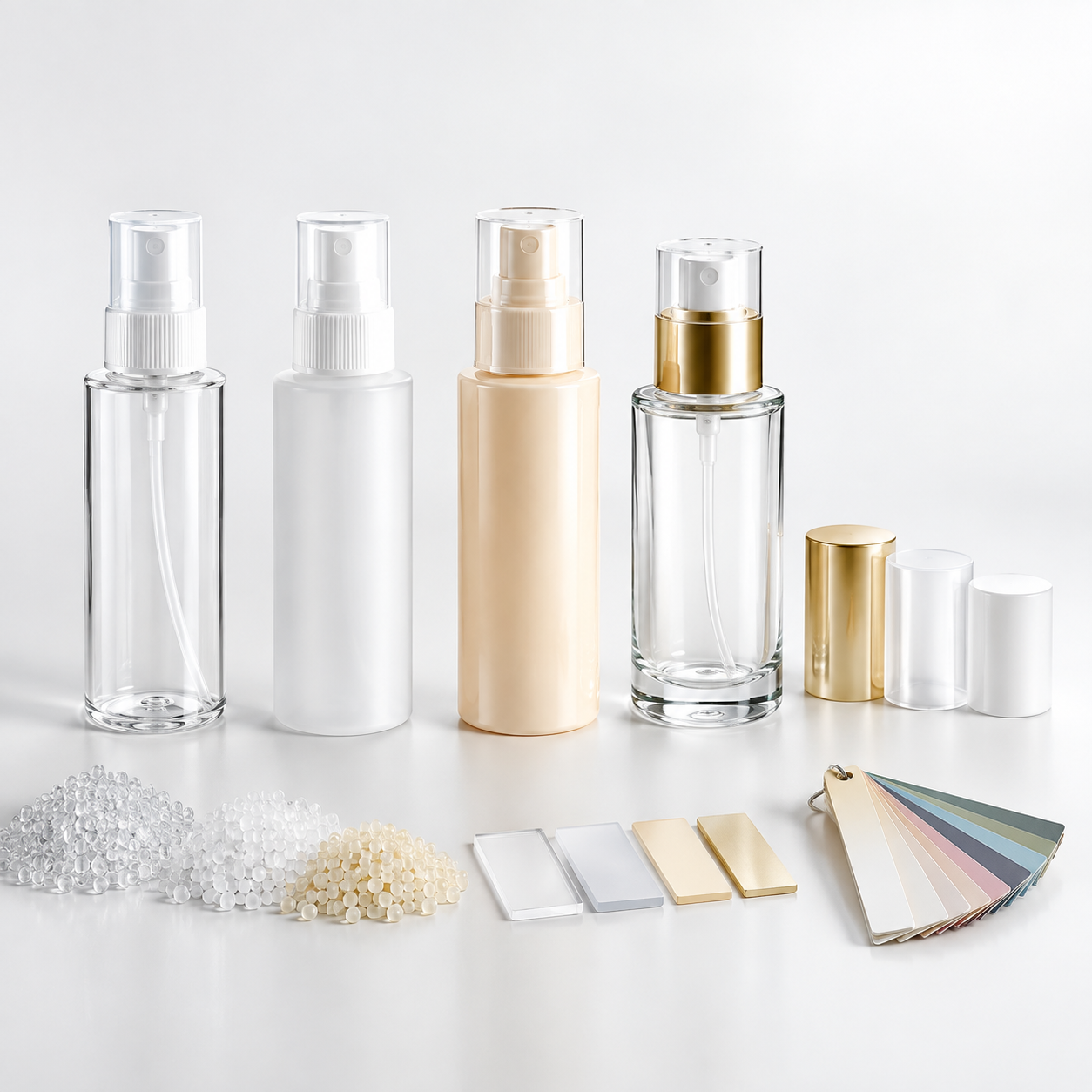
Material selection balances appearance, formula contact, weight, handling and manufacturing method. PET is commonly considered when clarity and a lightweight bottle are desired. PE-family materials may offer a different feel and barrier profile. Glass can provide clarity and weight but requires breakage and shipping review. These are general comparisons; compatibility cannot be concluded from the resin name alone.
Provide a color reference and identify whether it applies to the bottle, sprayer, collar or cap. Confirm whether the target is transparent, translucent or opaque. Supply vector artwork, print colors, decoration dimensions and preferred finish. Because bottle geometry affects the available print area, final artwork should be placed on the supplier’s approved dieline or drawing.
Step 4: Review Samples and Compatibility
Spray packaging samples should progress from basic component screening to production-representative approval samples. An undecorated stock sample can establish size and handling, but it cannot approve a custom color, printed finish or formula performance.
Use the intended formula and filling process whenever practical. Record the test conditions, sample identity, fill level, storage orientation and review intervals so results can be traced. The brand or filler should define the acceptance criteria for its product. YBJ Packaging can discuss sample and compatibility requirements, but final approval depends on the customer’s formula, protocol and application.
Formula Contact, Leakage, Priming and Spray Pattern
Compatibility review should cover every formula-contact component, including the bottle, dip tube, seals and internal sprayer parts. Look for swelling, softening, cracking, discoloration, odor change, blockage or other changes under the brand’s test protocol.
Leakage checks should reflect expected storage, handling and shipping orientations. Priming is the number of actuations needed before the sprayer begins dispensing consistently; define how it will be evaluated. Spray-pattern review can consider cone shape, droplet character, coverage and consistency across repeated actuations. Also check dosage, closure security, actuator recovery and residual product. Acceptance limits depend on the formula and intended consumer experience.
Step 5: Approve Specifications Before Manufacturing
Manufacturing should follow a controlled, approved specification rather than email descriptions alone. The approval record should identify component drawings, materials, colors, capacity, neck finish, sprayer model, dip-tube length, decoration files, approved sample and packing requirements.
- Confirm the final bill of materials for the complete assembly.
- Approve dimensional drawings and artwork placement.
- Approve physical color and decoration samples.
- Complete the customer’s formula and functional review.
- Confirm inspection criteria, packing configuration and shipping marks.
- Obtain the final commercial and production schedule after all details are reviewed.
Any later change to the formula, sprayer or decoration may require renewed testing or approval.
YBJ Packaging Spray Bottle Product References
Existing product pages are useful starting references for shape, dispenser style and presentation. They should not be treated as confirmation that a specific material, capacity, sprayer output, color or decoration is available for every order. Request a current project-specific specification.
Custom Trigger, Plastic Mist and Glass Spray Options
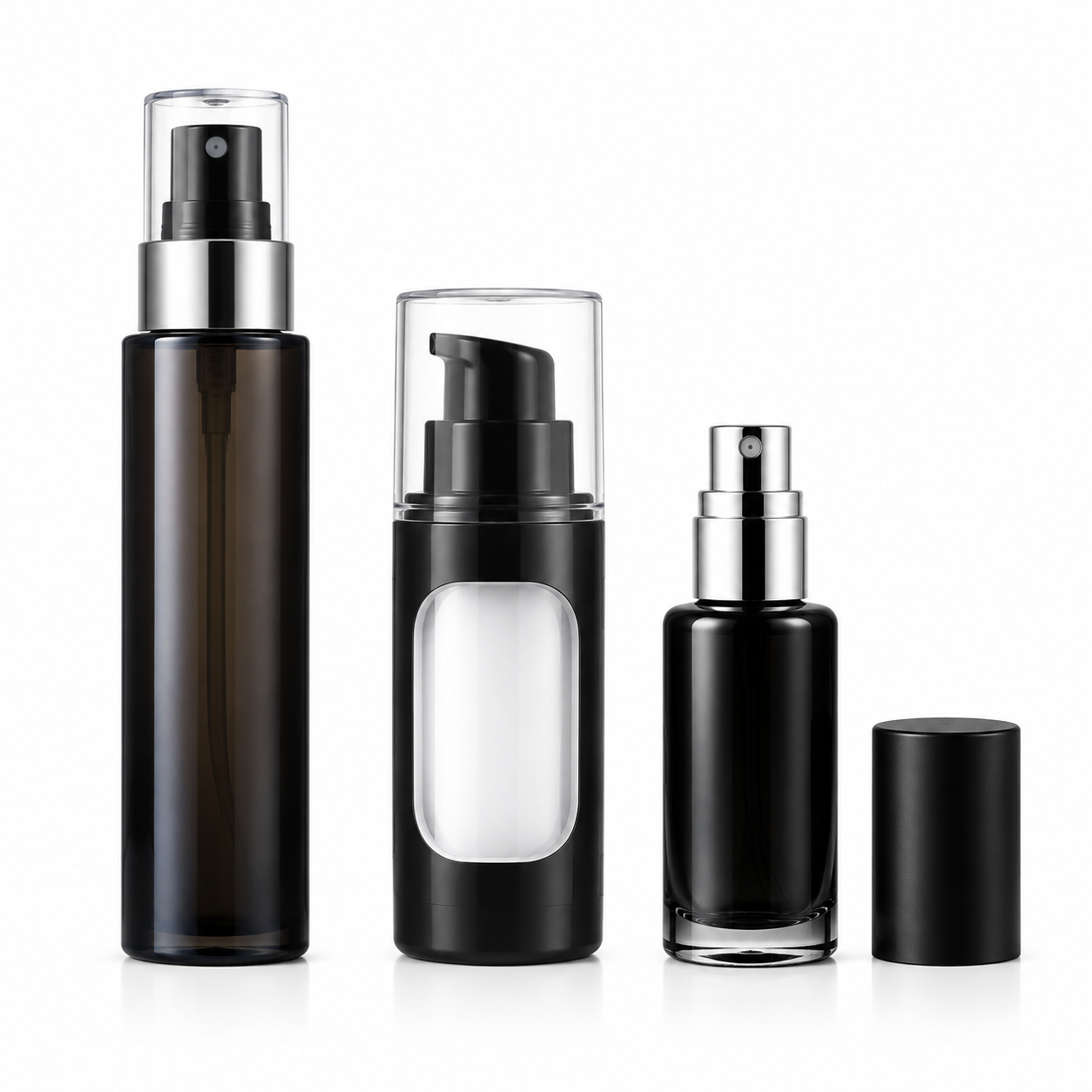
| YBJ reference | Useful for evaluating | Confirm before selection |
|---|---|---|
| Pump spray bottle set | A coordinated bottle family and dispenser presentation | Exact dispenser type, output, material, capacity and formula fit |
| Window cosmetic spray bottle and lotion pump bottle | A windowed presentation and multiple dispensing formats | Window construction, fill visibility, decoration area and closure options |
| Glass mist spray bottle | A compact glass bottle with mist sprayer and overcap | Formula suitability, capacity, sprayer performance and transport protection |
These references focus on cosmetic mist and pump formats. A project requiring a custom trigger spray bottle should identify the desired trigger output, lock, grip and bottle capacity so suitable options can be reviewed separately.
What YBJ Packaging States About Its Manufacturing Support
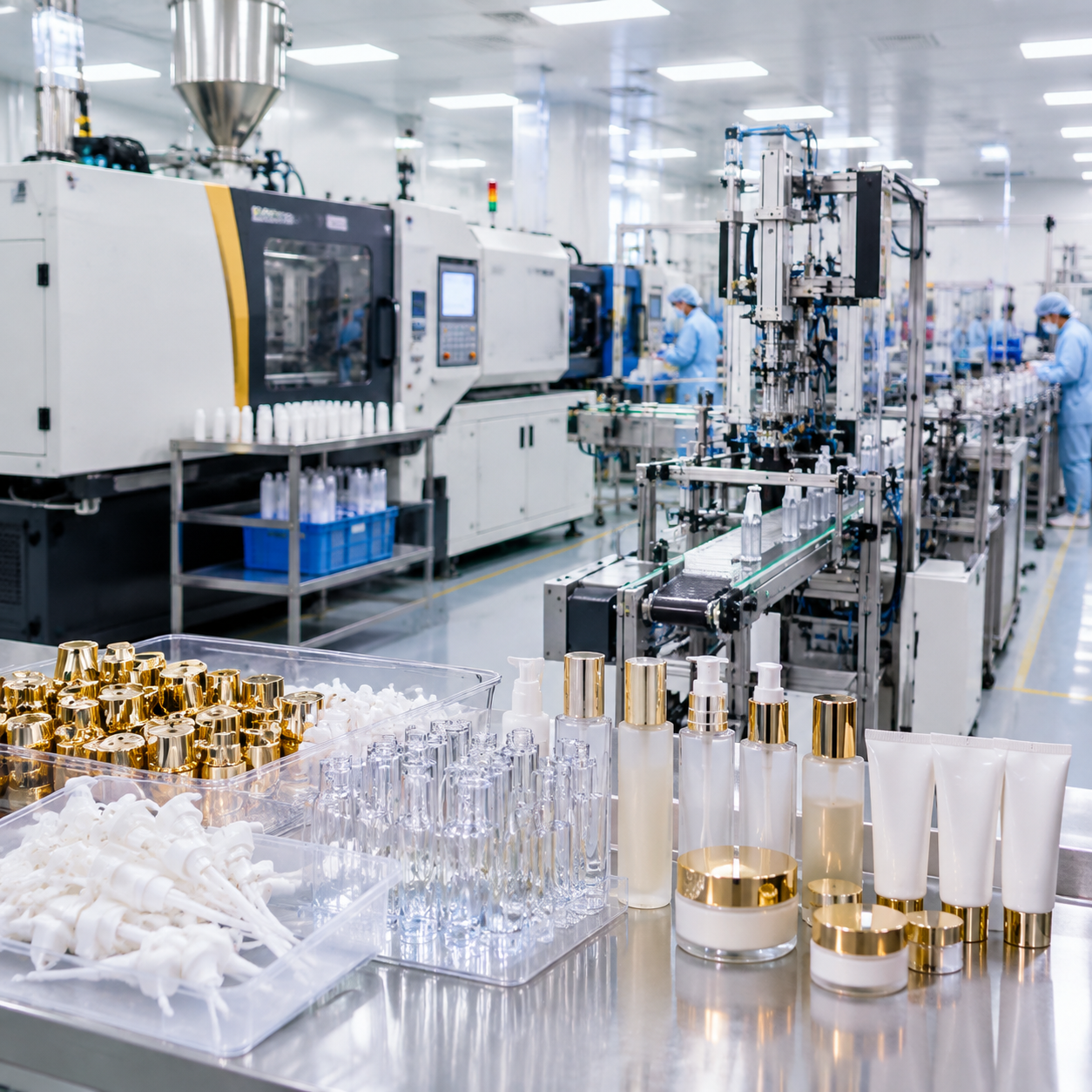
YBJ Packaging describes itself as a China-based OEM and ODM cosmetic packaging manufacturer with more than 20 years of cosmetic-packaging experience. The company states that it provides support from consultation and design through mold development, material selection, manufacturing, assembly, quality checks and worldwide shipping.
The YBJ website also describes a 10,000-square-meter intelligent facility, a Class 10,000 cleanroom, 12 automated assembly lines and 23 Toshiba all-electric injection machines. A cleanroom is a controlled production area designed to limit airborne particles under specified operating conditions. These are company-stated capabilities, not a guarantee that every spray bottle project will use every facility or process. Buyers should confirm the production route, inspection plan and exact specification for their order.
Custom Spray Bottle RFQ Checklist
A complete RFQ allows the manufacturer to evaluate component fit, customization and sampling requirements with fewer assumptions. Include:
- Product type and intended cosmetic or personal-care application
- Formula description, viscosity context and relevant ingredients or filling conditions
- Nominal capacity, target dimensions and preferred bottle shape
- Preferred material and required transparency or opacity
- Fine-mist, treatment or trigger sprayer preference
- Desired dosage, spray pattern, dip-tube arrangement and locking method
- Neck finish if already fixed by another component
- Color references, artwork and decoration method
- Estimated order quantity and whether stock customization or new tooling is acceptable
- Filling application, filling-line constraints and approval protocol
- Ship-to country or destination port and packing requirements
- Target approval date and requested delivery date
MOQ, tooling, price, production time and shipping can only be confirmed after these details and the required approval stages are reviewed.
Frequently Asked Questions About Custom Spray Bottle Projects
The answers below address common sourcing questions about samples, tooling and component selection. Exact recommendations remain dependent on the bottle, formula, filling process, quantity, destination and approved sample.
Discuss Your Custom Cosmetic Packaging
Send YBJ Packaging a clear technical brief to discuss stock bottle customization, component matching, spray packaging samples or new mold development. The team can review the requested format and identify the information needed for a project-specific recommendation and quotation.
FAQ
Can an existing spray bottle be produced in a custom color?
Often, an existing bottle can be evaluated for molded color, coating or another finish. Feasibility depends on the bottle material, selected color, surface treatment, quantity and production process. Approve the color on a physical sample because appearance can vary with resin, wall thickness and lighting.
When does a custom spray bottle require a new mold?
A new mold may be required when existing bottles cannot meet the requested shape, capacity, dimensions, grip, base or decoration panel. YBJ Packaging must review the drawings and manufacturing requirements before confirming tooling feasibility, cost, MOQ or timing.
What is the difference between a fine-mist sprayer and a trigger sprayer?
A fine-mist sprayer is generally designed to atomize a smaller output into a broad mist. A trigger sprayer generally delivers a higher output through repeated finger operation and is often used on larger bottles. Actual output, pattern and formula suitability depend on the selected mechanism and should be tested.
Can water be used to approve a cosmetic spray bottle?
Water may be useful for preliminary mechanical screening, but it does not establish compatibility or spray performance with the finished formula. Viscosity, alcohol, oils, particles and other formula characteristics can change priming, output, spray pattern, sealing and material behavior.
What sample should be approved before manufacturing?
Approve a production-representative complete assembly whenever possible: bottle, sprayer, dip tube, cap or lock, color and decoration. The approval record should also reference drawings, artwork and functional criteria. Formula compatibility remains subject to the customer’s test protocol.
How long does custom spray bottle development take?
Timing depends on whether the project uses stock components or new molds, as well as color matching, decoration, sample iterations, compatibility testing, quantity and approvals. A production schedule should only be confirmed after YBJ Packaging reviews the complete brief.
Request a Custom Spray Bottle Review
Provide your product type, formula or viscosity context, capacity, dimensions, preferred material, closure or sprayer, decoration, estimated quantity, filling application, destination and target date. YBJ Packaging can then discuss suitable samples, compatibility considerations and whether stock customization or mold development should be evaluated. MOQ, tooling, pricing, production time and shipping remain subject to project review and approval.

 English
  Français
  Español