



Table des matières
- Why Cosmetic Spray Bottles Clog or Spray Unevenly
- Sprayer Terms Buyers Should Know
- Common Spray Failures and Likely Causes
- Troubleshooting Comparison Table
- Formula Factors That Influence Spray Performance
- Packaging Components That Must Work Together
- A Pre-Production Spray Test Process
- Selected Fine Mist and Trigger Spray Bottle Options
- What to Send the Supplier for Troubleshooting
- Frequently Asked Questions About Spray Performance
- Discuss a Spray Bottle Sample and Compatibility Review
Reliable spray performance depends on the filled formula and the complete bottle, dip tube, closure and sprayer assembly. Use this guide to isolate common failures and agree on practical checks before production approval.
Why Cosmetic Spray Bottles Clog or Spray Unevenly
Cosmetic spray bottle clogging usually starts with a mismatch between the formula and the spray path, residue drying at the outlet, or a component that does not seal, prime or draw liquid consistently. Test the filled bottle and sprayer together: changing the nozzle alone may not fix an air leak, short dip tube or settling formula.
First determine whether the defect appears on the first use, after storage, only near empty, or across every actuation. That timing helps separate assembly faults from formula changes and in-use residue. A clear liquid that sprays well immediately may still behave differently after storage or repeated use; neither appearance nor an empty-package test establishes compatibility.
Sprayer Terms Buyers Should Know
Sprayer specifications describe different parts of one dispensing system. Ask the supplier to identify each component on the proposed sample so that a change in spray pattern is not confused with a change in bottle capacity or closure fit.
Actuator, Orifice, Dip Tube, Neck Finish and Output
Les actuator is the button or trigger a user presses. The orifice is the outlet opening; its size and internal geometry help shape the spray. The dip tube carries liquid from the bottle to the pump. Finition du col means the bottle opening and its dimensions or threads where the closure attaches. Output, sometimes called dosage, is the measured liquid dispensed per complete actuation under stated test conditions.
A fine mist sprayer is generally selected for a lighter, more dispersed application; a trigger format may suit a different grip and dispensing pattern. Neither term specifies actual droplet size or output for a proposed assembly. Request a spray-pattern sample and a measured output range rather than assuming performance from the product name.
Common Spray Failures and Likely Causes
Clogging, sputtering, poor priming and dripping can look similar to a user but call for different checks. Record the fill level, storage position, number of strokes and time since filling before disassembling a failed unit; otherwise, useful evidence may be lost.
Clogging, Sputtering, Poor Priming and Dripping
Clogging can follow dried residue or particles at the outlet or inside the pump. Sputtering can indicate intermittent liquid pickup, trapped air or inconsistent pump return. Poor priming means the sprayer takes unexpectedly long to begin dispensing and may point to an air leak or intake issue. Dripping can reflect liquid collecting at the actuator, a pattern unsuited to the formula, or incomplete valve closure.
These are diagnostic possibilities, not confirmed causes. Compare several filled units from the same assembly, then repeat with a known control liquid only if its use is appropriate for the components. Keep formula and component changes separate so the result remains interpretable.
Troubleshooting Comparison Table
Use symptoms to choose the next inspection, not to declare a root cause. A failed check should lead to a controlled comparison using the intended formula, filling method and assembled package.
Symptom, Possible Cause and Recommended Check
| Symptom | Possible cause | Recommended check |
|---|---|---|
| No spray after storage | Residue at the orifice; pump not retaining prime | Inspect outlet and compare first-use performance with stored samples. |
| Uneven mist or intermittent stream | Formula settling; air intake; variable actuation | Check formula uniformity and closure fit; repeat full strokes consistently. |
| Sprays upright but sputters when tilted | Dip tube intake exposed above liquid | Measure tube reach and test at the intended fill levels and angles. |
| Many strokes before first spray | Air in pump path; poor seal or intake | Record priming strokes and inspect assembled neck and pump fit. |
| Large drops or wet patch | Formula and outlet combination unsuitable for target pattern | Compare filled samples using the same target distance and stroke. |
| Leak or drip at closure | Gasket, neck finish or assembly mismatch | Inspect seating and perform an agreed filled-package orientation check. |
Formula Factors That Influence Spray Performance
The same sprayer can behave differently with different liquids. Supply the actual formula, or a representative sample approved by your team for evaluation, because appearance alone does not establish viscosity, residue behavior or compatibility with wetted components.
Viscosity, Suspended Particles, Foaming and Drying Residue
Viscosité describes resistance to flow; a thicker formula may draw through the pump and break into droplets differently. Suspended particles can settle or obstruct a narrow passage. Foaming may make priming and measured output less consistent. A formula that leaves drying residue near the orifice may spray well initially but fail after pauses in use.
Ask the formulator whether the product must be shaken, whether ingredients settle, and whether temperature or storage changes its flow. Do not assume a larger opening solves every issue: it may change mist quality or output. Changes to the formula or sprayer should be assessed together and approved on filled samples.
Packaging Components That Must Work Together
Spray bottle compatibility is an assembly question, not just a bottle-material question. Confirm that the bottle opening, closure, seal, dip tube and actuator are specified as one tested configuration, including any planned decoration that could affect filling or handling.
Bottle, Closure, Gasket, Dip Tube and Actuator
Les bottle must suit the fill volume, formula and handling conditions. Its closure must fit the neck finish, while a gasket, where used, helps seal the joint. Dip tube length should be checked against the bottle’s internal shape: too short can leave usable liquid out of reach; an unsuitable cut or placement can interfere with intake. The actuator and pump determine the user action and contribute to the resulting pattern.
Material choice also involves trade-offs. A clear bottle makes fill level and visible settling easier to inspect, while an opaque or decorated bottle may better suit the intended presentation. Neither choice proves formula compatibility or light protection without project-specific evaluation. Review the proposed assembly, fill process and inspection points together.
A Pre-Production Spray Test Process
Approve spray performance against a written method on representative, filled assemblies. The sequence below is a proposed buyer-supplier workflow, not a published YBJ test standard; sample count, conditions and pass criteria need agreement for each project.
Conditioning, Priming, Output Consistency and Storage Orientation
- Define the sample. Record formula version, fill volume, bottle and sprayer identifiers, dip tube dimensions, assembly method and target spray pattern.
- Condition filled units. Agree on storage time and conditions that reflect the intended supply chain and use. Note any formula settling before testing.
- Measure priming. From a defined starting condition, count complete strokes until the first consistent spray; retain any units that fail for inspection.
- Check output and pattern. At a fixed stroke method and target distance, compare consecutive actuations for visible pattern, dripping and measured dispensed amount. Agree on acceptable variation before judging results.
- Repeat after storage. Examine upright and other relevant orientations for leakage and restart behavior, then inspect near-empty pickup where relevant.
- Approve the configuration. Document findings and any component or formula changes; retest the revised filled assembly before production approval.
YBJ Packaging describes consultation, design, manufacturing, assembly and quality checks as part of its service. Confirm the exact test method, acceptance criteria and responsibilities for your project. A broader cosmetic packaging sampling process can help distinguish functional review from final production approval.
Selected Fine Mist and Trigger Spray Bottle Options
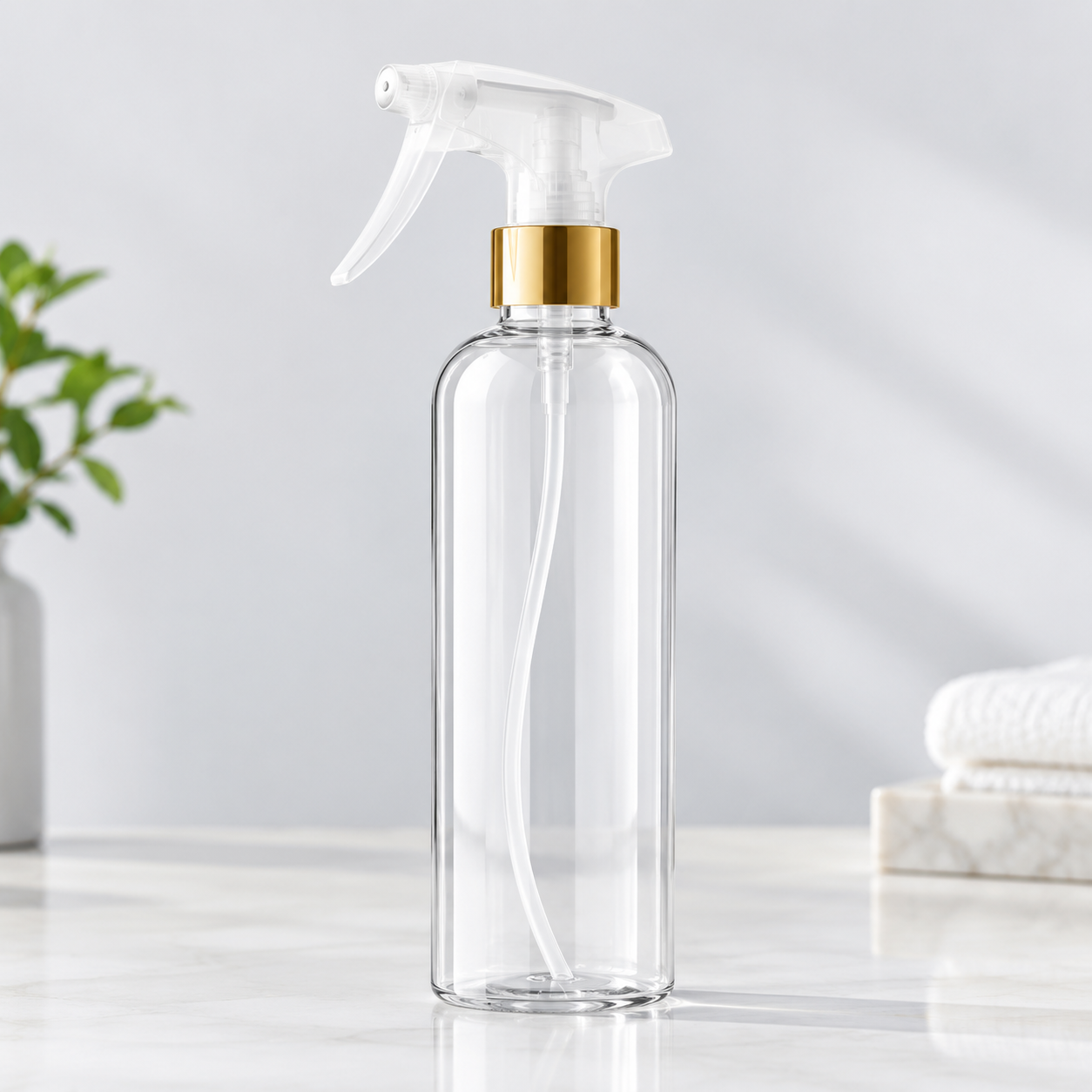
YBJ’s listed spray bottles are useful starting points for a sample discussion, not evidence that any particular formula will spray successfully. Product-page names and photos show format options; confirm the supplied sprayer type, material, capacity, neck finish and measured output for the exact item quoted.
| Listed product | Format to explore | Question for the supplier |
|---|---|---|
| Flacon pompe cosmétique rose bleu | Compact pump-actuated spray presentation | Which actuator and spray pattern are available for my formula? |
| Flacon pulvérisateur en plastique très prisé | Trigger-style format shown in the product image | Is the pictured trigger configuration available with my required bottle and test sample? |
| flacon pulvérisateur en plastique transparent | Clear bottle with pump-style sprayer shown in the product image | Can I assess fill visibility, dip tube reach and spray performance on a filled sample? |
For fine mist sprayer problems, compare the desired coverage and hand feel with the actual filled sample. For trigger sprayer testing, also check repeatable full strokes and handling at the intended fill levels. The better format depends on application, formula and approved assembly rather than the product photograph alone.
What to Send the Supplier for Troubleshooting
A useful troubleshooting brief identifies both the failed condition and the intended finished package. Send the product type; formula or viscosity context, including particles or settling; nominal capacity and bottle dimensions; preferred material; closure, pump or trigger preference; decoration; estimated quantity; filling application; destination; and target date.
Add the formula version, fill level, photos or video of the spray, the number of priming strokes, when the failure appears, storage orientation and any available component identifiers. State the output and pattern you want, but distinguish targets from measured results. Ask which samples and checks are needed before approval. The cosmetic packaging quality inspection checklist can help organize incoming and pre-shipment inspection questions; it does not replace formula-specific spray testing.
Frequently Asked Questions About Spray Performance
These answers identify the next useful check. Final component selection and acceptance criteria depend on the formula and approved sample.
Discuss a Spray Bottle Sample and Compatibility Review
Share your target spray pattern and the filled-package details with YBJ Packaging to discuss suitable samples and project-specific checks. Compatibility, tooling, MOQ, pricing, production time and shipping require review of the proposed configuration and approval requirements.
FAQ
Can a shorter dip tube cause sputtering?
Yes. If the intake rises above the liquid at the intended fill level or use angle, it may draw air. Check tube reach in the actual bottle and test upright and tilted use as applicable.
Will a larger nozzle prevent every clog?
No. A different outlet may change the spray pattern without resolving settling particles, drying residue, an air leak or a pump-path obstruction. Compare filled samples after identifying the likely cause.
Should output be tested with water or the cosmetic formula?
Use the intended formula, or an agreed representative sample, for approval. Water may help isolate a mechanical issue but cannot establish how the finished product will spray or interact with the assembly.
When should a stored spray bottle be retested?
Agree on storage intervals and orientations relevant to the product and supply chain. Retest priming, pattern, output and leakage after conditioning, and set acceptance criteria before approval.
Request a Spray Bottle Sample and Quote Review
Tell YBJ Packaging your product type, formula or viscosity context, capacity, dimensions, preferred material, closure or pump, decoration, estimated quantity, filling application, destination and target date. Include any clogging or uneven-output evidence and ask about filled-sample compatibility checks. Specifications, MOQ, tooling, pricing, production time and shipping can be discussed after project review and sample requirements are defined.

 English
  Français
  Español