



Table des matières
- Which Spray Bottle Material Should You Choose?
- PET, HDPE and Glass in Plain English
- How Material Structure Affects Packaging Decisions
- Spray Bottle Material Comparison Table
- Clarity, Weight, Impact Risk, Decoration and Use-Case Fit
- When PET Spray Bottles Are a Practical Option
- When HDPE Spray Bottles May Fit the Project
- When Glass Spray Bottles Support the Product Positioning
- Weight, Breakage and Sprayer-Matching Considerations
- Material Compatibility Is Formula-Specific
- Testing the Bottle, Gasket, Dip Tube and Sprayer Together
- Selected Plastic and Glass Spray Bottle Options
- Steps From Material Selection to Approval Sample
- Spray Bottle Quotation Checklist
- Frequently Asked Questions About Spray Bottle Materials
- Request a Material and Packaging Review
This B2B spray bottle material guide compares PET, HDPE and glass for cosmetic and personal-care packaging, including practical trade-offs in appearance, handling, decoration, compatibility and sprayer selection.
Which Spray Bottle Material Should You Choose?
PET is often a practical starting point when a brand wants clarity, low package weight and broad design flexibility. HDPE may be more appropriate when toughness, an opaque appearance or a squeezable bottle body matters. Glass can support a heavier, premium presentation, but it increases shipping weight and breakage risk.
The final choice cannot be made from appearance alone. Buyers should evaluate the formula, viscosity, spray pattern, filling process, bottle capacity, neck finish, closure system, distribution route and approved sample. A finition du col is the standardized combination of opening diameter and thread or crimp geometry used to connect the bottle and sprayer.
PET, HDPE and Glass in Plain English
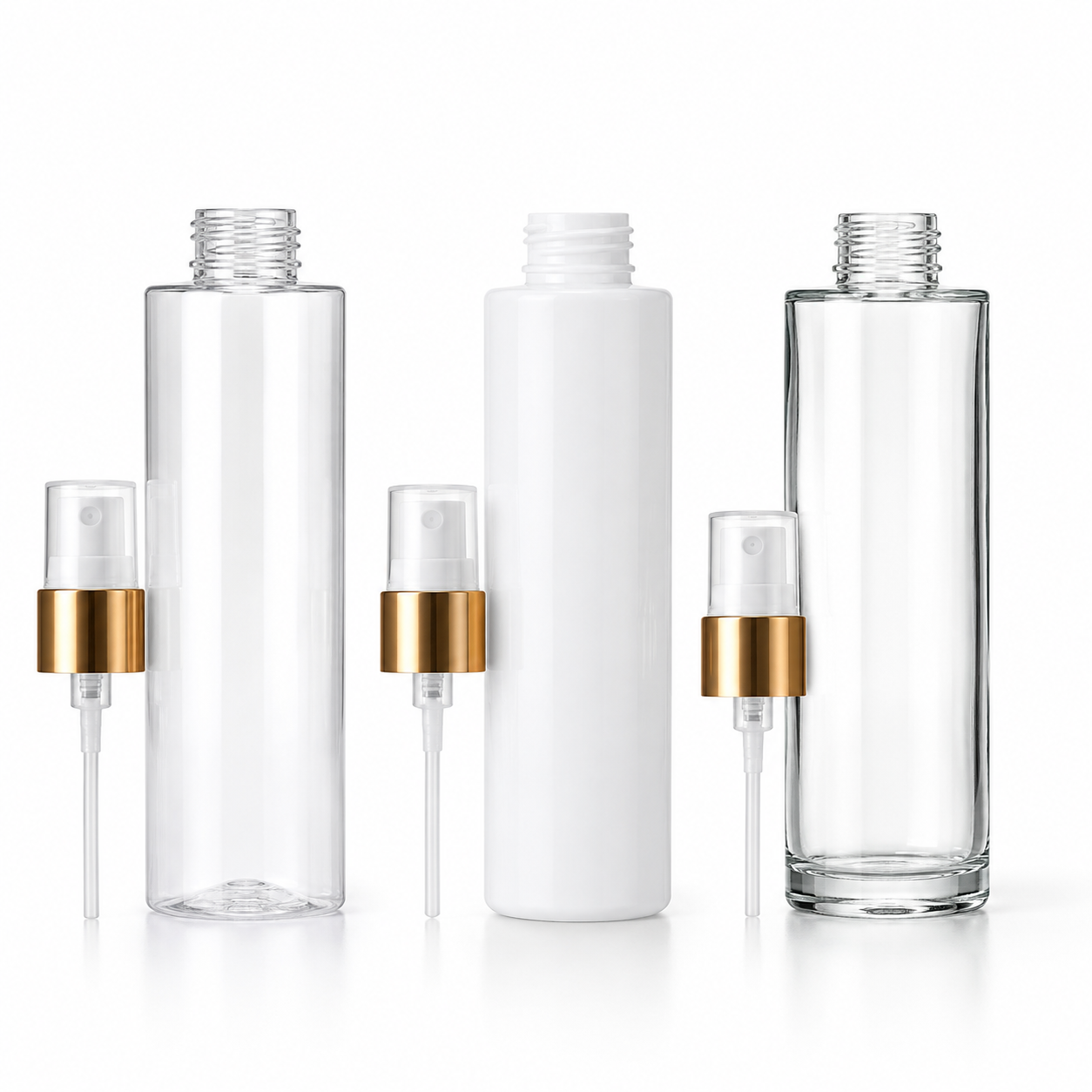
PET and HDPE are plastic packaging materials with different structures and handling characteristics, while glass is a rigid inorganic material. PET, or polyethylene terephthalate, can provide glass-like clarity in a lightweight bottle. HDPE, or high-density polyethylene, is commonly recognized by its naturally translucent-to-opaque appearance and resilient feel. Glass provides high rigidity, substantial weight and a premium tactile impression.
These descriptions are general material tendencies, not compatibility guarantees. Colorants, wall thickness, bottle geometry, processing conditions and decoration can change the appearance and practical performance of the finished package.
How Material Structure Affects Packaging Decisions
Material structure affects rigidity, surface feel, visibility, dimensional behavior and how the bottle responds to impact or squeezing. PET bottles are generally rigid enough for clear retail presentation while remaining lighter than comparable glass. HDPE bottles tend to flex more and hide the formula. Glass retains its shape and can feel substantial, but it does not absorb impact in the same way as plastic.
The package must also work as a system. A rigid bottle does not correct a poorly matched sprayer, and a chemically suitable bottle does not establish that every gasket, spring, dip tube or decoration is suitable for the formula.
Spray Bottle Material Comparison Table
The table gives buyers a first-pass comparison, but it should not replace formula and assembly testing.
| Factor | PET | PEHD | Verre |
|---|---|---|---|
| Typical appearance | Clear, translucent or colored | Translucent or opaque | Clear, frosted or colored |
| Package weight | Low | Low | Higher |
| Impact behavior | Good everyday handling, subject to design | Generally tough and resilient | Breakage risk requires evaluation |
| Body flexibility | Usually relatively rigid | Usually more squeezable | Rigid |
| Product visibility | High with clear grades | Limited | High with clear glass |
| Decoration direction | Printing, labels, color and selected finishes | Printing, labels and molded color | Printing, coating, frosting and labels |
| Typical positioning | Clear, lightweight mass or prestige-mass packaging | Practical, opaque and handling-focused packaging | Premium, fragrance-led or display-focused packaging |
| Principale limite | Compatibility and heat conditions require review | Lower clarity and a different surface aesthetic | Weight, breakage and freight exposure |
Clarity, Weight, Impact Risk, Decoration and Use-Case Fit
Choose clarity when seeing the formula or fill level contributes to the user experience; choose opacity when hiding the contents or creating a solid-color presentation is more important. For travel, e-commerce and larger capacities, PET or HDPE can reduce package weight and avoid glass fragments if a bottle is dropped. Glass may still be suitable when its visual and tactile value justifies more protective secondary packaging.
Decoration should be evaluated on the actual substrate and bottle shape. Print adhesion, color appearance, label bonding and coating durability can vary. Review artwork areas, handling points and filling-line contact before approving a finish. The cosmetic packaging decoration guide explains common processes and approval considerations.
When PET Spray Bottles Are a Practical Option
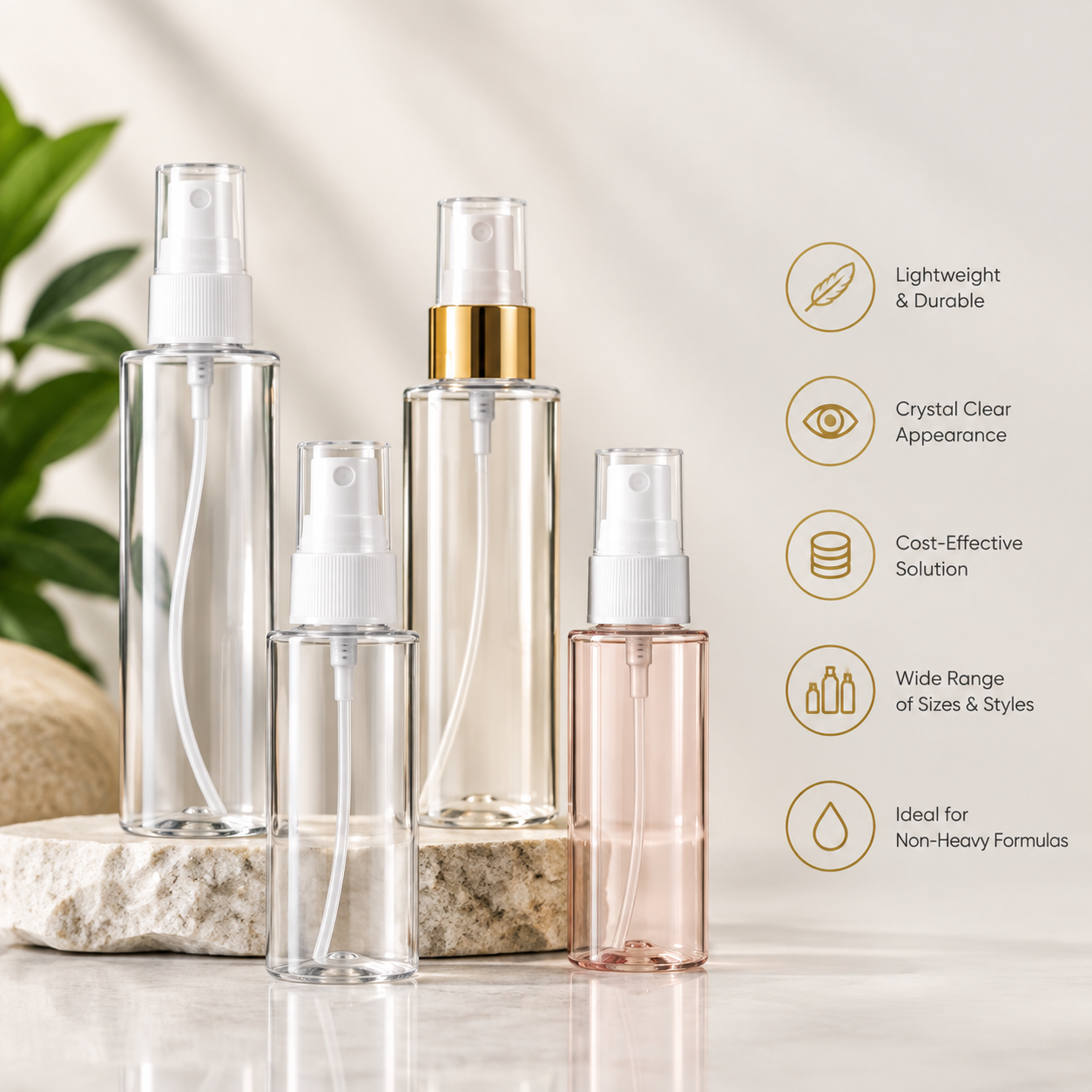
PET spray bottles are practical when buyers need a clear, lightweight container with strong shelf visibility. Common project directions include facial mists, hair products, body sprays and other low-viscosity personal-care formulas, provided the complete package passes compatibility and dispensing checks.
PET can support transparent, translucent or colored presentations, but the formula, storage temperature and filling method must be disclosed. Hot filling or exposure to aggressive ingredients may change the material decision. Buyers should also confirm whether the bottle requires a fine-mist pump, treatment pump or trigger sprayer; each option has different output and neck requirements.
When HDPE Spray Bottles May Fit the Project
HDPE spray bottles may fit projects that prioritize resilience, opacity and a practical grip over glass-like clarity. The material is often considered for hair care, body care, household-adjacent personal care and larger trigger spray bottles, subject to formula-specific testing.
HDPE’s more flexible body can influence how the package feels in hand and how it behaves on a filling line. Buyers should specify the desired wall feel, color, shoulder shape and panel resistance. An opaque bottle can hide the product and fill level, so a label, window or other fill-control method may be needed depending on the operation.
When Glass Spray Bottles Support the Product Positioning
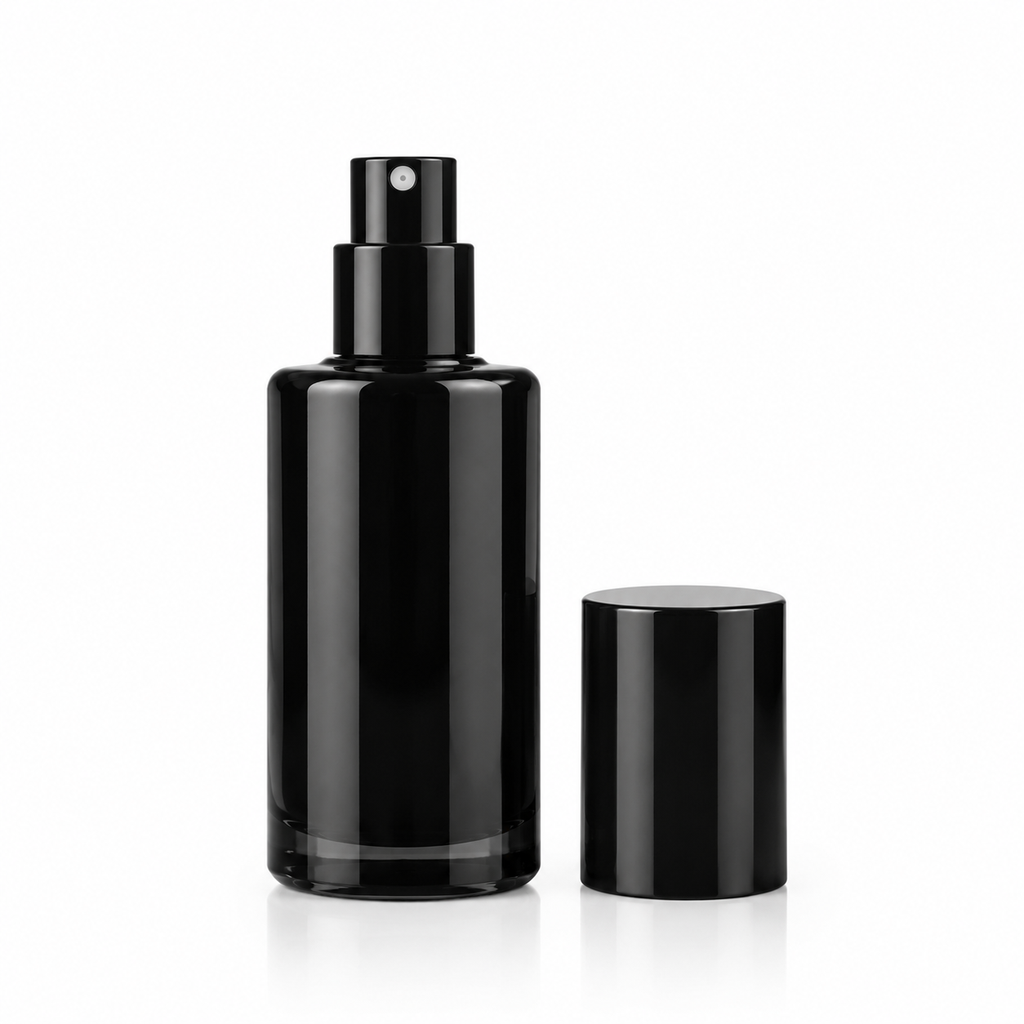
Glass spray bottles can support fragrance, facial mist and premium skincare positioning when weight, rigidity and visual depth are part of the brief. Clear, colored, frosted or coated presentations can create different shelf effects, but each finish needs an approved physical sample.
Glass is not automatically compatible with every formula, and the bottle is only one part of the package. Review the sprayer, gasket, dip tube, cap and any internal metal exposure. Buyers comparing broader format trade-offs can consult this glass versus plastic cosmetic packaging guide.
Weight, Breakage and Sprayer-Matching Considerations
Glass requires closer attention to unit weight, carton design, dividers, pallet configuration and destination handling. A bottle that performs acceptably as a single sample may behave differently in a decorated, filled and packed shipment.
The sprayer must match the bottle’s neck finish and sealing surface. Confirm thread or crimp requirements, dip-tube length, cap fit, spray direction and torque or crimping parameters. For portable products, assess accidental actuation and cap retention. The product listing for a glass mist spray bottle provides one format reference; exact material, component and decoration specifications should be confirmed for the intended project.
Material Compatibility Is Formula-Specific
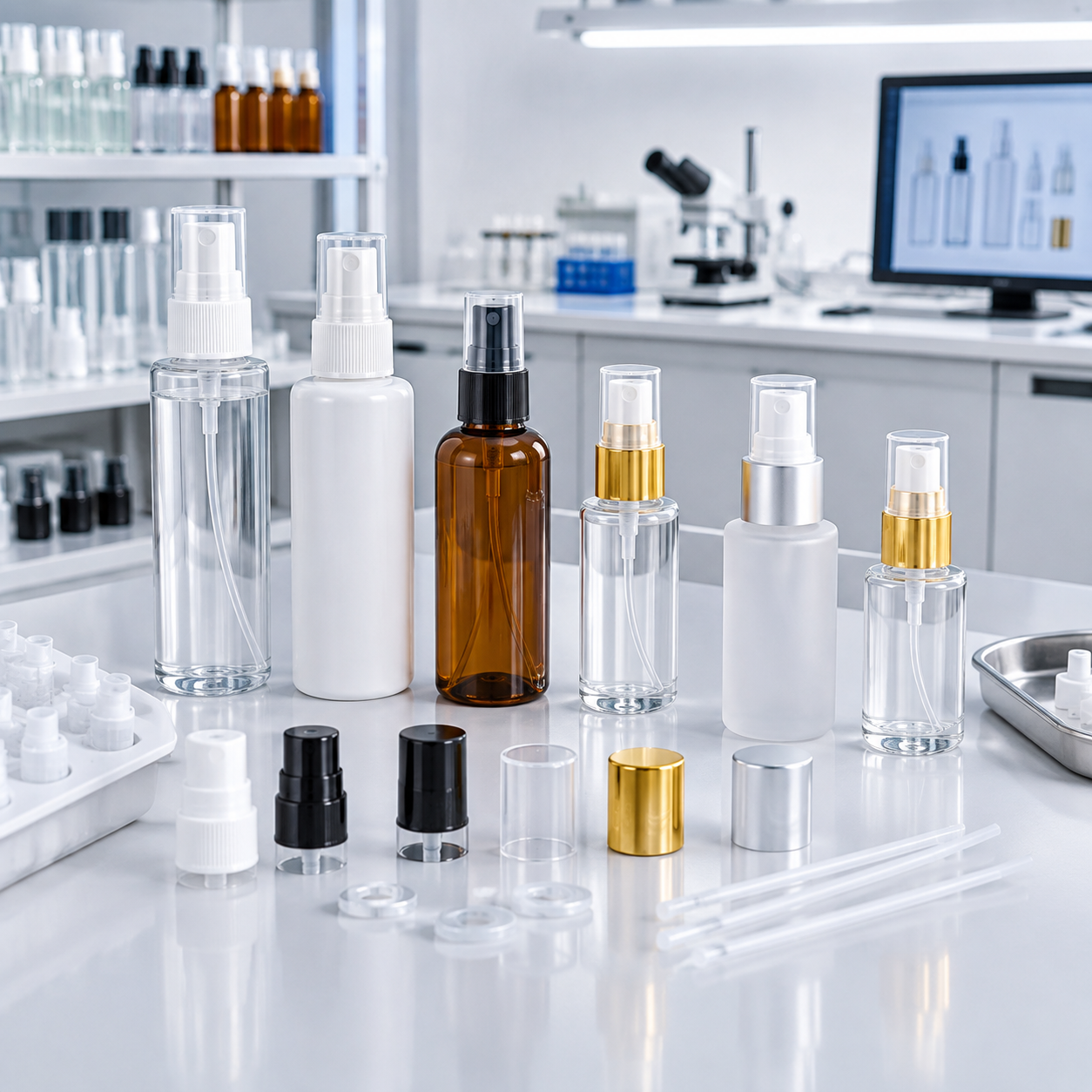
No spray bottle material should be approved solely from a generic compatibility chart. Alcohol level, oils, solvents, fragrance components, surfactants, pH, viscosity and other formula characteristics can affect the bottle, sprayer and decoration differently over time.
Compatibility testing should use the intended formula and production-representative components under conditions relevant to filling, storage and distribution. Watch for swelling, cracking, stress whitening, discoloration, leakage, odor transfer, coating damage, reduced output and changes in spray pattern. Acceptance criteria and test duration should be agreed by the brand, filler and packaging supplier for the specific project.
Testing the Bottle, Gasket, Dip Tube and Sprayer Together
Test the filled package as a complete assembly because the formula contacts more than the bottle wall. The gasket provides the seal beneath the sprayer, the dip tube draws product from the bottle, and the pump contains internal passages and moving parts. Posologie means the nominal amount dispensed per full actuation, while spray pattern describes how that output is distributed.
Evaluate upright, inverted and side storage where relevant. Check leakage, priming, output consistency, clogging, cap security and evacuation performance. Trigger spray bottles also require attention to trigger force, nozzle settings and lock features. Results depend on the formula, fill level, headspace, actuator design and test conditions.
Selected Plastic and Glass Spray Bottle Options
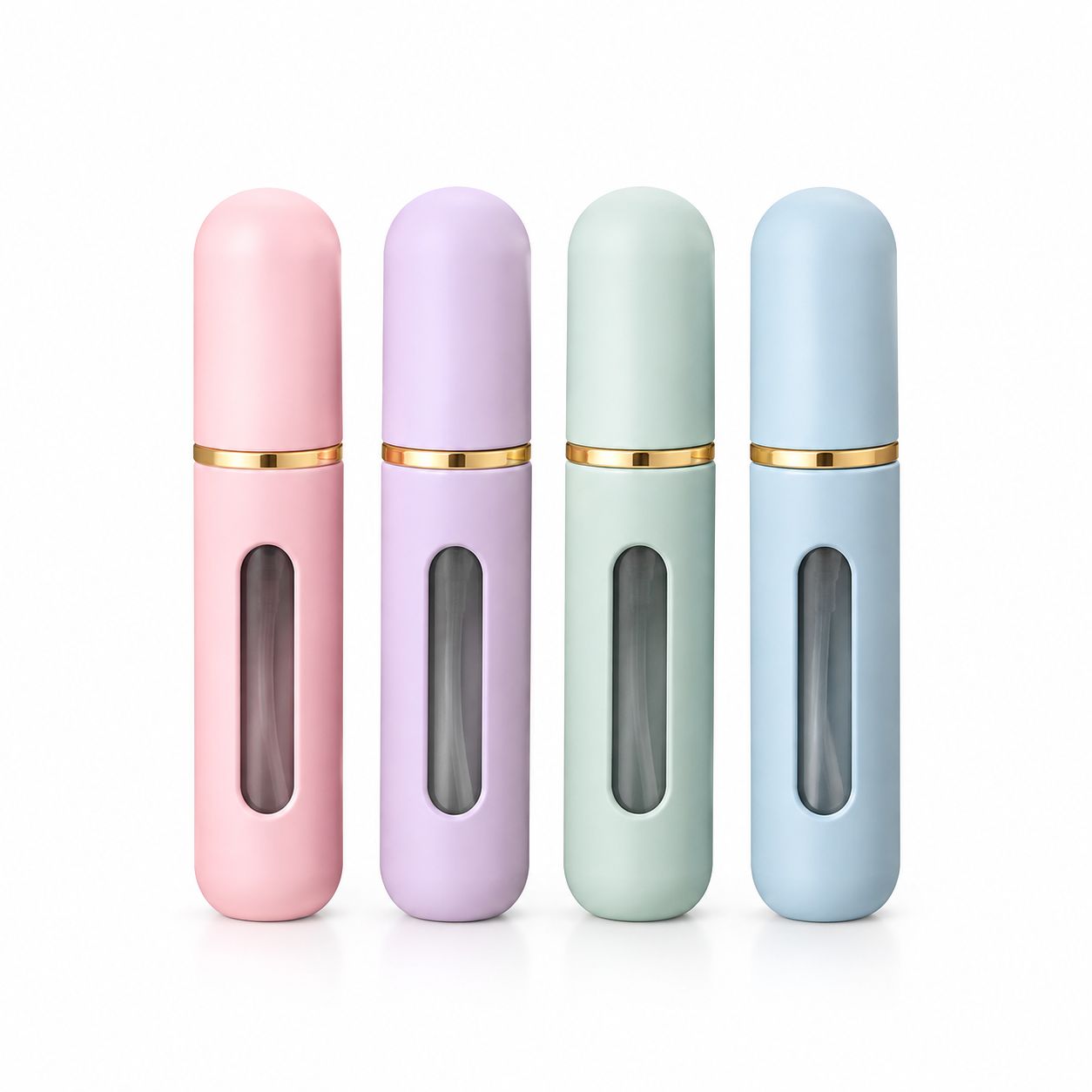
These existing YBJ product pages provide starting references for different spray-package directions. Availability and exact specifications require project review.
| Reference option | Format direction | Points to confirm |
|---|---|---|
| Sprayer glass mist bottle | Compact glass bottle with mist sprayer | Capacity, glass color, neck, sprayer, formula compatibility and decoration |
| Perfume atomizer with silicone case | Portable atomizer format with an external case | Fill method, capacity, actuator, case color, leakage testing and destination requirements |
| Pump spray bottle set | Coordinated bottle and pump presentation | Whether the dispenser suits the intended viscosity, dosage, closure fit and use case |
A product image or listing is not an approval sample. Confirm dimensions, materials, decoration and component construction before ordering.
Steps From Material Selection to Approval Sample
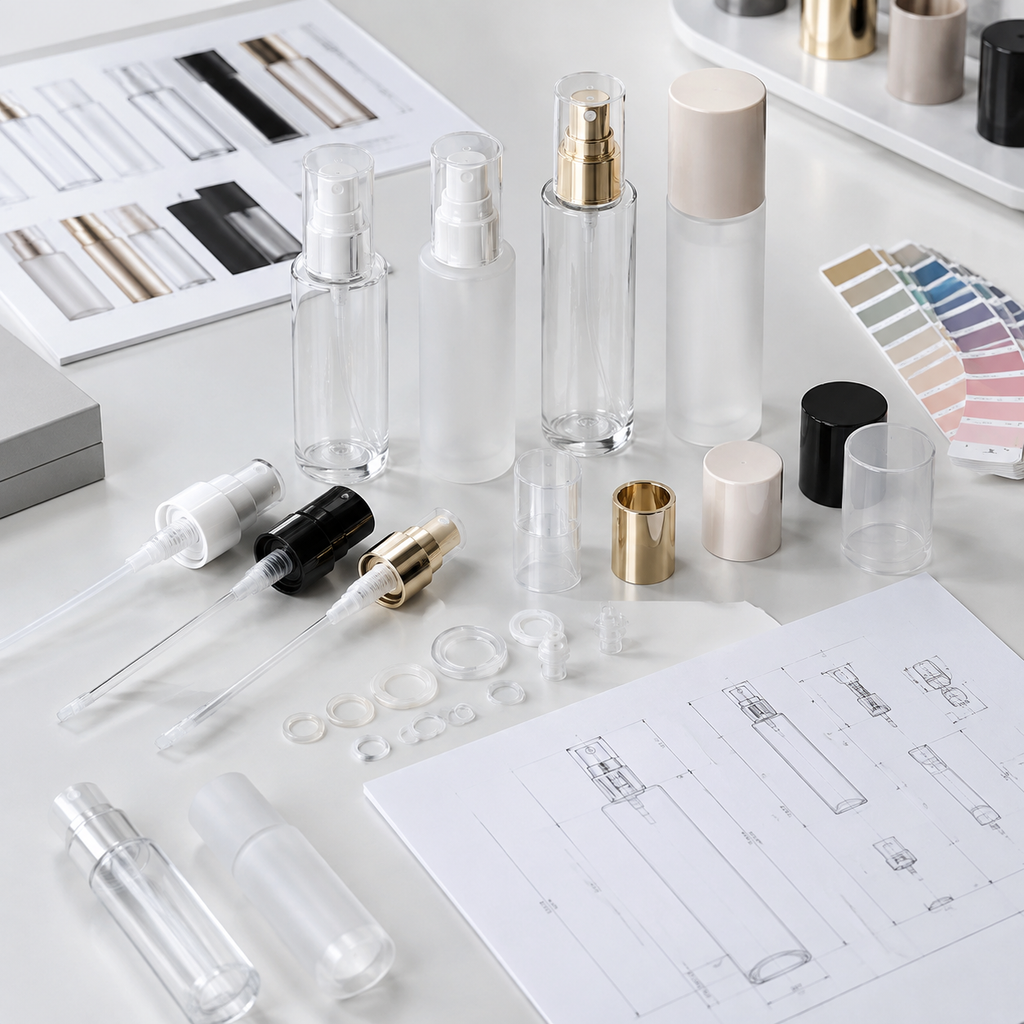
A controlled development process turns the material preference into a testable cosmetic spray packaging specification.
- Define the product. Share formula context, viscosity, capacity, application, fill method and destination.
- Shortlist bottle materials. Compare PET, HDPE and glass against appearance, handling, shipping and compatibility needs.
- Select the dispensing system. Define fine mist, treatment pump or trigger sprayer, including dosage and spray-pattern expectations.
- Confirm interfaces. Review neck finish, gasket, dip tube, cap, thread engagement and filling-line requirements.
- Develop decoration. Check print area, color targets, label dimensions, coating and artwork orientation on the selected bottle.
- Test representative assemblies. Conduct compatibility, functional, leakage and transport-related evaluations using agreed criteria.
- Approve the sample and specification. Record the accepted bottle, components, colors, dimensions, decoration and packing method before production.
YBJ Packaging states that it offers support from consultation and design through mold development, material selection, manufacturing, assembly, quality checks and worldwide shipping. Its website also describes more than 20 years of cosmetic-packaging experience, a 10,000 m² intelligent facility, a Class 10,000 cleanroom, 12 automated assembly lines and 23 Toshiba all-electric injection machines. A cleanroom is a controlled production area designed to limit airborne particles. Buyers should confirm which capabilities, processes and conditions apply to their specific package.
Spray Bottle Quotation Checklist
A detailed brief helps the supplier identify viable materials and components before discussing tooling, pricing or timing. Include:
- Product type and intended application
- Formula characteristics, viscosity and alcohol or oil context where relevant
- Target capacity, bottle dimensions and preferred shape
- Preferred PET, HDPE or glass material, including color and clarity
- Neck finish, closure, mist pump or trigger sprayer requirements
- Target dosage and spray pattern
- Decoration artwork, colors, label area and finish
- Estimated order quantity and whether a custom mold is being considered
- Filling method, fill temperature and line constraints
- Sales destination, packing requirements and target date
MOQ, tooling, pricing, production time and shipping depend on the selected design, quantity, decoration, destination and approval process.
Frequently Asked Questions About Spray Bottle Materials
The questions below address common early-stage decisions about PET, HDPE and glass. Final recommendations remain dependent on the formula, dispensing components, filling operation and approved samples.
Request a Material and Packaging Review
Send YBJ Packaging your formula context, bottle capacity, material preference and dispensing requirements for a project-specific review. The team can discuss available formats, custom development, decoration and sample planning, subject to technical and commercial evaluation.
FAQ
Is PET or HDPE better for a cosmetic spray bottle?
Neither material is universally better. PET is generally preferred when clarity and a more rigid, glass-like appearance matter. HDPE may be preferred for opacity, resilience and a more flexible body. Confirm the decision through formula compatibility, dispensing and filling-line tests.
Can glass spray bottles be used for facial mists?
Glass can be considered for a facial mist when it matches the positioning and the complete package passes compatibility, leakage, spray and handling evaluations. Weight, drop risk, cap security and protective shipping materials also need review.
Are trigger sprayers suitable for all three bottle materials?
Trigger sprayers can be paired with compatible PET, HDPE or glass bottles, but the neck finish, sealing surface, bottle stability and intended output must match. Larger trigger heads may also affect package balance and carton dimensions.
What is the difference between a fine-mist sprayer and a trigger sprayer?
A fine-mist sprayer usually produces a smaller output and finer spray for facial, fragrance or hair applications. A trigger sprayer is operated with one or more fingers and commonly supports higher output or broader coverage. Actual dosage and pattern depend on the selected mechanism and formula.
Does an opaque bottle protect every light-sensitive formula?
No. Opacity alone does not establish adequate light protection or product stability. The brand or formula owner should define the required protection and validate the filled package under appropriate conditions.
When is a custom spray bottle mold necessary?
A custom mold may be considered when available bottles cannot meet the required shape, dimensions, capacity, branding or filling-line interface. Tooling cost, quantity, development time and manufacturability must be reviewed before proceeding.
Request a Spray Bottle Material Review
Contact YBJ Packaging with your product type, formula or viscosity context, capacity, dimensions, preferred material, closure or pump, decoration, estimated quantity, filling application, destination and target date. Request a sample and compatibility discussion before approving the package. MOQ, tooling, pricing, production time and shipping will be confirmed only after the project details are reviewed.

 English
  Français
  Español