

Table des matières
- Quick answer: how is cosmetic packaging color approved?
- Pourquoi la couleur varie-t-elle selon les matériaux et les finitions ?
- Substrate and surface effects
- Printing, coating and molded color
- Color approval comparison table
- Artwork, reference standards and samples
- Production inspection considerations
- Questions for a packaging supplier
- FAQ
Cosmetic packaging color matching requires more than sending a digital artwork file. Brands should define the substrate, decoration process, reference standard and approval sample before production, because the same color can look different on PETG, AS, glass, coatings and printed surfaces.
Quick answer: how is cosmetic packaging color approved?
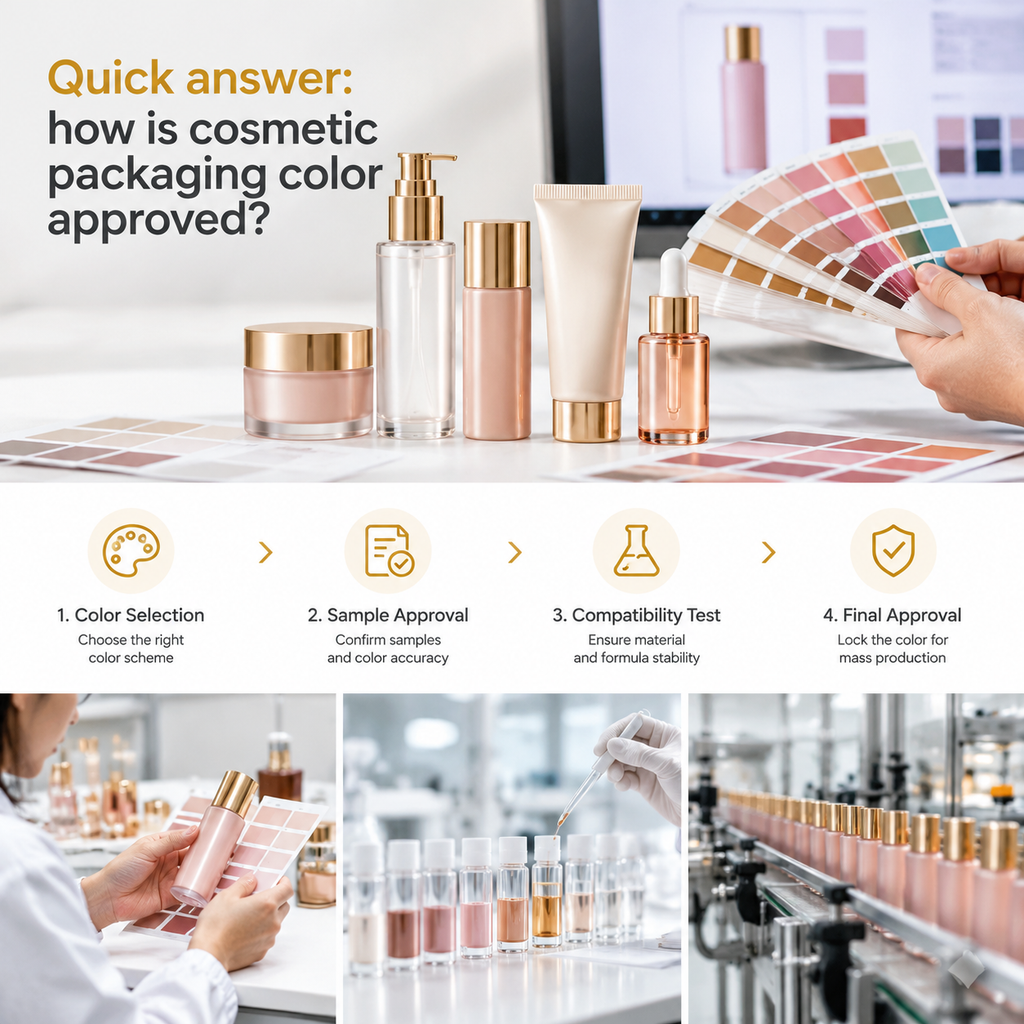
Brands approve cosmetic packaging color by evaluating a physical sample made with the intended material, surface finish and decoration process—not by approving a screen image alone. A practical approval record should identify the color reference, substrate, finish, decoration method, tolerance or visual standard, and the person authorized to sign off.
For cosmetic packaging color matching, provide the supplier with the package format, material, decoration location, target color reference and intended finish. Request a development sample or color drawdown, compare it under agreed lighting, and approve a representative sample before mass production. The final appearance remains project-dependent and should be confirmed against the approved sample.
Key takeaways
- Digital artwork shows design intent, but it is not a reliable physical color standard.
- Pantone or another physical reference can guide matching, but the substrate and process still affect the result.
- Approve the complete decorated component, including color, gloss, opacity, print position and any metallic effect.
- Confirm how production variation will be inspected and recorded before placing the order.
Pourquoi la couleur varie-t-elle selon les matériaux et les finitions ?
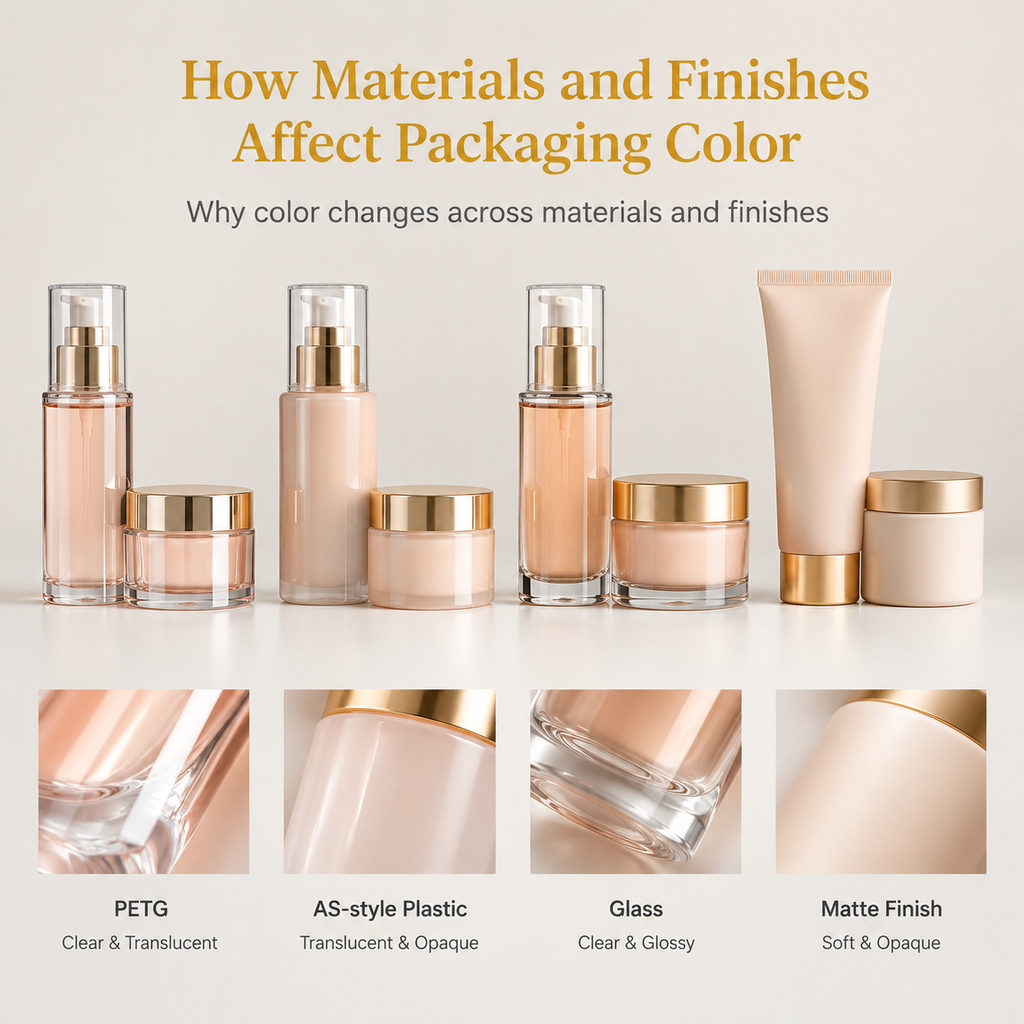
A brand color is not reproduced in isolation. It is seen through or on a particular substrate, surface texture and decoration layer. A translucent PETG bottle, an opaque AS component, a coated glass container and a molded color closure may use the same color reference but produce different visual results.
Color can change because of light transmission, background color, surface reflectivity, texture, gloss level, coating thickness, ink coverage and the interaction between multiple layers. A matte surface scatters light and usually appears softer than a high-gloss surface. A transparent or translucent component may show the formula, inner bottle or background through the color. Metallic decoration can also alter how the eye perceives adjacent colors.
In plain terms, the substrate is the material receiving or containing the color, while the finish is the final surface appearance, such as glossy, matte, frosted or metallic. Both should be included in the color brief.
Substrate and surface effects
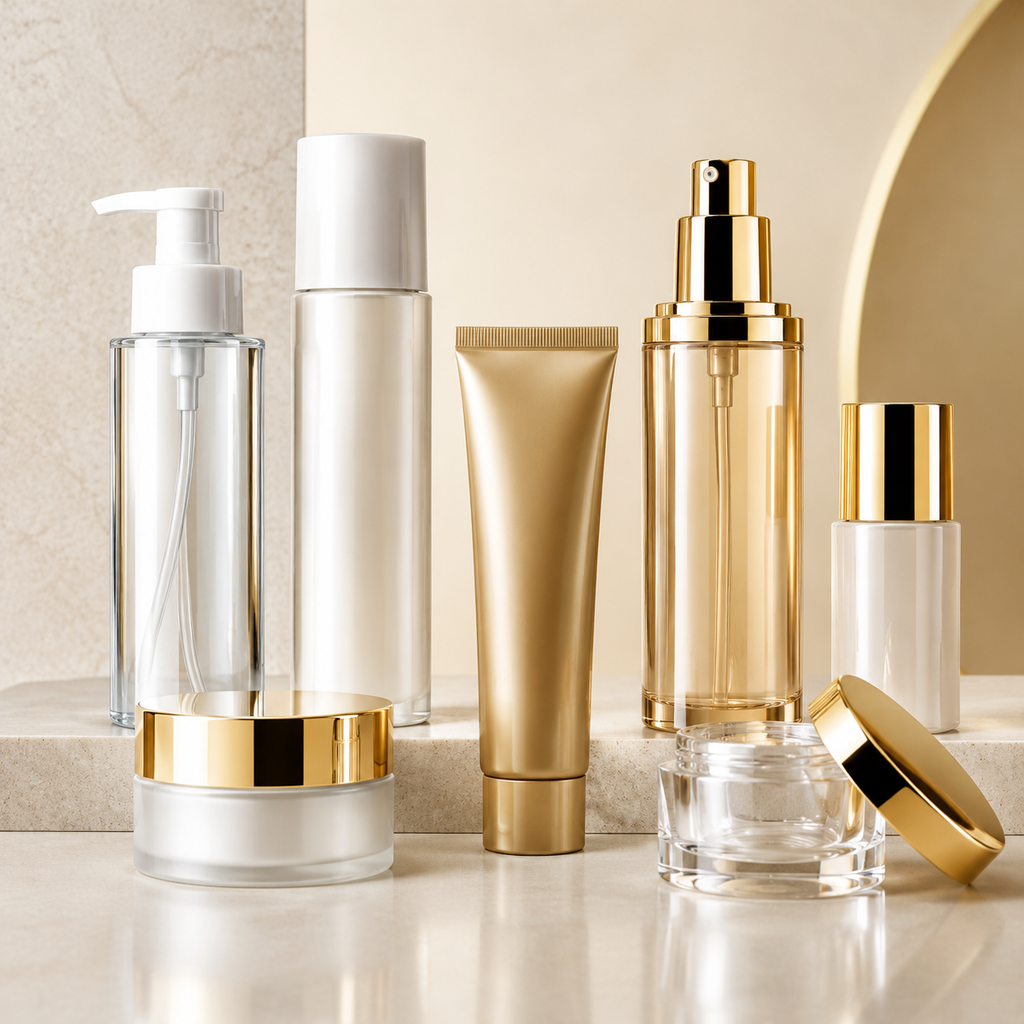
Material selection should be considered before approving custom packaging colors. PETG may support clear, translucent or colored bottle concepts, while AS can be selected for certain rigid cosmetic components where clarity, appearance and structural requirements fit the project. Glass provides a different visual and tactile base, and a coating may be used when the desired appearance cannot be achieved through the base material alone.
Ask whether the color will be transparent, translucent, opaque, pearlescent or solid. Also specify whether the color must be visible from the outside only or must remain consistent when the container is filled. Formula color, fill level and the color of an inner component can influence the finished appearance.
Printing, coating and molded color
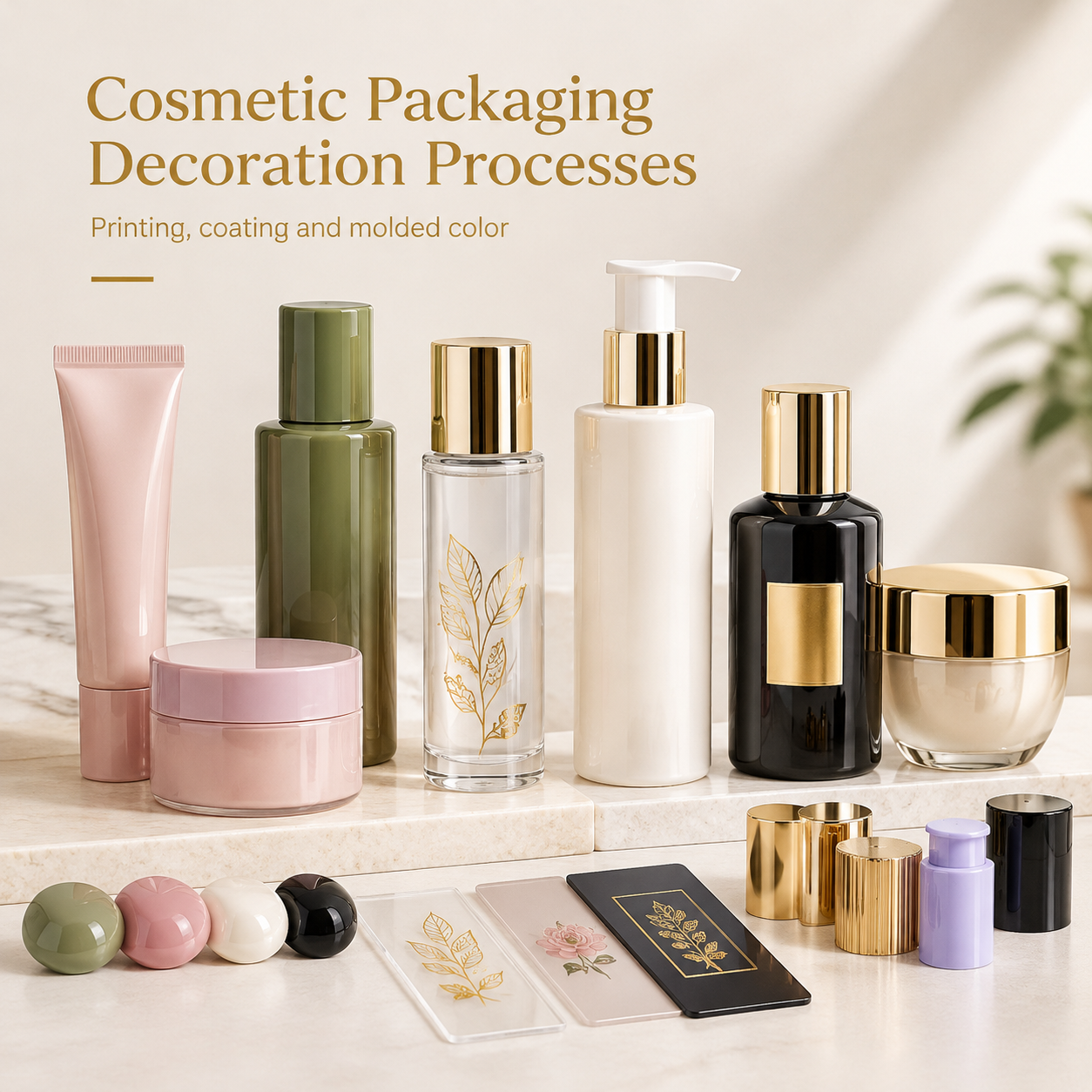
Different decoration routes solve different appearance requirements:
- Molded-in color: Color is incorporated into the plastic during molding. It can create a consistent base appearance, but the result depends on resin, pigment, wall thickness, opacity and molding conditions.
- Spray coating: A coating is applied to the surface. It can support opaque, matte, glossy, frosted or special effects, but adhesion, handling and coverage should be reviewed for the specific component.
- Screen or pad printing: Ink is applied to selected areas for logos, text or graphics. Print color may appear different on a dark, transparent or textured base.
- Hot stamping or metallic decoration: A reflective foil or effect is added to the component. It can strengthen shelf impact, but it should be reviewed for legibility, registration and resistance to expected handling.
The best route depends on the package, formula context, decoration area, quantity, mold scope, filling process and target appearance. YBJ Packaging describes one-stop OEM and ODM support covering design, mold development, material selection, manufacturing, assembly and quality checks; buyers should confirm the available process and sample method for each project.
Color approval comparison table
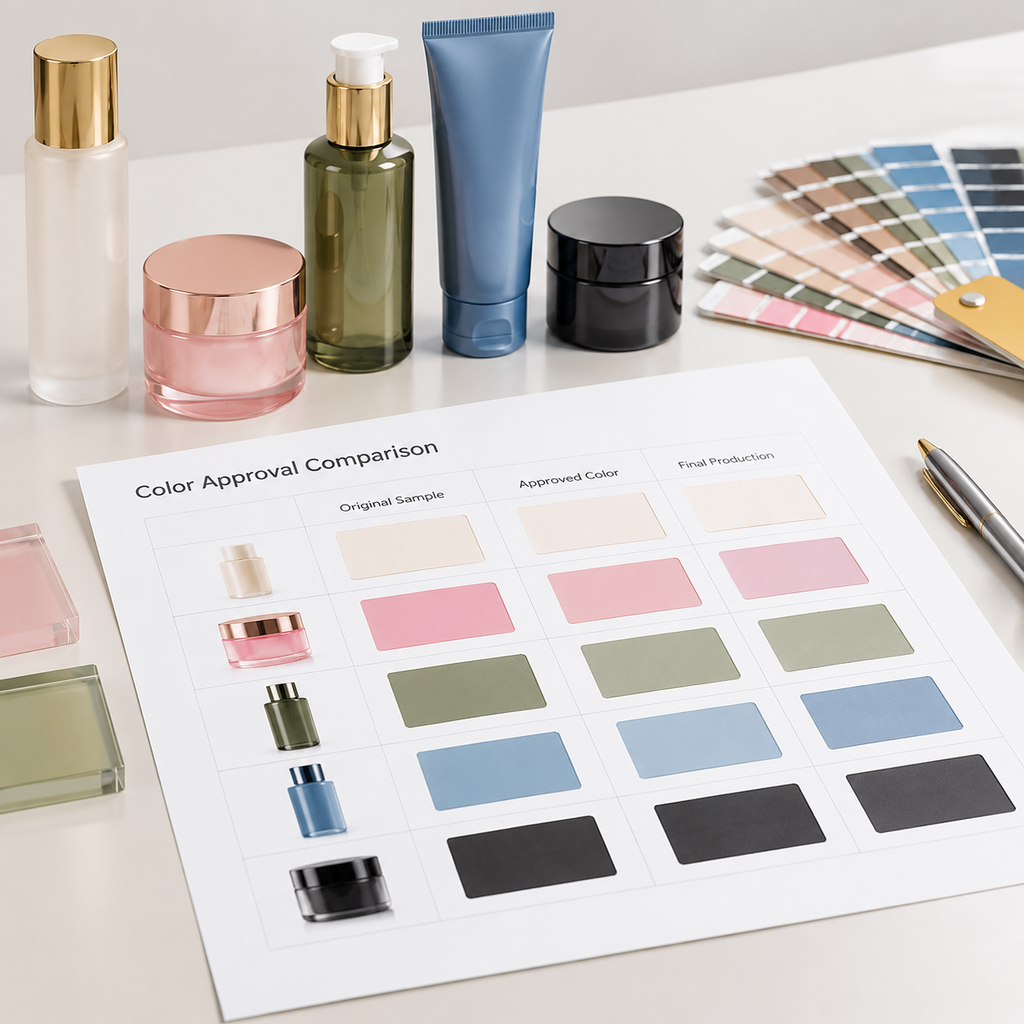
The following comparison helps buyers choose the right approval reference. It is a planning guide, not a guarantee that any option will reproduce a color identically across all components.
| Approval reference or route | Best suited to | Advantages | Limitations to confirm |
|---|---|---|---|
| Physical Pantone or brand standard | Defining the target color | Provides a shared physical reference | Paper or reference-book color may not match plastic, glass or coating directly |
| Digital artwork file | Showing layout and design intent | Easy to share and revise | Screen calibration, color profile and display settings change the appearance |
| Color drawdown | Reviewing ink or coating on a selected base | Shows the proposed process on a relevant substrate | May not represent the final molded shape or complete component |
| Decorated production-intent sample | Final packaging color approval | Reviews material, shape, finish and decoration together | Sample timing, tooling and quantity depend on the project |
| Mass-production comparison sample | Batch inspection | Creates a practical visual benchmark | Inspection lighting, sample selection and agreed variation criteria are required |
Artwork, reference standards and samples
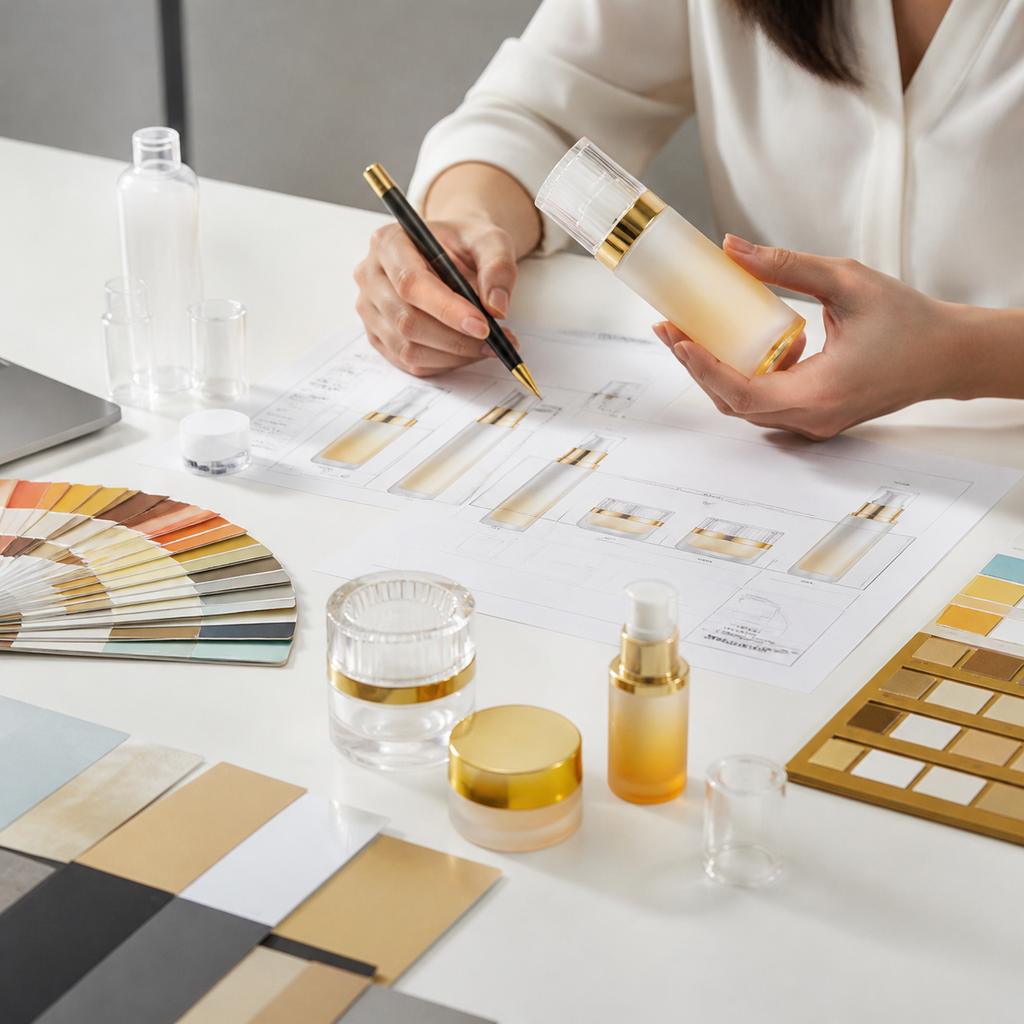
Brands should approve both the visual design and the physical color result. A digital file can define logo size, print position, typography and artwork layers, but it cannot fully predict how a color will appear on the selected packaging.
For Pantone cosmetic packaging work, send the exact reference number and identify whether it is a coated, uncoated or another physical reference. If the brand uses an internal standard, send a clean physical sample and explain which surface should be matched. Do not assume that a Pantone reference automatically defines gloss, opacity, translucency or metallic effect.
- Confirm the component, material, capacity and surface finish.
- Identify the color reference and decoration process.
- Review a drawdown, molded chip or other development sample when appropriate.
- Review a production-intent sample with the complete component and artwork.
- Record the approved sample identification, revision date, comments and signatory.
For multi-component packs, approve the bottle, jar, pump, cap and any secondary parts together when their colors need to coordinate. A color that looks balanced on a bottle may appear mismatched beside a cap made from another resin or finished by another process.
Production inspection considerations
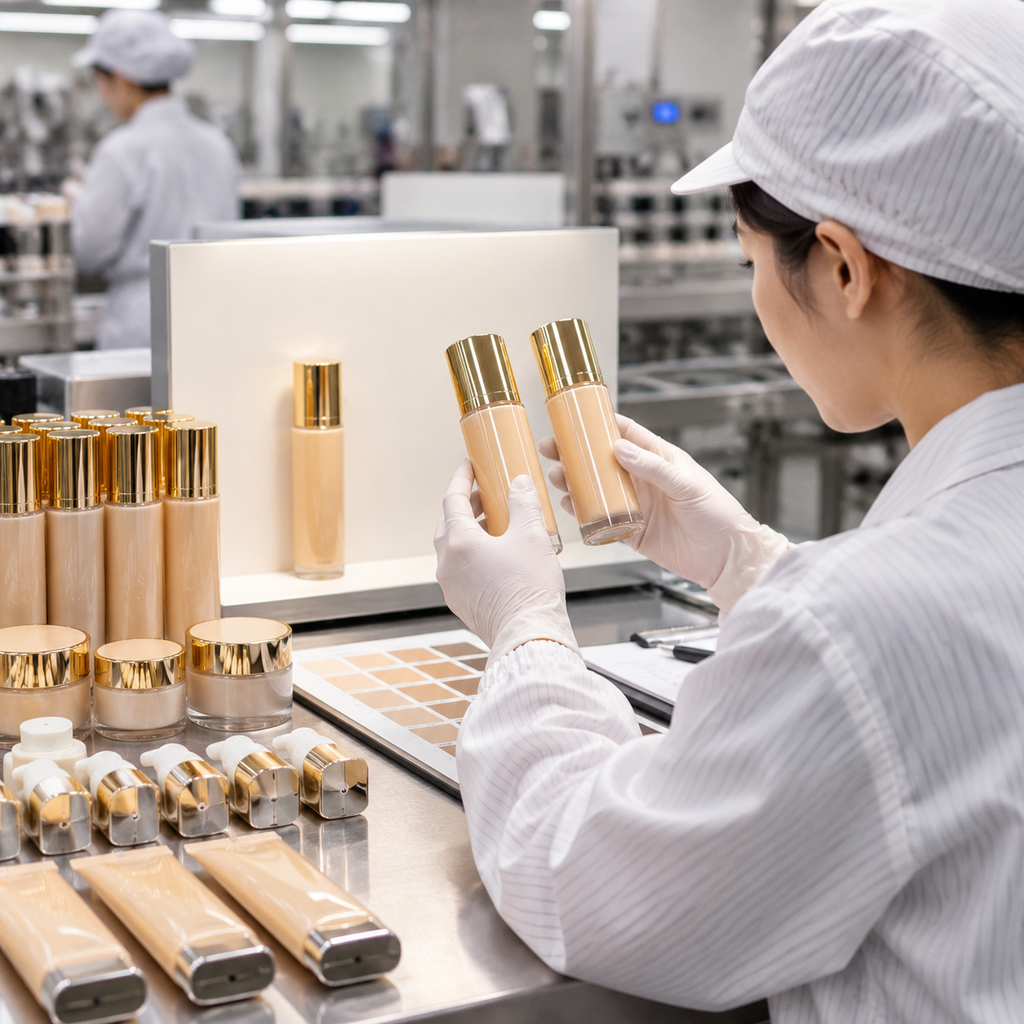
Production color control is a comparison exercise, not a promise that every unit will be visually identical. Resin lot, pigment dispersion, coating conditions, ink coverage, component geometry and lighting can create variation. The buyer and supplier should agree how the approved sample will be used during inspection.
Define the inspection environment, viewing angle, lighting preference, acceptable visual variation and the areas that are critical to the brand. Inspect color together with gloss, opacity, print registration, logo position, scratches, coating coverage and component assembly. If the formula will be filled before the consumer sees the package, consider reviewing the color at the intended fill level as well.
YBJ Packaging states that its capabilities include a 10,000 m² intelligent facility, a Class 10,000 cleanroom, 12 automated assembly lines and 23 Toshiba all-electric injection machines. These are company-stated manufacturing capabilities; they do not replace project-specific color approval, compatibility review or quality criteria. Confirm the applicable inspection plan for the selected material, decoration and order.
Questions for a packaging supplier

Include the following information in a color-matching inquiry:
- What product will be filled, and does the formula have a relevant color, viscosity or sensitivity context?
- What format, capacity, dimensions and material are required?
- Will the package be molded in color, printed, coated, metallized or decorated using more than one process?
- What Pantone reference, internal brand standard or physical sample should be used?
- Should the finished color be clear, translucent, opaque, pearlescent, matte, glossy or metallic?
- Which components must match: bottle, jar, tube, pump, cap, label or carton?
- What quantity, filling application, destination and target date should the supplier plan around?
- Which samples will be provided for approval, and how will production variation be inspected?
Also ask whether tooling is needed, whether the color is suitable for the selected manufacturing process and whether the supplier can review the assembled pack rather than only an individual component. Compatibility, MOQ, pricing, production time and shipping depend on project details and approval.
FAQ
Color approval is most reliable when the reference, material, process and final sample are documented together. The following answers address common sourcing questions.
FAQ
How do brands match colors on cosmetic packaging?
Brands usually start with a physical Pantone reference, internal brand standard or approved physical sample. The supplier then evaluates that target on the specified material and decoration process, provides a development or production-intent sample, and records the approved result for production inspection.
Why can packaging color differ from a digital artwork file?
A digital file is viewed through a screen with its own calibration, brightness, color profile and settings. Packaging is viewed through physical light interaction with plastic, glass, ink, coating, texture and background. The file is useful for artwork layout, but a physical sample is needed for color approval.
What should be approved for custom cosmetic color matching?
Approve the complete production-intent component or assembled pack, including substrate, molded or printed color, gloss level, opacity, finish, artwork, print position and component-to-component coordination. Record the sample revision and approval date.
Is a Pantone reference enough for cosmetic packaging?
A Pantone reference is a useful starting point, but it does not automatically define how the color will look on every plastic, glass, coating or finish. The supplier should create a sample on the intended substrate and process for review.
Can colored cosmetic bottles use the same color as the cap or pump?
They can be designed to coordinate, but matching may be difficult when the parts use different materials, pigments or decoration processes. Approve the bottle, cap and pump together and confirm the visual criteria for each component.
Discutez de vos emballages cosmétiques sur mesure
Tell YBJ Packaging what you are filling, the package format and capacity you need, your material and decoration preferences, estimated quantity, destination and target date. The team can review the brief and suggest practical OEM or ODM packaging options for your project. Include your color reference, desired finish, artwork status and any sample or compatibility questions.

 English
 Français
 Español
