


Índice
- Direct answer: which format suits a thick formula?
- Why viscosity affects packaging selection
- Jars and tubes
- Pumps and airless systems
- Format comparison table
- Filling, dosage and compatibility questions
- How to plan sample testing
- Information to send an OEM supplier
- Preguntas frecuentes
The best packaging for a thick cream, lotion or gel depends on its viscosity, yield stress, particles, filling method, required dosage and user experience. Compare jars, tubes, standard pumps and airless systems before approving samples.
Direct answer: which format suits a thick formula?
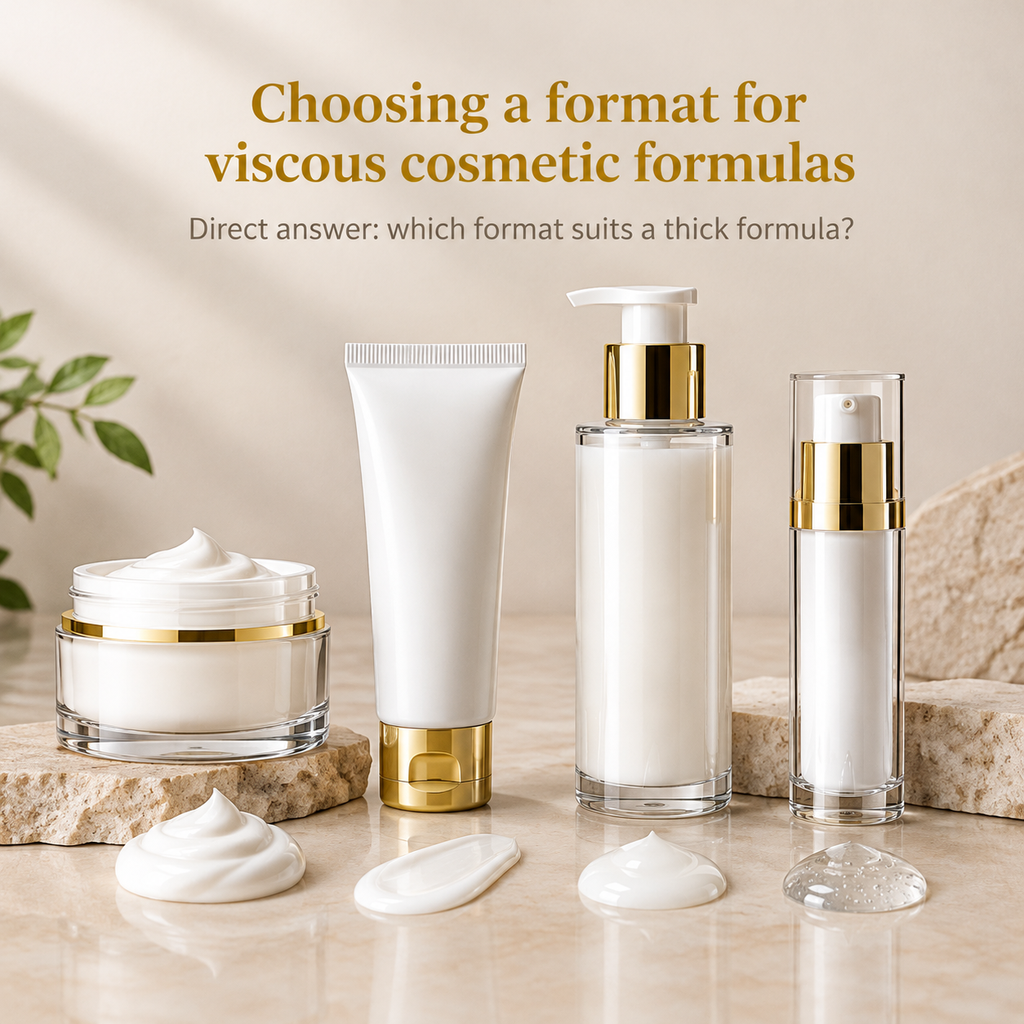
For very thick creams, a wide-mouth jar or squeeze tube is often the simplest starting point because the product can be removed directly or pushed through a larger opening. A thick lotion may also work with a pump or botella airless, but the actual formula, dosage target, dip tube or piston design, filling process and approval sample must be tested together.
Choose a jar when access and simple filling are priorities; choose a tube when controlled squeezing and portability matter; evaluate a standard pump or airless system when you want measured dispensing and reduced direct contact. There is no universal viscosity cutoff that guarantees a format will work.
- Viscosity alone is not enough; yield behavior, particles and temperature can change dispensing.
- Thick lotion pumps and airless systems require formula-specific compatibility and output testing.
- Confirm neck finish, dosage, filling method, decoration and shipping requirements before tooling or mass production.
Why viscosity affects packaging selection
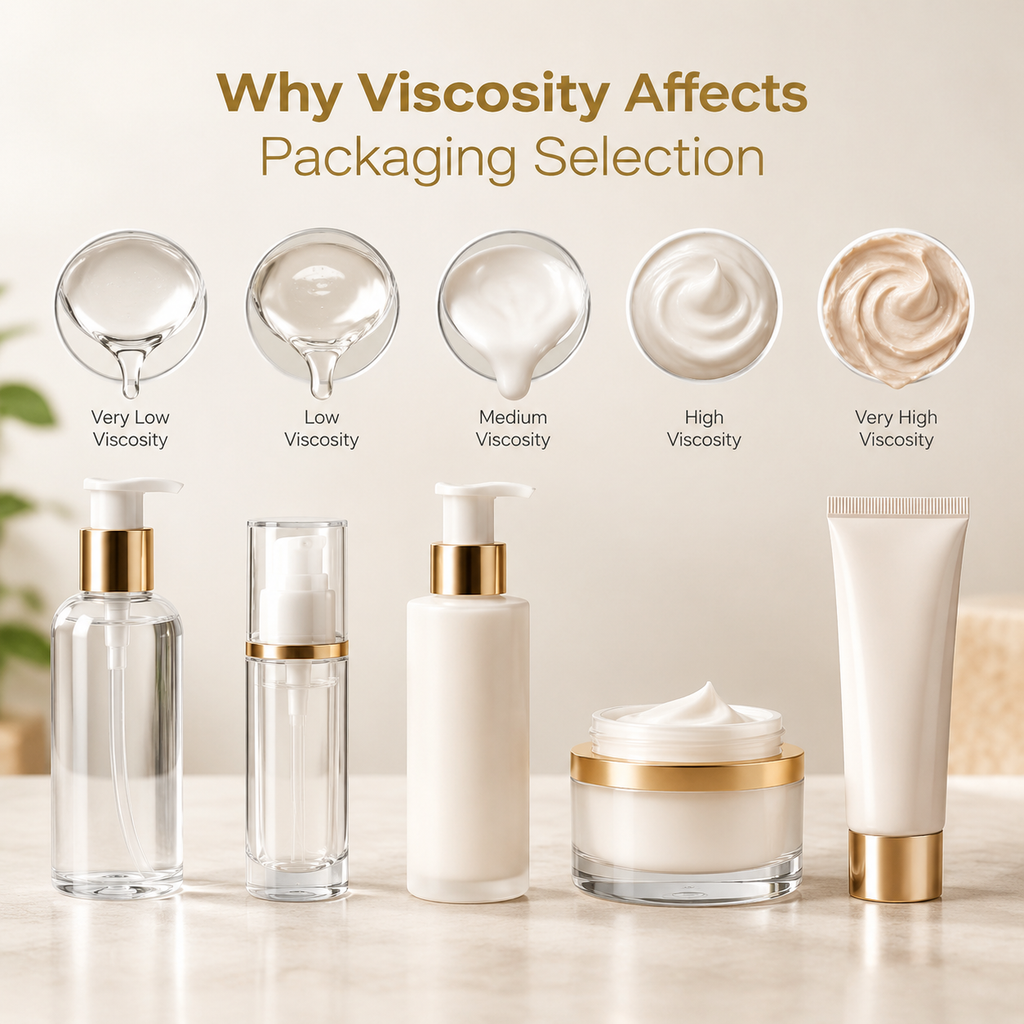
Viscosity describes how strongly a product resists flow. A low-viscosity lotion may move easily through a narrow passage, while a high-viscosity cream needs more force and may recover its shape after dispensing. Many formulas are non-Newtonian, meaning their flow changes when they are squeezed, pumped or stirred. A gel can also contain particles, polymers or air that affect priming and output.
For cosmetic packaging for viscous formulas, ask the formulation and packaging teams to review more than a single viscosity reading. Useful context includes test temperature, measurement method, shear condition, density, particle size, oil or solvent content, pH where relevant to material selection, and whether the formula separates or thickens during storage.
Packaging selection should also consider the user’s force tolerance, the intended dose, residual product, orientation during storage and whether the container must protect the formula from repeated exposure. These factors help narrow the format, but performance remains project-dependent.
Jars and tubes
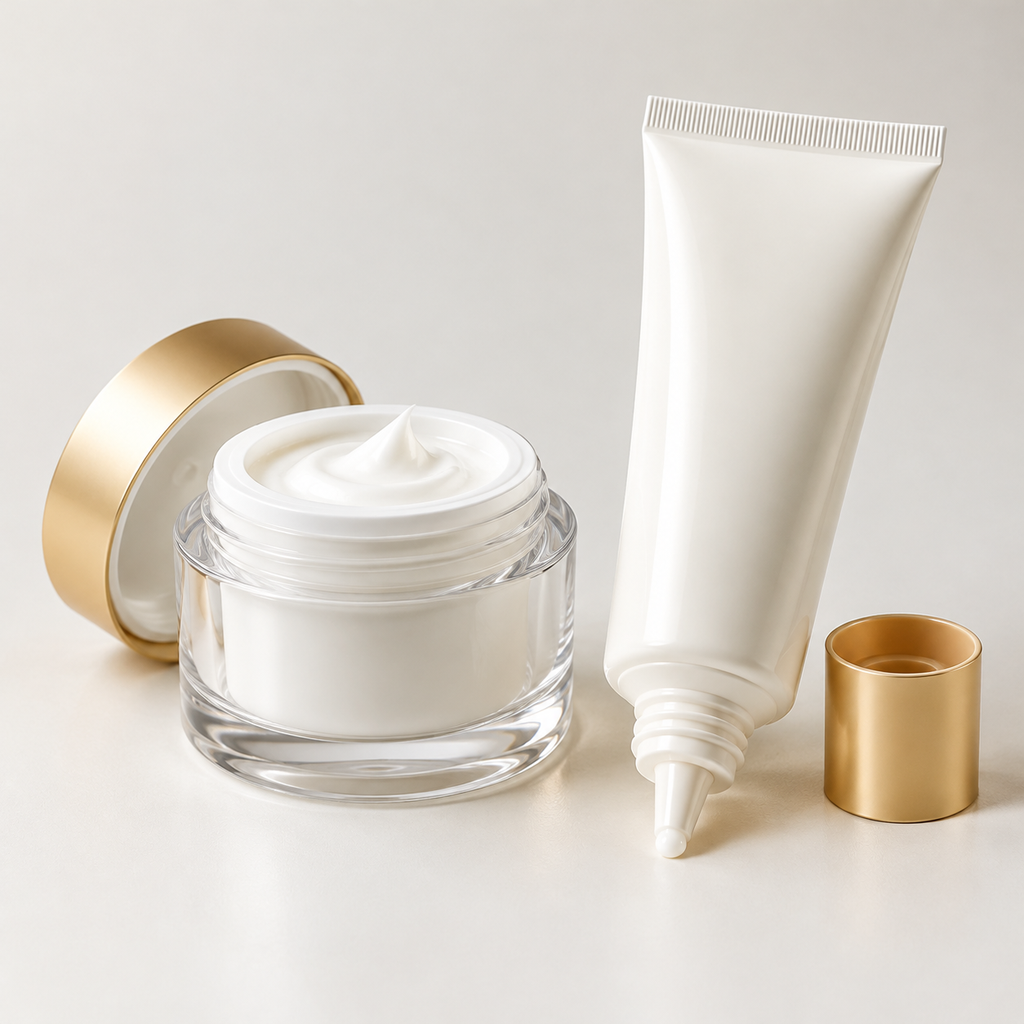
Tarros provide a wide opening and usually accommodate dense creams that are difficult to draw through a pump. They can support premium decoration and straightforward filling, but the formula is exposed to the user’s fingers or an included spatula after opening. Jar compatibility still needs review because the formula may interact with the container, liner or closure.
Tubos dispense by squeezing the body, making them useful for creams, cleansing products and gels intended for controlled hand application. The shoulder, or transition between the tube body and nozzle, can influence how easily thick product reaches the orifice. Cap fit, seal integrity, tube wall construction and the filling line should be checked together. See YBJ’s cosmetic tube packaging category for a starting format review.
Pumps and airless systems
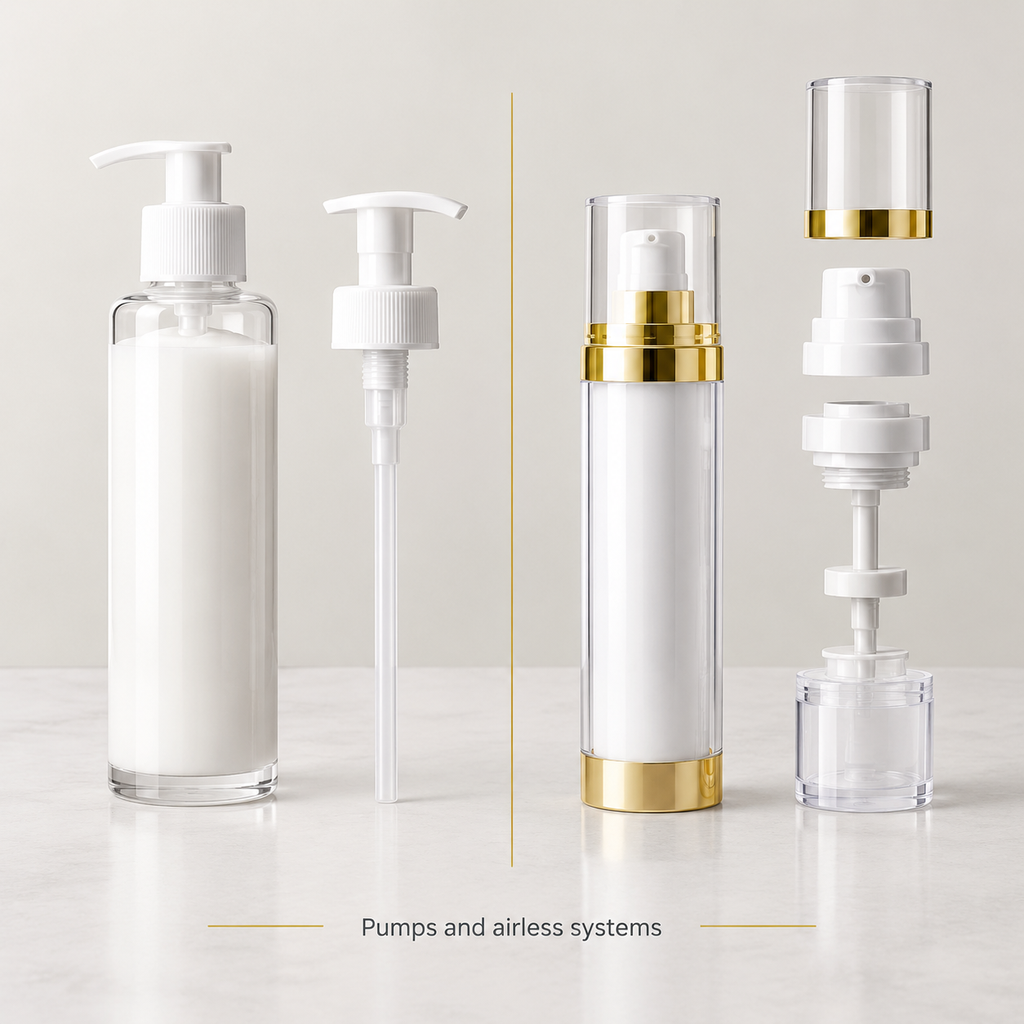
A standard pump uses a dip tube to draw product upward when the actuator is pressed. It may suit a thick lotion if the formula can move through the tube and pump channels at the intended temperature. A posología is the approximate amount released per actuation, but the actual output can vary with formula, pump design, fill level and test method.
Un envase sin aire uses a piston or collapsible inner system to move product toward the pump rather than relying on a conventional dip tube. It can be useful when controlled dispensing or reduced air exchange is desired, but priming, residual product, piston movement and formula recovery must be validated. Airless does not automatically mean every thick cream will dispense successfully.
Ask about the complete component set: bottle or inner container, pump, actuator, gasket, neck finish and protective cap. YBJ Packaging offers OEM and ODM support across design, mold development, material selection, manufacturing, assembly and quality checks. The website states more than 20 years of cosmetic-packaging experience, a 10,000 m² intelligent facility, a Class 10,000 cleanroom, 12 automated assembly lines and 23 Toshiba all-electric injection machines. These are company-provided capabilities; exact component suitability and production scope depend on project review.
Format comparison table
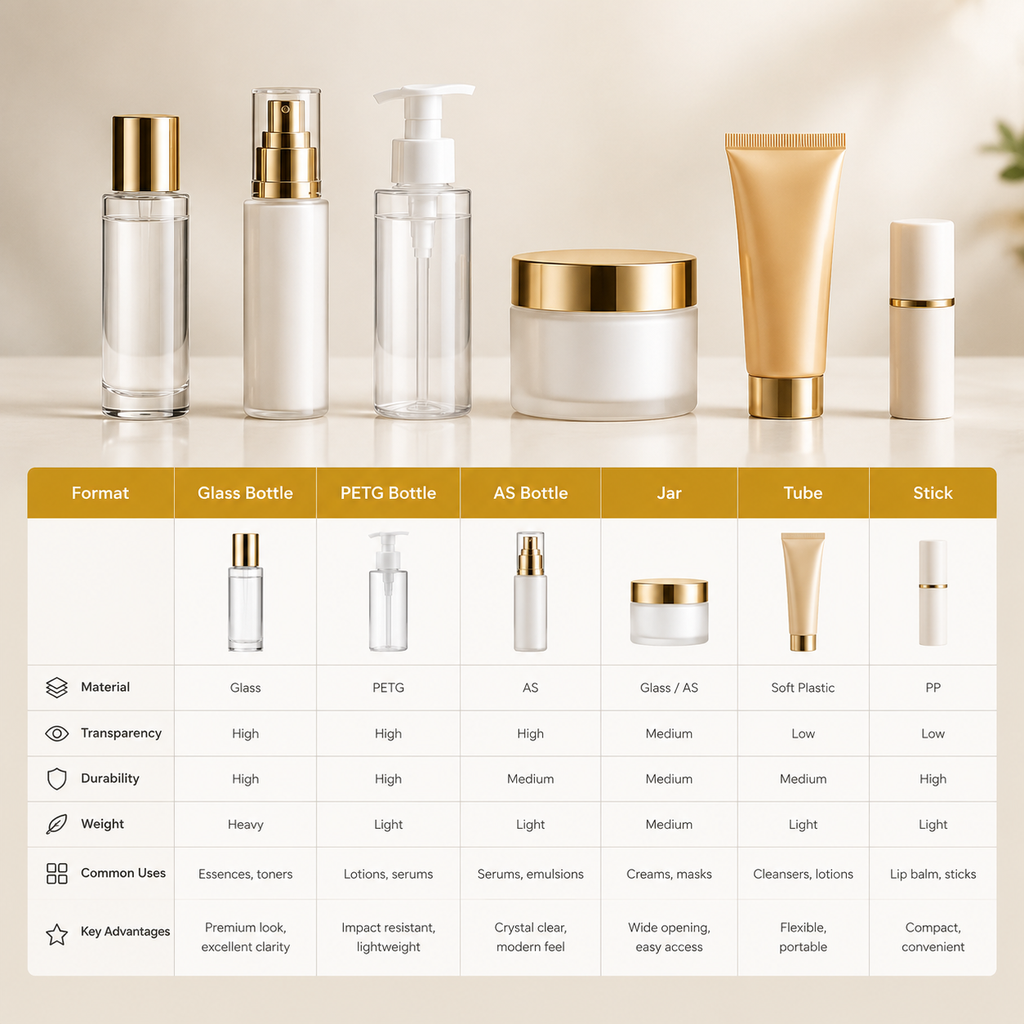
| Formato | Typical fit | Advantages | Limitations to validate |
|---|---|---|---|
| Wide-mouth jar | Dense creams, masks and balms | Large opening; simple product access; broad decoration area | Repeated user exposure; residual product; closure liner and compatibility |
| Squeeze tube | Thick creams and gels used in controlled amounts | Portable; direct user control; convenient for targeted application | Required squeeze force; nozzle flow; seal and cap performance |
| Standard lotion pump | Medium-thick lotions and selected creams | Measured dispensing; familiar user experience | Priming; dip-tube flow; clogging or uneven output; temperature sensitivity |
| Airless bottle | Selected thick lotions, creams and gels | Controlled dispensing; enclosed product path | Priming; piston travel; residual product; component matching and cost |
Use this table to create a shortlist, not to approve a final package. The formula, component design, filling equipment, quantity, mold and destination can change the recommendation.
Filling, dosage and compatibility questions
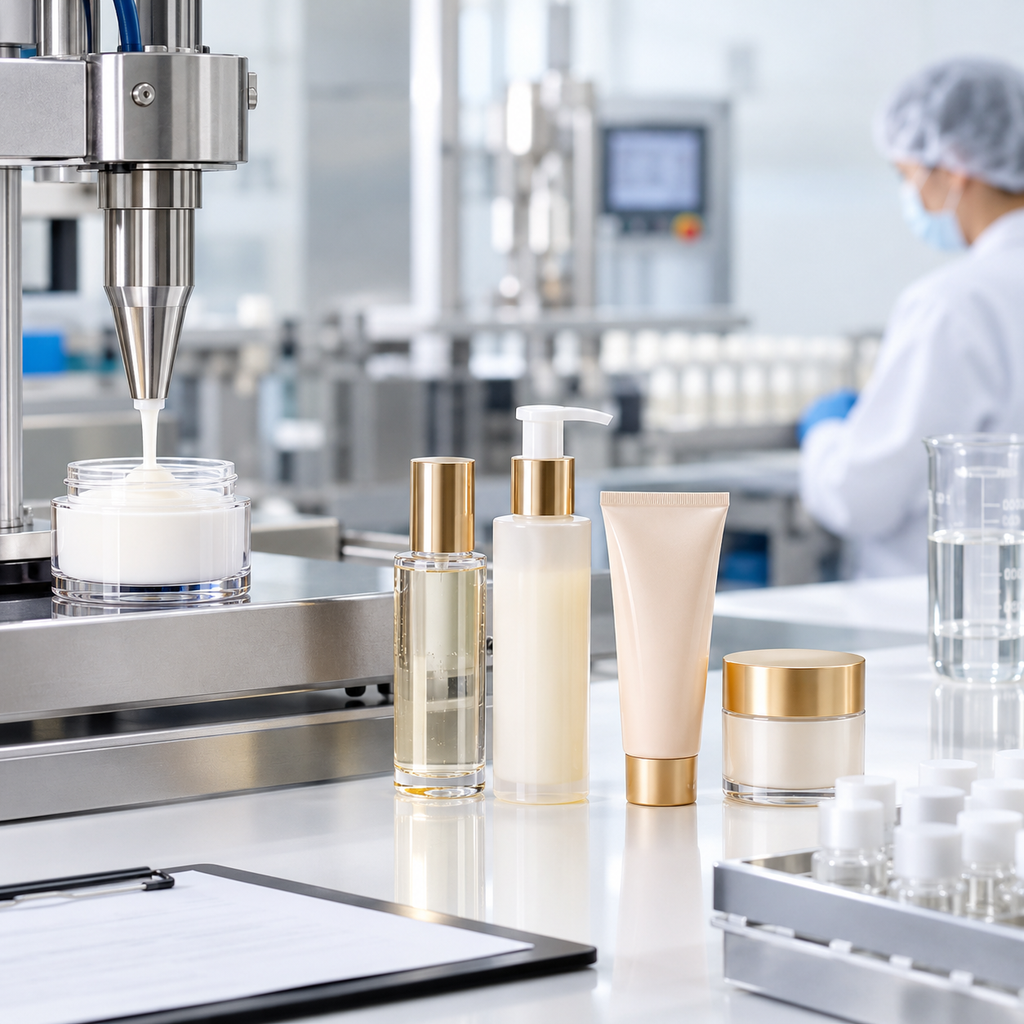
Packaging and filling equipment must be considered as one system. Before selecting cream dispensing packaging, confirm:
- Formula behavior: viscosity range, temperature during filling, shear sensitivity, particles, density and settling or separation.
- Target output: desired dose per actuation or squeeze, acceptable variation, number of actuations and the user’s expected application.
- Filling process: hot or cold fill, equipment type, nozzle dimensions, fill accuracy, headspace and whether the container is filled before component assembly.
- Compatibilidad: contact materials, gasket and liner, colorants, fragrance or oils, stress cracking risk, swelling, discoloration and odor transfer.
- Use and shipping: upright or inverted storage, leakage concerns, transport orientation, temperature range and destination requirements.
For gels, also report whether the formula contains exfoliating particles, suspended ingredients or a high level of polymer. Those details can affect the opening and dispensing path.
How to plan sample testing
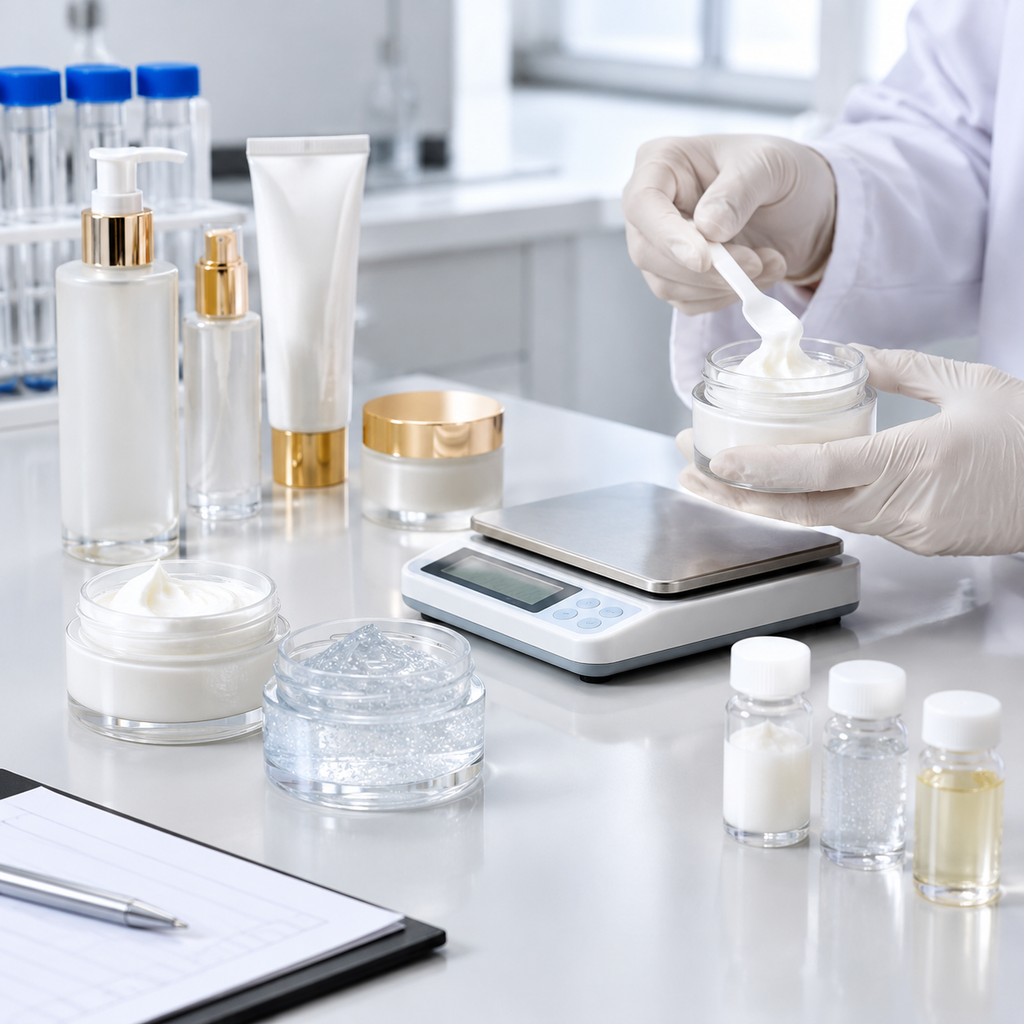
Sample testing should use the actual formula or a representative batch, not water or a much thinner substitute alone. A practical sequence is:
- Shortlist two or three formats based on formula behavior, capacity, appearance and user experience.
- Confirm the neck finish, pump or cap, material, decoration and intended filling method.
- Fill samples using the planned process or the closest available process, documenting temperature and fill conditions.
- Measure initial priming, dose, actuation force, squeeze force, leakage and visible residue.
- Repeat dispensing after storage in the intended orientations and relevant project-defined temperature conditions.
- Inspect the formula and package for changes, then approve an identified sample before tooling or production.
Results can depend on the formula batch, sample quantity, mold revision and test method. Record the approval sample and component version so later production can be compared against the agreed specification.
Information to send an OEM supplier

Send a complete brief so the supplier can evaluate the formula-to-format relationship instead of recommending a container by appearance alone. Include:
- Product type: cream, lotion, balm, gel, mask or cleanser.
- Formula or viscosity context, including test temperature, method, density, particles and any known compatibility concerns.
- Target capacity, fill weight, dimensions and preferred bottle, jar, tube or airless format.
- Material preferences such as PETG, AS, glass or other options, plus color and transparency requirements.
- Closure, pump, actuator, nozzle, neck finish and target dosage.
- Decoration, surface finish, artwork and labeling approach.
- Estimated quantity, filling application, destination and target date.
- Required samples, existing filling-line constraints and approval criteria.
YBJ Packaging can review an OEM or ODM brief covering design, material selection, mold development, manufacturing, assembly, quality checks and worldwide shipping. Confirm compatibility, MOQ, tooling, pricing, production time and shipping after the project details and approval requirements have been reviewed.
In short, the best packaging for thick creams and lotions is the format that delivers the required user dose through a compatible component set and filling process. Start with viscosity and use conditions, then approve performance with the real formula.
Preguntas frecuentes
What packaging is best for thick creams?
A wide-mouth jar or squeeze tube is often the most practical starting point for very thick creams. A pump or airless bottle may also work when the formula, component path, target dose and filling process are tested together. The best choice depends on the actual formula and user experience requirements.
Can thick lotion work with a pump or airless bottle?
Yes, some thick lotions work with standard pumps or airless systems. Confirm priming, output, actuation force, temperature behavior, residual product and compatibility using the intended formula and component set. Airless packaging is not automatically suitable for every viscous product.
What formula information should be shared with a packaging manufacturer?
Share viscosity and test temperature, measurement method, density, particles, shear sensitivity, pH where relevant, fragrance or oil content, storage behavior, target dosage and filling temperature. Also explain whether the product is a cream, lotion, gel, balm or mask.
Is a jar or tube better for a thick gel?
It depends on the gel’s flow behavior, particles and intended application. A tube can provide controlled squeezing, while a jar provides a wide opening and easy access. Test the nozzle, cap seal, squeeze force and residue with the actual gel before approval.
Does a higher viscosity require a larger pump opening?
Higher viscosity may require changes to the pump channel, dip tube, orifice or dispensing architecture, but there is no universal size rule. The complete pump and formula should be evaluated through project-specific sample testing.
Comenta tu envase cosmético personalizado
Tell YBJ Packaging what you are filling, the package format and capacity you need, your material and decoration preferences, estimated quantity, destination and target date. Include formula or viscosity context, filling application and dosage expectations so the team can review the brief and suggest practical OEM or ODM packaging options for your project.

 English
 Français
 Español
