
Índice
- Direct answer: which packaging sample should be approved?
- Types of cosmetic packaging samples
- Sample comparison table
- What to inspect at each stage
- How samples affect production decisions
- Buyer approval checklist
- Preguntas frecuentes
A prototype can show the concept, dimensions or dispensing principle, but it does not necessarily prove final packaging quality. Before bulk production, buyers should approve a representative production sample covering appearance, fit, function, decoration, assembly and filling-line compatibility.
Direct answer: which packaging sample should be approved?
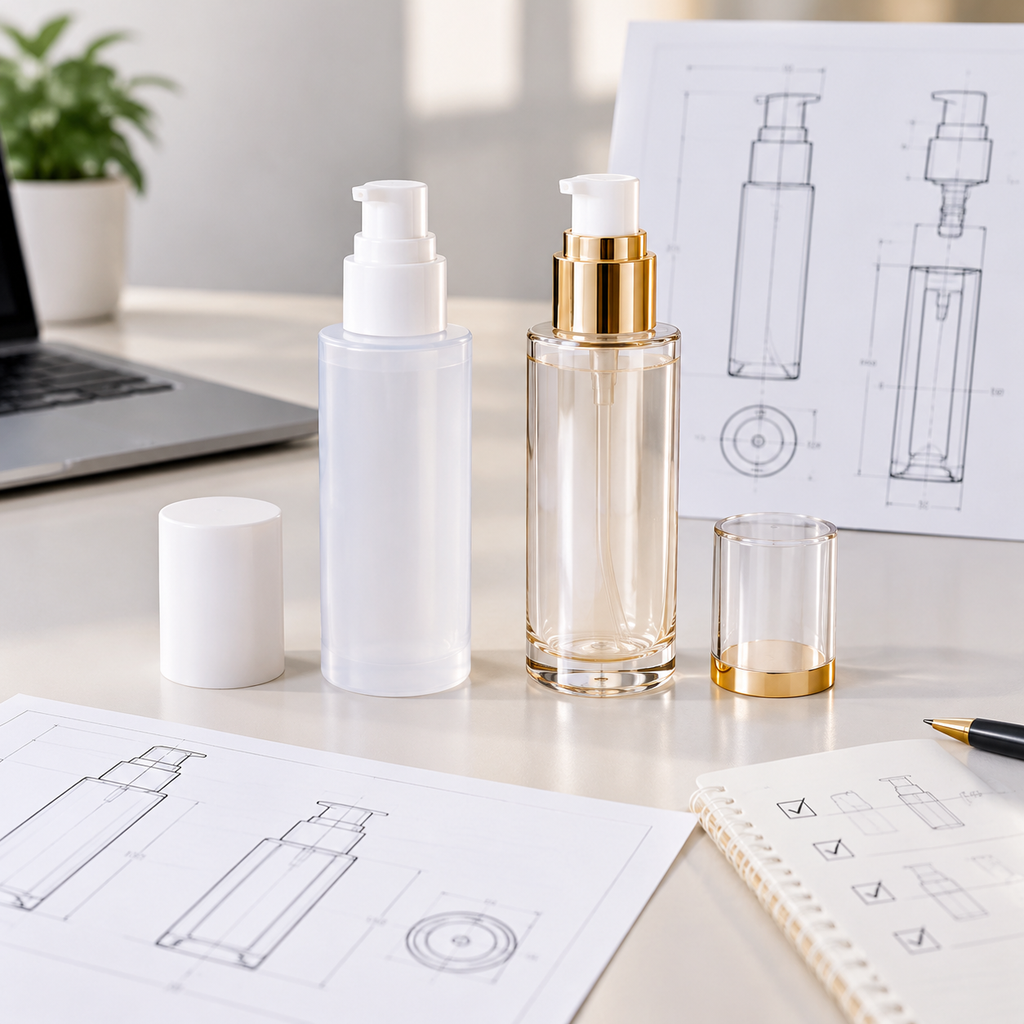
Before bulk cosmetic packaging production, buyers should approve a representative pre-production or production sample made with the intended material, mold, components, decoration and assembly method. A concept prototype can support design decisions, but the final approval should be based on a sample that reflects the planned production process as closely as possible.
The difference is practical: a cosmetic packaging prototype helps evaluate shape, dimensions, ergonomics or a dispensing idea. A cosmetic packaging production sample is used to confirm what the factory is expected to make in quantity. The production sample should be checked against the approved artwork, technical drawing, formula context, filling process and packaging specification.
Compatibility, tooling, minimum order quantity, pricing, production time and shipping depend on project details and should be confirmed with the supplier after sample review.
Types of cosmetic packaging samples
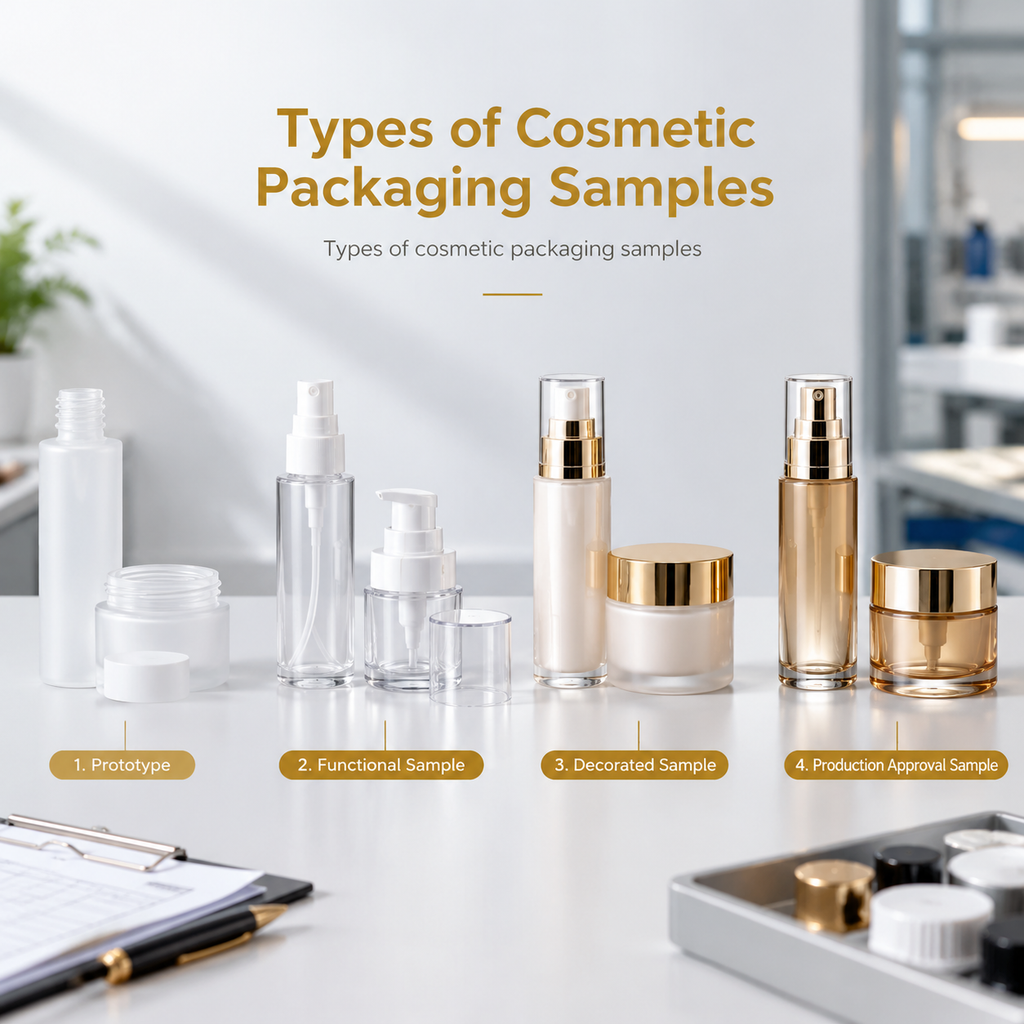
Different samples answer different questions. Labeling the sample stage clearly helps prevent a buyer from approving a shape prototype as though it were a finished packaging reference.
Concept and functional prototypes
A concept prototype is an early representation of a bottle, jar, tube, cap, pump or makeup component. It may be produced through a temporary process, a rough mold, 3D printing or an existing stock component. It is useful for reviewing proportions, hand feel, shelf presence and basic layout.
A functional prototype adds a working component or dispensing mechanism. For example, a pump prototype can help assess whether the dosage and actuator movement are suitable for the formula context. A dropper prototype may help review handling and basic liquid delivery. These samples do not automatically prove long-term formula compatibility, leak resistance, decoration durability or filling-line performance.
For component selection, buyers may compare PET bottles with pump and cap options when viscosity, dosage, neck finish and filling requirements are still being evaluated.
Decorated and production approval samples
A decorated sample shows the intended color, printing, coating, labeling, hot stamping or other finish. It should be reviewed against the approved artwork and color reference, but the decoration may still have been applied outside the final production conditions. Ask the supplier to identify whether the sample uses the final material, mold, decoration process and component batch.
A pre-production sample is made after key development decisions are substantially defined and before the main order. It is the most useful stage for checking the complete system: container, closure, pump or dropper, decoration and assembly. A production approval sample may be taken from the production process or prepared to closely represent it. The exact sampling method should be agreed in writing.
YBJ Packaging states that it provides OEM and ODM support from consultation and design through mold development, material selection, manufacturing, assembly, quality checks and worldwide shipping. The company also describes more than 20 years of cosmetic-packaging experience, a 10,000 m² intelligent facility, a Class 10,000 cleanroom, 12 automated assembly lines and 23 Toshiba all-electric injection machines. Buyers should confirm which capabilities and controls apply to the specific project.
Sample comparison table
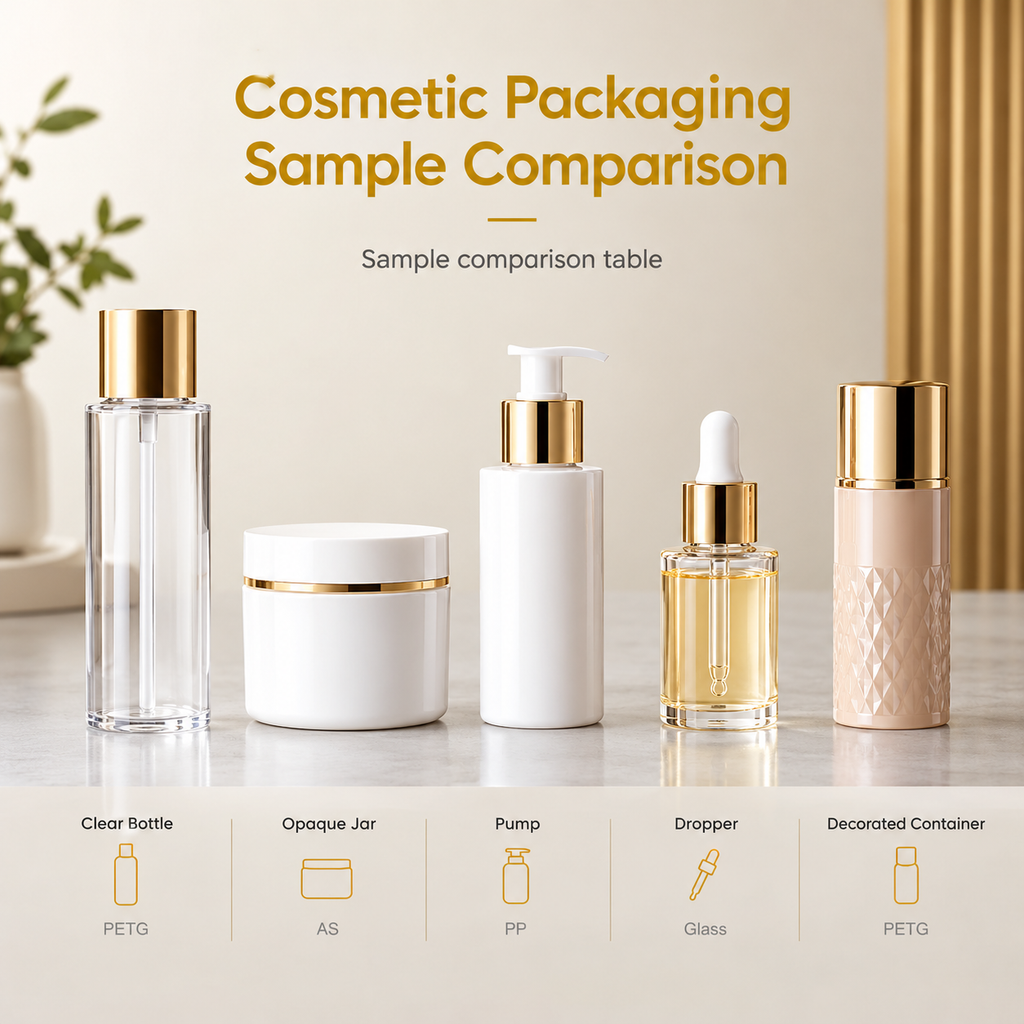
Use this table to define what each stage can and cannot prove.
| Sample type | Best for reviewing | What it may not prove | Approval use |
|---|---|---|---|
| Concept prototype | Shape, proportions, basic appearance and ergonomics | Final material, mold accuracy, decoration, compatibility or production consistency | Approve the design direction |
| Functional prototype | Basic pump, dropper, spray or closure operation | Final dosage, leak resistance, formula interaction or filling-line behavior | Approve the dispensing concept |
| Decorated sample | Artwork placement, color direction, print and finish | Final decoration repeatability if made by a different process or batch | Approve the visual specification |
| Pre-production sample | Complete component fit, decoration, assembly and handling | Every result from a full production run | Approve the planned production setup |
| Production sample | Representative finished goods from the production process | Performance beyond the agreed inspection scope | Release or verify bulk production |
A production sample should not be treated as a substitute for compatibility testing or filling trials. Those activities may require the actual formula, filling equipment, storage conditions and agreed test plan.
What to inspect at each stage
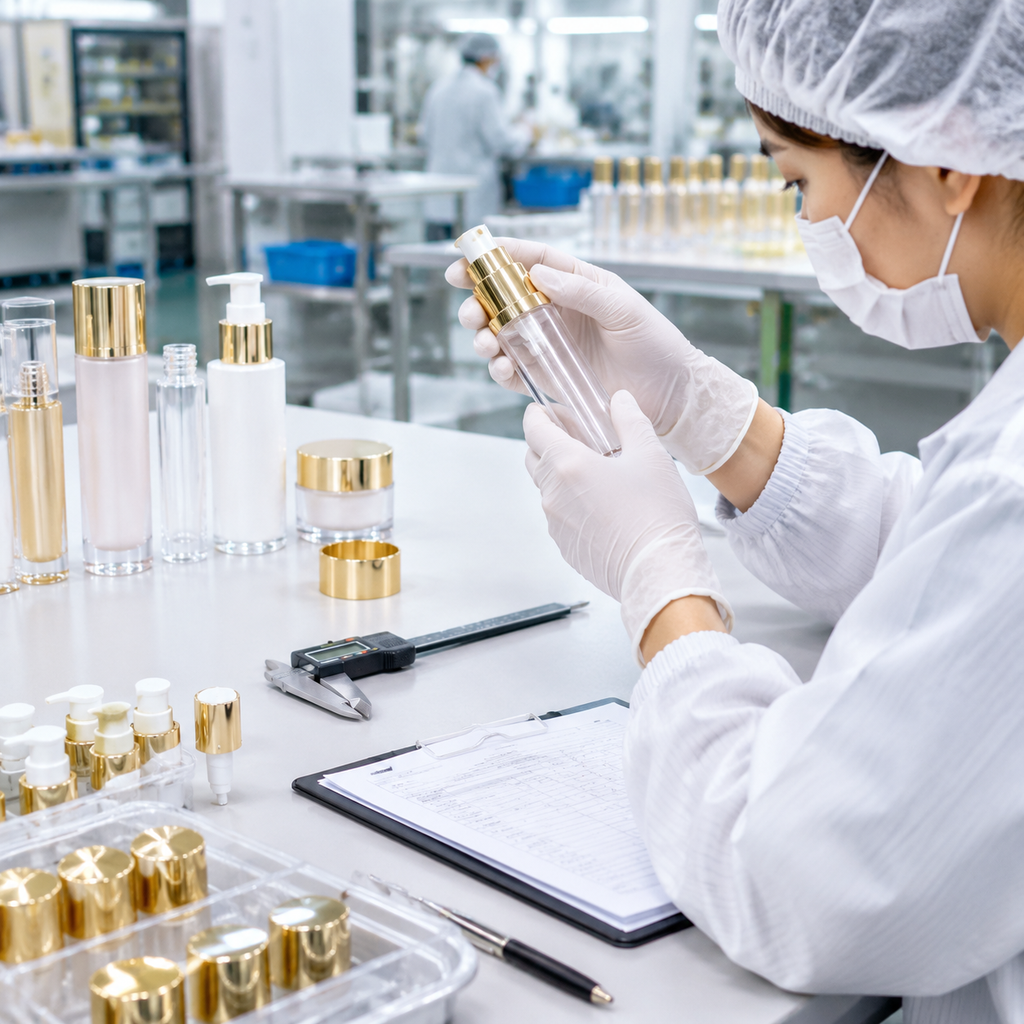
Review samples in a fixed order so visual approval does not hide a functional or manufacturing issue.
- Identity and specification: Confirm the sample code, version, material, capacity, dimensions, neck finish and closure. A neck finish is the standardized opening and thread or connection that allows a bottle to match a pump, cap or dropper.
- Aspecto: Check color, transparency, gloss or matte effect, surface marks, mold lines, sink marks, flash, print position and artwork spelling. Compare the sample with the latest approved drawing and artwork file.
- Fit and assembly: Confirm that the bottle, jar, tube, pump, cap, liner, insert and other components seat correctly. Check thread engagement, closure alignment and whether assembly creates visible gaps.
- Función: Test opening and closing, pump actuation, spray or dropper operation and basic dosage where relevant. Dosage means the approximate amount dispensed per actuation or use. Record the test conditions because output can depend on formula viscosity, filling level and component variation.
- Formula and filling compatibility: Use the intended formula or a suitable test substitute where agreed. Review leakage, deformation, interaction with the formula and the fit with the filling application. Packaging compatibility cannot be concluded from appearance alone.
- Shipping and handling: Review closure security, carton configuration and handling risks relevant to the destination. Any transportation test should use an agreed method and representative packaging configuration.
For airless packaging, confirm the actuator, pump movement, internal piston or bag system and priming behavior as applicable. “Airless” generally describes a dispensing package designed to limit routine air return into the container; the exact performance depends on the component design, formula and use conditions.
For a different format, buyers can compare PET and PETG cosmetic bottle considerations before finalizing the material and sample criteria.
How samples affect production decisions
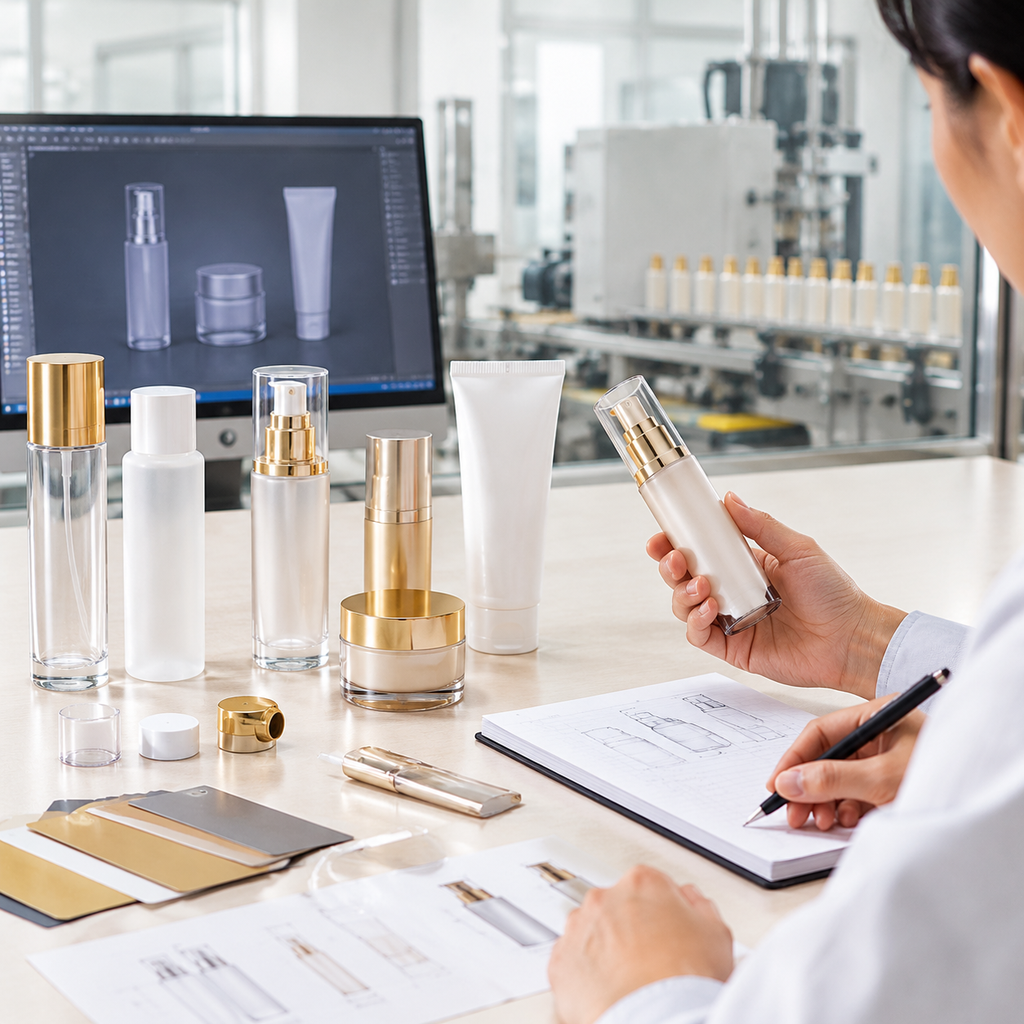
Sample approval should convert a design discussion into a controlled production reference. The approved packaging sample should be linked to the final drawing, bill of materials, artwork, color reference, decoration method and inspection requirements.
In practice, sample findings can change the mold, wall thickness, component specification, pump dosage, closure fit, material choice or decoration process. A buyer may also discover that the selected package does not suit the filling line or that the formula needs a different dispensing system. These changes can affect tooling, quantity, pricing and production time, so they should be resolved before bulk release.
YBJ Packaging describes mold development, material selection, injection molding, cleanroom production and automated assembly as part of its packaging support. A cleanroom is a controlled production area designed to limit airborne particles; it does not, by itself, prove formula compatibility or guarantee a particular result. Ask which production area, assembly controls and quality checks apply to the requested package.
For buyers comparing formats, a custom airless bottle may be evaluated differently from a standard lotion bottle because the dispensing mechanism and internal package structure add approval points.
Buyer approval checklist
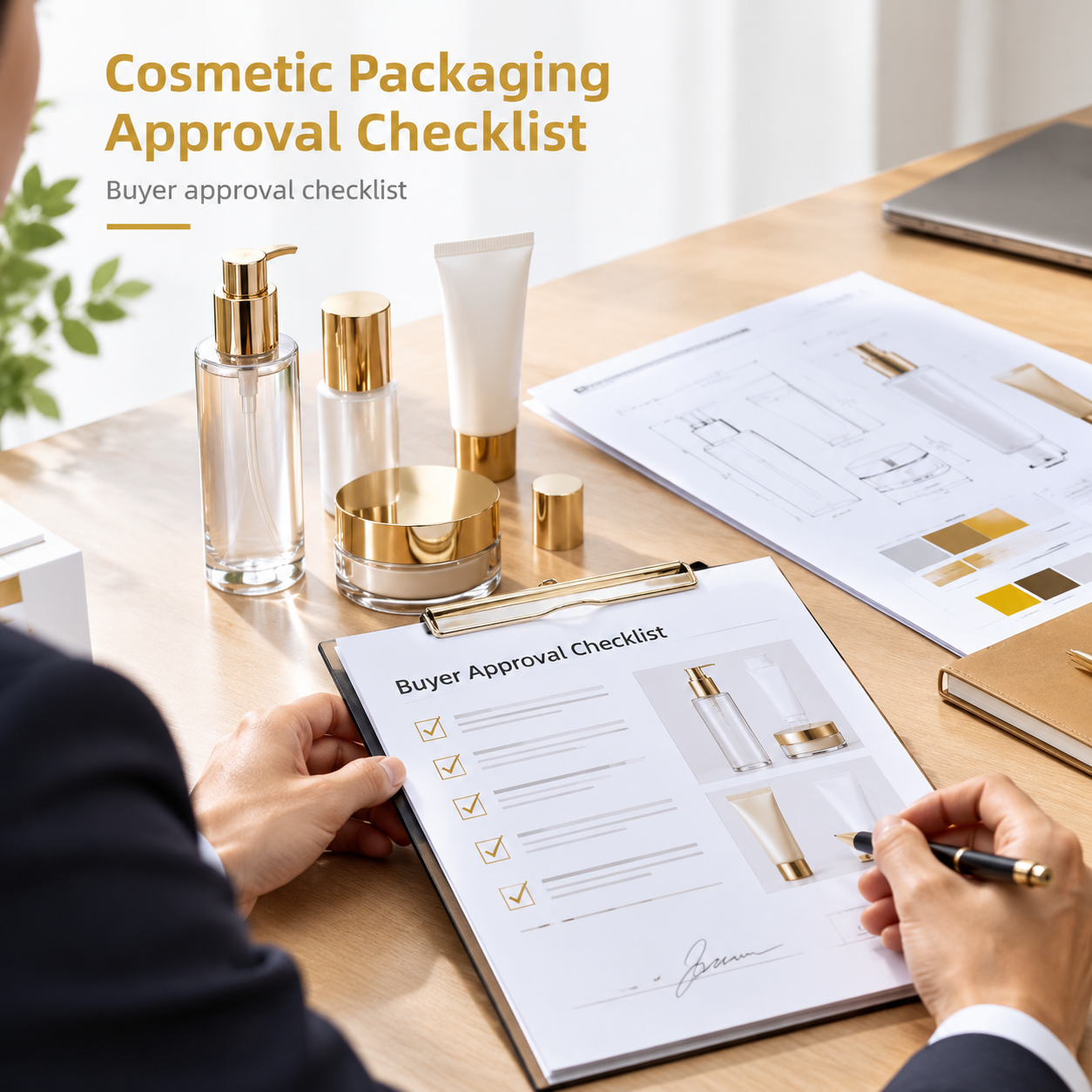
Before signing off on an approved packaging sample, record the following information:
- Product type and formula context, including viscosity or any known material-sensitivity concerns.
- Package format, nominal capacity, dimensions and fill level.
- Container material and color, such as PETG, AS, glass or another specified option.
- Closure, pump, dropper, spray component, liner or insert, including the neck finish.
- Decoration method, artwork version, color reference and finish requirements.
- Assembly method, component orientation and any visible gap or alignment limits.
- Filling application, equipment constraints and the planned filling trial.
- Estimated quantity, destination, shipping configuration and target date.
- Inspection points, sample quantity, test conditions and the person authorized to approve changes.
- Written confirmation of what the sample does not cover, such as full compatibility testing, long-term storage or transport testing.
Keep the signed sample or a controlled reference image with the purchase documents. If the supplier changes the material, mold, component source, decoration process or artwork after approval, request a new review rather than assuming the original approval still applies.
Preguntas frecuentes
What is the difference between a cosmetic packaging prototype and production sample?
A prototype is mainly used to evaluate a concept, shape, dimensions or basic function. A production sample is intended to represent the material, mold, components, decoration and assembly process planned for bulk manufacturing. A prototype can guide development, but a production-representative sample should support the final production approval.
What should be approved before bulk packaging production?
Approve the complete packaging specification: container, material, capacity, dimensions, neck finish, closure or pump, decoration, artwork, assembly and relevant function. Where applicable, also review formula compatibility, filling-line fit, leakage risk and the agreed inspection criteria. The exact approval scope should be documented with the supplier.
Can a prototype prove final packaging quality?
No. A prototype can prove selected design or functional questions, but it may not use the final material, mold, decoration process or component batch. It cannot by itself prove production consistency, long-term compatibility, filling performance or shipping performance.
Is a pre-production sample the same as a production sample?
Not always. A pre-production sample is generally made before the main order to represent the planned setup. A production sample may be taken from the actual production process. Ask the supplier how the sample was made and which production variables it represents.
Should buyers approve the package before testing the formula?
Packaging design can be reviewed before formula testing, but final compatibility and dispensing decisions should consider the actual formula or an agreed representative test material. Viscosity, ingredients, filling conditions and storage can affect the result, so the testing scope should be agreed with the supplier and relevant technical teams.
Comenta tu envase cosmético personalizado
Tell YBJ Packaging what you are filling, the package format and capacity you need, your material and decoration preferences, estimated quantity, destination and target date. The team can review the brief and suggest practical OEM or ODM packaging options for your project. You can also discuss sample requirements and compatibility questions before confirming the specification.

 English
 Français
 Español
