

Índice
- Quick answer: what must be decided for an eyeshadow palette?
- Palette structure and pan layout
- Pan count, spacing and usable surface
- Case, lid and closure options
- Materials and decoration comparison
- Mold, assembly and filling considerations
- Sampling and artwork approval
- Questions for a palette manufacturer
- Preguntas frecuentes
A practical guide to developing eyeshadow palette packaging, covering pan layout, case materials, closures, decoration, filling, assembly and sample approval.
Quick answer: what must be decided for an eyeshadow palette?
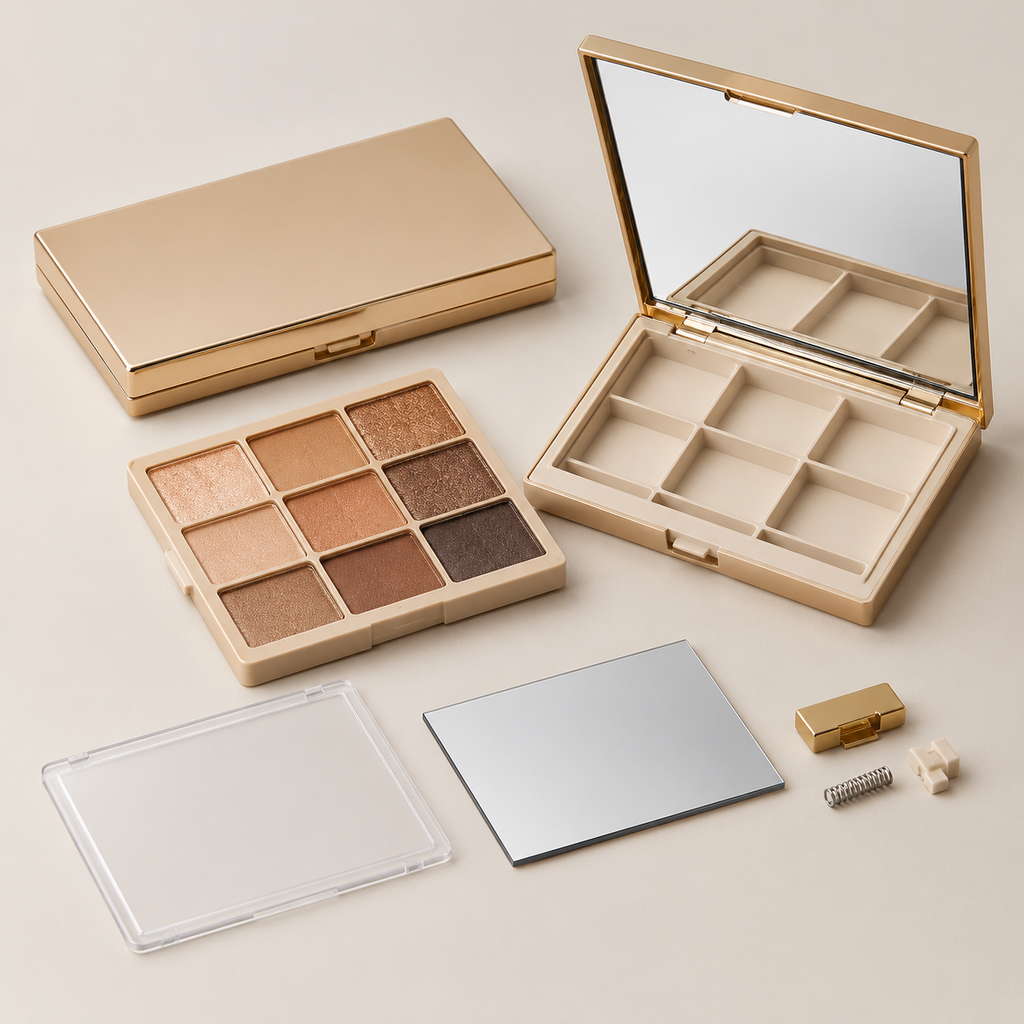
Custom eyeshadow palette packaging is designed by coordinating the pan layout, internal tray, case dimensions, lid, closure, decoration and filling process as one system. The best design is not only visually attractive; it must also fit the selected pans, tolerate assembly and filling requirements, protect the product during handling and match the brand’s target cost and appearance.
Before requesting a quotation, define the number and shape of pans, finished palette dimensions, material preference, mirror or accessory requirements, closure style, decoration, estimated quantity, filling application, destination and target date. Compatibility, tooling, minimum order quantity, pricing, production time and shipping depend on the project and approval sample.
Palette structure and pan layout
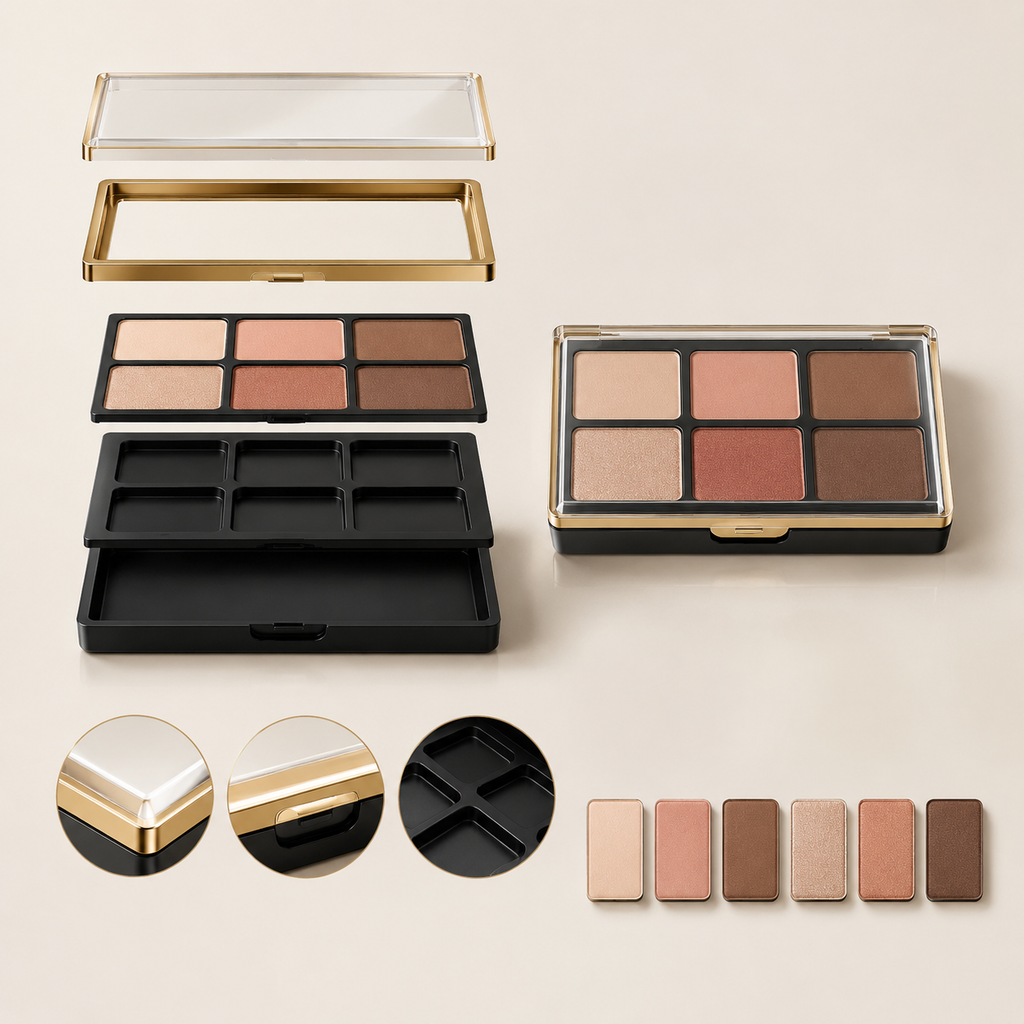
How is custom eyeshadow palette packaging designed? Start with the product architecture: pan quantity, pan geometry, arrangement, tray retention, usable surface and external case size. The case, insert and pans should be reviewed together because a small change in spacing can affect the overall footprint, decoration area and filling plan.
An eyeshadow pan is the metal or plastic cup that holds a pressed powder or other color cosmetic fill. The insert or tray positions the pans inside the case. A palette may use individual pans, a removable tray, a refillable construction or a fixed molded platform. Each approach changes assembly steps, customization potential and repair or replacement options.
For buyers comparing makeup palette packaging, request a dimensional drawing that identifies the pan cavity, tray wall, lid clearance, hinge area and closure location.
Pan count, spacing and usable surface
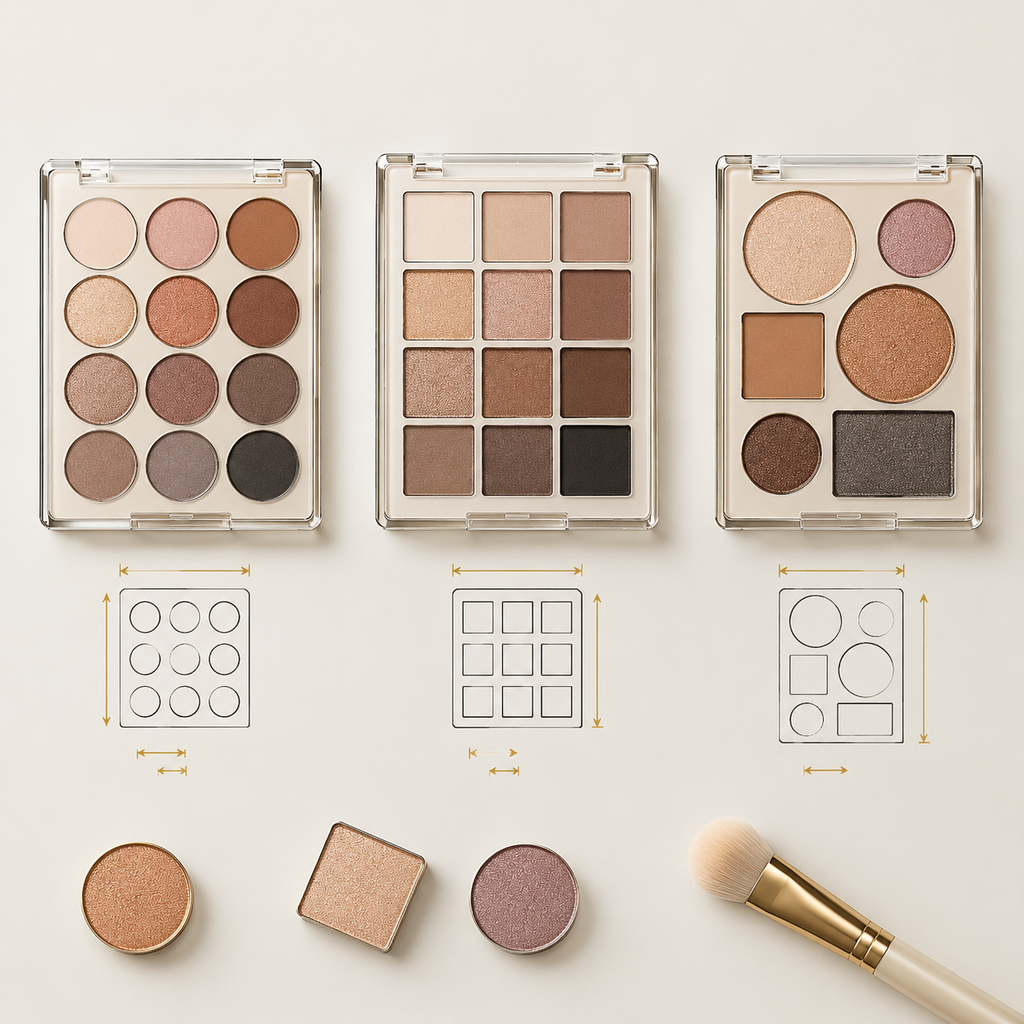
What should be considered when choosing an eyeshadow pan layout? Begin with the number of shades and the intended use of each shade. Equal-size round or square pans simplify a regular grid, while mixed pan sizes can create a distinctive visual hierarchy but may require a more complex tray and artwork file.
- Pan count: More pans increase color choice but also increase case size, component count and assembly complexity.
- Spacing: Leave enough material between cavities for structural support, tool access and clean visual separation. The required spacing is project-dependent.
- Clearance: Check pan height against the lid, mirror, divider and any applicator. Allow for the actual component tolerance, not only nominal dimensions.
- Usable surface: Reserve space for a logo, shade names, brush wells or a mirror only after the pan arrangement and closure geometry are confirmed.
Ask the supplier to review the pan drawing, tray drawing and filled-product height together. A layout that looks efficient in a flat artwork file may not work after wall thickness, hinge movement and assembly tolerances are added.
Case, lid and closure options
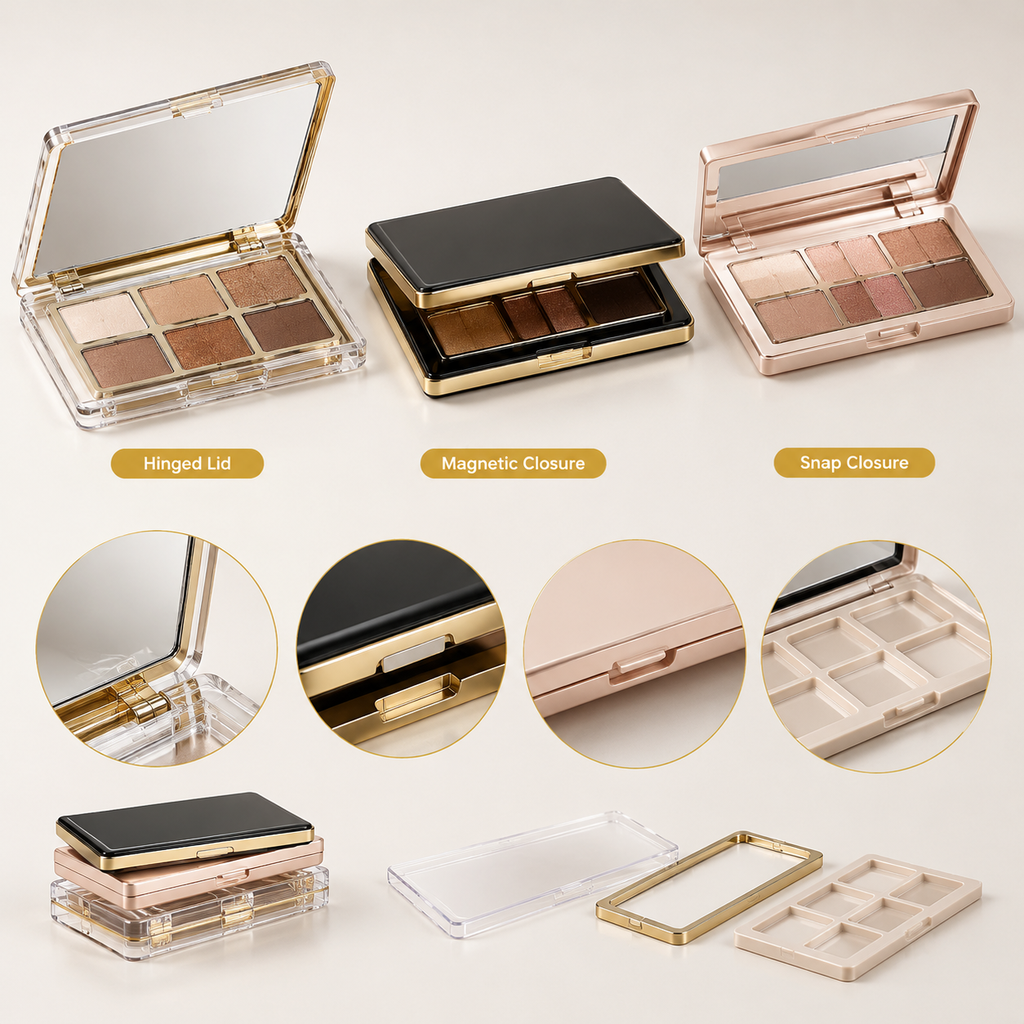
The case protects the pans and provides the main brand surface. A hinged lid can support a compact everyday format, while a separate lid or sleeve may suit a refill-oriented or presentation-focused design. Magnetic closures can create a smooth opening experience, but the magnet position, retention, case thickness and transport requirements need review. A snap closure may simplify component integration but should be evaluated for opening force, wear and alignment.
Mirrors, brush wells, removable trays and layered inserts add functionality, but they also affect weight, internal clearance and assembly. Specify whether the palette must be opened with one hand, displayed upright, packed in a carton or shipped through an e-commerce distribution chain. These use conditions help determine the appropriate closure and structural design.
Materials and decoration comparison
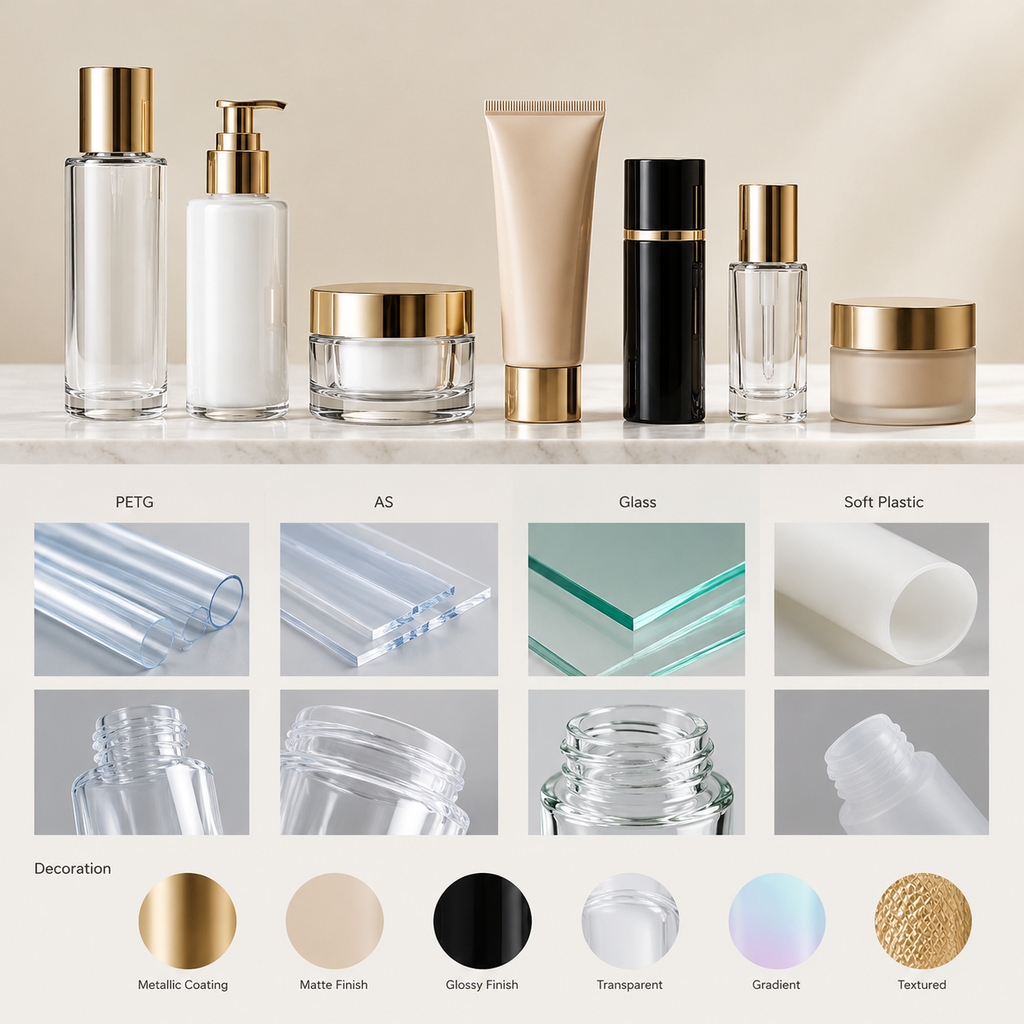
Material selection affects appearance, weight, tooling, durability and decoration—not just the perceived quality of the palette. The final choice should be confirmed against the case design, filling process, quantity, destination and approval sample.
| Opción | Potential strengths | Aspectos que hay que sopesar | Suitable when |
|---|---|---|---|
| Plastic case, such as AS or a related engineering plastic | Supports molded shapes, integrated details and a wide range of finishes | Tooling, wall thickness, weld lines, shrinkage and color consistency require review | The brand needs a shaped custom case or efficient repeatable assembly |
| Cardboard or paperboard outer structure | Can provide a lightweight printed surface and layered graphic design | Moisture, edge wear, rigidity and insert retention need evaluation | The palette prioritizes printed artwork and a lightweight presentation |
| Metal pan with a plastic or board case | Common pan format with clear separation between fill component and outer case | Pan dimensions, retention method, magnet use and corrosion or finish requirements must be confirmed | The formula supplier uses standard or custom metal pans |
| Glass or premium rigid components | Can create a substantial, high-end feel in selected constructions | Weight, breakage risk, hinge design and shipping protection become more important | The product concept supports a heavier prestige format |
Decoration may include color matching, printing, hot stamping, metallic effects, coating, embossing or a label. Each method has different artwork, surface and sample requirements. Confirm whether the decoration is applied before or after assembly and request a physical decorated sample for approval.
Mold, assembly and filling considerations
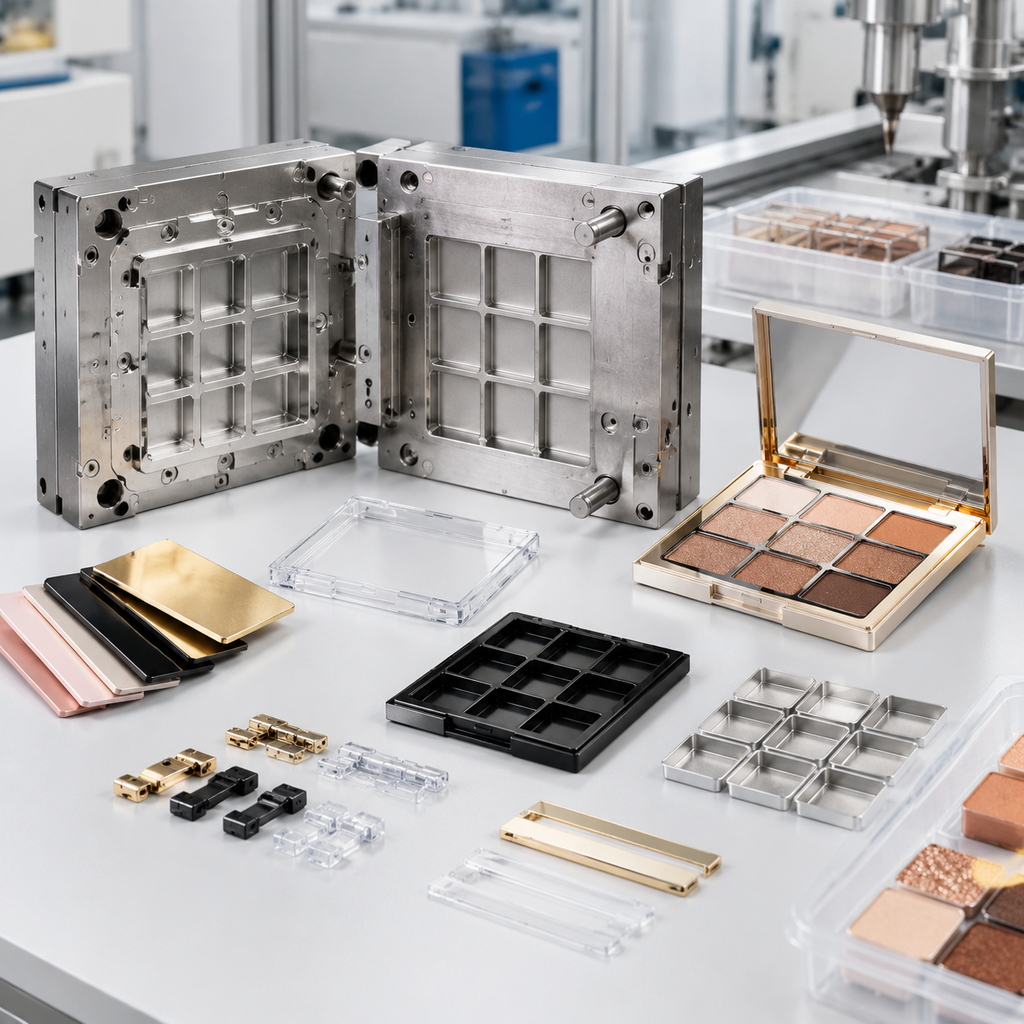
Can an OEM supplier develop custom makeup palette packaging? Yes, an OEM or ODM supplier can review a custom case, tray and component system, but feasibility depends on the dimensions, mold requirements, selected materials, estimated quantity, filling application and approval process.
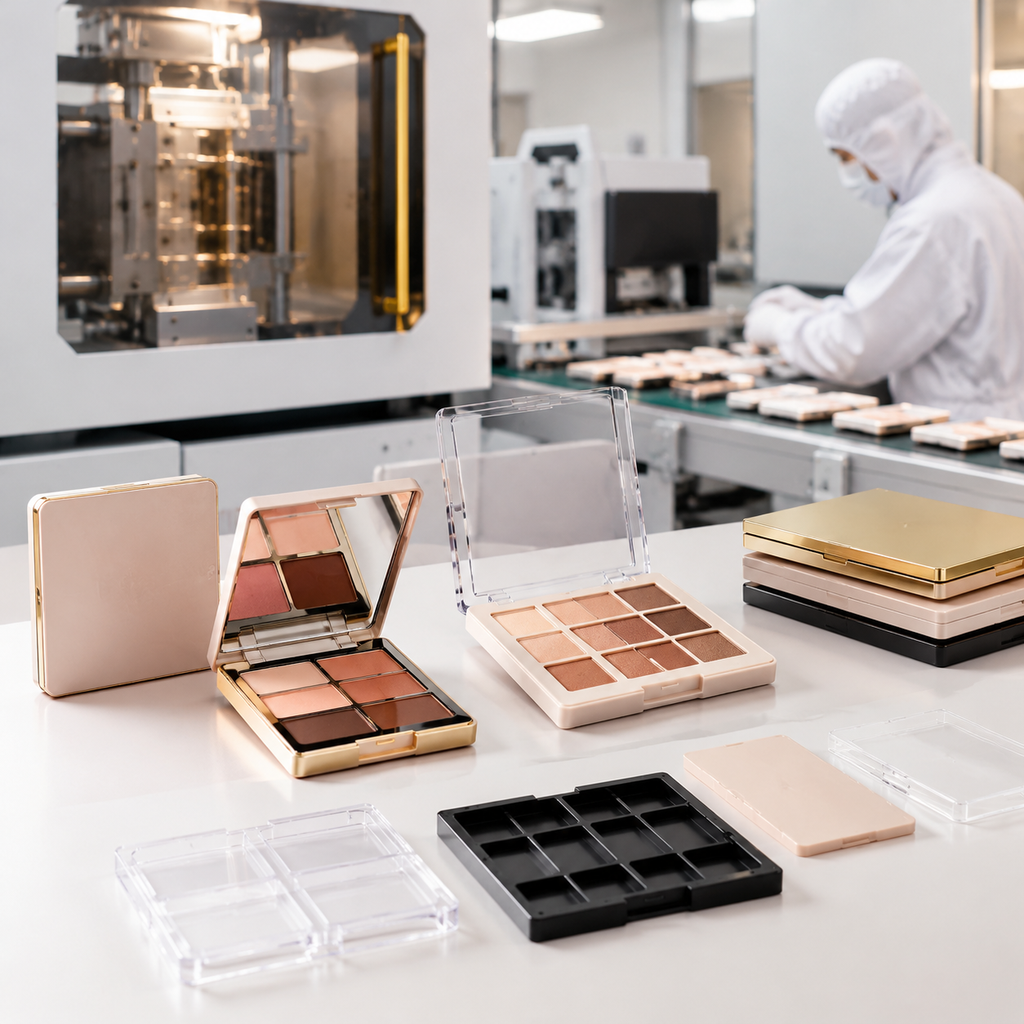
YBJ Packaging states that it provides OEM and ODM support from consultation and design through mold development, manufacturing, assembly, quality checks and worldwide shipping. The company also describes more than 20 years of cosmetic-packaging experience, a 10,000 m² intelligent facility, a Class 10,000 cleanroom, 12 automated assembly lines and 23 Toshiba all-electric injection machines. These are company-stated capabilities; the suitable process and capacity for a specific palette should be confirmed during project review.
- Share the pan, tray and case dimensions, including tolerances and material preferences.
- Confirm whether the pans arrive prefilled, are filled by a contract manufacturer or require an integrated filling and assembly plan.
- Review mold parting lines, draft, ejection, hinge features, magnet pockets and decoration surfaces.
- Define assembly sequence, inspection points, packaging configuration and destination requirements.
- Approve functional and decorated samples before production specifications are finalized.
Filling means placing or pressing the cosmetic formula into the pan; assembly means installing pans, trays, mirrors, magnets, lids and other components. These stages should be planned together because the filled height, powder dust, adhesive or retention method can affect the case and inspection process.
Sampling and artwork approval
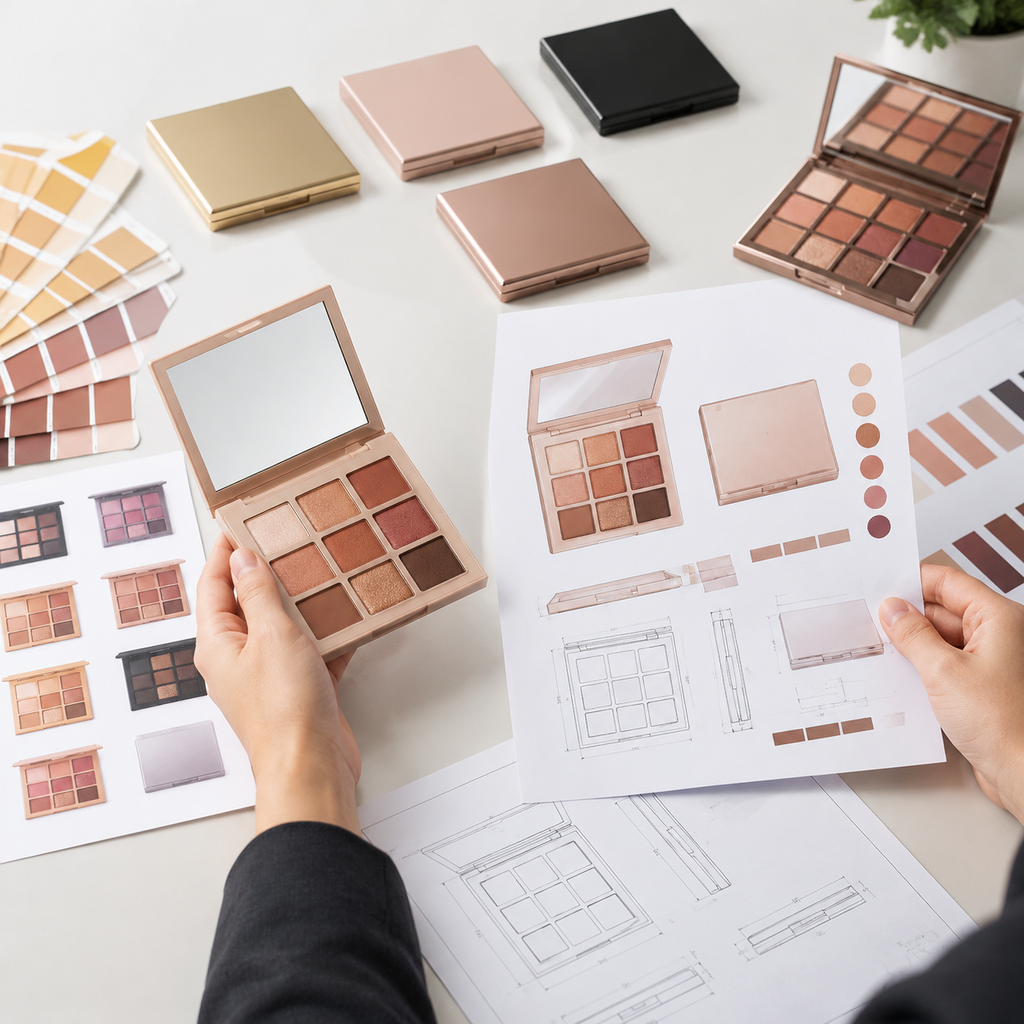
Sampling should verify both appearance and function. A useful approval sequence is:
- Concept review: Confirm pan count, case architecture, target dimensions, materials and closure.
- Structural sample: Check fit, hinge movement, closure engagement, mirror clearance, tray retention and applicator space.
- Decoration sample: Review color, print registration, coating, foil, texture, logo placement and visible mold marks.
- Filled or simulated assembly sample: Check filled-product height, pan seating, dust exposure, assembly sequence and pack-out.
- Production approval: Record the approved drawings, artwork, color references, components and inspection criteria.
Do not approve artwork from a flat rendering alone. Ask for the latest dimensional drawing and a physical or representative sample, because surface curvature, seams and hinge clearances can change the final appearance. Compatibility and quality checks should reflect the actual formula components and assembly process.
Questions for a palette manufacturer
Include the following information in an inquiry to a cosmetic palette manufacturer:
- Product type, formula or powder component context and whether pans are filled before assembly.
- Pan count, pan shape, pan dimensions, filled height and preferred eyeshadow pan layout.
- Finished palette dimensions, capacity, mirror, brush well, removable tray and refill requirements.
- Case, tray and pan materials, closure preference and any material restrictions.
- Decoration method, color references, artwork files, finish and logo placement.
- Estimated quantity by colorway, filling application, destination, packaging configuration and target date.
- Required samples, compatibility questions, inspection expectations and mold ownership or development scope.
YBJ Packaging can review an OEM or ODM brief, but exact compatibility, MOQ, tooling, pricing, production time and shipping should be confirmed after the specifications and approval requirements are understood.
Preguntas frecuentes
Eyeshadow palette packaging decisions are easiest to manage when the formula component, pan layout and case are treated as one development project. The final recommendation should be based on approved dimensions, samples and project requirements.
Preguntas frecuentes
How is custom eyeshadow palette packaging designed?
It is designed by coordinating the pan count, pan geometry, tray, case dimensions, lid clearance, closure, decoration and filling or assembly process. A supplier should review drawings and samples before final production specifications are approved.
What should be considered when choosing an eyeshadow pan layout?
Consider shade count, pan shape and size, spacing, tray wall thickness, filled height, lid clearance, logo area, applicator space and the intended filling and assembly method. The best layout balances visual organization with manufacturability.
Can an OEM supplier develop custom makeup palette packaging?
Yes. An OEM or ODM supplier can review custom cases, trays, closures and decoration, subject to the project’s dimensions, materials, mold requirements, quantity, filling process and approval samples.
Which material is best for a custom eyeshadow case?
There is no universal best material. Plastic can support molded shapes and integrated features, cardboard can support lightweight printed designs, and premium rigid constructions can create a heavier presentation. The choice depends on design, tooling, decoration, durability, quantity and shipping requirements.
What should be approved before palette production?
Approve the dimensional drawings, pan and tray fit, closure and hinge function, mirror or accessory clearance, decoration sample, color references, artwork placement, assembly details and any relevant filled or simulated sample. Exact approval requirements depend on the project.
Comenta tu envase cosmético personalizado
Indica a YBJ Packaging qué producto vas a envasar, el formato y la capacidad del envase que necesitas, tus preferencias en cuanto a materiales y decoración, la cantidad estimada, el destino y la fecha prevista. El equipo analizará el pliego de condiciones y te propondrá opciones prácticas de envasado OEM u ODM para tu proyecto.

 English
 Français
 Español
