



Table of Contents
- Short answer: specify the complete bottle-and-filling system
- Create a dropper bottle filling-line data sheet
- Capacity, target fill volume and headspace
- Neck finish, closure dimensions and capping requirements
- Pipette length, bottle geometry and dosage
- Plain-English definitions of neck finish, dosage and pipette length
- Comparison table: which specification affects which production step?
- How to plan a filling, capping and dispensing trial
- Check machine fit and component feeding
- Record fill accuracy, closure fit and user dispensing
- Common dropper bottle and filling-line mismatches
- What to include in a supplier inquiry for a production-ready package
- How YBJ Packaging supports custom development and assembly review
- Frequently asked questions
- Send your filling-line specifications to YBJ Packaging
A dropper bottle must be specified as a complete bottle, dropper, closure, formula, filling, capping, and inspection system. This guide explains the information cosmetic brands should provide to an OEM or ODM packaging supplier before requesting samples, tooling, or production pricing.
Short answer: specify the complete bottle-and-filling system
Short answer: A production-ready dropper bottle specification should cover the bottle, formula context, target fill volume, headspace, cosmetic bottle neck finish, dropper assembly, pipette length, closure torque, filling equipment, capping process, decoration, inspection method, and shipping destination. A nominal bottle capacity or product photograph alone is not enough to confirm dropper bottle filling compatibility.
For serum bottle filling, the most reliable approach is to provide a structured data sheet and then run the selected components on the intended filling and capping equipment. The trial should use the actual formula whenever practical, or a representative liquid with similar viscosity, surface tension, foaming behavior, and temperature during filling. The final result depends on the formula, bottle and component tolerances, line architecture, filling quantity, decoration, approval sample, and destination requirements.
Before requesting a quotation, define these seven items:
- Container: material, color, nominal capacity, target fill volume, overall dimensions, shoulder shape, base, and allowable tolerances.
- Neck and closure: neck finish drawing, thread details, sealing surfaces, dropper or pipette assembly, cap dimensions, and the capping method.
- Dispensing: pipette length, bulb or actuator details, orifice, intended dropper bottle dosage, and whether the dosage is measured by drop, volume, mass, or user instruction.
- Formula: viscosity range or test description, temperature, solids or particles, sensitivity to air or light, and any known material-compatibility concerns.
- Line: filler type, nozzle arrangement, bottle handling, cap feeder, torque head, line speed target, and available change parts.
- Quality: fill-accuracy method, leak or seal checks, torque acceptance window, visual standards, assembly checks, and approval-sample process.
- Commercial and logistics: estimated quantity, decoration, destination, packaging configuration, target date, tooling expectations, and required documents.
YBJ Packaging can review a custom packaging brief from design and mold development through material selection, manufacturing, assembly, quality checks, and worldwide shipping. These are company-provided capabilities; compatibility, tooling, MOQ, pricing, production time, and shipping arrangements must be confirmed for the specific project.
Create a dropper bottle filling-line data sheet
A dropper assembly specification sheet gives the packaging supplier and filling-line team one shared reference. It reduces the risk of discussing a bottle, closure, or pipette as an isolated item when the actual requirement is a complete assembled package. The sheet can begin as a buyer brief and become the controlled specification after drawings, samples, and line-trial results are approved.
Use clear units and identify which dimensions are nominal and which are acceptance limits. If a dimension is not yet decided, label it as open rather than allowing the supplier to assume it. Attach a drawing or sample wherever the fit depends on a surface, thread, sealing area, or machine interface.
| Data-sheet group | Information to record | Why the line team needs it |
|---|---|---|
| Formula and process | Product type, viscosity context, temperature at filling, foaming tendency, solids or particles, and whether the formula is filled by volume or mass | Filling behavior and dispensing performance can change with liquid properties and process conditions |
| Bottle | Material, color, nominal capacity, target fill volume, headspace, overall height, body diameter or width, shoulder, base, wall thickness, and tolerance requirements | Determines nozzle access, container handling, fill position, visual inspection, and pack-out |
| Neck finish | Finish designation if used, thread profile, neck outside diameter, finish height, sealing surface, bead, drawing datum, and tolerance | Controls dropper insertion, closure engagement, sealing, cap feeding, and torque setup |
| Dropper assembly | Closure material and color, bulb or actuator, pipette material, pipette length, tube dimensions, orifice, wiper if applicable, and assembly orientation | Influences uptake, discharge, component feeding, consumer handling, and residual liquid |
| Filling and capping line | Filler type, number and spacing of nozzles, container indexing, cap feeder, torque head, change parts, target speed, and line constraints | Allows the package to be checked against actual equipment rather than a general assumption |
| Decoration | Print or label method, artwork, color references, decoration area, orientation mark, finish, and inspection standard | Decoration can affect handling, orientation, scuffing, sensor recognition, and appearance acceptance |
| Quality and logistics | Sampling plan, visual standard, leak check, torque check, fill-accuracy method, carton configuration, destination, quantity, and target date | Connects the approved sample to production release and delivery planning |
It is useful to add a revision block showing the document number, date, sample version, drawing revision, formula version, and person responsible for approval. Packaging changes that appear minor, such as a different bulb material, decoration finish, thread detail, or bottle color, should be recorded as a new revision when they can affect the line or dispensing result.
Ask the supplier to identify assumptions in its response. For example, an initial proposal may use a standard closure or an available bottle while the final neck drawing and decoration are still under review. That can be a useful development starting point, but it should not be treated as the production configuration until the line trial and approval process are complete.
Capacity, target fill volume and headspace
Capacity and fill volume are related but not interchangeable. Nominal capacity describes the intended size of the container under a defined measurement approach. Target fill volume is the amount the filling line is set to dispense. Headspace is the empty volume left between the liquid surface and the closure or shoulder area after filling. All three should appear on the brief.
For serum bottle filling, start with the commercial fill declaration and then confirm how the filling department controls the dose. A line may control volume, mass, time, or another validated process variable. The supplier needs to know which approach is used because bottle geometry and liquid behavior can affect the result. Do not ask a packaging supplier to infer the required fill tolerance from a label claim alone.
Headspace should be selected with the filler, closure, formula, and transportation conditions in mind. Too little space can create liquid contact with the dropper assembly, overflow during closure placement, or inconsistent fill appearance. Too much space can affect the perceived fill level, consumer use, and the amount of liquid available to the pipette. Foaming, temperature changes, liquid expansion, and movement during shipping may also need consideration.
Record the following information:
- Nominal bottle capacity and the method used to define it.
- Target fill volume and any separate minimum or maximum fill limits.
- Whether the line controls volume, mass, or another process variable.
- Liquid temperature during filling and the expected temperature range in production.
- Required headspace or an agreed method for determining it during trials.
- Liquid appearance at the fill line, including foam, bubbles, particles, or settling if relevant.
- Whether the pipette should reach near the base, stop above the base, or follow a defined internal geometry.
Because bottle tolerances and internal shape can vary, the target fill level should be checked with physical samples rather than only with an external drawing. A bottle may have the correct nominal capacity but still present a different visible fill height or pipette reach from another design. Confirm the actual result using the intended formula or a representative test liquid before approving the package.
Neck finish, closure dimensions and capping requirements
The cosmetic dropper bottle neck finish is the engineered interface between the bottle and the dropper closure. It includes more than the visible neck diameter. The thread profile, thread start, finish height, sealing surface, bead or support feature, outside diameter, and dimensional tolerances can all affect assembly and sealing.
Provide a dimensioned neck drawing or a physical component that the supplier can measure. If the project uses an existing filling line, share the line owner's change-part or closure requirements as well. A closure that looks compatible by eye may still have insufficient thread engagement, an incorrect sealing contact, or a fit that creates excessive resistance during capping.
The closure portion of the brief should include:
- Closure type and external dimensions.
- Closure material, color, surface finish, and any metal or plastic subcomponents.
- Dropper bulb or actuator details and how it is fixed to the pipette.
- Wiper, insert, liner, gasket, or other sealing component if used.
- Neck finish drawing, thread details, sealing datum, and tolerance.
- Cap application method, chuck or gripper interface, and any cap feeder constraints.
- Required application direction and whether a tamper-evident or secondary feature is needed.
- Torque measurement method, acceptance window, and the conditions under which torque is checked.
Cosmetic bottle closure torque should be treated as a process setting and a quality characteristic, not as a universal number. The useful operating window depends on the bottle and closure materials, thread geometry, sealing component, cap design, line head, speed, and target seal. Excessive torque can damage components or make the package difficult to open; insufficient torque can reduce closure security or create leakage risk. The correct range must be established with the actual components and the line equipment.
Torque alone does not prove a good package. Combine the torque record with visual thread engagement, cap height, closure alignment, leakage or inversion checks, and consumer-use evaluation where appropriate. For a broader explanation of drawings and component fit, buyers can review the cosmetic bottle neck finish guide before completing the supplier brief.
Pipette length, bottle geometry and dosage
Pipette length should be specified from a clear reference point, not by describing it as short, medium, or long. Define the measurement datum, such as the underside of the assembled closure or another agreed seating surface, and measure to the pipette tip. Also record the tube outside diameter, inside diameter, tip geometry, orifice, material, and allowable variation.
The bottle interior matters just as much as the nominal pipette length. Shoulder angle, internal neck height, base shape, wall thickness, and bottle height determine where the pipette ends in relation to the liquid and the lowest part of the container. A pipette that is too long may contact the base or create assembly and handling problems. One that is too short may leave liquid behind or fail to collect the intended amount near the end of use. These effects are design- and formula-dependent and should be checked with physical components.
Dropper bottle dosage can refer to several different things:
- The amount of liquid filled into the bottle by the production line.
- The amount collected by the pipette after bulb release.
- The amount discharged by one user actuation.
- The number of drops a user obtains under stated use conditions.
- The mass or volume used for an internal quality check.
State which meaning applies. Drop size is affected by the pipette orifice, tube dimensions, bulb recovery, liquid viscosity, surface tension, density, temperature, orientation, and actuation method. A drop count should not be converted into a fixed volume without defining the test conditions. If the brand has a consumer-use instruction, test that instruction separately from the filling-line dose.
A practical pipette and dosage section of the specification sheet can include:
| Item | What to define |
|---|---|
| Measurement datum | Where pipette length starts and where the tip measurement ends |
| Pipette geometry | Length, tube outside and inside dimensions, tip shape, orifice, and tolerance |
| Assembly | How the pipette connects to the bulb, insert, or closure and how orientation is controlled |
| Bottle relationship | Clearance from the base and shoulder, desired reach, and behavior at low remaining fill |
| Dosage test | Volume, mass, or drop-count method; liquid condition; actuation; orientation; and sample quantity |
| Acceptance criteria | Limits for uptake, discharge, residual liquid, leakage, and user handling, subject to project approval |
Do not finalize pipette length from an exterior bottle height alone. The closure seating position and internal bottle profile can change the effective reach. Request an assembled sample and evaluate uptake, dispensing, replacement, and end-of-use behavior with the intended formula or an agreed representative liquid.
Plain-English definitions of neck finish, dosage and pipette length
Packaging discussions often use shorthand that means different things to the bottle designer, filling engineer, and procurement team. The following definitions help keep the specification consistent.
- Neck finish
- The shaped and threaded top portion of a bottle that receives a closure. It defines how the closure engages, seals, and is applied. A neck finish drawing should show the relevant dimensions and tolerances rather than only a nominal label.
- Dosage
- The defined amount delivered or filled under a specified method. In a dropper system, dosage may mean filling volume, liquid uptake, volume per actuation, mass, or drop count. The test method must state the liquid, temperature, orientation, and actuation conditions.
- Pipette length
- The distance from a specified closure or assembly datum to the end of the dip tube. The datum matters because the same tube length can produce a different reach when the closure seating position changes.
- Airless packaging
- A package that uses a pump and an internal piston or other structure to move product toward the outlet without the usual open headspace. It is not the same as a glass dropper bottle. An airless format may be considered when the formula and dispensing objective suit a pump system, but it requires a different package and line review.
- PETG
- PETG commonly means glycol-modified polyethylene terephthalate, a thermoplastic used in some packaging applications. Its appearance, grade, wall design, decoration adhesion, and formula compatibility must be confirmed for the specific project.
- AS
- AS commonly means acrylonitrile styrene, a rigid plastic used in some cosmetic packaging components. The exact grade, color, stress behavior, decoration method, and compatibility should be identified before approval.
- Cleanroom
- A controlled production area designed to limit airborne particles and manage specified environmental conditions. A cleanroom does not by itself confirm formula compatibility, sterility, or regulatory compliance. The applicable controls and packaging process must be confirmed for the project.
These terms describe package architecture; they do not establish cosmetic performance or regulatory suitability. The formula owner remains responsible for evaluating the formula, and the packaging team should document the tests and approvals required for the destination market.
Comparison table: which specification affects which production step?
The same package specification can affect several steps on the line. Use this table to identify the people who should review each item before samples are approved.
| Specification | Primary production step affected | Practical issue to review | Evidence to request or record |
|---|---|---|---|
| Nominal capacity and target fill volume | Filling and in-process inspection | Can the filler reach the target without excessive foam, splash, or variation in visible fill level? | Approved fill setting, measurement method, sample results, and fill-level photographs if useful |
| Headspace | Filling, closure placement, and transportation | Is there enough room for closure insertion and expected movement without overflow or unwanted liquid contact? | Agreed headspace method, assembled samples, and transport-related review if required |
| Bottle material and wall design | Container molding, handling, decoration, and formula contact | Does the bottle remain stable through handling and retain the required appearance and fit? | Material grade, color standard, drawing, samples, and compatibility plan |
| Body dimensions and base | Infeed, conveyor movement, indexing, filling, labeling, and cartoning | Does the bottle sit securely and pass through guides, pockets, sensors, and downstream equipment? | Dimensioned drawing, change-part review, and line trial observations |
| Neck finish | Dropper insertion and capping | Do thread engagement, sealing surfaces, and tolerances support repeatable assembly? | Neck drawing, closure drawing, assembled samples, torque data, and leak checks |
| Closure and dropper assembly | Component feeding, insertion, capping, and consumer use | Can the cap be oriented, picked, placed, torqued, removed, and replaced without damage or instability? | Assembly drawing, component samples, feeder review, and functional observations |
| Pipette length and tip | Assembly, uptake, dispensing, and end-of-use performance | Does the pipette reach the intended area without bottoming, scraping, or leaving avoidable residual liquid? | Datum definition, length tolerance, assembled sample, and dosage test record |
| Orifice and bulb or actuator | Consumer dispensing and dosage checks | Is discharge behavior repeatable under the defined liquid and actuation method? | Dosage protocol, liquid condition, orientation, and acceptance criteria |
| Decoration and surface finish | Printing, labeling, handling, inspection, and shipping | Does the decoration survive the process and remain oriented and visually acceptable? | Artwork, color references, decoration sample, rub or handling review if required |
| Carton and pack-out | Secondary packing and logistics | Are assembled bottles protected from movement, scuffing, leakage, and compression in the planned shipment? | Pack-out drawing, carton sample or review, destination, and shipping instructions |
| Cleanroom or controlled assembly requirement | Assembly and quality control | Which environmental and handling controls are required for this product and destination? | Project-specific process description and agreed inspection or handling requirements |
No single row confirms production readiness. The bottle, closure, formula, machine, and quality method must be considered together. If a change is made to one item after the line trial, determine whether the affected steps need to be repeated.
How to plan a filling, capping and dispensing trial
A line trial should answer practical questions that drawings cannot settle: whether bottles feed reliably, whether the filler reaches the target, whether the dropper closes consistently, and whether the assembled package dispenses as intended. Plan the trial as a controlled development activity rather than an informal sample demonstration.
- Freeze the trial configuration. Identify the bottle revision, closure revision, pipette length, decoration status, formula or representative liquid, filling temperature, and line settings to be evaluated.
- Confirm the measurement methods. Agree how fill amount, torque, leakage, visual defects, dosage, and component damage will be checked. Define who records the result and who can approve a change.
- Prepare sufficient components. Include bottles, closures, pipettes, bulbs, inserts, and secondary packaging from the intended or representative manufacturing route. The quantity depends on the trial objective and should be agreed in advance.
- Run the filling sequence. Observe infeed, container stability, nozzle alignment, liquid behavior, fill level, foam, splashing, and any interaction with decoration or sensors.
- Run closure assembly and capping. Review component feeding, insertion depth, thread engagement, cap height, capping torque, skew, and damage. Check whether the line requires different change parts or handling settings.
- Perform dispensing checks. Test uptake and discharge using the defined method. Include normal orientation and any consumer-use orientation that the brand intends to communicate.
- Document deviations and repeat where needed. Separate a machine adjustment from a component defect. If a dimension, material, or formula changes, identify whether the trial remains representative.
- Approve or revise. Sign off the package only after the responsible teams agree that the result meets the project acceptance criteria.
Compatibility, line speed, component quantity, tooling, production time, and shipping cannot be confirmed from a general article. They depend on the selected design, equipment, formula, destination, and approval sequence.
Check machine fit and component feeding
Machine fit includes more than whether a bottle can be placed under a filling nozzle. Review the complete path from component loading to filled, capped, inspected, and packed product. The line owner or equipment integrator should provide the interfaces that the packaging supplier needs to check.
For bottles, review body diameter or width, height, shoulder transition, base stability, center of gravity, surface friction, decoration orientation, and the clearance available in guides or pockets. An unusual square, oval, tapered, or lightweight bottle may need different handling from a round container. The correct conclusion depends on the actual machine and change parts.
For dropper components, review the cap feeder, bowl or track orientation, pick-and-place tooling, insert placement, pipette presentation, and whether the bulb can be handled without deformation. If the cap is supplied as a preassembled dropper, confirm how it is transferred and seated. If the assembly is completed on the line, identify every component-feeding step and its inspection point.
At the filling station, check nozzle access, bottle positioning, nozzle height, drip control, and the relationship between fill speed and liquid behavior. A formula with higher viscosity or more foam may need a different filling approach from a thin serum, but the correct setting must be developed with the formula and machine.
At the capping station, check the capper head, chuck or gripper, closure height, thread-start orientation if relevant, torque measurement, and reject handling. A closure can fit the bottle manually but fail to feed, align, or torque consistently on the line. Record any manual intervention because repeated intervention may indicate a package or tooling issue rather than an operator issue.
Ask for a line-layout sketch or photographs with sensitive commercial details removed if that helps the supplier understand the interfaces. Include the current package that runs successfully on the same line if one exists, but do not assume its dimensions or finish can be copied without a new compatibility review.
Record fill accuracy, closure fit and user dispensing
A useful trial record connects each observation to a sample, component revision, machine setting, and test method. Avoid a conclusion such as works well without stating what was tested. A procurement team should be able to compare the result with the approved drawing and repeat the check if the package or formula changes.
For filling, record the selected dose setting, measurement method, sample identification, test conditions, observed fill amount, visible fill level, foam or splash behavior, and any rejected units. The acceptable range should come from the brand, filling department, quality plan, and applicable project requirements. Do not insert a generic tolerance simply because it is common on another line.
For closure fit, record whether the dropper assembly was fully seated, whether the threads engaged smoothly, cap height and alignment, visible damage, and the measured torque under the agreed method. If a liner, wiper, insert, or gasket is used, confirm that it remains in the intended position. Follow torque observations with leakage or seal checks appropriate to the package design.
For dispensing, document the liquid used, its temperature and conditioning time, bottle orientation, number of actuations, bulb recovery time if relevant, pipette position, and the measurement method. Distinguish between the first use, repeated uses, and low remaining fill. These conditions may produce different results. If the package is marketed for a particular consumer instruction, test that instruction as written rather than substituting a laboratory motion.
Visual inspection should cover bottle clarity or color, molded surfaces, flash, sink or flow marks where applicable, closure appearance, print or label position, scuffs, contamination, and assembly alignment. The exact defect categories and sample size are project-dependent. Photographs and retained samples are useful when they show the approved standard and not only a failure.
End the record with a clear disposition: approved for the next stage, approved with listed actions, or not approved. List any open items, responsible person, due date, and whether the issue requires a new sample, mold adjustment, decoration trial, line adjustment, or formula review.
Common dropper bottle and filling-line mismatches
Most packaging delays are not caused by one dramatic design error. They often come from a small mismatch between a component drawing, a formula assumption, and the equipment that must process the finished package.
| Mismatch | What it can cause | How to reduce the risk |
|---|---|---|
| Capacity is specified but target fill and headspace are not | Unexpected liquid level, closure contact, overflow, or a package that does not look full enough | Record nominal capacity, target fill volume, headspace method, and filling conditions separately |
| Neck finish is described only by a nominal name | Incorrect thread engagement, poor sealing, capper adjustment problems, or incompatible dropper assembly | Exchange dimensioned bottle and closure drawings and approve assembled samples |
| Pipette length is selected from exterior height | Tip contact with the base, poor uptake, excess residual liquid, or interference with the shoulder | Measure from the agreed closure datum and check the assembled package internally |
| Dropper dosage is assumed to be universal | Different drop sizes or uptake results when the formula, temperature, orientation, or actuation changes | Define the dosage meaning and test method; do not convert drop count to volume without conditions |
| Formula viscosity is not shared | Slow filling, stringing, foam, dripping, inconsistent uptake, or a mismatch with the selected orifice | Provide viscosity context or a representative liquid and involve the filling team early |
| Manual assembly is used as proof of automatic fit | Cap-feeder jams, misalignment, inconsistent insertion, or excessive operator intervention | Trial the package on the intended equipment and review change parts |
| Torque is copied from another package | Seal weakness, damaged threads, difficult opening, or inconsistent cap height | Establish cosmetic bottle closure torque with the actual components and capper |
| Decoration is approved without line handling review | Scuffing, incorrect orientation, sensor difficulty, print damage, or appearance rejects | Review decoration area, orientation, finish, handling, and inspection requirements |
| Material is chosen without formula and process context | Stress, appearance change, odor transfer, softening, cracking, or other compatibility questions | Identify the material grade and conduct a project-specific compatibility assessment |
| Pack-out is considered after production | Movement, abrasion, leakage, or damage during storage and international shipment | Confirm carton configuration, separators or protection, stacking, destination, and shipping conditions |
| A component changes after approval | Previously acceptable fill, torque, decoration, or dispensing results may no longer apply | Use revision control and determine which checks must be repeated |
When an issue appears, first identify whether it comes from the component, the formula, the machine setting, the measurement method, or the interaction between them. That distinction prevents a tooling change from being made when a line adjustment would have solved the issue, or vice versa.
What to include in a supplier inquiry for a production-ready package
A supplier can respond more accurately when the inquiry describes the production environment as well as the desired appearance. The following checklist can be copied into an RFQ or development email. Mark unknown items as to be confirmed rather than omitting them.
- Product type: Identify whether the package is for a serum, facial oil, essence, treatment liquid, refill, or another cosmetic or personal-care product.
- Formula context: Provide viscosity information or a practical description, filling temperature, foaming behavior, particles, color, fragrance considerations, and any material-compatibility concerns. A formula safety or regulatory assessment is outside the packaging supplier's general specification.
- Capacity and fill: State nominal capacity, target fill volume, headspace preference or method, fill-accuracy method, and whether the line controls volume or mass.
- Bottle dimensions: Provide overall height, body diameter or width, shoulder and base details, wall-thickness expectations, shape, stability requirements, color, transparency, and material or material options.
- Neck and closure: Attach the cosmetic dropper bottle neck finish drawing or sample. Identify closure type, thread, cap dimensions, bulb, pipette, insert, wiper, liner, seal, and the capping equipment.
- Pipette and dosage: Define the measurement datum, pipette length, tube dimensions, tip orifice, desired reach, dosage meaning, orientation, number of actuations, and measurement method.
- Filling application: Share filler type, nozzle arrangement, bottle handling, cap feeder, torque head, change parts, target speed, and any existing package that runs on the line.
- Decoration: Provide artwork, print or label preference, color references, decoration area, orientation, surface finish, inspection standard, and whether the package must be read or detected in a particular direction.
- Quantity: Give estimated annual volume, first-order quantity, forecast, and any phased launch plan. Do not assume an MOQ until the supplier confirms it for the selected design, material, mold, and decoration.
- Quality and samples: List visual standards, fill checks, torque checks, leak checks, dispensing checks, retained samples, approval authority, and the number of sample revisions allowed in the development plan.
- Destination and timing: State shipping destination, required delivery terms if known, import or documentation needs, launch date, target sample date, and target production date. Timing depends on design approval, tooling, material availability, decoration, production scheduling, inspection, and shipping.
Attach photographs of the line, closure drawings, bottle samples, artwork, and the current approved package where available. A clear inquiry does not need to have every decision finished; it needs to show what is fixed, what is flexible, and what must be tested.
Ask the supplier to separate standard components from custom components, tooling items from production items, and estimated planning assumptions from confirmed deliverables. This makes it easier to compare technically different proposals without treating a lower initial price or shorter estimate as proof of better line performance.
How YBJ Packaging supports custom development and assembly review
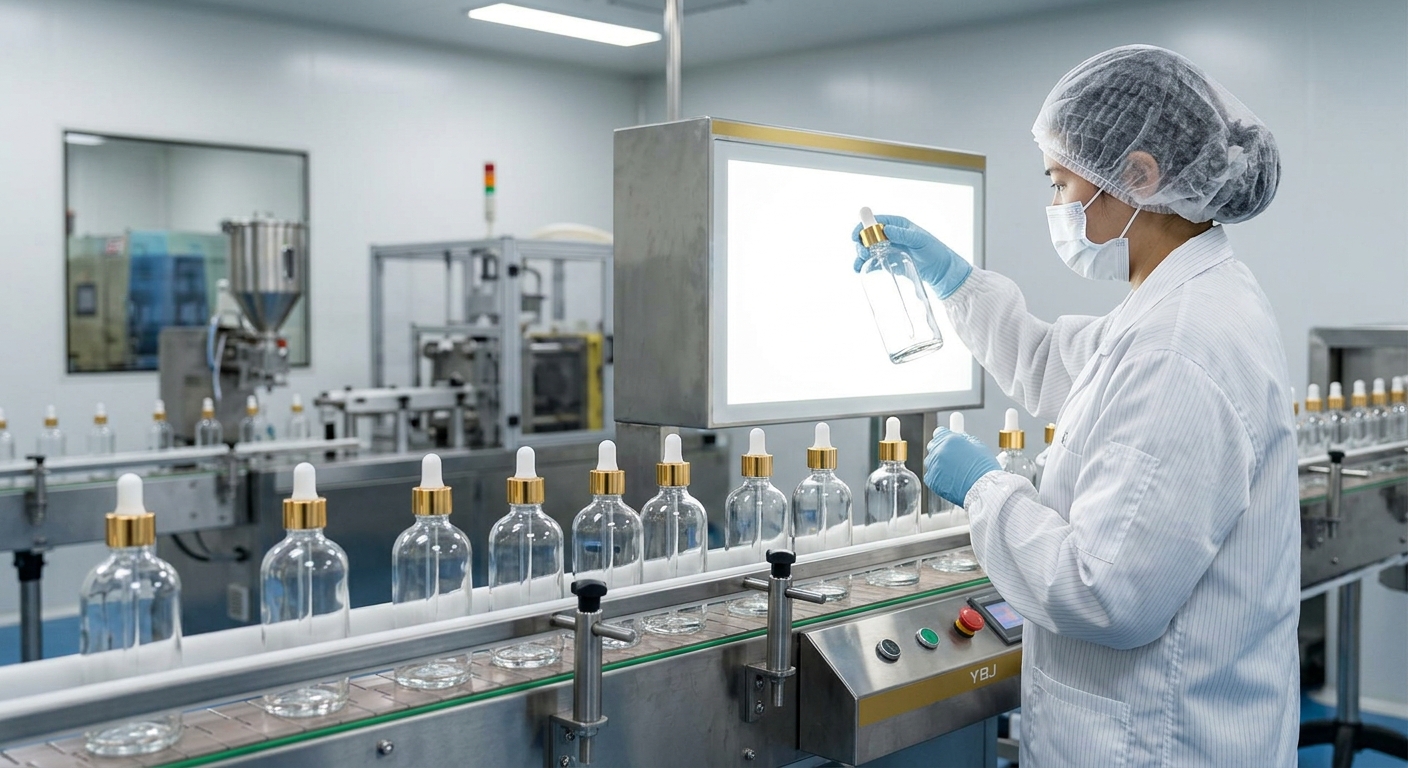
YBJ Packaging is a China-based OEM and ODM cosmetic packaging manufacturer serving skincare, makeup, and personal-care brands. The company describes a one-stop process covering consultation, design, mold development, material selection, manufacturing, assembly, quality checks, and worldwide shipping. For a dropper bottle project, that type of integrated review can help connect the visible package concept with the bottle, dropper, decoration, assembly, and logistics requirements.
According to information provided on the YBJ Packaging website, the company has more than 20 years of cosmetic-packaging experience, a 10,000 m² intelligent facility, a Class 10,000 cleanroom, 12 automated assembly lines, and 23 Toshiba all-electric injection machines. These are company-stated capabilities. They should be understood as available company resources rather than a guarantee that every machine, cleanroom process, material, decoration method, or assembly configuration applies to a particular dropper bottle project.
During an initial review, ask YBJ Packaging to confirm:
- Whether the proposed bottle and dropper assembly can be developed around the buyer's neck finish and filling-line constraints.
- Which dimensions, materials, colors, and decoration details are standard, available, or custom.
- Whether mold development is required and which features must be frozen before tooling.
- How bottle and closure samples will be assembled and identified for approval.
- Which filling, capping, dosage, leakage, appearance, and packaging checks should be included in the project trial.
- What quantity, production timing, inspection, packaging, and shipping details are possible after the specification is reviewed.
Use the following product references as starting points for discussion, not as automatic proof of compatibility. The exact capacity, material, neck finish, pipette, decoration, MOQ, tooling, pricing, production time, and line fit for each item must be confirmed with YBJ Packaging.
| Product reference | Potential sourcing use | Confirm before selection |
|---|---|---|
| Low MOQ Custom Printed Dropper Bottles for Startups | A starting reference for a startup brand exploring custom printed dropper packaging and an initial production quantity | Actual MOQ, bottle and closure specification, print method, formula fit, filling-line handling, and sample approval |
| Wholesale Custom Printed Empty Dropper Bottles with OEM Service | A reference for empty dropper bottle sourcing with OEM development discussion | Neck finish, dropper assembly, material, dimensions, decoration, quantity, capping method, and compatibility trial |
| Large Capacity Custom Printed Dropper Bottles for Liquid Refills | A starting reference when a larger liquid format or refill-oriented package is being considered | Actual capacity, target fill, headspace, pipette reach, liquid behavior, line change parts, pack-out, and shipping requirements |
The most useful next step is to send a data sheet, drawings or samples, formula context, filling-line information, quantity estimate, destination, and target date. YBJ Packaging can then advise which points require a sample, assembly review, mold discussion, or filling-line trial.
Frequently asked questions
Is nominal bottle capacity enough to specify a dropper package?
No. Nominal capacity should be provided, but the supplier also needs target fill volume, headspace, bottle geometry, formula context, and the filling method. The actual visible fill level and pipette reach should be checked with physical samples.
What neck-finish information should a buyer send?
Send a dimensioned bottle neck drawing or physical sample, together with the closure drawing or sample. Include thread details, finish height, sealing surfaces, outside dimensions, tolerances, and the intended capping method. A nominal finish name without dimensions may not be enough for assembly review.
How should dropper bottle dosage be defined?
State whether dosage means the line fill amount, pipette uptake, discharge per actuation, drop count, or mass. Define the liquid, temperature, orientation, actuation, measurement method, and acceptance criteria. Drop size is not a universal fixed volume.
Can a supplier confirm dropper bottle filling compatibility from drawings?
Drawings help identify dimensional risks, but they cannot replace a trial on the intended filling and capping equipment. Formula behavior, change parts, component feeding, line settings, and decoration can affect the result.
Does pipette length depend on the bottle shape?
Yes. The internal shoulder, neck, base, and closure seating position affect effective reach. Specify length from an agreed datum and check the assembled pipette against the actual bottle interior.
When should torque be finalized?
Establish the cosmetic bottle closure torque window after the bottle, closure, seal components, and capping equipment are defined. Check torque together with cap seating, alignment, leakage, and opening behavior under the agreed test method.
What information is needed before discussing MOQ, price, or timing?
Provide the product type, formula or viscosity context, capacity, target fill, material, dimensions, neck and closure, decoration, estimated quantity, filling application, destination, and target date. MOQ, tooling, pricing, production time, and shipping depend on the approved project specification.
Send your filling-line specifications to YBJ Packaging
If you are sourcing a dropper package for an existing cosmetic filling line, send the complete specification rather than only a bottle reference or target capacity. YBJ Packaging can review the proposed bottle, dropper assembly, material, decoration, manufacturing route, and assembly requirements as part of a project-specific discussion.
Include the product type, formula or viscosity context, capacity, target fill volume, headspace, bottle dimensions, material, neck finish, closure or pump details, pipette length, dosage method, decoration, estimated quantity, filling application, destination, and target date. Attach drawings, photographs, current-line information, artwork, and available samples. Invite a sample or compatibility discussion, but allow the final recommendation to depend on technical review and approval samples.
Compatibility, MOQ, tooling, pricing, production time, inspection, and shipping arrangements are not universal. They should be confirmed after YBJ Packaging reviews the project details and the required package configuration.
Request a dropper packaging and filling-line review
Contact YBJ Packaging with your dropper bottle filling line specifications for a project-specific review. Please provide:
- Product type and formula or viscosity context
- Nominal capacity, target fill volume, and headspace
- Bottle dimensions, material, color, and neck finish
- Closure or dropper assembly, pipette length, and dosage method
- Decoration and artwork requirements
- Estimated quantity and launch or production forecast
- Filling application, capping equipment, and available change parts
- Shipping destination and target date
Invite a sample or compatibility discussion. YBJ Packaging will need to confirm the exact specification, tooling, quantity, approval sample, production plan, and shipping requirements before providing project-specific commercial or timing information.

 English
  Français
  Español