

Table of Contents
- Custom PET Bottle vs. Stock Bottle: The Short Answer
- When Should a Buyer Explore an Existing Shape?
- Existing Design Versus New Mold Comparison Table
- What Counts as a Change to the Bottle or Decoration?
- PET Shampoo and Lotion Bottle Examples to Reference
- Steps From Design Brief to Approved Sample
- Tooling Scope and Ownership Questions
- Quotation Checklist and FAQs
- Discuss Your Custom Cosmetic Packaging
Compare an existing PET bottle shape with a custom bottle mold for shampoo, conditioner, lotion and body-care packaging. Learn which design changes may require tooling, what to approve and which project details are needed for a useful quotation.
Custom PET Bottle vs. Stock Bottle: The Short Answer
Choose an existing bottle design when its capacity, dimensions, neck finish and appearance already suit the formula, filling line and brand. Explore a custom bottle mold when the bottle geometry itself must change or when a distinctive structure is commercially important enough to justify project-specific tooling, sampling and approval.
A product listing is a reference for inquiry, not confirmation that a bottle is currently stocked. Availability, material, color, component combinations, modification options, minimum order quantity, tooling cost, production time and shipping must be confirmed for each project.
PET is polyethylene terephthalate, a clear thermoplastic commonly evaluated for personal-care bottles. PETG is a glycol-modified polyester with different processing and appearance characteristics; it should not be treated as interchangeable with PET without supplier and compatibility review. A neck finish is the standardized or project-specific opening and thread area that must fit the selected pump or cap. A custom mold is tooling made to produce a new component geometry.
Key takeaways: Start by checking an existing shape, separate bottle changes from decoration changes, and compare quotations on equivalent specifications. Final suitability depends on the formula, viscosity, filling process, quantity, approved sample and destination requirements.
When Should a Buyer Explore an Existing Shape?
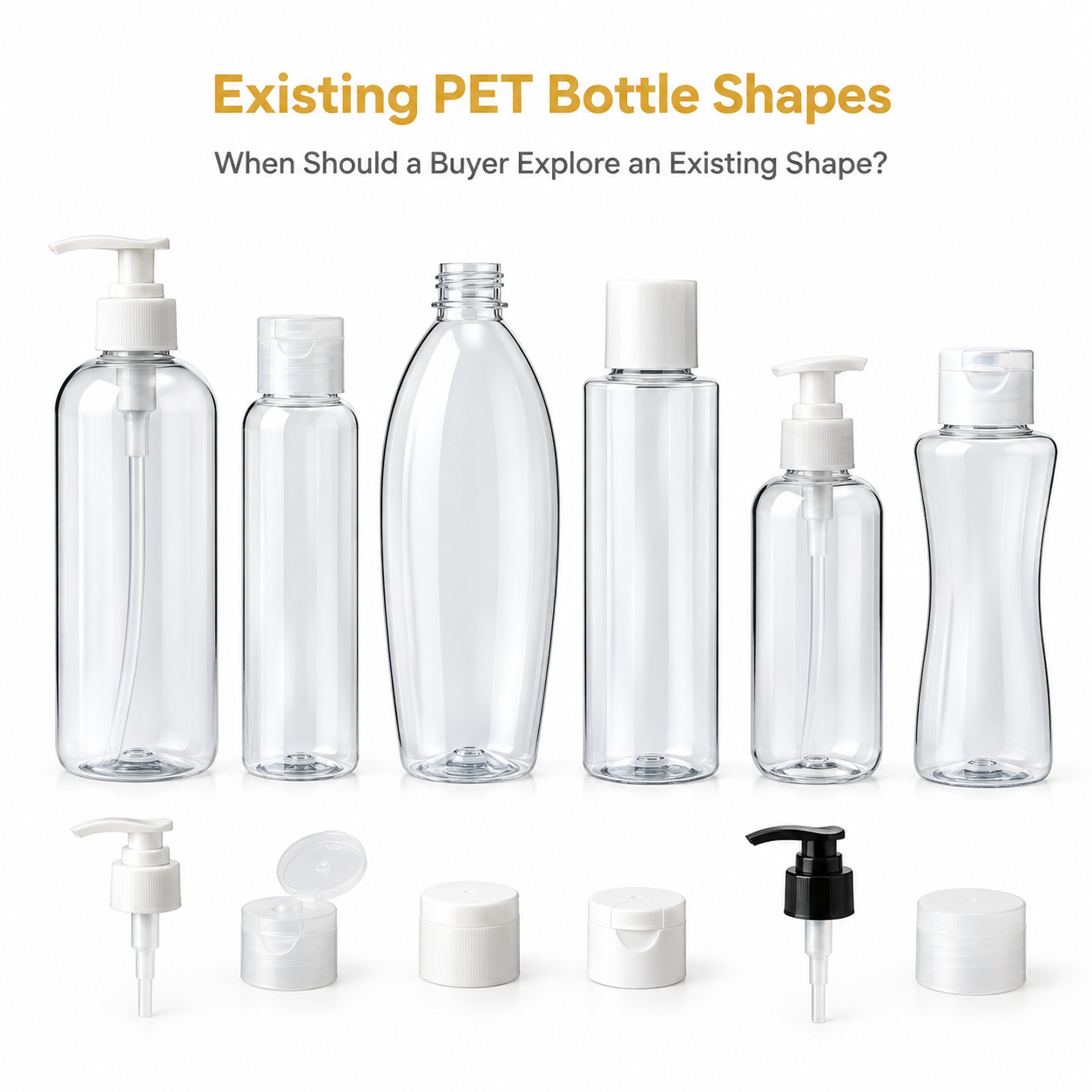
An existing shape is usually the first option to investigate when launch priorities favor a familiar format, lower development complexity and faster specification review. It can be suitable for shampoo, conditioner, body wash or lotion when the available capacity, bottle proportions, neck finish and dispensing system match the intended use.
Ask the supplier to verify whether the referenced tooling is active, whether the bottle is made to order, which resin is used and which colors or closures can be considered. “Existing design” does not necessarily mean finished inventory is waiting for shipment. Bottles, pumps and caps may have separate production conditions and quantity requirements.
Existing tooling is less suitable when the project needs a new silhouette, altered grip panels, a proprietary neck, a major wall or base change, an embossed logo or dimensions engineered around a specific retail footprint. Even a visually modest dimensional change can affect tooling, molding behavior, labeling space, carton count and filling-line handling.
For initial research, buyers can review PET bottle packaging options and then submit the exact application rather than selecting from appearance alone.
Existing Design Versus New Mold Comparison Table
The practical difference is control versus development scope. Existing tooling can simplify evaluation when it fits the brief, while new tooling provides greater control over geometry but adds engineering, sampling and commercial questions.
| Decision factor | Existing bottle design | New custom bottle mold |
|---|---|---|
| Bottle geometry | Uses an available shape and confirmed dimensions | Developed around an approved drawing and project brief |
| Upfront work | Confirm availability, resin, neck, closure and decoration | Confirm industrial design, drawings, tooling scope and validation plan |
| Brand differentiation | Primarily through color, closure, label and decoration where feasible | Can include a proprietary silhouette, grip, panel or molded branding |
| Sampling | Reference or decorated samples may be available after review | Tooling trials and dimensional or functional samples are normally required |
| Quotation | Depends on bottle, component, decoration, quantity and destination | Also depends on mold complexity, cavities, revisions and tooling terms |
| Timing | Project-dependent; existing tooling can reduce development stages | Includes design, tooling and trial stages before production approval |
| Main risk to check | Assuming a listed shape or component is available without confirmation | Approving appearance without resolving filling, closure and ownership details |
Request both quotations against the same capacity, material, closure, decoration, quantity and delivery basis. Otherwise, the totals will not represent a useful like-for-like comparison.
What Counts as a Change to the Bottle or Decoration?
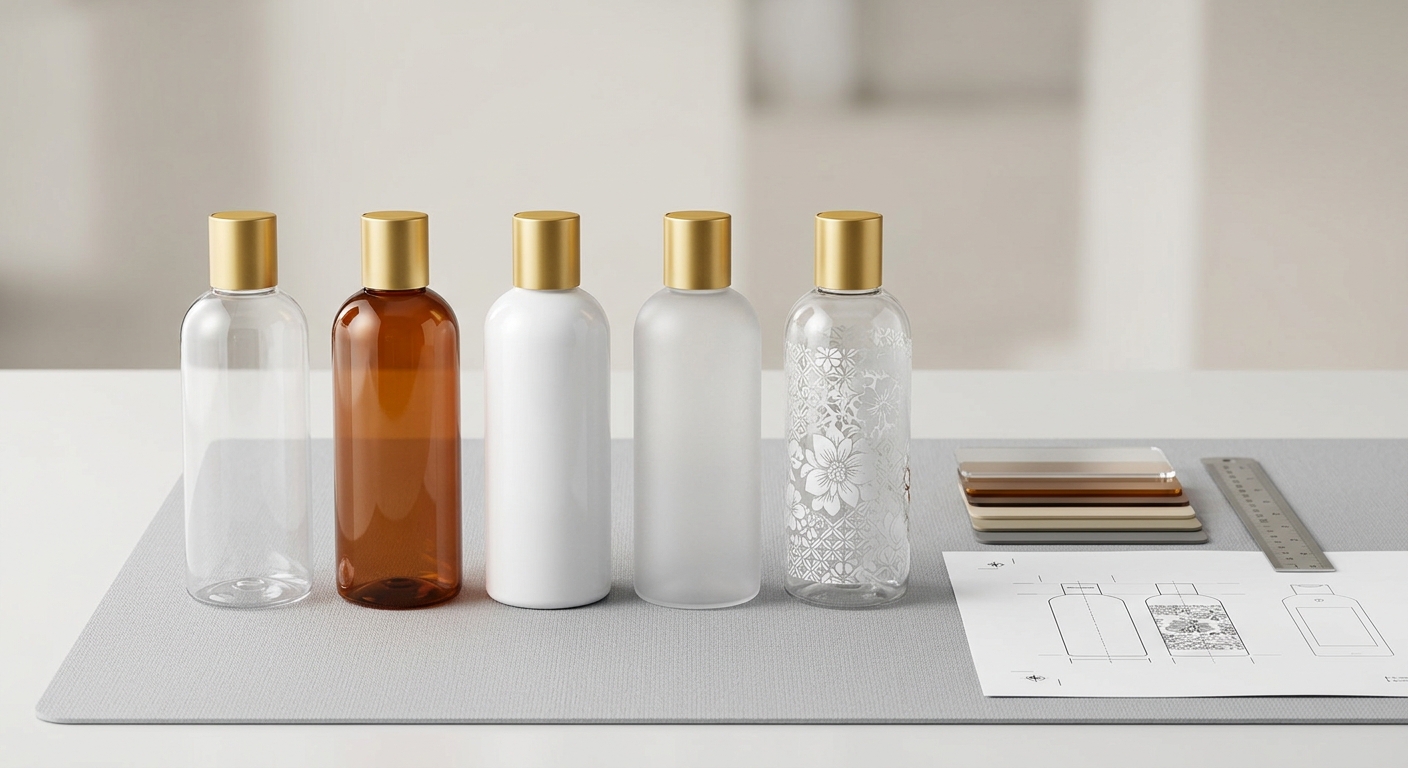
A bottle change alters the molded component; decoration changes its surface appearance. This distinction matters because structural revisions can require new or modified tooling, while decoration may use screens, plates, fixtures, labels or finishing processes instead.
Changes that may require tooling include the silhouette, capacity at fixed proportions, shoulder profile, base, neck finish, thread geometry, wall distribution, grip feature, recessed label panel or molded logo. Feasibility depends on the original tool and production process, so buyers should not assume an existing mold can be edited.
Bottle decoration can include color, coating, screen printing, hot stamping, labeling or other finishes offered for the project. Decoration still affects approval. Curved surfaces can limit artwork size; color can appear different on clear, translucent or opaque material; and fine copy may not reproduce consistently at the intended scale. Approve substrate color, artwork position, print color, finish and acceptable appearance on a representative sample.
Changing the pump or cap may not alter the bottle mold when the neck remains compatible, but the complete package still needs review. Component fit, dip-tube length, lock position, output and leakage risk depend on the selected combination and formula. Dosage means the amount dispensed per full pump actuation.
PET Shampoo and Lotion Bottle Examples to Reference
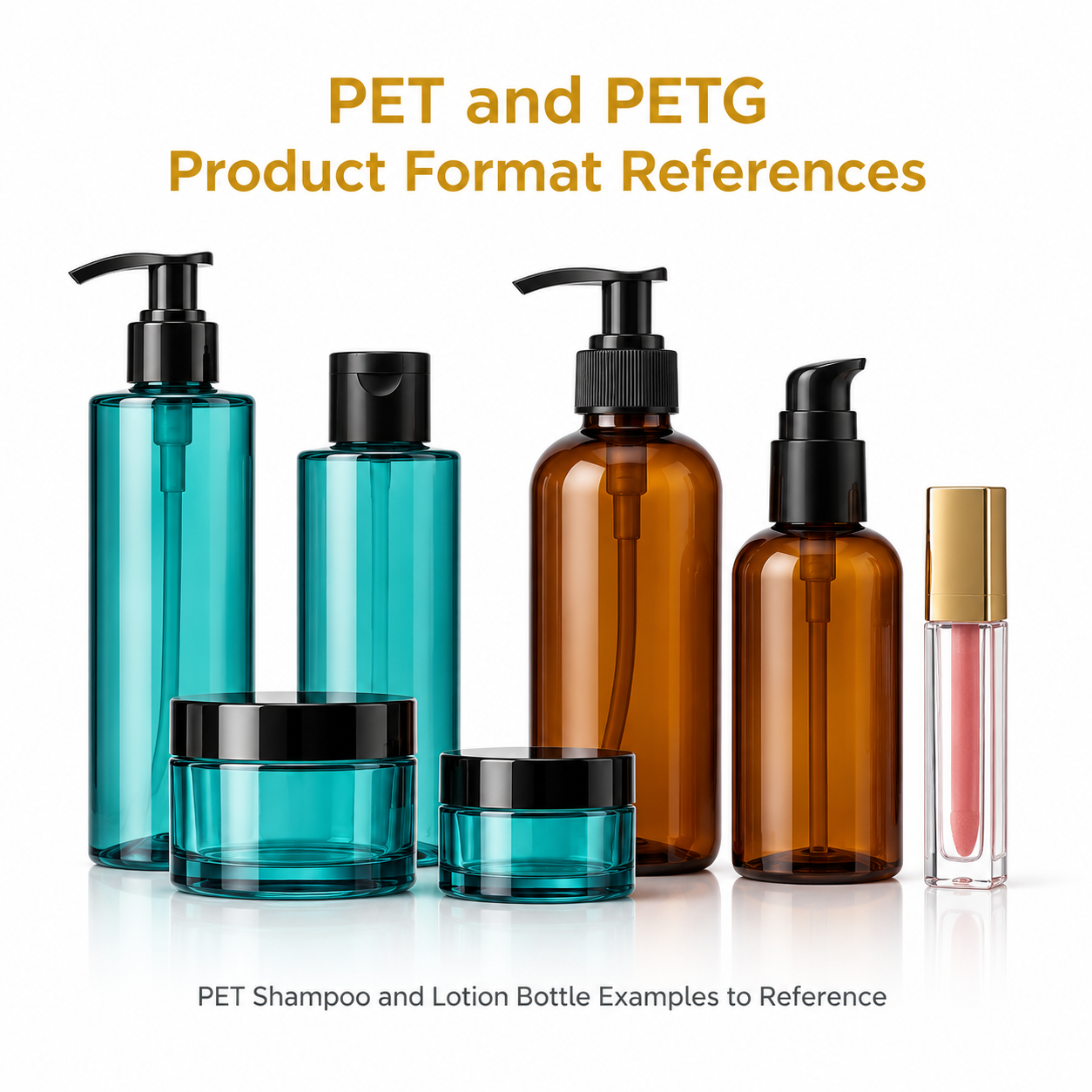
Use product listings as visual and technical discussion references, not as proof of inventory or suitability. Ask YBJ Packaging to confirm the actual resin, capacity, dimensions, neck, closure choices and current production status for the item you reference.
| Listing to reference | Useful discussion point | What must be confirmed |
|---|---|---|
| PETG cosmetic bottle shapes | Reference for straight-sided and coordinated bottle-family aesthetics | Whether a relevant size and dispensing configuration can suit shampoo, lotion or another formula; PETG is not the same resin as PET |
| Amber PET serum and lotion bottles | Reference for amber appearance and pump-based packaging | Capacity, color method, neck finish, pump output and suitability for the buyer’s formula and fill process |
| PET lip product tube format | Shows why material alone does not define an application or package | This is a different product format and should not be treated as a shampoo or lotion bottle reference |
For PET shampoo bottles, buyers commonly need to prioritize wet-hand handling, closure convenience, controlled dispensing and filling-line stability. For PET lotion bottles, pump compatibility, dip-tube reach, formula viscosity and evacuation behavior become important. These are application considerations, not guaranteed properties of every listed bottle.
Steps From Design Brief to Approved Sample
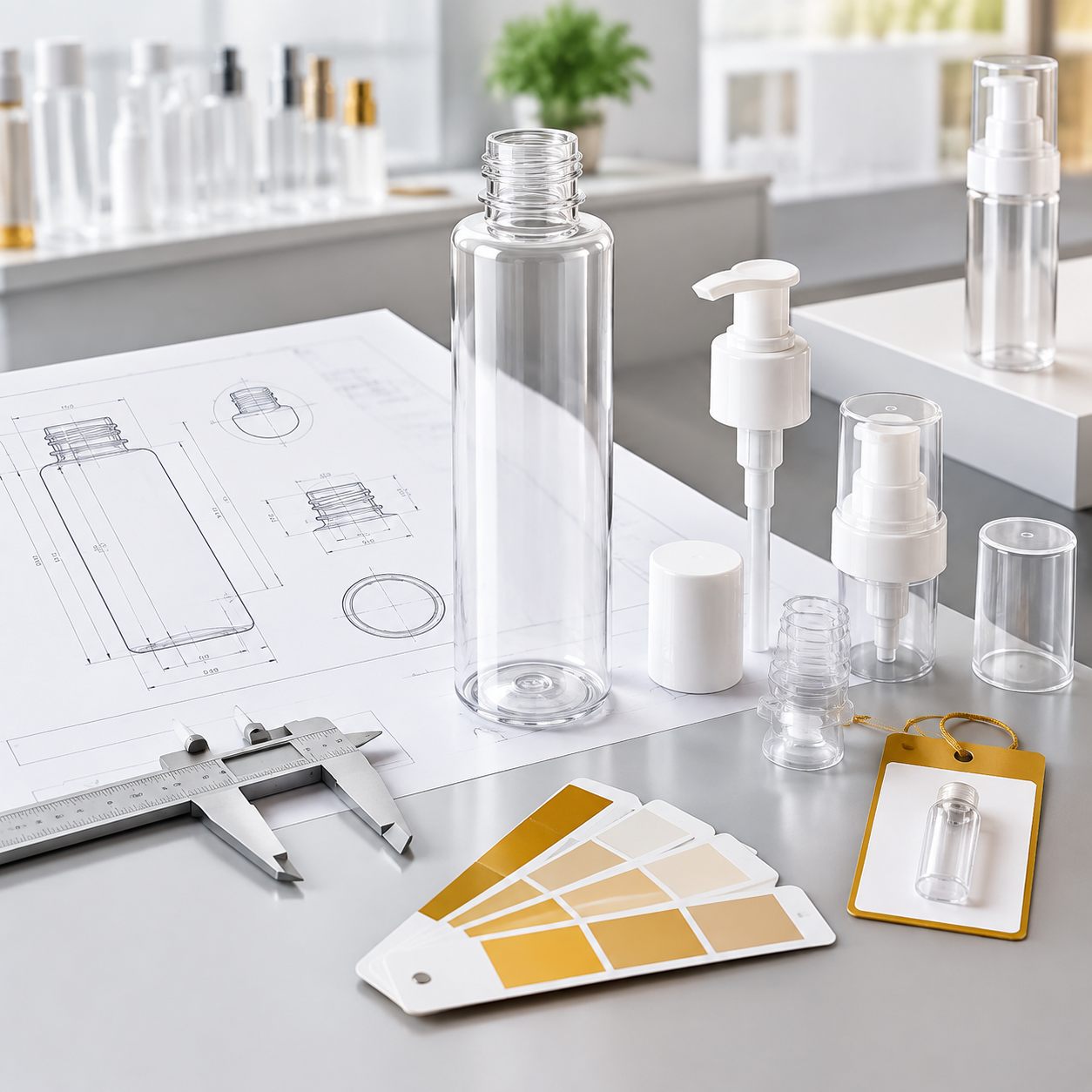
A controlled development process resolves the package specification before mass production. The exact stages depend on whether the project uses an existing design, modifies components or commissions new tooling.
- Define the use case. Provide product type, formula and viscosity context, nominal fill capacity, filling method, retail channel and destination.
- Set the package specification. Identify bottle material, dimensions, neck finish, pump or cap, desired dosage, color, decoration and secondary packaging constraints.
- Compare existing and custom routes. Ask which suitable tools already exist and identify each feature that would require new mold development.
- Review drawings and commercial scope. Confirm dimensions, overflow capacity if relevant, component interfaces, tooling items, sample stages and quotation exclusions.
- Evaluate physical samples. Check appearance, assembly, closure operation, pump function, label or print position and fit with the intended filling line.
- Run project-specific checks. Evaluate formula compatibility, leakage risk, dispensing, transport packaging and decoration adhesion using an agreed protocol. Results depend on the actual formula, components and conditions.
- Approve a defined standard. Record the accepted sample, artwork, colors, dimensions and components before production authorization.
YBJ Packaging states that it provides one-stop OEM and ODM support from consultation and design through mold development, material selection, manufacturing, assembly, quality checks and worldwide shipping. Its website also describes more than 20 years of cosmetic-packaging experience, a 10,000 m² intelligent facility, a Class 10,000 cleanroom, 12 automated assembly lines and 23 Toshiba all-electric injection machines. A cleanroom is a controlled production area designed to limit airborne particles. Buyers should confirm which facility, process and control conditions apply to their particular package.
Tooling Scope and Ownership Questions
Buyers should ask who owns, controls, stores, maintains and may use each custom mold. Ownership should be documented rather than inferred from a tooling payment.
- Which bottle and component tools are included in the quotation?
- Is the mold exclusive to the buyer, and under what written conditions?
- Who owns the mold after payment and approval?
- Where will the tool be stored, and who is responsible for maintenance or repair?
- How many cavities are planned, and can cavity count change after trials?
- Which drawing revision and approved sample define acceptance?
- How are engineering changes, additional trials and replacement tooling quoted?
- Can the mold be transferred, and what technical or commercial limits apply?
Also clarify whether pumps, caps, liners or decorative fixtures use separate tooling owned by another party. A “custom bottle” quotation may cover only the primary container unless the scope explicitly lists every component.
Quotation Checklist and FAQs
A comparable packaging quotation requires the same technical and commercial inputs for every option. A request that includes only a reference image and capacity is unlikely to identify differences in components, decoration or tooling.
- Product type and formula or viscosity context
- Nominal fill capacity and any dimensional limits
- Preferred PET grade or request for a material recommendation
- Neck finish and closure type, including pump dosage where applicable
- Bottle color, transparency and surface finish
- Artwork files, print colors, label size and decoration method
- Estimated order quantity and expected variants
- Filling application, equipment constraints and assembly needs
- Testing or approval sample expectations
- Shipping destination, delivery basis and target date
- For a new mold: tooling scope, ownership, cavities and requested drawing format
Ask the supplier to separate bottle, closure, decoration, tooling, sampling, packing and shipping assumptions where practical. Compatibility, MOQ, tooling, pricing, production time and freight remain project-dependent until the brief and approval requirements are reviewed.
Discuss Your Custom Cosmetic Packaging
The best custom PET bottle vs stock bottle decision starts with a complete technical brief, not the shape alone. An existing design can be practical when its interfaces and dimensions work, while custom tooling is appropriate when bottle geometry creates meaningful functional or brand value.
Tell YBJ Packaging what you are filling, the package format and capacity you need, your material and decoration preferences, estimated quantity, destination and target date. Include dimensions, closure or pump requirements and filling application. The team can review the brief and suggest practical OEM or ODM packaging options for your project, including sample or compatibility discussions where appropriate. Final availability, test scope, price and delivery require project review and approval.
FAQ
Does a product listing mean that a PET bottle is in stock?
No. Treat a listing as a shape or format to inquire about. Ask YBJ Packaging to confirm current production status, material, available capacities, colors, compatible closures, minimum order quantity and timing for the specific project.
Which PET bottle design changes might require new tooling?
Changes to the silhouette, shoulder, base, dimensions, capacity proportions, neck finish, grip features, label panel or molded branding may require a new or modified mold. The supplier must review the existing tool and proposed drawing before confirming the tooling route.
How do decoration choices affect sample approval?
Decoration affects color, artwork position, legibility, adhesion and visual consistency. Approve the actual substrate color, print or label dimensions, finish and placement on a representative sample. Results can vary with bottle geometry, material, artwork and process.
What should a buyer ask about custom bottle mold ownership?
Ask who owns the mold, whether it is exclusive, where it will be stored, who pays for maintenance or repairs, which components are covered and whether transfer is allowed. Put these terms in the quotation or a separate written agreement.
Which project details are needed to compare PET bottle quotations?
Use the same product type, formula context, capacity, dimensions, resin, neck finish, closure, pump dosage, decoration, quantity, filling process, packing requirement, destination and delivery basis for every quote. Include tooling and sample requirements when comparing a custom mold with an existing design.
Discuss Your Custom Cosmetic Packaging
Tell YBJ Packaging what you are filling, the package format and capacity you need, your material and decoration preferences, estimated quantity, destination and target date. Include required dimensions, closure or pump, filling application and artwork details. The team can review the brief and suggest practical OEM or ODM packaging options for your project.

 English
 Français
 Español
