

Table of Contents
- What must be specified before selecting a bottle?
- PET lotion bottle specification table
- Capacity, dimensions and neck finish defined
- Compare relevant YBJ PET lotion bottle examples
- Steps for filler review and sample approval
- Checks that depend on the formula and line
- Inquiry checklist and FAQs
- Discuss Your Custom Cosmetic Packaging
A practical guide to documenting PET bottle capacity, dimensions, neck finish, pump fit and approval tests before releasing lotion packaging for production.
What must be specified before selecting a bottle?
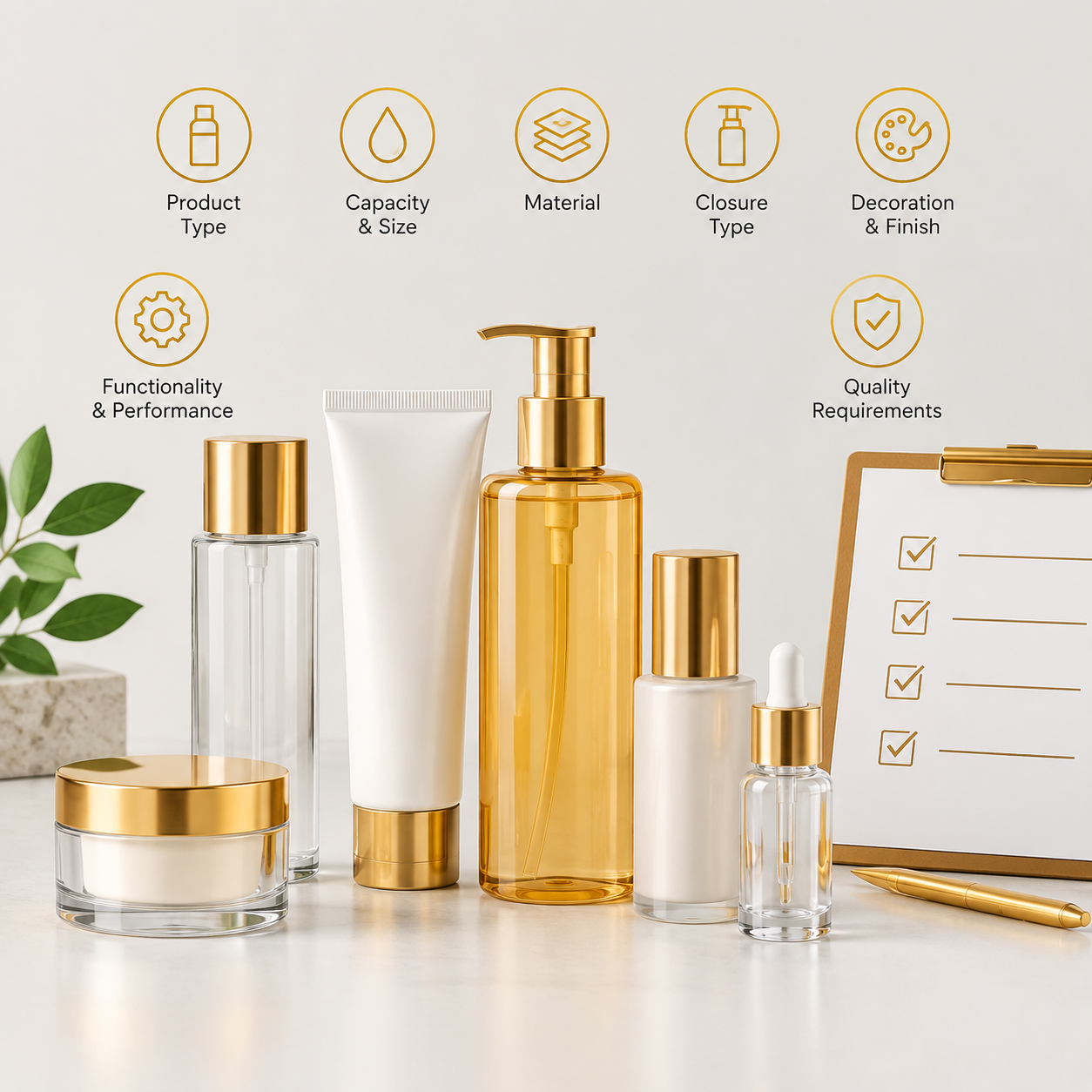
A filling partner needs more than a nominal bottle capacity. Before selecting a PET lotion bottle, document the bottle’s overall height, body width or diameter, base geometry, neck finish, overflow capacity, label or decoration area, pump dimensions and filled-pack weight. The filler should review these details against its conveyor, guides, filling nozzles, capping equipment and packing process.
The key takeaway is that PET lotion bottle filling line specifications must describe the complete assembled package, not just the bottle. A 250 mL bottle from one mold may have different dimensions, neck geometry and handling behavior from another 250 mL bottle.
Ask the filler which measurements its line requires. Common inputs include:
- Nominal fill quantity and target fill weight
- Overflow capacity and required headspace
- Maximum body width, depth or diameter
- Bottle height without the pump and total height with the pump locked
- Neck finish, sealing surface and thread dimensions
- Pump closure size, dip-tube length, output per actuation and locking style
- Flat or curved labeling and decoration area
- Bottle orientation features, base stability and conveyor contact area
- Case count, divider arrangement and filled shipping orientation
YBJ Packaging states that it provides one-stop OEM and ODM support from consultation and design through mold development, material selection, manufacturing, assembly, quality checks and worldwide shipping. Its website also describes more than 20 years of cosmetic-packaging experience, a 10,000 square meter intelligent facility, a Class 10,000 cleanroom, 12 automated assembly lines and 23 Toshiba all-electric injection machines. These are company-stated capabilities; buyers should confirm the manufacturing route, equipment, inspection plan and cleanroom requirements applicable to their specific project.
PET lotion bottle specification table
Use one controlled specification sheet for the bottle, pump and assembled pack. Values should come from supplier drawings and approved physical samples, then be checked by the contract filler before production.
| Specification | What to record | Why the filler needs it | Approval method |
|---|---|---|---|
| Product and fill | Formula type, viscosity range, target net contents and fill temperature | Affects nozzle selection, filling speed, foaming, stringing and headspace | Trial with the intended formula or an agreed representative material |
| PET bottle capacity | Nominal capacity, target fill level and overflow capacity | Confirms fill volume and required headspace | Measure actual samples under an agreed procedure |
| Bottle geometry | Height, width, depth or diameter, base and shoulder profile | Determines conveyor stability, guide spacing and nozzle clearance | Approved drawing plus line trial |
| Neck | Neck finish designation, thread dimensions, sealing land and opening diameter | Controls pump fit, sealing and capping setup | Component drawing, gauge checks and assembled samples |
| Pump | Closure size, gasket, dosage, dip-tube material and cut length | Affects priming, evacuation, dispensing and assembly | Test pumps from the intended component combination |
| Decoration | Label panel, artwork position, print or coating limits and orientation | Affects sensors, guides, scuffing risk and visual alignment | Decorated approval sample |
| Secondary packing | Tray, divider, carton count and orientation | Protects components before filling and finished packs after filling | Packing sample and transport review |
Nominal capacity alone is not enough to approve fill volume. The target quantity, formula density, fill level, headspace and overflow capacity must be considered together. Dimensions and tolerances also remain project-specific because they depend on the selected mold and component combination.
Capacity, dimensions and neck finish defined
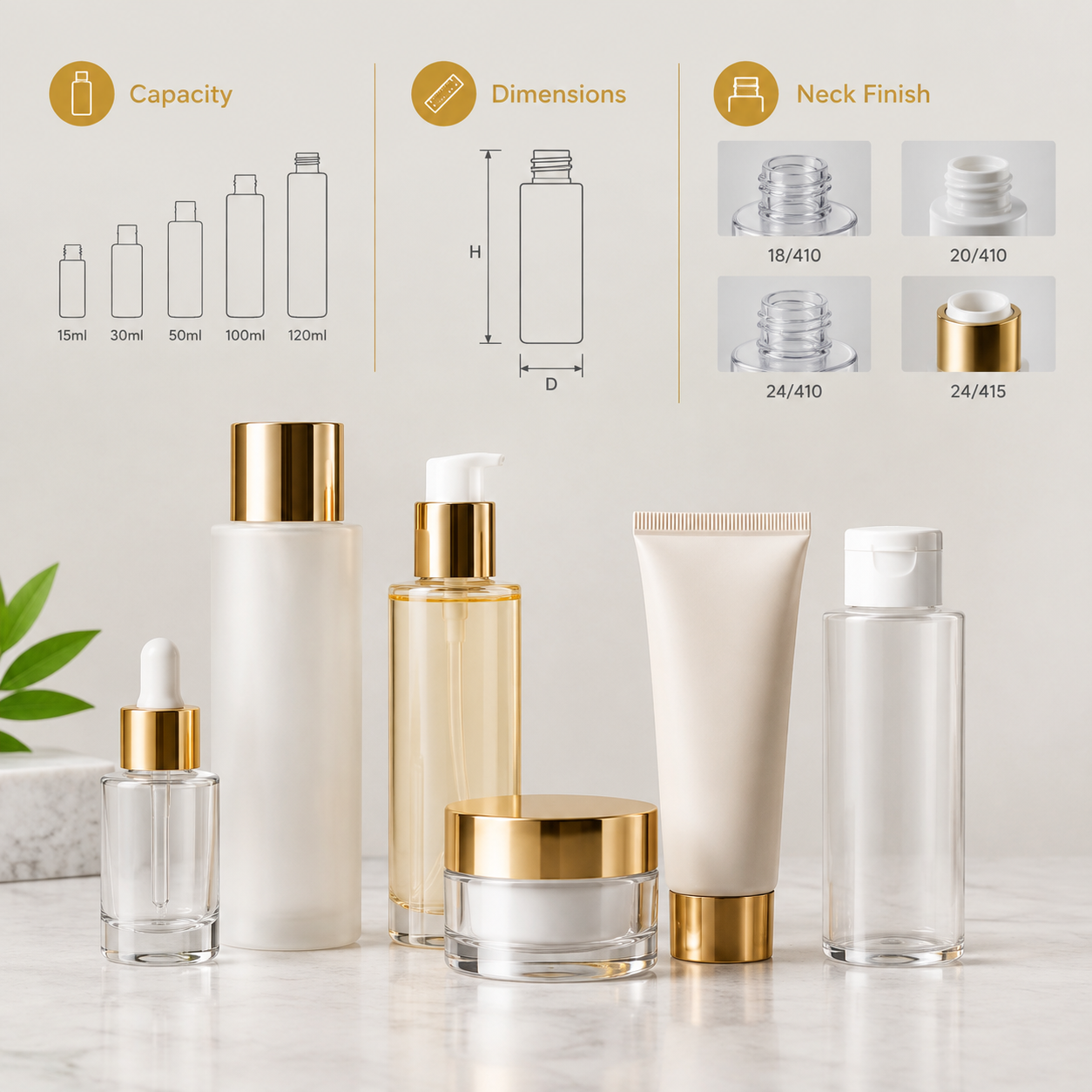
Nominal capacity is the quantity a bottle is intended to hold under its specified use conditions. Overflow capacity is the total liquid volume when the container is filled to the top. The difference provides potential headspace, but the acceptable headspace depends on the formula, fill process, pump displacement and appearance target.
Lotion bottle dimensions normally include the maximum body width, depth or diameter; bottle height to the neck; base dimensions; shoulder profile; and total assembled height. The filling partner may also request the centerline position, label-panel dimensions and dimensional tolerances. Measurements should identify whether the pump is unlocked, locked down or covered by an overcap.
A neck finish is the standardized or project-specific geometry at the bottle opening, including the opening, threads, sealing surface and key dimensions used to attach a closure. A matching nominal size does not by itself prove pump and bottle fit. Thread form, engagement, gasket compression, sealing surface and closure torque must also be compatible.
Dosage means the amount a pump is designed to dispense per full actuation under defined test conditions. Actual output can vary with the formula, priming, actuation speed and pump configuration. A cleanroom is a controlled production area designed to limit airborne particles; YBJ describes its facility as having a Class 10,000 cleanroom, but the project-specific production environment should be confirmed during sourcing.
Compare relevant YBJ PET lotion bottle examples
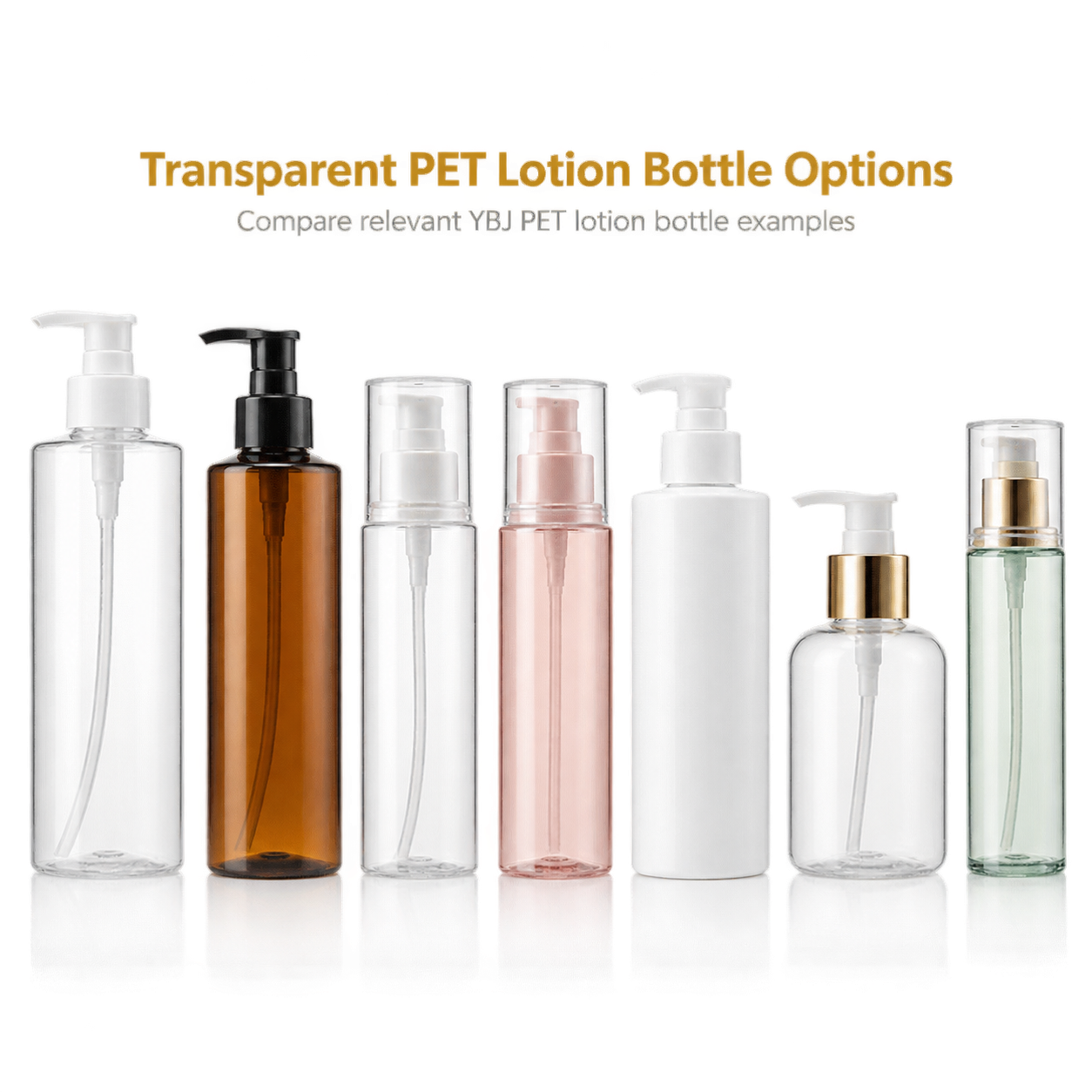
YBJ lists transparent, blue and black PET lotion bottle examples. They provide useful starting points for discussing appearance and format, but the website images do not establish the exact capacity, dimensions, neck finish, pump dosage or filling-line compatibility required for a purchase specification. Request the current drawing and physical samples for the selected version.
| YBJ example | Visible sourcing direction | Information to confirm | Potential review focus |
|---|---|---|---|
| transparent PET lotion bottle options | Clear and colored small-format cylindrical bottles shown with dispensing pumps | Available capacities, resin color, wall construction, neck finish, pump output and overcap options | Fill-level visibility, artwork contrast, pump priming and line handling |
| blue PET lotion bottles | Blue cylindrical bottles shown with pumps and protective overcaps | Color standard, translucency, capacity, dimensions, neck finish and component combinations | Color approval, sensor response, overcap fit and assembled height |
| black PET lotion bottle formats | Dark rectangular bottles shown in several sizes with lotion pumps | Capacity range, panel dimensions, base stability, resin color, pump closure and dip-tube length | Conveyor orientation, label placement, scuff visibility and filled-pack stability |
Transparent PET can make the fill level visible, while colored PET can support a specific shelf appearance. Color, masterbatch, coating and decoration may affect visual inspection, sensor settings and color consistency. They should not be treated as proof of formula protection or compatibility without project-specific evaluation.
For a broader starting point, review YBJ’s PET bottle packaging range. Final selection still depends on the formula, filling method, quantity, mold availability, decoration and destination.
Steps for filler review and sample approval
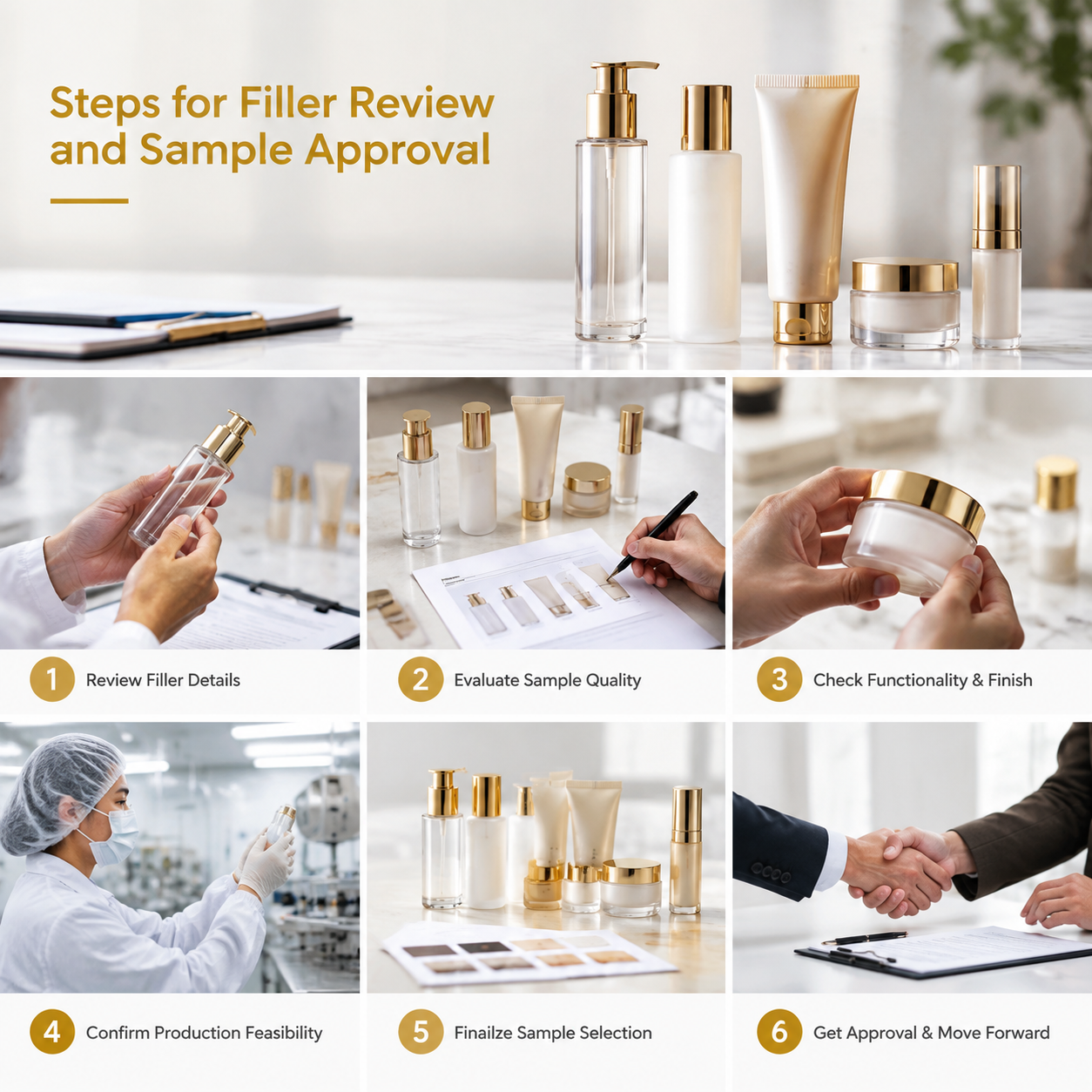
The contract filler should verify line handling and pump assembly using production-representative components. YBJ can supply packaging information and samples for review, but the organization operating the filling and capping equipment must confirm that the setup works on its actual line.
- Issue the package brief. State the formula type, viscosity context, target fill, capacity, bottle material, dimensions, neck finish, pump, decoration, quantity, destination and schedule.
- Review the technical drawing. Compare dimensions and tolerances with conveyor guides, timing screws, pucks, nozzles, capper heads and case-packing constraints.
- Match the dispensing system. Confirm the pump closure, gasket, thread engagement, dip-tube length, dosage target and lock or overcap arrangement. Relevant cosmetic pump and cap options should be evaluated as a complete assembly.
- Inspect empty samples. Check appearance, dimensions, base stability, neck quality, component fit, decoration position and packaging presentation.
- Run a line trial. Use the intended formula where practical, or a documented substitute agreed by the filler. Observe feeding, filling, dripping, foaming, capping, torque, leakage and coding.
- Evaluate filled samples. Review fill level, net contents, package distortion, seal condition, pump priming, output, dip-tube reach, residue and appearance over an agreed period.
- Approve controlled references. Sign off the bottle, pump, decoration and filled sample against revision-controlled drawings, artwork and specifications before mass production.
The approved set should include an empty assembled package, a decorated package and filled samples produced under representative conditions. Retained references should identify component revisions and trial conditions. Approval does not remove the need for agreed incoming, in-process and final quality checks.
Checks that depend on the formula and line
No supplier drawing can fully predict how every lotion will fill and dispense. Formula viscosity, density, particulates, surface tension, aeration and fill temperature can influence nozzle behavior, fill accuracy, headspace, priming and pump output.
Line-dependent checks include bottle feeding, conveyor stability, sensor detection, nozzle entry and withdrawal, fill splash, cap placement, application torque, pump unlocking, batch coding and final case packing. Rectangular bottles may require orientation control, while narrow cylindrical bottles may need guides or pucks. These are setup considerations, not universal defects or advantages.
Compatibility checks should use the intended bottle, pump, gasket, dip tube, decoration and formula. The parties should agree on test conditions and acceptance criteria for leakage, distortion, stress cracking, discoloration, odor change, pump function and appearance. YBJ Packaging should confirm what sampling and packaging checks it can support, while the brand, formula owner and filler approve suitability for the intended product and process.
Inquiry checklist and FAQs
A useful inquiry lets the packaging supplier and filler identify missing requirements before samples or tooling are approved. Send the following information:
- Product type and formula or viscosity context
- Target net contents, preferred PET bottle capacity and required headspace
- Maximum lotion bottle dimensions and any line height restrictions
- Preferred bottle shape, color and transparency
- Required neck finish or details of the existing pump
- Pump dosage target, locking style, overcap and dip-tube requirements
- Label, printing, coating, color and artwork requirements
- Estimated order quantity and whether a stock mold or custom development is being considered
- Filling application, fill temperature and relevant line constraints
- Destination market, packing requirements and target date
- Required samples, line-trial quantity and approval responsibilities
Compatibility, MOQ, tooling, pricing, production time and shipping depend on the final design, quantity, decoration, testing scope, destination and approved sample. They should be confirmed in the project quotation and specification rather than assumed from a product image.
Discuss Your Custom Cosmetic Packaging
A PET lotion bottle should be released only after the supplier specification and filler requirements describe the same approved assembly. Capacity, dimensions, neck finish, pump fit, decoration and line behavior all need to be tied to controlled drawings and representative samples.
Share the complete filling and packaging brief with YBJ Packaging for review. The team can discuss stock-format or custom OEM and ODM options, but exact compatibility, MOQ, tooling, price, production timing and delivery must be confirmed after reviewing the project and approval requirements.
FAQ
Which bottle dimensions does a filling partner need?
Most fillers need maximum body width, depth or diameter, bottle height to the neck, total height with the pump, base dimensions, shoulder profile, neck position and relevant tolerances. They may also request label-panel dimensions and drawings showing whether the pump is locked or fitted with an overcap.
Is nominal capacity enough to approve fill volume?
No. The filler should review nominal capacity together with overflow capacity, target net contents, formula density, fill level, pump displacement and required headspace. Approval should be based on measured samples and a representative filling trial.
What is a neck finish on a PET lotion bottle?
The neck finish is the opening, thread, sealing surface and dimensional geometry that connects the bottle to a pump or cap. A shared nominal diameter does not guarantee fit; thread engagement, gasket compression and sealing performance must also be checked.
Who should verify pump assembly on the filling line?
The contract filler or facility operating the assembly equipment should verify pump placement, capping method, torque settings and line handling. The packaging supplier should provide component specifications and representative samples, while the brand and filler approve the final assembled result.
Which filled samples should be approved before production?
Approve samples made with the intended bottle, pump, gasket, dip tube and decoration under representative filling and capping conditions. Review net contents, fill level, leakage, bottle condition, closure fit, pump priming, dosage behavior, appearance and packing. The exact test plan and acceptance criteria depend on the formula and distribution requirements.
Discuss Your Custom Cosmetic Packaging
Tell YBJ Packaging what you are filling, the package format and capacity you need, your material and decoration preferences, estimated quantity, destination and target date. Include formula or viscosity context, dimensions, closure or pump requirements and filling application. The team can review the brief, discuss samples and suggest practical OEM or ODM packaging options for your project. Compatibility, pricing and delivery are confirmed only after project review and approval.

 English
 Français
 Español
