



Table des matières
- Direct Answer: Test the Complete Container-Closure System With the Intended Formula
- What Cosmetic Packaging Compatibility Testing Covers
- Formula-to-Container Compatibility
- Closure, Pump and Dispensing Compatibility
- Compatibility Risks to Review Before Approval
- Leakage, Swelling, Cracking and Seal Changes
- Odor, Color, Surface and Decoration Changes
- A Practical Pre-Production Sample Workflow
- Prepare Samples Using Representative Formula and Fill Conditions
- Inspect at Agreed Checkpoints and Record Observations
- Build a Project-Specific Acceptance Checklist
- What the Packaging Supplier Can Check and What the Brand Must Approve
- Related YBJ Product Option: Customizable Premium Cosmetic Bottle for Skincare Formulations
- Send Your Formula, Filling and Packaging Requirements for Review
Before mass production, test the filled container-closure system with the intended formula—not only an empty bottle—to identify leakage, dispensing, material and decoration risks.
Direct Answer: Test the Complete Container-Closure System With the Intended Formula

Réponse directe : Cosmetic packaging compatibility testing should use the complete, filled container-closure system before mass production. Test the intended bottle, jar or tube together with its pump, dropper, cap, liner, gasket, decoration and formula under project-specific conditions.
Compatibility means that the formula and package remain acceptable together for the agreed use period and handling conditions. An empty-component inspection or visual sample approval alone cannot confirm formula packaging compatibility.
- Use the final formula when available, or clearly label a surrogate formula as provisional.
- Apply the closure using the intended filling and assembly process where practical.
- Define observations, checkpoints and acceptance criteria before testing begins.
What Cosmetic Packaging Compatibility Testing Covers
A useful compatibility review covers the formula, package materials, closure interface, dispensing performance and decoration. It should also reflect how the package will be filled, stored, transported and used.
- Formula-to-container: Review the surfaces that contact the product, including the bottle wall, jar liner, dip tube and pump pathway.
- Container-closure compatibility: Check that the neck finish, seal and closure remain properly mated. A neck finish is the opening geometry, thread or bead that allows a closure to fit the container.
- Distribution : Check priming, actuation, dosage, output consistency, clogging and cap retention. Dosage is the approximate amount delivered per pump or dropper actuation.
- Appearance and decoration: Inspect the package and printed or coated surfaces for changes after formula exposure and handling.
The exact test plan depends on the formula, material, quantity, filling application, destination and approval requirements.
Formula-to-Container Compatibility
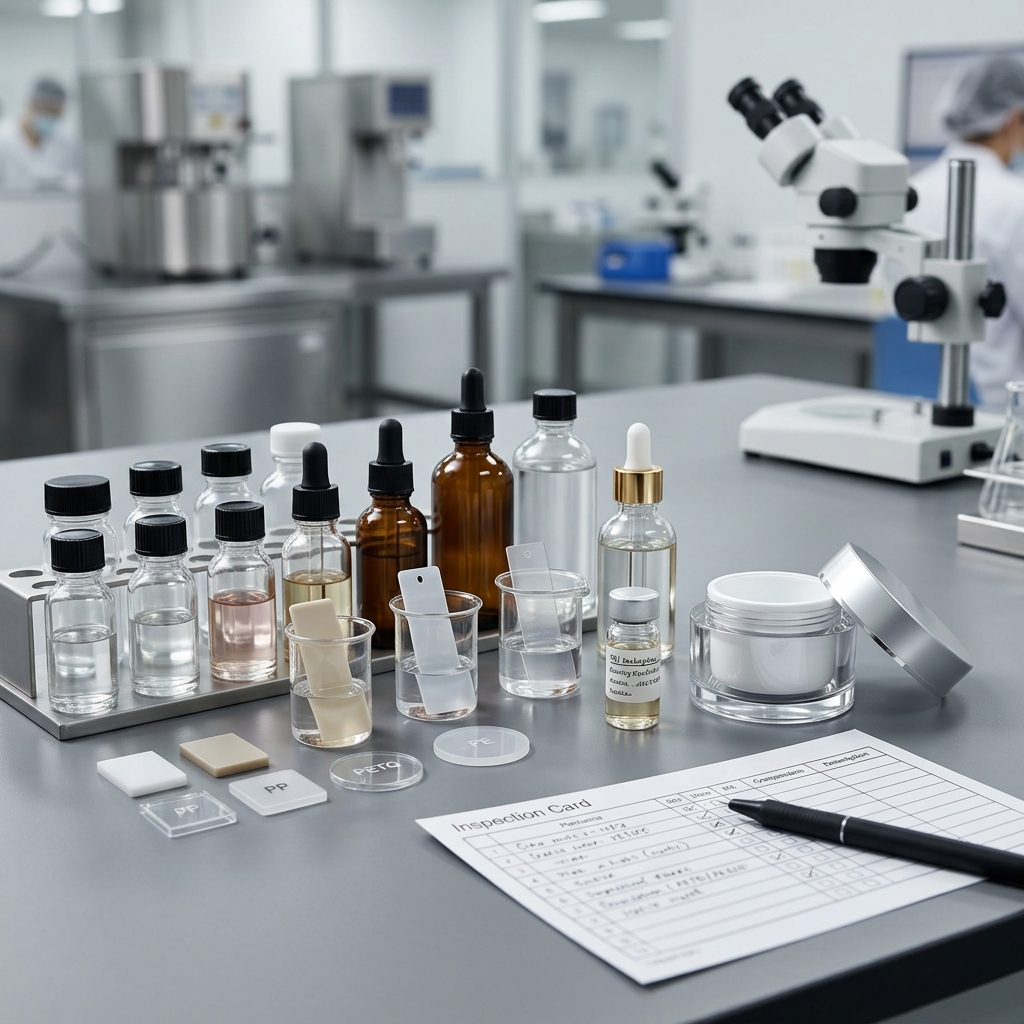
Formula-to-container testing looks for unacceptable interaction between the product and the materials it touches. Review the bottle or jar, inner cup, liner, gasket, dip tube and internal pump parts—not just the visible outer shell.
PETG is a glycol-modified form of PET plastic; AS commonly means acrylonitrile styrene plastic. These names identify material options, not a universal compatibility result. A formula containing oils, solvents, surfactants, alcohol, pigments or suspended particles may require a different review from a simple water-based product. The relevant behavior depends on the complete formulation and the selected component.
Compare filled samples with a retained formula control and record changes such as odor, color, clarity, separation, mass loss, swelling, brittleness, crazing or stress cracking. If the final formula, material or decoration changes, treat the previous result as requiring review rather than automatic approval.
Closure, Pump and Dispensing Compatibility
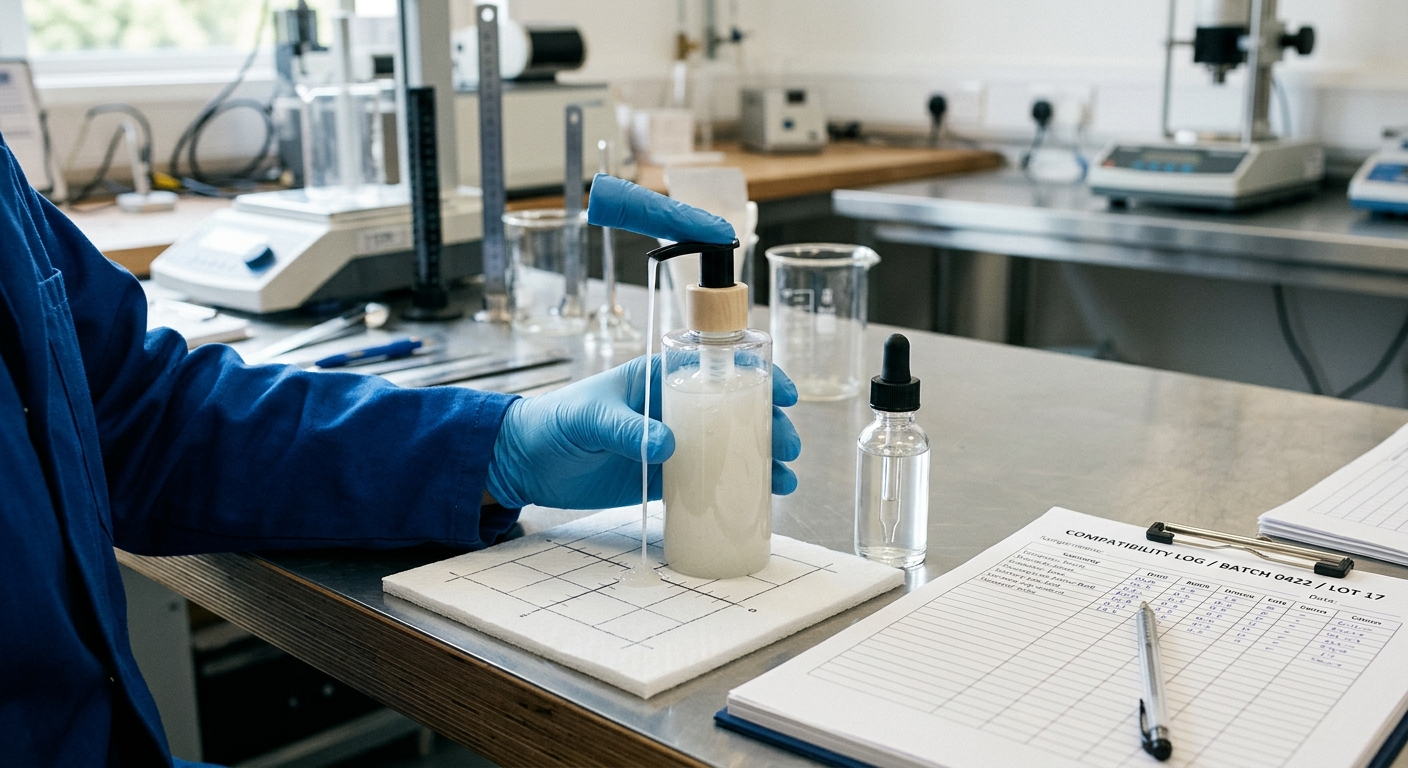
A pump compatibility test must evaluate the assembled dispensing system, including the actuator, dip tube, gasket, spring or internal parts, closure and container neck finish. Check fit, seal formation, priming, actuation force, dosage, output consistency, clogging, lock or unlock function and cap retention.
An airless package uses a moving piston or another internal mechanism to dispense product without relying on outside air being drawn back into the product chamber. Airless formats still require formula-specific tests for priming, pickup, output and end-of-pack dispensing. They are not automatically compatible with every viscosity or formula structure.
Dispensing results can change with viscosity, particles, fill level, headspace, fill temperature, closure application and package orientation. For that reason, a pump specification should be confirmed with filled samples and the intended filling process.
Compatibility Risks to Review Before Approval
The main risks are physical package changes, seal or dispensing failures and appearance changes. Review them together because one issue can create another—for example, material swelling may affect the closure seal, while a change in viscosity may affect pump dosage.
- Formula loss through leakage, evaporation or an incomplete seal.
- Container swelling, distortion, cracking, crazing or embrittlement.
- Changes to gasket, liner, dip tube or pump components.
- Inconsistent dosage, poor priming, clogging or actuator failure.
- Odor, color, surface, label, ink or coating changes.
These are risk categories, not predetermined failures. The result must be established with the specific formula and package combination.
Leakage, Swelling, Cracking and Seal Changes
A cosmetic bottle leakage test observes whether product escapes from a filled and closed package under selected storage, orientation, pressure, temperature or handling conditions. The protocol should match the product’s expected logistics and use rather than rely on an unspecified universal test.
Inspect the closure interface, pump or cap, bottle shoulder, body, bottom, seams and any liner or gasket. Record visible residue, changes in container dimensions or shape, closure loosening and any change in seal appearance. Where agreed, before-and-after mass or volume checks can help identify product loss.
Swelling or cracking can occur at the container, closure or decoration interface. A result from one resin, closure, formula or decoration system should not be transferred automatically to another combination.
Odor, Color, Surface and Decoration Changes
Use an unexposed control whenever possible so reviewers can distinguish formula change from normal batch variation. Inspect the product for odor, color, clarity, visible separation or other agreed appearance changes, and inspect the package for tackiness, whitening, fading, corrosion or loss of structural feel.
Decoration requires its own review after formula contact and handling. Check label adhesion, print, coating, hot stamping, ink transfer and rub resistance when those finishes are part of the project. YBJ’s guide to techniques de décoration des emballages de produits cosmétiques can help frame the finish discussion, but the final acceptance result remains project-specific.
A Practical Pre-Production Sample Workflow
A controlled workflow turns packaging samples into evidence for a mass-production decision. Keep the protocol, samples and observations traceable from the first fill through final approval.
- Define the protocol: List the formula, components, fill conditions, orientations, checkpoints and acceptance criteria.
- Build the sample set: Include the proposed production components and identify any substitute material, closure or formula.
- Fill and close: Use representative fill volume, headspace, closure application and decoration conditions.
- Condition and inspect: Hold samples under agreed conditions and record physical, visual and dispensing observations.
- Review and sign off: Document open issues, corrective samples, responsible approvers and the final sample-approval status.
Prepare Samples Using Representative Formula and Fill Conditions
Representative samples should resemble production as closely as practical. Use the intended formula or a documented representative batch, the planned material and closure, target capacity, fill level, headspace, filling nozzle or application and closure process.
Include actual decoration if formula contact, handling or transport could affect it. If a laboratory fill, alternate closure or unfinished component is used, record that limitation on the sample report. Compatibility conclusions should be revisited when a material, formula, closure, filling process or decoration changes.
Inspect at Agreed Checkpoints and Record Observations
Use checkpoints that reflect the project instead of assigning an arbitrary test duration. A practical record can include:
- Baseline: Component condition, formula appearance, fill data and closure status before exposure.
- Early check: Immediate leakage, priming, seal, dosage and visible surface observations after filling and assembly.
- Conditioned checks: Package orientation, formula appearance, mass or volume where agreed, material condition and dispensing performance.
- Handling or transport check: Closure retention, leakage, decoration and package damage after agreed handling or logistics simulation.
- Final review: Photographs, observations, deviations, corrective actions and approval signatures.
There is no universal checkpoint schedule. Formula, package format, destination, storage profile and the brand’s acceptance plan determine the appropriate conditions.
Build a Project-Specific Acceptance Checklist
Acceptance criteria should be observable or measurable and agreed before samples are reviewed. Add the following fields to the project brief:
- Formula: Product type, viscosity context, ingredients that may affect materials, particles, fill temperature and whether the formula is final.
- Package: Capacity, dimensions, material, product-contact parts, neck finish, closure or pump, dip tube, liner and decoration.
- Process: Filling application, fill level, headspace, closure application, assembly conditions and any cleanroom requirement.
- Performance: Leak status, seal condition, dispensing dosage, priming, clogging, cap retention, appearance and decoration condition.
- Decision: Pass, conditional approval or corrective action, with sample identification, date, reviewer and change-control notes.
Compatibility, tooling, MOQ, pricing, production time and shipping depend on the complete project and approval sample. Confirm each specification with the supplier before ordering.
What the Packaging Supplier Can Check and What the Brand Must Approve
A packaging supplier can help review component fit, material choices, mold requirements, assembly details, visual quality and sample observations. The brand or formula owner must approve the formula-package combination and define the product acceptance decision.
YBJ Packaging states that it provides one-stop OEM and ODM support from consultation and design through mold development, material selection, manufacturing, assembly, quality checks and worldwide shipping. Its website describes more than 20 years of cosmetic-packaging experience, a 10,000 m² intelligent facility, a Class 10,000 cleanroom, 12 automated assembly lines and 23 Toshiba all-electric injection machines. A cleanroom is a controlled production area designed to limit airborne particles; it does not by itself prove formula compatibility.
These are company-provided capabilities. Ask YBJ to confirm the exact testing scope, available sample configuration, inspection records and project process. The brand should retain responsibility for final formula packaging compatibility and approval against its own requirements.
Related YBJ Product Option: Customizable Premium Cosmetic Bottle for Skincare Formulations
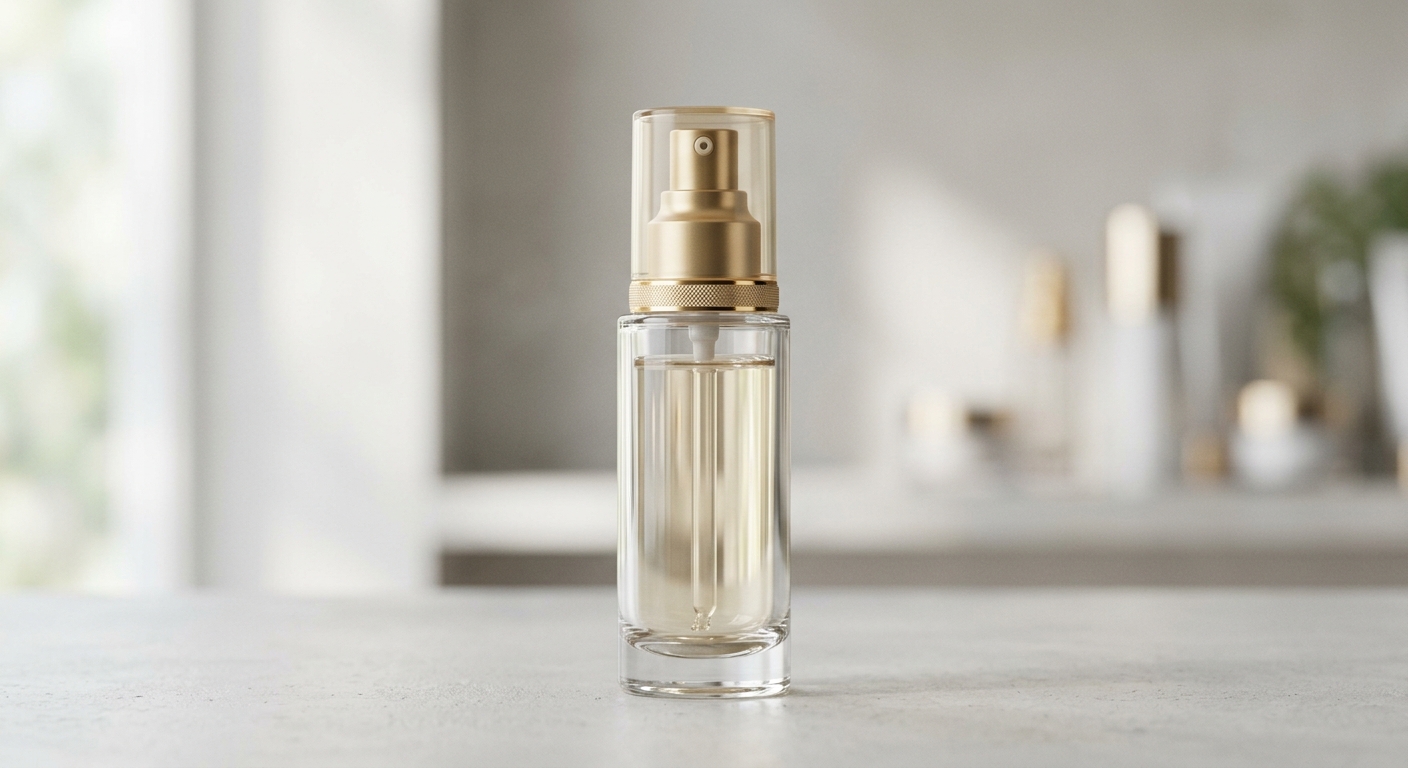
For a skincare packaging brief, review YBJ’s customizable premium cosmetic bottle for skincare formulations as a starting point for a compatibility discussion. The product page and the options below should be treated as sourcing references, not as evidence that a package is compatible with a particular formula.
| YBJ option | Potential sourcing use | Confirmer avant validation |
|---|---|---|
| Flacons d'emballage cosmétique personnalisés aux finitions haut de gamme | Review for a bottle concept where material, shape and decoration are part of the brief. | Material, product-contact parts, closure, finish durability and filled-sample results. |
| Fournisseurs d'emballages pour flacons de cosmétiques | Use as a broader bottle sourcing reference during format selection. | Available capacity, dimensions, neck finish, material, sample configuration and quantity requirements. |
| Cosmetic bottling companies | Consider when packaging and filling-process questions need to be discussed together. | Whether filling support applies to the project and whether the process matches the formula and closure. |
For every option, request an approval sample assembled and filled under conditions representative of the intended launch package.
Send Your Formula, Filling and Packaging Requirements for Review
Send YBJ Packaging a structured brief before requesting compatibility samples. Include the product type, formula or viscosity context, capacity, dimensions, material, closure or pump, decoration, estimated quantity, filling application, destination and target date. Also identify the final-formula status, intended storage or transport conditions and the acceptance criteria that matter most.
YBJ can then review the packaging concept and clarify which samples, component checks and compatibility discussions are appropriate. Compatibility, MOQ, tooling, pricing, production time and shipping require project review and approval; they should not be assumed from a catalog image or standard sample.
Discuss Your Cosmetic Packaging Compatibility Test Plan
Contacter YBJ Packaging with your product type, formula or viscosity context, capacity, dimensions, material, closure or pump, decoration, estimated quantity, filling application, destination and target date. Ask about representative samples and the compatibility checks that fit your project. Final compatibility, MOQ, tooling, pricing, production time and shipping details require review and approval.

 English
  Français
  Español