

Table des matières
- Direct answer: what belongs in a cosmetic packaging RFQ?
- The RFQ information checklist
- Produit, formule et format de conditionnement
- Quantity, decoration and logistics
- RFQ fields by packaging category
- What a supplier may need to confirm
- How to request samples and quality checks
- YBJ Packaging one-stop project support
- FAQ
- Send your packaging brief
A manufacturer-ready cosmetic packaging RFQ should describe the product, formula context, package format, capacity, materials, components, decoration, estimated quantity, filling process, quality expectations and destination. This checklist helps OEM and ODM buyers request more useful quotations and identify details that require technical confirmation.
Direct answer: what belongs in a cosmetic packaging RFQ?
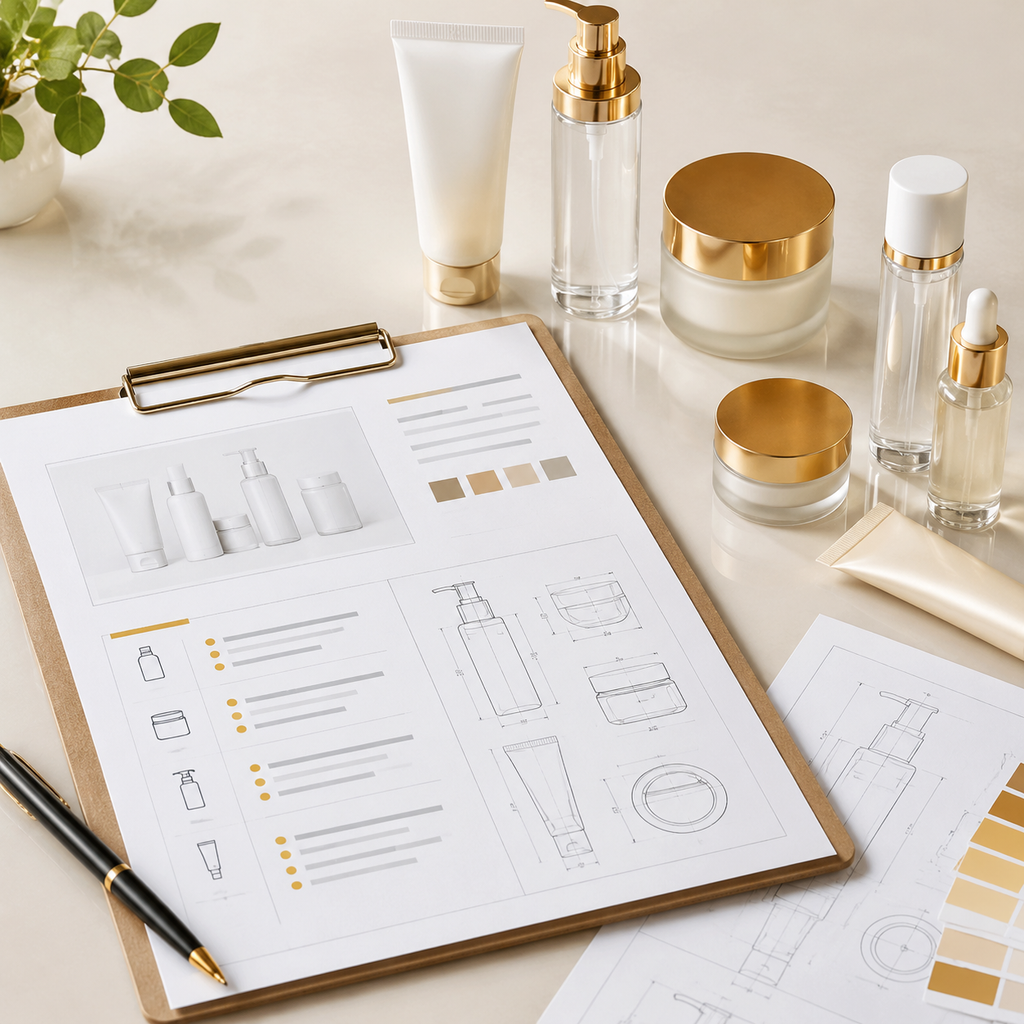
A useful cosmetic packaging RFQ should tell an OEM manufacturer what you are filling, which format you want, how much packaging you expect to buy and what the finished package must look and do. Include the product category, formula or viscosity context, capacity, dimensions if known, material preference, bottle, jar or tube format, closure or pump, decoration, estimated quantity, filling application, destination and target date.
The more complete the brief, the easier it is for a supplier to separate a standard component from a custom development project. Compatibility, minimum order quantity, tooling, pricing, production time and shipping remain project-dependent and should be confirmed after the supplier reviews the specifications and approval requirements.
The RFQ information checklist
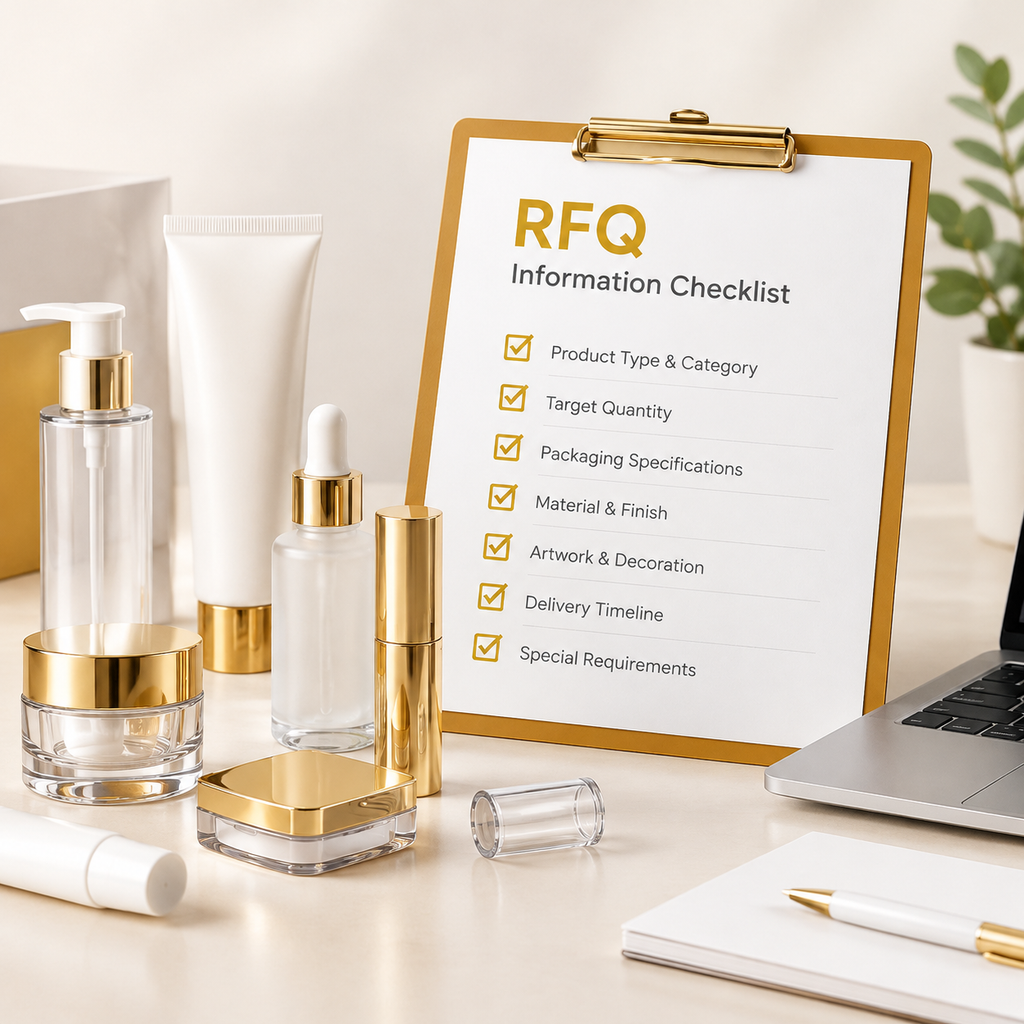
Use the following checklist when preparing an OEM packaging inquiry:
- Product: State whether the package is for a serum, cream, lotion, cleanser, shampoo, makeup or another personal-care product.
- Contexte de la formule : Provide viscosity, ingredients that may affect packaging, alcohol or oil content when relevant, and any known sensitivity to light, oxygen or contamination.
- Format : Identify the preferred bottle, jar, tube, airless package, dropper, spray, pump, cap or makeup component.
- Capacity and dimensions: Give nominal fill volume, target dimensions, neck finish if known and any height or diameter limits.
- Components: Specify the bottle or container, closure, pump, dropper, actuator, overcap, inner plug and any required inserts.
- Appearance: Describe color, transparency, surface finish, decoration, logo placement and artwork status.
- Quantité : Provide forecast or trial quantity, expected annual demand and whether the first order is a pilot or commercial run.
- Filling: Explain the filling machine, filling temperature, line speed, capping method and whether the supplier must review line compatibility.
- Qualité : List appearance standards, leak checks, dimensional expectations, dosage checks or sample approval steps.
- Logistique : State destination country, delivery location, preferred shipping terms if known, carton or pallet requirements and target date.
Attach sketches, reference images, artwork, technical drawings and existing samples where available. Mark each item as fixed, preferred or open to recommendation.
Produit, formule et format de conditionnement
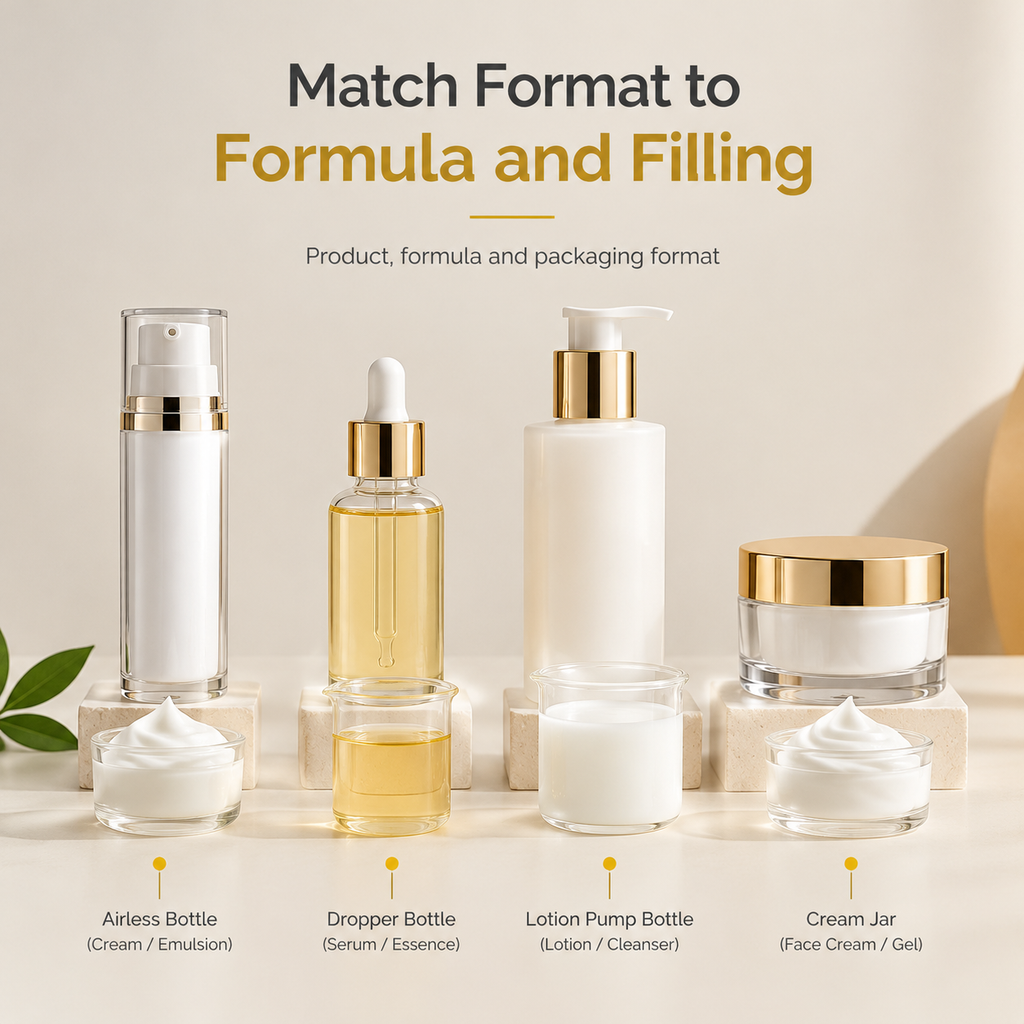
Formula and filling information matter because the package is a complete dispensing system, not only a decorative container. A thick cream may require a wide opening or a suitable pump, while a thin serum may suit a dropper, treatment pump or airless system depending on the intended dosage. An airless package uses a piston or collapsible mechanism to dispense product while limiting the amount of air entering the container; it does not automatically guarantee compatibility or complete evacuation.
For a bottle, jar or tube, include the required opening, closure style and user experience. For a pump or dropper, provide the target dosage if known, the number of actuations or drops per use and whether the filling line has a defined component. For a spray, describe the desired spray experience and formula behavior. These details help the manufacturer assess component matching, filling and testing needs.
Define technical terms in the brief where possible. A neck finish is the standardized opening and thread or bead that connects a container to a closure. Dosage is the approximate amount dispensed by one pump stroke, drop or spray actuation. A cleanroom is a controlled production area designed to limit airborne particles; YBJ Packaging states that it operates Class 10,000 cleanroom production, while the appropriate production and inspection requirements depend on the project.
Quantity, decoration and logistics

Quantity affects whether a standard component, color adjustment, decoration process or custom mold is commercially practical. Give the expected quantity for the first order, a forecast if available and the approximate order frequency. Do not assume that a forecast is the same as a confirmed purchase quantity; ask the supplier to quote or confirm each scenario separately.
Describe decoration in production terms: color matching, frosting, spraying, metallization, hot stamping, silk screening, labeling, printing or other finishes. Include the artwork file type, print areas, color references, registration expectations and whether decoration is required on the primary container, closure or both. Decoration methods can change appearance, durability, cost and sample timing.
For logistics, provide the destination, packaging regulations or documentation requirements known to your team, preferred shipping mode, carton labeling needs and target arrival date. A target date is useful for planning but is not a production or shipping commitment until specifications, samples, quantity and logistics are reviewed.
RFQ fields by packaging category
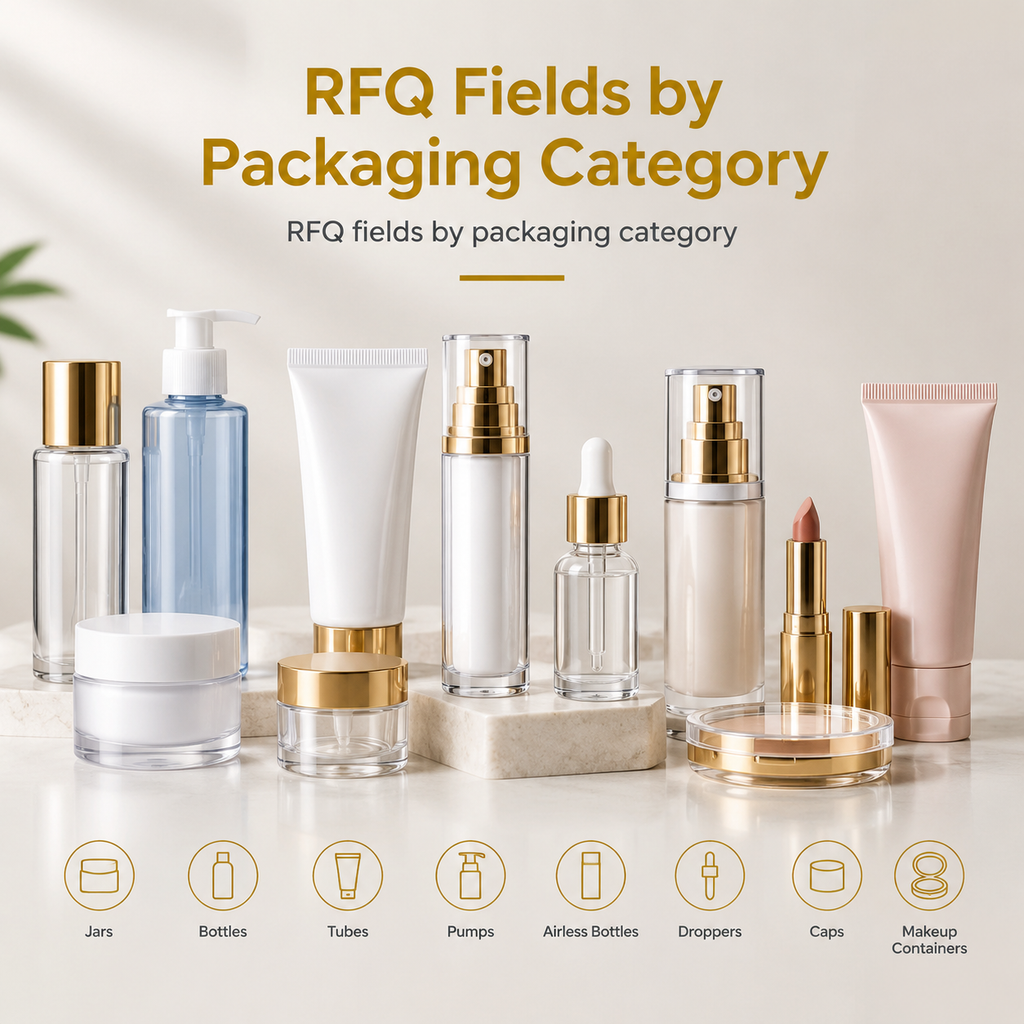
Different formats require different technical fields. Use this comparison to avoid sending the same incomplete specification for every package type.
| Packaging category | Include in the RFQ | Key confirmation |
|---|---|---|
| Jars | Capacity, opening diameter, inner cup or liner, material, lid style and decoration | Formula access, seal or liner fit, filling method and visual finish |
| Bottles | Capacity, height, diameter, neck finish, material, pump or cap and shoulder shape | Component matching, filling-line handling, leak resistance and artwork area |
| Airless bottles | Formula viscosity, target dosage, actuation style, fill volume and overcap | Priming, dosage consistency, compatibility and product evacuation |
| Droppers and sprays | Dropper or sprayer type, dosage or spray experience, formula and closure | Output, sealing, filling and capping compatibility |
| Tubes | Tube diameter, capacity, shoulder, nozzle, cap, material and decoration | Seal integrity, filling orientation, viscosity and end-sealing method |
| Makeup components | Pan or insert size, layout, mirror, closure, decoration and assembly | Component fit, hinge action, assembly sequence and appearance standard |
For example, an OEM supplier cannot evaluate a pump quote accurately from bottle capacity alone. Pump dosage, neck finish, product viscosity, dip-tube length and filling-line constraints may all affect the recommended system.
What a supplier may need to confirm

An RFQ starts a technical conversation; it does not replace development review. Ask the supplier to identify which points are confirmed, recommended, unavailable or dependent on testing. Common review items include:
- Whether the requested capacity, dimensions and neck finish match an available component.
- Whether the selected material is suitable for the formula, appearance and intended use.
- Whether a pump, dropper, spray or cap provides the required fit and approximate output.
- Whether a custom mold is needed and who owns the tooling after development.
- Whether decoration can meet the artwork, color and surface requirements.
- What samples, compatibility checks, dimensional inspections or line trials are appropriate.
- Whether the estimated quantity supports the proposed process and order structure.
- What packaging, labeling and shipping information is needed for the destination.
Material choices involve trade-offs. PETG can provide clarity and a glass-like appearance in some applications, AS can support a rigid transparent appearance, and glass offers a different weight, feel and breakage profile. The correct selection depends on formula, design, handling, filling, decoration and customer requirements rather than a universal material ranking.
How to request samples and quality checks

State what kind of sample you need and what decision it must support. A stock sample can help assess shape, capacity and basic component fit. A color or decoration sample can help review appearance. An assembled sample or filled compatibility sample may be needed to evaluate the complete package, but the appropriate sequence depends on the formula, filling process and project stage.
Include proposed acceptance points such as dimensions, color reference, print position, surface defects, closure fit, leak checks, pump or dropper output, torque or assembly requirements and carton condition. Ask the supplier which checks are feasible and whether your team must provide the formula, filling equipment or test method. Keep a dated approval record that identifies the exact sample, artwork, material, decoration and component configuration.
Do not treat a sample approval as confirmation of every future production condition. Confirm the production reference, inspection method, allowable variation and change-control process before placing a commercial order.
YBJ Packaging one-stop project support
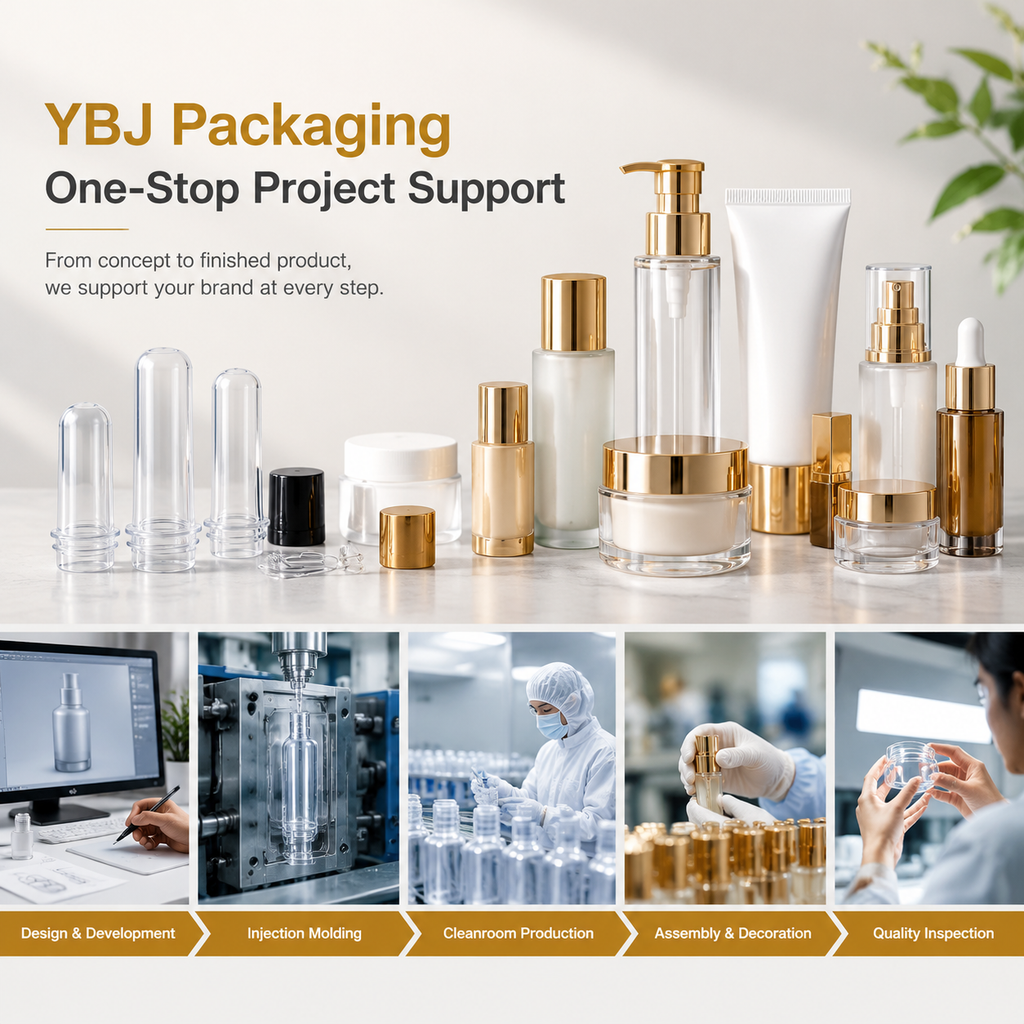
YBJ Packaging describes its service as one-stop OEM and ODM cosmetic packaging support, from consultation and design through mold development, material selection, manufacturing, assembly, quality checks and worldwide shipping. The company states that it has more than 20 years of cosmetic-packaging experience, a 10,000 m² intelligent facility, a Class 10,000 cleanroom, 12 automated assembly lines and 23 Toshiba all-electric injection machines.
These are company-stated capabilities, not a substitute for a project review. A buyer should still provide the complete packaging supplier brief and confirm the exact material, component configuration, tooling scope, decoration, quality plan, quantity and delivery requirements for the project. A clear RFQ gives the team a practical basis for discussing bottles, jars, tubes, pumps, caps, airless formats and other cosmetic packaging options.
FAQ
Use these answers when preparing a cosmetic packaging quote request.
Send your packaging brief
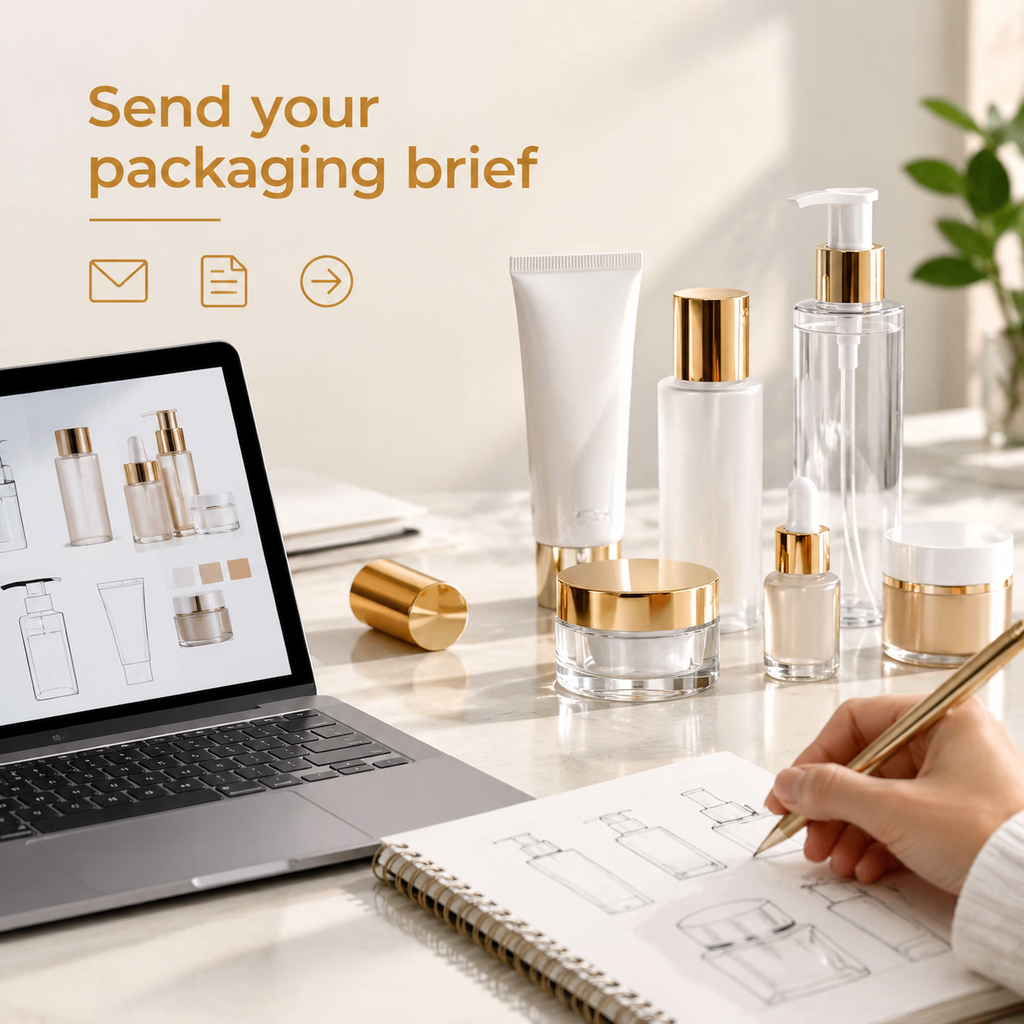
A complete RFQ does not need to have every technical answer finalized. It should clearly separate confirmed requirements from preferences and questions. Send the product type, formula or viscosity context, format, capacity, dimensions, material, closure or pump, decoration, estimated quantity, filling application, destination and target date so the supplier can review the project realistically.
FAQ
What information should be included in a cosmetic packaging RFQ?
Include the product type, formula or viscosity context, package format, capacity, dimensions, material, neck finish, closure or pump, dosage, decoration, quantity, filling method, quality expectations, destination and target date. Add drawings, artwork and reference samples when available.
How do I request a quote from an OEM cosmetic packaging manufacturer?
Send a structured brief that separates required specifications from preferences. Identify whether you need stock components, decoration, custom mold development, assembly or a complete OEM or ODM service. Ask the supplier to list assumptions and confirm compatibility, tooling, quantity, sampling, production timing and shipping after review.
Why do packaging suppliers need formula and filling information?
Formula viscosity and composition can affect material compatibility, dispensing, sealing and component selection. The filling and capping process can affect dimensions, machine handling, fill temperature, line speed and assembly requirements. Without this context, a container-only recommendation may not represent a workable finished package.
Should I include an exact MOQ or target price in the RFQ?
Include your expected first-order quantity, forecast and budget context if available, but do not assume an MOQ or price before review. Quantity, tooling, decoration, component sourcing, material and quality requirements can change the commercial structure of the project.
Can an OEM supplier confirm compatibility from an RFQ alone?
An RFQ provides the information needed to plan a review, but compatibility may require formula details, component samples, filled samples, testing or a filling-line trial. Ask the supplier which checks are appropriate and record the approved configuration before production.
Discutez de vos emballages cosmétiques sur mesure
Indiquez à YBJ Packaging le contenu de vos emballages, le format et la capacité dont vous avez besoin, vos préférences en matière de matériaux et de décoration, la quantité estimée, la destination et la date de livraison souhaitée. Notre équipe examinera votre cahier des charges et vous proposera des solutions d'emballage OEM ou ODM adaptées à votre projet.

 English
 Français
 Español
