

Table des matières
- When Is Dropper Bottle Packaging a Good Fit?
- The Parts of a Cosmetic Dropper System
- Considérations relatives au verre, au plastique et à l'aspect esthétique
- Dropper Dosage and Formula Compatibility
- Dropper Bottle Specification Table
- Sampling and Approval Tests
- How to Prepare a Dropper Packaging Inquiry
- Questions fréquemment posées
- Request Serum Dropper Samples
A serum dropper should be specified as a complete dispensing system, not just as a bottle. This guide explains how to select the bottle, neck finish, dropper cap, pipette, bulb, decoration and validation checks for a custom serum packaging project.
When Is Dropper Bottle Packaging a Good Fit?
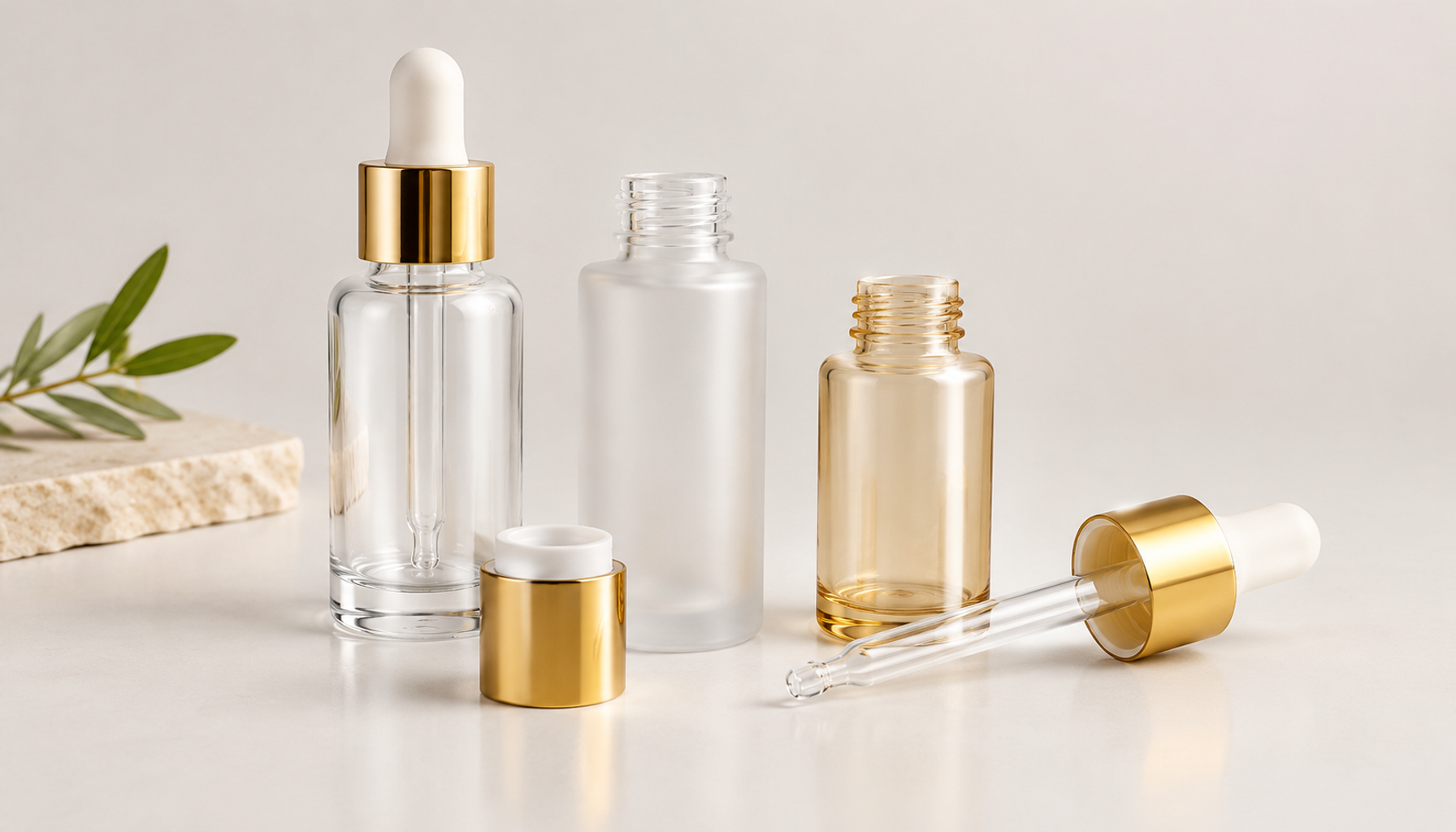
Dropper bottle packaging for serum is a good fit when the user needs controlled, small-volume dispensing and the formula can be picked up and released consistently through a pipette. It is commonly considered for facial serums, facial oils, concentrated treatments and other liquid skincare products, but the final choice depends on viscosity, ingredients, filling equipment, target dosage and the intended user experience.
A dropper system can support a premium, measured-use presentation, but it is not automatically suitable for every serum. A thick, stringy or particulate formula may not fill the pipette consistently. A low-viscosity formula may dispense too quickly or leave more product around the closure. These behaviors should be checked with production-intent samples.
Point à retenir : Select the bottle, neck finish, dropper cap, pipette and bulb as one system. Confirm compatibility and dispensing performance before approving decoration or mass production.
The Parts of a Cosmetic Dropper System
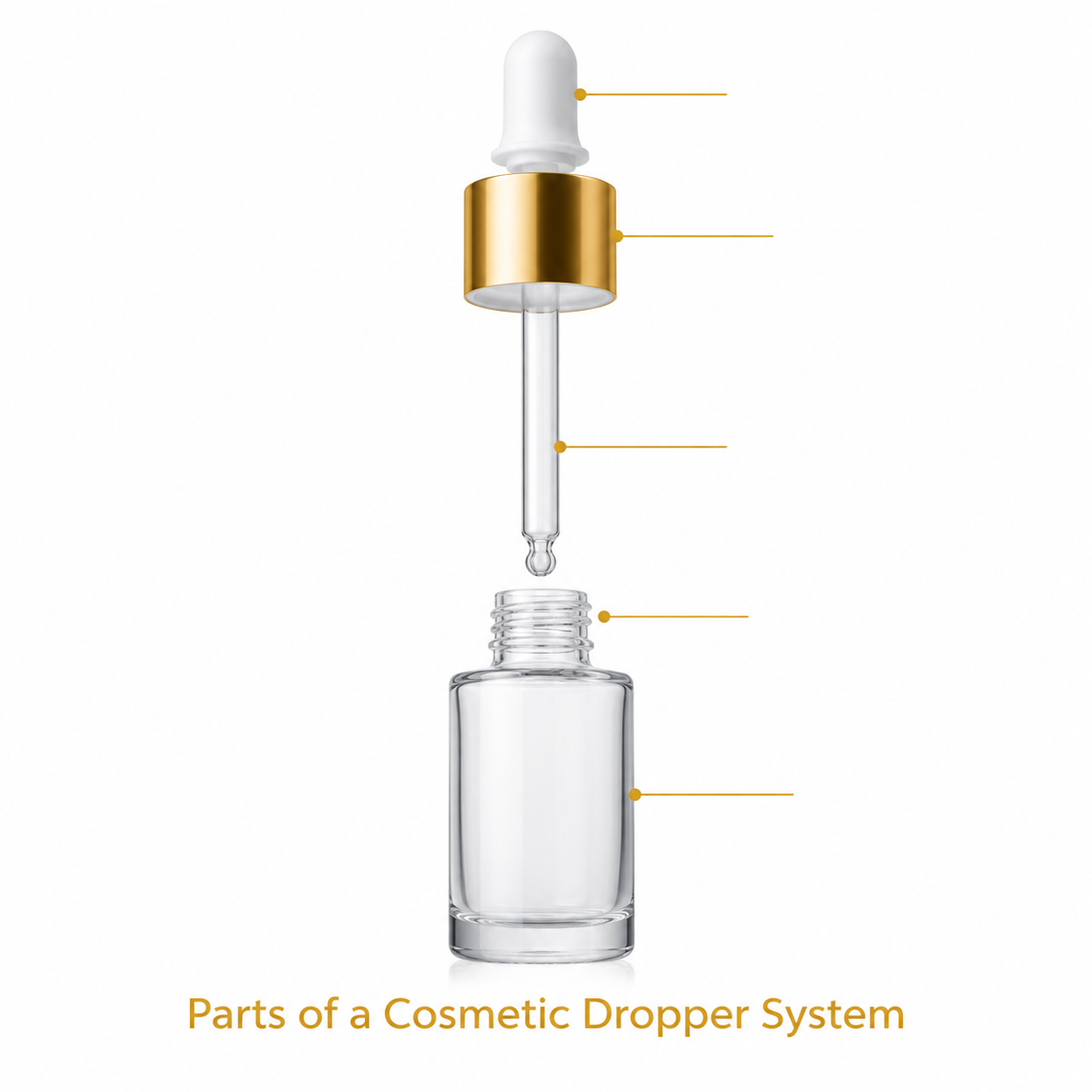
A complete cosmetic dropper system has more parts than the outer container. The components must fit mechanically, seal correctly and work with the formula and filling process.
Bottle, dropper cap, pipette and bulb
- Bottle: The rigid container holds the formula. Capacity, shoulder shape, base stability and material affect appearance, handling and shipping considerations.
- Finition du manche : This is the standardized threaded opening on the bottle. It determines which dropper cap can fit and should be confirmed by drawing, sample or supplier specification rather than appearance alone.
- Dropper cap: The outer cap provides grip and connects the dispensing assembly to the bottle. Its liner, insert or sealing structure can affect leakage and user feel.
- Pipette : The narrow tube reaches into the formula and carries liquid toward the tip. Its length, internal diameter and material influence pickup and release behavior.
- Bulb: The flexible top is squeezed to create suction and then pressed to release the liquid. Bulb recovery and firmness are practical user-experience factors that require sample evaluation.
For a custom serum packaging project, specify whether the cap, pipette and bulb are supplied as an assembled component or as separate parts. Also confirm the bottle opening, overall height, fill level and clearance between the pipette and the bottle base.
Considérations relatives au verre, au plastique et à l'aspect esthétique
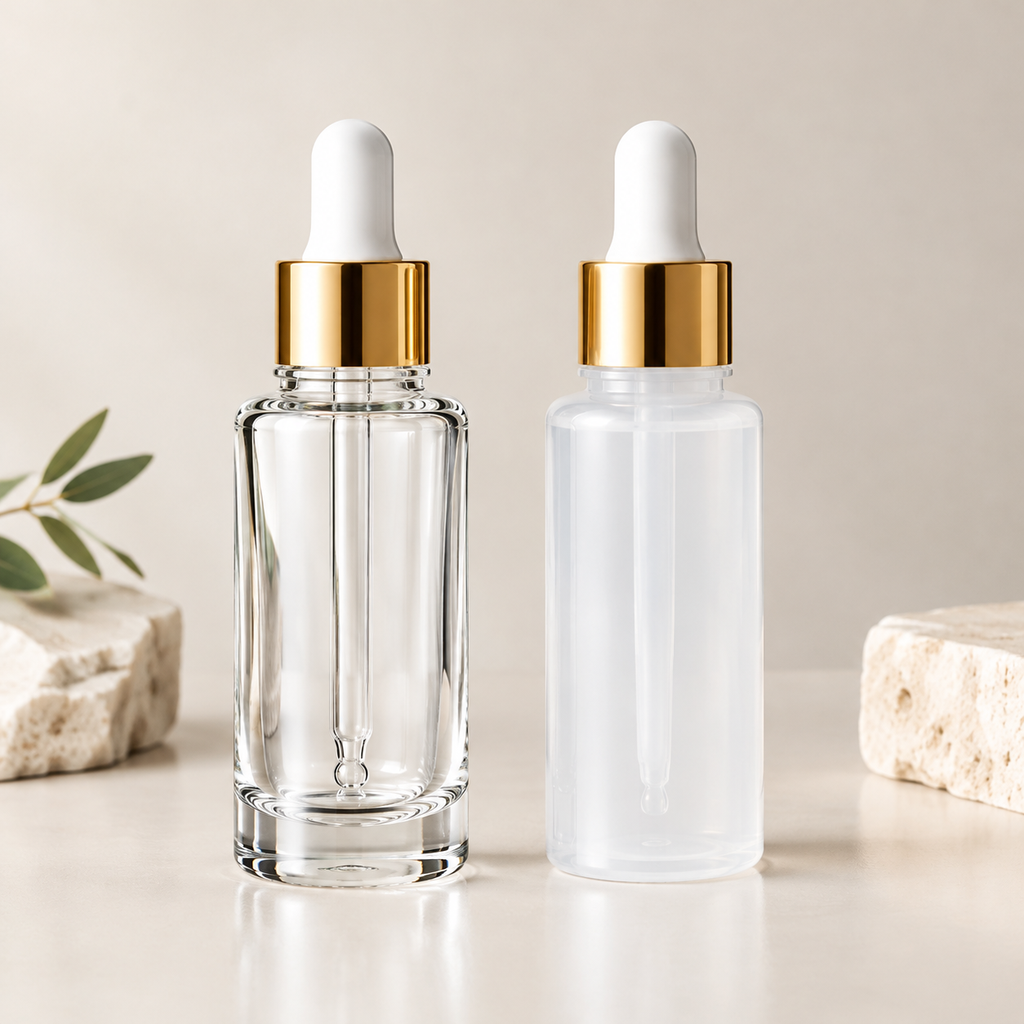
Neither glass nor plastic is universally best for a serum dropper bottle. The right choice depends on the formula, desired appearance, shipping profile, filling operation, target market and approved sample.
Transparency, weight and decoration trade-offs
Glass can provide a substantial, premium feel and strong visual clarity or color effects. It is also rigid and generally heavier, so buyers should consider breakage risk, secondary packaging and transportation handling. Plastic options can reduce weight and may offer more flexibility for shapes, colors and impact resistance, but the specific resin must be checked for chemical compatibility, clarity, stress cracking and decoration performance.
YBJ Packaging identifies glass, PETG, AS and other material options within its packaging capabilities. These are company-stated material options, not a guarantee that every material suits every formula. A supplier should review the formula context and confirm the selected material through samples and project testing. Decoration may include color matching, printing, coating or other finishing methods, with final appearance depending on the material, process, artwork and approved sample.
For a broader comparison, buyers can review PET bottle packaging et acrylic bottle options alongside glass formats.
Dropper Dosage and Formula Compatibility
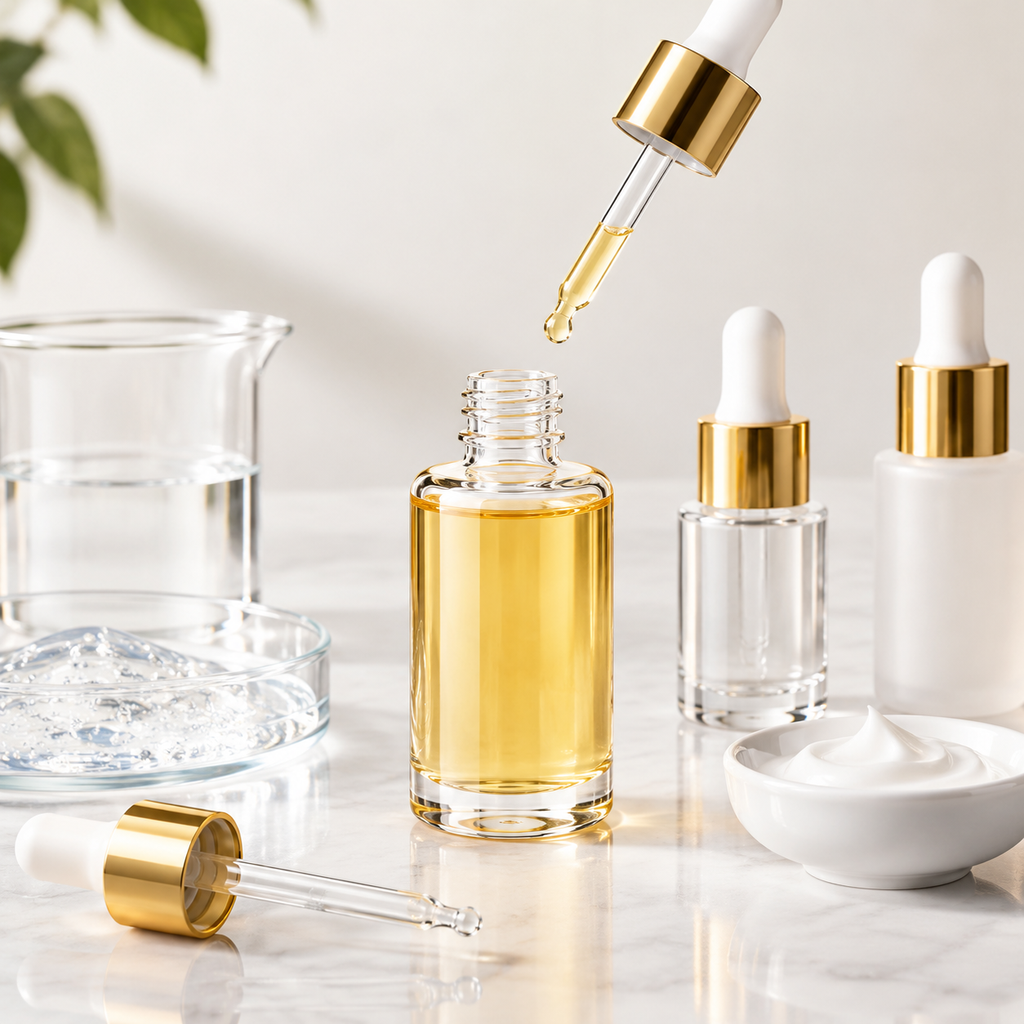
Cosmetic dropper dosage is not a fixed value simply because a dropper is used. The amount released per squeeze depends on the pipette geometry, bulb, liquid viscosity, surface tension, fill level, user technique and how the dropper is held. “One dropper” is therefore a usage description, not a verified dose unless the complete system has been tested under defined conditions.
Before selecting a serum dropper bottle, share the formula’s viscosity range, oil or water content, suspended particles, fragrance or solvent context, temperature range and any known material sensitivities. The supplier can then help identify a suitable starting configuration, but compatibility, dosage and shelf performance remain project-dependent.
Useful checks include:
- Confirm that the pipette picks up the formula without excessive bubbles or incomplete filling.
- Measure repeat dispensing across several squeezes and users, rather than relying on one test.
- Inspect the closure, bulb and neck area for swelling, softening, stress, staining or odor transfer.
- Observe leakage, weeping and residue after upright, inverted and transport-relevant handling.
- Repeat checks with the intended formula, fill level and temperature conditions.
These checks do not replace the brand’s own formula, packaging or regulatory review. They help identify whether the selected system performs as expected before approval.
Dropper Bottle Specification Table
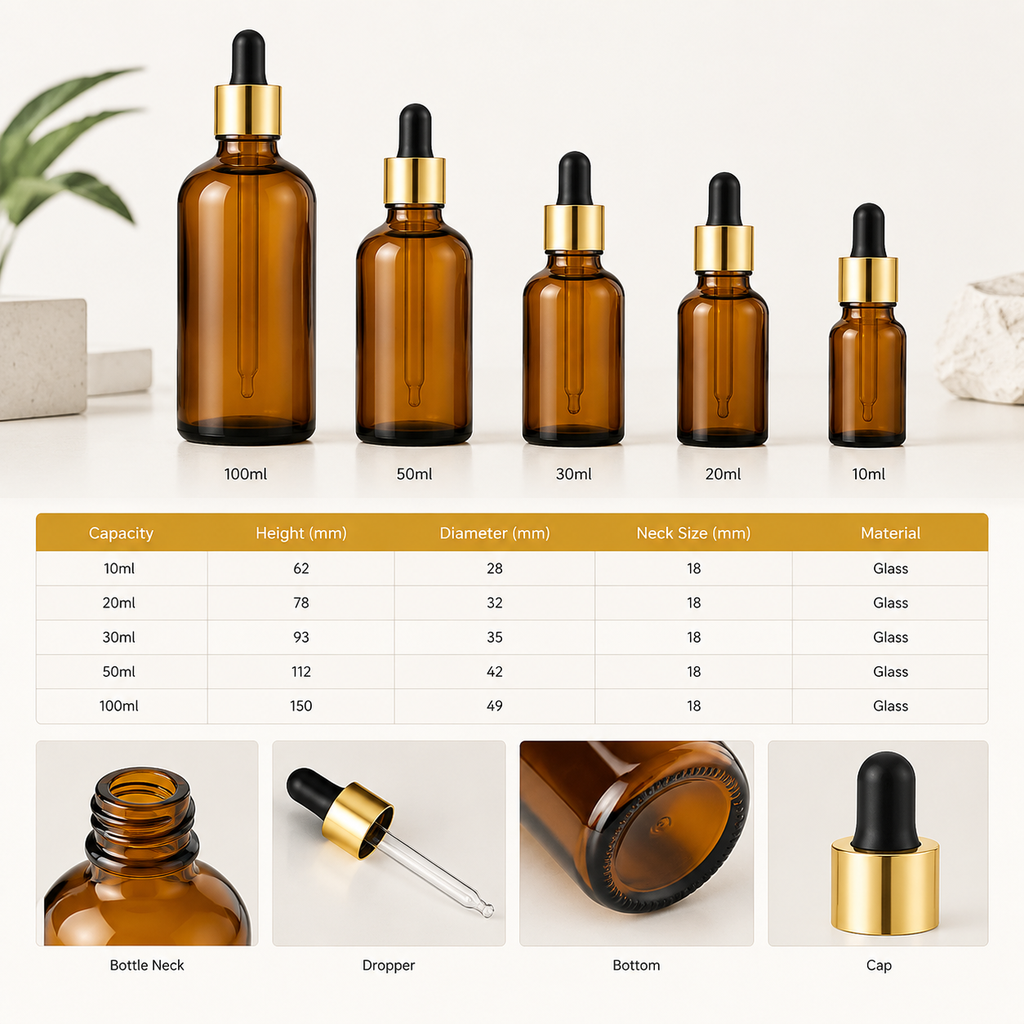
Use this table to organize the first packaging brief. Final dimensions, material selection, compatibility, tooling, MOQ, pricing, production timing and shipping depend on the project details and approval stage.
| Caractéristiques techniques | Ce qu'il faut définir | Pourquoi est-ce important ? |
|---|---|---|
| Application | Serum, facial oil, concentrate or another liquid treatment | Establishes the intended dispensing and handling context |
| Capacity | Nominal volume and target fill volume | Affects bottle height, pipette length and available headspace |
| Bottle material | Glass, PETG, AS or another proposed material | Influences weight, appearance, compatibility and shipping considerations |
| Finition du col | Thread or supplier-confirmed opening specification | Ensures the cap and bottle form a matched assembly |
| Ensemble compte-gouttes | Cap style, bulb, pipette material, length and internal diameter | Influences pickup, release, sealing and user experience |
| Décoration | Color, coating, printing, labeling or other finish | Determines appearance and may require an approval sample |
| Filling process | Manual, semi-automatic or automatic filling and capping | Helps identify clearance, assembly and line-fit requirements |
| Validation | Leakage, dosage, compatibility, appearance and transport checks | Creates a defined basis for approval |
Sampling and Approval Tests
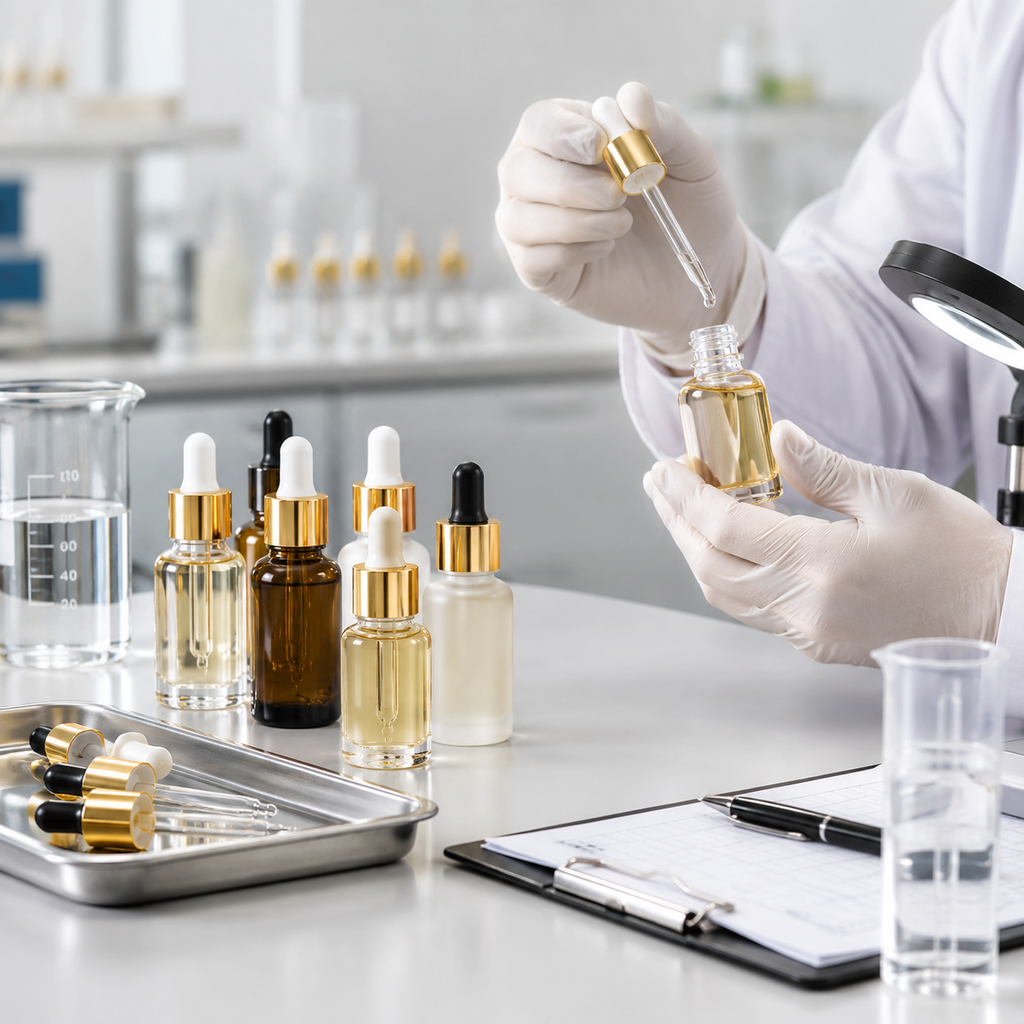
Request samples that represent the intended bottle, closure, pipette, bulb, decoration and formula whenever possible. A visually correct empty package cannot confirm how the finished system will behave.
Leakage, pickup, dispensing and closure checks
- Fit check: Confirm the cap threads, seal, pipette length, base clearance and overall dimensions.
- Leakage check: Examine the assembled pack after normal handling and agreed orientation or transport simulation.
- Pickup check: Test whether the pipette fills consistently without excessive air or formula residue.
- Dispensing check: Record repeat output using the intended formula, user instructions and test conditions.
- Formula contact check: Observe changes to the bottle, pipette, bulb, liner, color, odor and closure fit.
- Decoration check: Review color, print registration, adhesion, coating uniformity and resistance to routine handling.
YBJ Packaging states that it provides consultation, design, mold development, manufacturing, assembly and quality-check support, with a Class 10,000 cleanroom, 12 automated assembly lines and 23 Toshiba all-electric injection machines. These are company-provided capabilities; the exact inspection plan and acceptance criteria should be agreed for each project.
How to Prepare a Dropper Packaging Inquiry
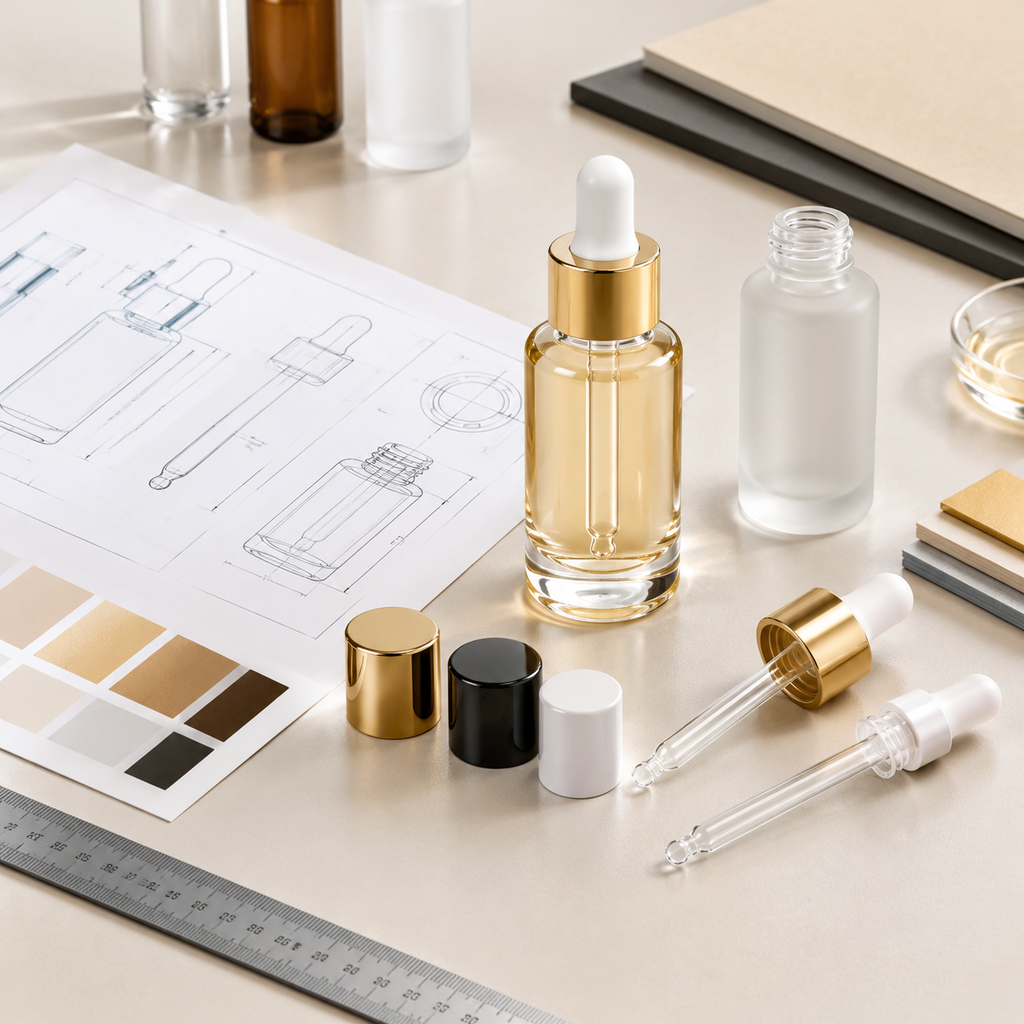
A complete brief helps a packaging manufacturer recommend a practical starting configuration and identify questions before sampling. Include:
- Product type and formula context, including viscosity, oil or water base, particles and known sensitivities.
- Target capacity, fill volume, bottle dimensions or preferred shape.
- Material preference, such as glass, PETG, AS or another option.
- Neck finish, dropper cap style, bulb preference, pipette material and desired dispensing behavior.
- Decoration requirements, artwork status, color references, printing and secondary packaging needs.
- Filling application, capping method and any contract-filler line constraints.
- Estimated quantity, destination market, shipping requirements and target date.
- Whether you need stock samples, custom mold development, assembled samples or formula compatibility discussion.
YBJ Packaging describes its service as one-stop OEM and ODM support from consultation and design through mold development, material selection, manufacturing, assembly, quality checks and worldwide shipping. Ask the team to confirm which elements are standard, which require customization and what must be approved before production.
Questions fréquemment posées
The best answer depends on the complete formula-and-package combination. These questions are useful starting points, not substitutes for approval testing.
Request Serum Dropper Samples
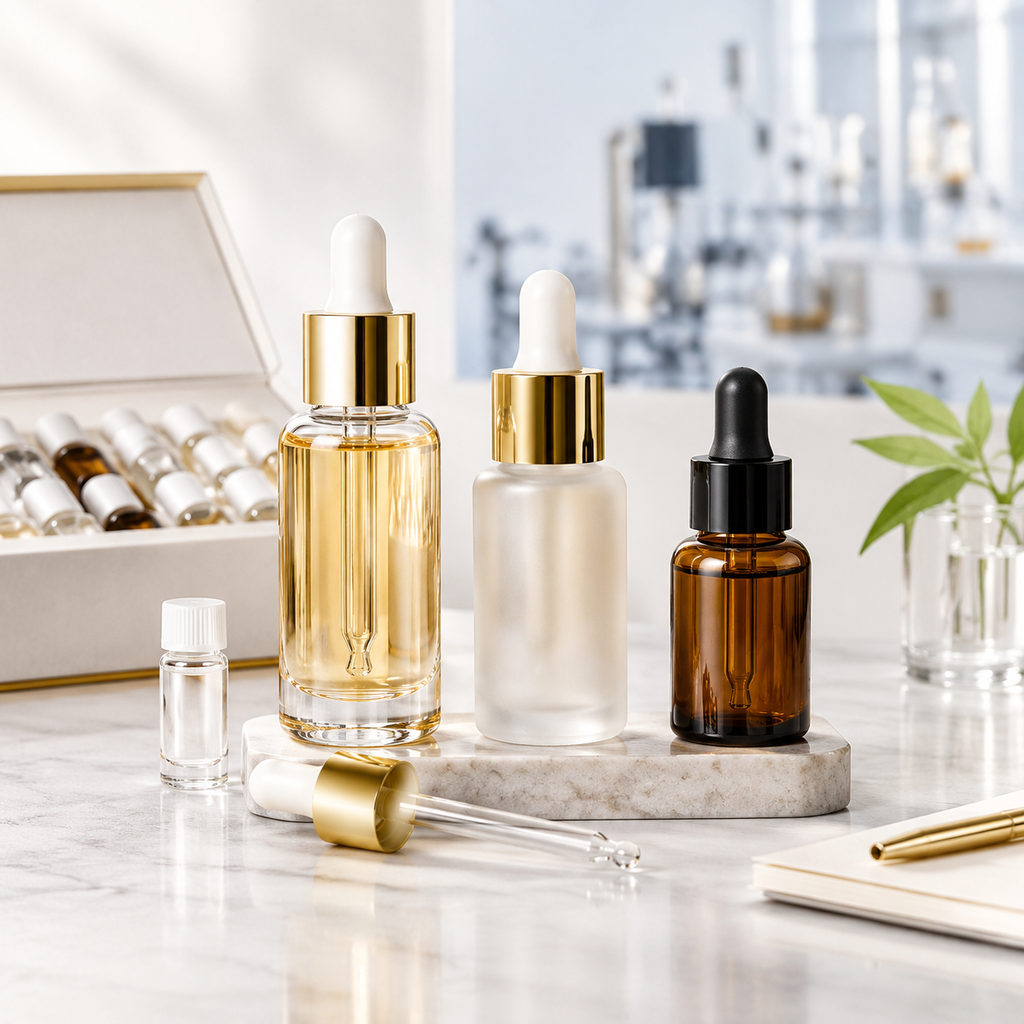
Start with a complete brief and ask for samples of the assembled system, not only the bottle body. Compare the selected bottle, cosmetic dropper cap, pipette and bulb with the intended formula, fill process and decoration. Confirm compatibility, dropper dosage, leakage performance and appearance before moving to production decisions.
For custom serum packaging, the practical objective is a dispensing system that fits the formula, filling operation, brand presentation and destination requirements. Exact compatibility, MOQ, tooling, pricing, production time and shipping should be confirmed after YBJ Packaging reviews the project.
FAQ
What type of bottle is best for a serum dropper?
The best bottle is one whose material, capacity, neck finish and shape work with the serum, dropper assembly, filling process and brand requirements. Glass may suit a premium, heavier presentation, while PETG, AS or another plastic may support lower weight or different design needs. Confirm the choice with assembled samples and formula compatibility checks.
How does a cosmetic dropper dosage work?
A bulb is squeezed and released to create suction, drawing liquid into the pipette. Pressing the bulb releases the liquid. Output varies with pipette geometry, bulb behavior, viscosity, surface tension, fill level and user technique, so a repeatable dosage must be measured with the intended system and formula.
Should I choose a glass or plastic dropper bottle?
Choose based on formula compatibility, appearance, weight, handling, shipping and filling requirements. Glass offers rigidity and a substantial feel but adds weight and breakage considerations. Plastic can reduce weight and offer design flexibility, but the specific resin needs compatibility and decoration review.
What formula tests are needed for dropper packaging?
Test pickup, air intake, repeat dispensing, leakage, residue, closure fit and material changes using the intended formula. Also review odor or color transfer, bulb and pipette condition, and performance across relevant fill levels and temperatures. The exact test plan should be agreed for the project.
What details should I include when requesting serum packaging samples?
Provide the product type, formula or viscosity context, capacity, dimensions, material preference, neck finish, dropper cap, pipette and bulb requirements, decoration, estimated quantity, filling application, destination and target date. State whether you need assembled samples, formula compatibility discussion or custom mold development.
Discutez de vos emballages cosmétiques sur mesure
Tell YBJ Packaging what you are filling, the package format and capacity you need, your material and decoration preferences, estimated quantity, destination and target date. The team can review the brief and suggest practical OEM or ODM packaging options for your project. Invite a sample or compatibility discussion so the complete dropper system can be evaluated before approval.

 English
 Français
 Español