



Table des matières
- What a cosmetic dropper bottle compatibility test must prove
- Map the complete bottle and dropper system before testing
- Formula, fill process and storage conditions
- Bottle, pipette, bulb, collar and closure interfaces
- How to build a representative compatibility sample set
- Select normal, worst-case and control samples
- A step-by-step cosmetic packaging compatibility test protocol
- Record appearance, odor, leakage and dispensing behavior
- Review results after filling, storage and handling
- Decision table: approve, revise or investigate further
- What to send a dropper bottle manufacturer for evaluation
- How YBJ Packaging can support sampling and specification review
- Foire aux questions
- Request a cosmetic dropper bottle compatibility review
A cosmetic dropper bottle compatibility test should evaluate the complete package system, not only the bottle body. This practical pre-production protocol explains how to test the formula, glass or plastic container, pipette, bulb, collar, closure, decoration, filling process and storage conditions before mass production.
What a cosmetic dropper bottle compatibility test must prove
Réponse directe : A cosmetic dropper bottle compatibility test should show that the formula, bottle, pipette, bulb, collar, closure, decoration and filling process continue to work together under the intended storage and handling conditions. The test should check both the product inside the package and the package itself before the specification is released for mass production.
Testing only an empty bottle or only the glass body is not enough. A serum may contact the inner wall, pipette tube, elastomer bulb, gasket, threaded neck, liner and decoration at different points in its life cycle. The formula can also be exposed to air during repeated dispensing, while the package may experience torque, vibration, temperature variation, inversion and user handling. A useful test therefore evaluates the assembled system with representative filled samples.
Compatibility is a system question
In this context, compatibility means that the package does not cause an unacceptable change in the formula and the formula does not cause an unacceptable change in the package. It also includes functional compatibility: the dropper must draw, retain and release the intended amount in a repeatable way, and the closure must seal after filling and use. Compatibility is not the same as proving a product has a particular cosmetic effect, and it is not a substitute for the brand owner’s formula stability, safety or market-specific review.
The test should provide evidence in five areas:
- Material contact: Look for swelling, softening, cracking, tackiness, discoloration, haze, odor transfer or other changes in the pipette, bulb, gasket, collar, closure and bottle surface.
- Formula condition: Observe color, clarity, odor, separation, precipitation, sediment, viscosity changes and other formula-specific indicators. Any measurement method and acceptance limit should be agreed with the formulator or quality team.
- Container integrity: Check for leakage, loss of mass, cracks, chips, distortion, thread damage, loose components and decoration failure.
- Dispensing performance: Record first draw, repeated draw behavior, drop formation, dripping, retained liquid, air intake, residual product and delivered dosage.
- Process and use fit: Confirm that the filled package can be assembled, capped, labeled, transported, stored and opened or closed as intended.
A pass decision should be tied to the exact formula version, component materials and grades, bottle dimensions, neck finish, pipette length, bulb design, closure torque, decoration, filling method and test conditions evaluated. If one of those variables changes, the previous result may no longer apply. A short written cosmetic packaging compatibility protocol prevents a general statement such as compatible with serum from being mistaken for approval of every serum or every dropper configuration.
For buyers planning serum bottle compatibility testing, the most useful starting point is a controlled sample matrix and a list of measurable acceptance criteria. Agreeing on those items before samples are filled makes supplier discussions more precise and reduces the risk of approving a visually attractive package that does not work on the filling line or in repeated use.
Map the complete bottle and dropper system before testing
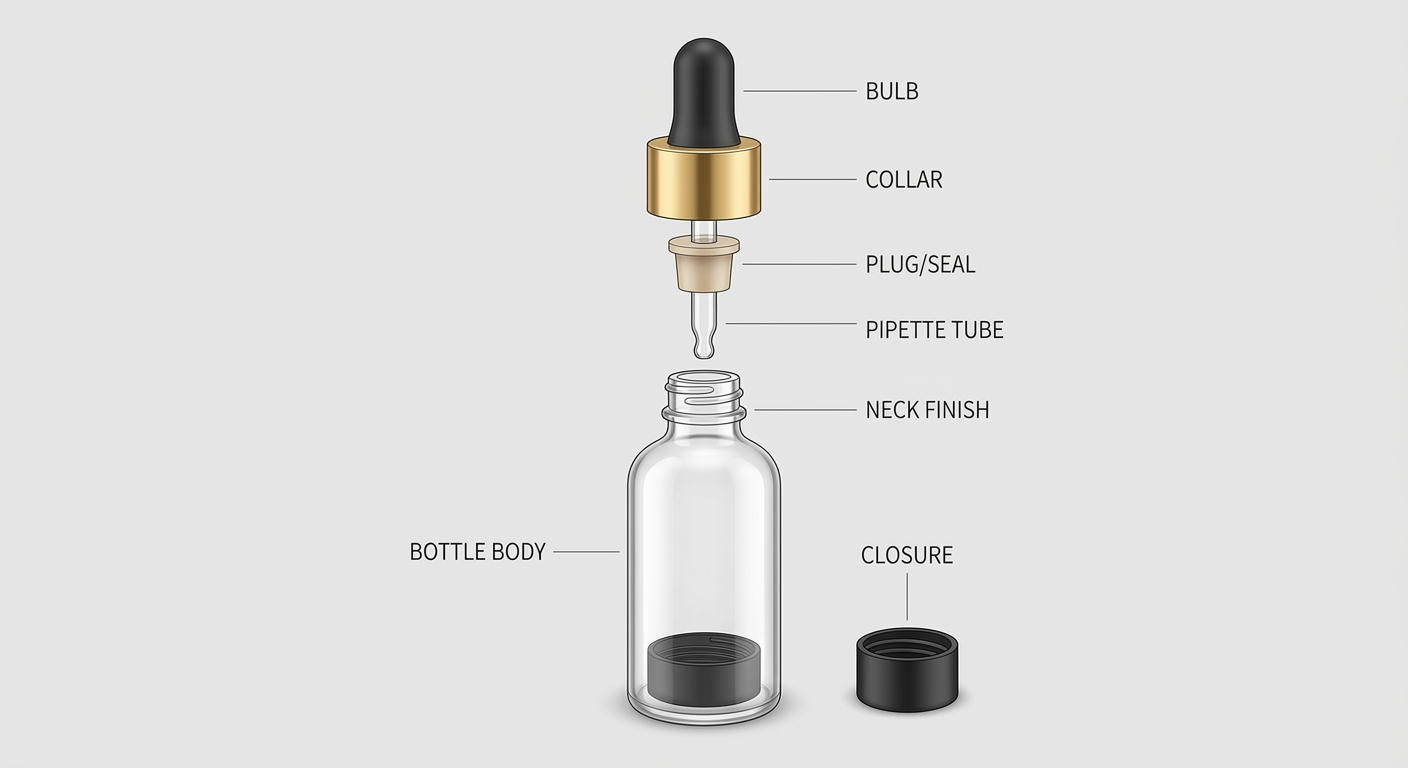
Before filling a sample, create a component map that identifies every part the formula may touch and every interface that can affect sealing or dispensing. This map turns a vague packaging compatibility concern into a testable package specification.
A typical cosmetic dropper system may include the following parts:
- The bottle body, which may be glass or a plastic material selected for the project.
- The bottle shoulder, base, inner wall and opening.
- The neck finish, meaning the dimensional profile at the bottle opening that allows a closure or dropper assembly to fit and seal.
- The collar or cap shell, including its thread, crimp or other attachment feature.
- The pipette tube, which may be glass or a specified plastic material.
- The bulb, the flexible part squeezed to draw and release the formula.
- A gasket, plug, wiper or other sealing element, if included in the design.
- Decoration such as silk screen printing, UV printing, coating, metallization, labels or color treatment.
- The filling and capping equipment that determines fill level, alignment, insertion depth and closing force.
Record the supplier, part number or sample code, material or material grade when available, dimensions, color, surface treatment and revision level for each part. If a part is supplied as an assembly, ask whether the assembly contains more than one material. A bulb that appears to be one component may include an elastomer, an internal plug and a separate collar, each with a different contact behavior.
It is also useful to separate the system into three review zones:
- Formula-contact zone: The bottle interior, pipette tube, bulb inlet or outlet, gasket, wiper and any internal coating or residue.
- Seal and stress zone: The neck finish, thread, liner, plug, collar, cap and the areas affected by insertion, torque or crimping.
- External handling zone: The outer bottle, printed decoration, label, coating, dropper top and surfaces touched during filling, shipping and use.
Do not assume that a bottle is compatible because the body is made from a familiar material. The formula may spend more time in contact with the pipette and bulb than with the bottle wall during normal use. Conversely, a package can pass a chemical contact check and still fail because the neck finish is mismatched, the dropper does not seat squarely, or the closure is tightened outside its workable range.
For dimensions and assembly terminology, buyers can review this Guide des types de goulots pour flacons cosmétiques. A neck finish drawing or physical sample should be checked against the actual dropper assembly rather than selected by a nominal neck name alone. Thread profile, finish height, sealing surface, inner diameter, outer diameter and closure engagement can all affect the result.
The component map should remain attached to the test report. It provides traceability if a bulb supplier, pipette length, closure color, decoration process or bottle mold changes later in development.
Formula, fill process and storage conditions
Start with the formula that will actually be filled, or a documented representative version. A water-thin prototype, a production serum and a high-oil concentrate may behave very differently in the same dropper. A compatibility result from one viscosity, solvent balance or preservative system should not automatically be extended to another formula.
Ask the formulator or quality team to identify the factors most likely to affect packaging. Depending on the product, those factors may include water content, oils, alcohol, fragrance, surfactants, acids, bases, salts, pigments, suspended materials, solvents, active ingredients and preservatives. The objective is not to test a formula by marketing category alone. The objective is to identify the actual chemical and physical exposures created by the formula.
Capture the following formula context where it is available:
- Formula name, version and date.
- Expected viscosity range and any temperature dependence.
- Density or approximate fill mass if it affects dosage calculations.
- pH range, when relevant to the package review.
- Oil, alcohol, solvent, fragrance or surfactant content that may contact package materials.
- Presence of powders, crystals, pigments or particles that could affect the pipette opening.
- Fill temperature and whether the formula is filled warm, at room temperature or after cooling.
- Expected headspace, meaning the air space left above the formula.
- Normal use pattern, including whether the bottle is stored upright, carried in a bag, inverted or shaken.
The filling process is part of the test. Use the intended filling nozzle, insertion depth, line speed or a justified laboratory simulation. Document whether the nozzle contacts the bottle or formula, how the pipette is inserted, whether the closure is applied by hand or equipment, and how torque or closing force is controlled. A package filled gently by hand may not represent a line-filled package that experiences faster capping, different alignment or a wider process window.
Check the fill volume and headspace because they influence the amount of air, evaporation opportunity and formula exposure during repeated dispensing. If the formula is shear-sensitive or changes with temperature, note the time between filling and capping. If a product is filled under a controlled environment, record that condition and define which parts of the process need to be reproduced for development samples.
Storage conditions should reflect the intended distribution and use risk. A project may need an ambient condition, a warmer screen, a cooler condition, light exposure, dark storage, upright storage, inverted storage, side storage, vibration or freeze-thaw exposure. Not every project needs every condition. Select conditions with the brand’s formulator, quality team and logistics stakeholders.
Use an elevated-temperature condition only as a comparative screening tool unless the responsible technical team has established how it relates to the broader stability program. It is not automatically a shelf-life prediction. Likewise, a bottle that survives a short laboratory screen is not automatically approved for every destination, shipping route or storage period.
Keep formula testing and packaging testing connected but distinguish them in the report. A formula can change because of its own stability profile, while a package can contribute to change through adsorption, extraction, permeation, contact with a component or inadequate closure. A reference sample in a known container or laboratory vessel can help the team compare changes, but the reference material and test conditions should be documented rather than assumed to be inert.
Bottle, pipette, bulb, collar and closure interfaces
Dropper pipette compatibility must be assessed at each contact and movement point. The pipette tube draws and releases the formula, the bulb creates the pressure change, the collar positions the assembly, and the closure or gasket protects the opening. A problem in any one part can appear as leakage, odor transfer, a change in drop size or an inability to draw the formula.
For each interface, ask what can move, swell, soften, abrade or lose its seal:
- Bottle interior to formula: Inspect the glass or plastic inner surface for haze, coating change, discoloration, residue or physical damage. Observe the formula for changes after contact.
- Pipette tube to formula: Confirm that the tube material and opening remain stable and that the formula does not cling excessively, crystallize or obstruct the opening.
- Bulb to formula and air: Check whether the bulb becomes sticky, hard, soft, swollen, collapsed or difficult to squeeze. Odor transfer is also worth recording where the formula is fragrance-sensitive.
- Bulb to collar or plug: Confirm that the bulb remains seated and does not twist, pull out, deform or leak during repeated use.
- Collar to neck finish: Check thread engagement, seating height, gap, alignment, torque response and evidence of cross-threading or stress.
- Gasket, liner or wiper to opening: Look for compression set, tearing, displacement, residue buildup and loss of seal after storage or repeated opening.
- Decoration to handling and formula exposure: Check printed or coated surfaces after filling, wiping, capping, inversion, rubbing and contact with formula or cleaning materials.
Glass bottle formula testing deserves a complete-system approach. Glass can provide a rigid body and may offer a useful barrier advantage, but it adds weight and breakage considerations. The dropper assembly, internal surface treatment, closure and decoration can still determine compatibility. Check the bottle for chips, cracks, thermal damage, sharp edges and dimensional consistency, especially around the neck and shoulder.
Plastic can reduce weight and improve impact tolerance for some formats, but the specific resin, colorant, additive package and processing history matter. Different plastics can have different resistance to oils, solvents, fragrances and other formula components. If a plastic bottle, collar or cap is under consideration, request the exact material specification and evaluate the finished part, not only a generic resin name.
Decoration introduces another contact system. Silk screen printing, UV printing, coatings and labels may have different adhesion and abrasion behavior. The package should be tested after the selected decoration is applied because a decorated sample may behave differently from an undecorated sample during wiping, filling, shipping and repeated handling. Confirm whether the formula can reach the decorated area through a spill, overflow or cap contact.
Define dosage in a way that matches the product use. For a dropper, dosage may mean the mass or volume released by a full bulb squeeze, a partial squeeze, a specified number of drops or a measured draw. The result depends on pipette dimensions, bulb design, orifice, formula viscosity, surface tension, fill level, temperature and the user’s technique. Do not publish a nominal dose as a guaranteed performance value until the exact assembly, formula and measurement method have been approved.
Review sample options such as custom cosmetic dropper bottles only after matching the bottle, closure and pipette specifications to the formula and filling application. A product category is a starting point for discussion, not a compatibility approval.
How to build a representative compatibility sample set
Build the sample set around the risks that could change the decision. One filled bottle can reveal a visible problem, but it cannot show whether that result is repeatable across components, filling variation or storage positions. A representative set should include the final or near-final configuration and enough repeated samples for the project team to distinguish a pattern from an isolated handling event.
Start by writing a test matrix. Each row should identify the formula version, bottle lot or sample code, pipette and bulb configuration, decoration status, fill volume, filling method, closure setting, storage condition, orientation and inspection time. If the project has more than one candidate component, keep each candidate in its own row rather than combining them under a general sample name.
Use three sample groups:
- Normal-production samples: Filled and assembled using the intended formula, target fill volume, standard component configuration and representative process settings.
- Worst-case or boundary samples: Selected to challenge the known risk within a reasonable, documented process range. Examples may include the more aggressive formula variant, a viscosity boundary, a high or low fill level, a challenging storage orientation, a longer pipette contact path or the upper and lower approved capping settings.
- Controls: Empty package controls, formula-only controls, current-package controls or reference-container samples, depending on the question being investigated.
The sample count is project-dependent. As a planning principle, use multiple samples for each meaningful condition instead of relying on one bottle, and document the reason for the selected count. The number can depend on available components, test duration, the cost of the formula, the seriousness of the failure mode and whether the samples are intended for screening, process development or approval.
When samples are supplied by a manufacturer, request identification of the bottle mold, component revision, material grade where available, decoration batch and assembly method. If the bottle is produced in more than one color or finish, test the version intended for launch. Colorants, coatings and surface treatments may change the package’s behavior or its inspection requirements.
Separate samples that will be opened repeatedly from samples that will remain unopened. Repeated dispensing evaluates use behavior and air exposure; unopened samples help isolate storage-related changes. If the product will be shipped, include handling or transport simulation that reflects the intended route, then inspect the same closure and decoration areas that a customer will handle.
Select normal, worst-case and control samples
Normal samples represent what the customer will receive; worst-case samples explore where the design or process may become vulnerable; controls help identify the source of a change. These groups should be labeled and tracked separately from the beginning.
Normal-production samples
Use the intended bottle, pipette tube, bulb, collar, gasket and closure. Apply the intended decoration and use the target fill volume. If the launch package will be assembled on an automated line, use that line or a process simulation that reproduces its critical steps. Record the actual settings instead of describing the process only as standard.
Worst-case or boundary samples
Choose boundary conditions based on a documented risk assessment. A high-oil formula may be more demanding for a selected elastomer than a water-based formula. A low-viscosity version may leak or drip more easily, while a high-viscosity version may draw slowly or leave more residual product. A high fill level may reduce headspace, while a low fill level can change the length of the liquid column and the draw behavior. A long storage period, inversion, warm condition, light exposure or transport movement may be relevant for one product and irrelevant for another.
Worst-case does not mean intentionally damaging the package or applying an unrealistic condition. It means testing the most demanding credible condition within the product specification or process window. If the team wants to study an extreme outside the intended range, identify it as an exploratory stress screen so it is not confused with a launch acceptance condition.
Controls
A formula-only control can show whether the formula changes under the same storage condition without package contact. An empty-package control can show whether a component changes without formula exposure. A current package or reference container can provide a comparison point when the team is changing formats. Controls do not make a package automatically acceptable, but they help the team avoid assigning every change to the bottle without evidence.
Keep a chain of identity for every sample: date filled, operator or line, component codes, formula batch, storage position, opening history and inspection status. Photograph the same areas at each time point when possible. A simple packaging compatibility checklist with sample IDs and sign-off fields is often more useful than a long report that cannot connect an observation to a specific component or condition.
A step-by-step cosmetic packaging compatibility test protocol
A practical protocol moves from specification control to baseline inspection, representative filling, controlled storage, repeated observation and a documented decision. The steps below are a development framework, not a universal pass standard. The brand, formulator, quality team and packaging supplier should agree on the exact conditions and acceptance limits for the project.
- Freeze the test question. State whether the test is screening a new bottle, comparing pipettes, checking decoration, investigating a leak, confirming a filling process or preparing an approval sample. A focused question determines which controls and measurements are needed.
- Record the specification. List the formula version, bottle material and dimensions, nominal capacity, target fill volume, pipette length and material, bulb and gasket details, neck finish, collar, closure, decoration, capping method, torque or closing force, storage conditions and intended use pattern.
- Inspect and identify incoming components. Check samples for chips, cracks, flash, burrs, contamination, scratches, distortion, color variation, print defects, incomplete threads and incorrect assembly. Assign a sample code before filling.
- Establish formula and package baselines. Record formula appearance, odor, color, viscosity or other agreed measurements. Record empty-package mass where useful, component dimensions, closure fit and initial dispensing behavior with a compatible test liquid if that is part of the development plan.
- Fill representative samples. Use the intended formula or documented surrogate, target fill volume, headspace, fill temperature and filling equipment. Avoid changing the pipette, bulb or closure during filling unless the change is part of the test matrix.
- Assemble and cap under controlled conditions. Record alignment, insertion depth, closure engagement, torque or closing force and any rework. Note whether the package is wiped before inspection and whether the formula can contact the decoration or external closure.
- Perform an immediate post-fill check. Inspect the bottle, neck, seal, decoration and closure. Check for visible leakage, drips, trapped formula, air bubbles, loose components, difficult opening, unusual squeeze response and formula changes from the baseline.
- Assign storage and handling conditions. Place samples in the agreed ambient, warm, cool, light, dark, orientation, vibration or other conditions. Keep the sample identity and position traceable. If samples are moved, opened or rotated, record the event.
- Inspect at defined time points. Use the same sequence and measurement method at each inspection. Record package observations separately from formula observations, then compare both with controls.
- Test repeated dispensing. Follow a defined user or process simulation. Record first draw, repeated draws, drop or dose behavior, dripping, retained liquid, bulb recovery, cap resealing and changes after the bottle is partly emptied.
- Investigate abnormal results. Preserve failed samples, photographs and component pieces when possible. Check whether the issue follows one component, one formula, one lot, one storage position or one process setting. Do not discard evidence before the cause is understood.
- Issue a decision report. State the tested configuration, conditions, observations, deviations, open questions, corrective actions and approval status. A pass should be limited to the scope of the test and should identify any conditions that still require confirmation.
For a new package, it is often efficient to run a screening phase before a longer confirmation phase. Screening can identify obvious leakage, swelling, poor dispensing or decoration problems. Confirmation can then focus on the selected configuration, approved formula version, production-representative process and agreed storage conditions. Separating the phases helps avoid spending time on extended testing of a package that already has a basic interface problem.
Record appearance, odor, leakage and dispensing behavior
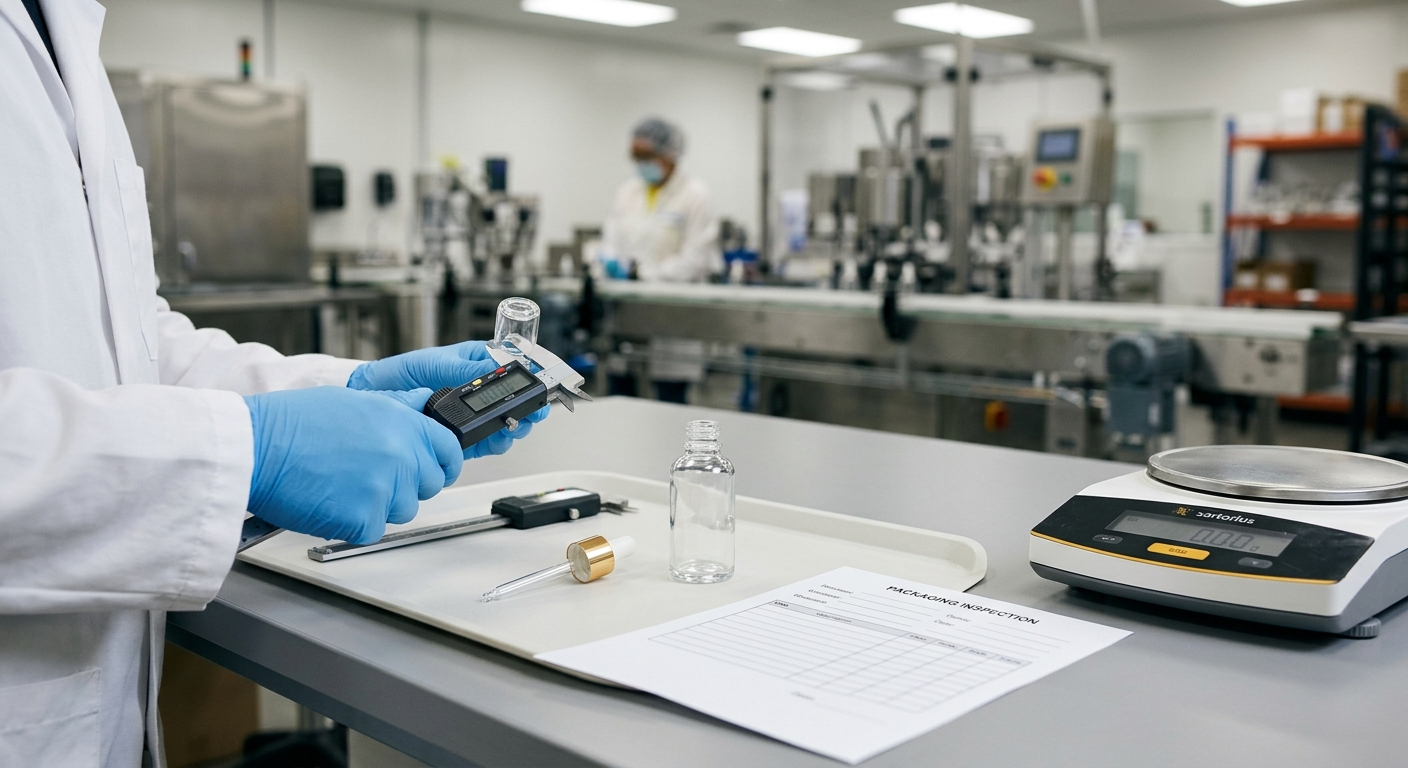
Use repeatable observations and measurements rather than a general statement such as looks fine. A compatibility log should make it possible for another reviewer to understand what changed, when it changed and whether the change occurred in the formula, package or both.
Appearance and physical condition
Inspect the bottle body, shoulder, base, neck and closure under consistent lighting. Record cracks, chips, scratches, haze, discoloration, coating changes, swelling, distortion, thread damage, loose parts and residue. For glass, pay particular attention to the neck and shoulder after filling, capping, inversion and handling. For plastic components, look for softening, stress whitening, deformation or a change in surface feel. Photograph the same view before filling and at each later time point when possible.
Inspect decoration separately. Note print lifting, ink transfer, fading, rub marks, blisters, edge damage and formula staining. A decoration issue should be logged even if the bottle remains sealed, because the external finish is part of the delivered package. Define the inspection method in advance, including any wiping or rubbing action, so that a later reviewer knows how the result was produced.
Formula appearance and odor
Compare the filled sample with the baseline and control under the same lighting and temperature. Record color shift, haze, separation, sediment, crystals, precipitate, bubbles that persist beyond the expected filling behavior and changes in viscosity or flow. Note whether the change is visible only near a component or throughout the bottle. If the formula is fragrance-containing or odor-sensitive, use the agreed evaluation method to record unusual odor or transfer from a component. Odor observations should be made by appropriately designated personnel and documented without turning the packaging test into an unsupported product safety conclusion.
Leakage and seal behavior
Inspect the neck, closure interface and external surfaces after filling, storage, inversion and handling. A clean, dry exterior does not by itself prove that there has been no loss, so a project may also use sample mass, liquid level or another agreed measurement. Record the orientation, duration and handling event associated with any leak. Distinguish an immediate assembly leak from a delayed seepage issue and from formula left on the outside during filling.
When investigating a leak, check the neck finish dimensions, thread engagement, gasket or plug position, closure torque, collar seating, bottle damage and assembly alignment. Do not simply increase torque without understanding the design. Excessive force can damage threads, distort a seal or create stress in the bottle, while insufficient force may leave a gap. The workable torque or closing-force range must be established for the exact package.
Dispensing and dosage behavior
Define the dispensing procedure before measuring. For example, the operator may hold the bottle upright, squeeze the bulb fully, wait for a specified interval, release, and collect the output using a defined method. The team may record the mass or volume from a selected number of draws, drop count, first-dose behavior, repeatability, drip after release, air intake, retained liquid and residual product. The exact method should match the intended user instruction and formula properties.
Record qualitative issues as well as numbers. A dropper can deliver a similar average mass but still be difficult to use if the bulb does not recover, the first draw is delayed, the pipette drains after release, the drop stream breaks unpredictably or the cap becomes hard to open. Conversely, a change in drop size may reflect temperature, viscosity, fill level or operator technique rather than a material failure. Note those variables and use controls where possible.
Repeated dispensing should include a defined number of open-close cycles or user actions appropriate to the product development stage. Inspect the bulb, pipette, collar, threads and gasket after the simulation. A package can look acceptable immediately after filling and show a different behavior after the formula has wet the components repeatedly.
Review results after filling, storage and handling
Review the package at more than one stage because failures may be immediate, delayed or use-related. At minimum, compare the empty component baseline, the post-fill condition, the agreed storage time points and the repeated-dispensing condition. A single final inspection can miss when the change started or which event caused it.
A project may use an inspection schedule such as immediate post-fill, an early check after the package has settled, several intermediate checks and a final review. The actual time points depend on the formula, risk assessment, development calendar and internal stability plan. Write the schedule into the protocol before testing; do not add a favorable time point after the fact or remove an unfavorable observation from the report.
Consider reviewing samples in the following condition groups when they are relevant:
- Unopened and upright: Helps evaluate normal storage with minimal user handling.
- Unopened and non-upright: Helps examine prolonged contact around the closure or decoration during transport and storage.
- Repeatedly opened and dispensed: Evaluates air exposure, wetting, bulb recovery, drop formation and closure resealing.
- Temperature-screened: Shows whether the package or formula responds differently at selected warmer or cooler conditions. The selected temperatures and duration must be project-specific.
- Light-exposed and light-protected: Useful when formula or decoration may be sensitive to light. Compare clear and tinted or decorated designs only under a defined method.
- Handled or transported: Includes the agreed vibration, inversion, drop, compression or other packaging handling simulation, if required by the project.
At each time point, compare the result with the beginning sample and the appropriate control. Record whether the observation is new, increasing, stable, reversible or uncertain. For example, a thin film on a closure may be formula residue from dispensing, while a gradual loss of liquid from a closed sample suggests a different investigation. A slight color difference may be a lighting artifact, while a repeated change in several samples under one condition deserves technical review.
When results are outside the predefined acceptance criteria, quarantine the decision rather than labeling the entire package immediately as failed. Preserve the samples and ask focused questions: Did the result occur only with one bulb material? Was the neck finish or closure torque different? Did the formula batch or fill temperature change? Was the sample stored in the intended orientation? Did the decoration contact the formula? Did the control show the same formula change?
After a design or process change, repeat the relevant portion of the test with the revised configuration. Changing only the pipette or bulb can alter dosage and chemical exposure even if the bottle remains the same. Changing the bottle coating, color, decoration or mold can also require a new review. The final approval sample should be identified by a complete specification and retained as the reference for later production checks.
Decision table: approve, revise or investigate further
Use the decision table as a gate for the next development step, not as a substitute for agreed acceptance criteria. A result can be acceptable for early screening and still require more work before production release. The final decision should be made against the formula-specific, package-specific and process-specific limits established by the responsible technical team.
| Observed result | Possible interpretation | Recommended action |
|---|---|---|
| No meaningful package or formula change; seal and dispensing meet defined criteria | The tested configuration is performing as expected under the evaluated conditions. | Approve for the next development gate or confirmation phase. Record the scope, conditions and remaining open items. |
| Minor decoration rub, ink transfer or surface change without a formula or seal issue | The selected decoration or handling method may not be robust enough for the intended process or use. | Revise the decoration, curing or handling specification and repeat the relevant checks. |
| Bulb, gasket, plug or pipette becomes swollen, hard, soft, sticky, brittle or odorous | Possible material or grade interaction, formula exposure issue or process-related damage. | Hold approval. Confirm the exact material, contact time and formula factors, then test an alternate component or grade. |
| Leakage, mass loss, loose closure, cross-threading or delayed seepage | Possible neck finish mismatch, seal displacement, damage, alignment issue or closing-force problem. | Inspect drawings and samples, review the capping window, correct the interface or process, and repeat filling and storage checks. |
| Variable draw, dripping, poor bulb recovery, blocked pipette or inconsistent dose | Possible interaction between pipette design and formula viscosity, surface tension, temperature, fill level or user method. | Define the dispensing method, review tube and bulb dimensions, adjust the design or instructions, and retest with the actual formula. |
| Formula changes in package and control | The change may be formula or condition related rather than caused only by the package. | Ask the formulator or quality team to investigate formula stability while continuing a package review. Do not claim package compatibility from the control result alone. |
| Formula changes only in package samples | Possible contact, adsorption, extraction, permeation, air exposure or component interaction. | Compare contact zones and components, request material information, retain samples and investigate before approval. |
| Glass chip, crack, sharp edge or structural damage | Possible component defect, capping stress, thermal shock, handling or transport issue. | Hold the affected configuration, review the cause and do not proceed until the risk and acceptance decision are resolved. |
An approve decision should be worded precisely. For example, the team may approve the specified sample configuration for the next confirmation activity under the listed conditions. That wording is more useful than a broad statement that the dropper bottle is compatible. It also makes later change control easier.
Revise means the issue is understood well enough to define a corrective action, while investigate further means the cause or significance is not yet clear. If the result could affect package integrity, formula condition or consumer handling, do not treat an unexplained observation as a pass merely because it is small or difficult to reproduce.
What to send a dropper bottle manufacturer for evaluation
Send enough technical and commercial context for the manufacturer to evaluate the complete system, not just a bottle silhouette. The clearer the inquiry, the easier it is to identify suitable samples, explain trade-offs and determine which details need confirmation before tooling or mass production.
Formula and product context
- Product type, such as facial serum, oil blend, essence, scalp treatment or another personal-care format.
- Formula version or development stage.
- Viscosity range, density and pH where relevant.
- Key exposure factors such as oils, alcohol, solvents, fragrance, surfactants, acids, bases, salts, pigments, particles or temperature-sensitive ingredients.
- Whether the formula is filled warm, at room temperature or after cooling.
- Expected use pattern, including dropper position, frequency of opening, shaking and storage orientation.
Package and component specification
- Target capacity, actual fill volume and expected headspace.
- Preferred bottle material, color, shape, diameter, height and dimensional constraints.
- Neck finish drawing or the existing bottle and closure reference.
- Pipette tube material, length, inner and outer dimensions, orifice and intended insertion depth.
- Bulb material or preferred feel, collar, gasket, plug, wiper and closure details.
- Desired dispensing method and target dosage definition, such as measured mass, volume, drop count or full draw.
- Decoration requirements, including silk screen printing, UV printing, coating, label, color, coverage and any surface-contact concern.
Filling, quality and logistics information
- Filling application, line or equipment constraints, nozzle arrangement and assembly sequence.
- Target capping method, torque or closing-force range if already established.
- Estimated quantity and whether the request concerns development samples, a pilot, a custom mold or a repeat production program.
- Destination market and shipping route, including any temperature, light or transport concerns.
- Target date for sample review and the desired mass-production window.
- Acceptance criteria, test conditions, inspection schedule and the person responsible for final formula and package approval.
- Artwork files, color references, technical drawings and any confidentiality requirements.
If the formula is confidential, provide a practical compatibility summary under an NDA or another agreed information-sharing process. A manufacturer may need enough information to recommend material and component options without receiving proprietary formula details. Ask what technical documents, material declarations, drawings or component samples can be supplied for review. The availability and format of those documents depend on the component and project.
Ask for an assembled sample set rather than a bottle body alone. Request that the sample description identify the bottle, neck finish, pipette, bulb, collar, gasket, decoration and closure. If the manufacturer proposes a substitution, treat it as a specification change and ask whether the compatibility test needs to be repeated.
Buyers comparing options can begin with the dropper bottle product category, then narrow the request using the formula, fill process, dosage and destination details above. The category page or a reference image cannot confirm a fit by itself; physical samples and specification review remain necessary.
Copy-and-paste inquiry checklist
- Type de produit et formule ou viscosité.
- Capacity, target fill volume and headspace.
- Bottle dimensions and preferred material or color.
- Closure, collar, pipette, bulb and gasket requirements.
- Decoration and surface-finish requirements.
- Filling application, capping method and dosage definition.
- Estimated quantity, destination and target date.
- Required samples, compatibility questions and acceptance criteria.
How YBJ Packaging can support sampling and specification review
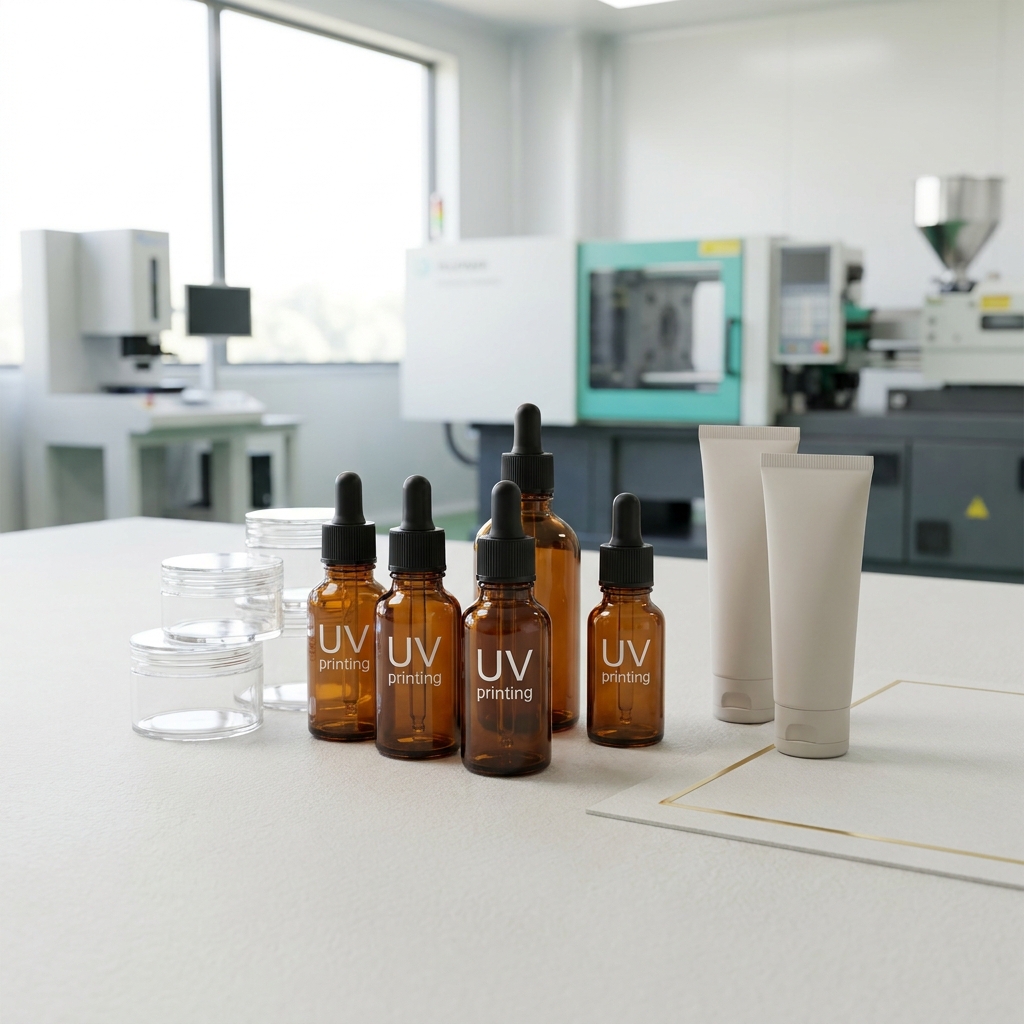
YBJ Packaging can support the packaging side of a compatibility project by helping buyers review the bottle format, components, materials, decoration, samples and manufacturing requirements before a production decision. The exact dropper configuration, material combination, tooling, compatibility, MOQ, pricing, production time and shipping plan remain dependent on the project details and approval samples.
YBJ Packaging’s website describes the company as a China-based OEM and ODM cosmetic packaging manufacturer serving skincare, makeup and personal-care brands. The company states that it provides one-stop support from consultation and design through mold development, material selection, manufacturing, assembly, quality checks and worldwide shipping. The website also describes more than 20 years of cosmetic-packaging experience, a 10,000 m² intelligent facility, a Class 10,000 cleanroom, 12 automated assembly lines and 23 Toshiba all-electric injection machines.
These are company-provided capability descriptions, not a compatibility result for a particular formula. During an inquiry, buyers should ask YBJ to confirm which capabilities, materials, assembly steps and quality checks apply to the proposed dropper bottle project. A cleanroom, automated line or injection machine does not by itself prove that a specific formula is compatible with a specific pipette, bulb, gasket, closure or decoration.
Reference dropper bottle options for review
The following matched products can be used as starting points for a technical discussion. They should be treated as reference configurations until YBJ confirms the exact material, capacity, neck finish, pipette, bulb, decoration process and available sample specification.
| Reference product | Potential review focus | Project-dependent questions |
|---|---|---|
| Vente en gros de flacons compte-gouttes vides imprimés et personnalisés avec service OEM | Custom printed dropper format and OEM development discussion. | Confirm bottle material, dimensions, closure assembly, pipette and bulb, decoration method, capacity and sample configuration. |
| Flacons compte-gouttes en verre transparent avec sérigraphie personnalisée | Visible formula presentation and silk screen decoration. | Review light exposure needs, glass dimensions, print adhesion, formula contact risk, neck finish and dropper dosage with the actual filled sample. |
| Flacons compte-gouttes en verre ambré de qualité supérieure avec impression UV blanche personnalisée | Amber glass appearance and custom white UV printing. | Confirm the light-transmission requirement, glass and closure specification, print durability, pipette and bulb materials, and filling-line fit. |
Clear and amber glass can create different design and formula-review questions. Clear glass may help the buyer see formula color and remaining fill, but it may expose light-sensitive formulas to more transmitted light than a tinted design. Amber glass may reduce some transmitted light, but the degree of protection depends on the glass specification, formula sensitivity, closure system and storage conditions. Neither color should be treated as a universal stability solution without a formula and package review.
Decoration also needs a filled-package check. Silk screen printing and white UV printing may be appropriate visual directions, but the final result depends on the substrate, ink or coating system, curing, handling, filling residue, storage and the destination requirements. YBJ can help coordinate sample and specification discussions; the buyer’s technical team should define the acceptance criteria and approve the final configuration.
For an efficient review, send the inquiry checklist above and identify whether you need an existing sample, a color or decoration sample, a dimensional drawing, a custom mold discussion, an assembled compatibility sample or a production-process review. YBJ should confirm the available options and project conditions before the buyer commits to tooling or mass production.
Foire aux questions
Is testing the glass bottle alone enough?
No. The formula may contact the pipette, bulb, gasket, collar, closure and decoration. Test the assembled package with the intended formula and filling process.
Can a dropper be called compatible because it dispenses water correctly?
No. Water may not represent the viscosity, surface tension, solvent balance or contact behavior of a serum or oil. Dispensing should be checked with the actual formula or a documented representative fluid, followed by confirmation with the final formula.
How many samples are needed for dropper bottle sample testing?
There is no universal number for every project. Use multiple samples for each meaningful condition and set the count according to the formula quantity, risk, test purpose, component variation and internal quality plan.
Does an elevated-temperature screen prove shelf life?
No. It can be a useful comparative screen when the condition is defined, but it is not automatically a shelf-life prediction. The responsible technical team should connect packaging observations with the broader formula stability program.
Should decorated samples be included?
Yes, if decoration is part of the intended launch package. Check print or coating adhesion, rub resistance, formula staining, wiping, storage and handling using the final or representative decoration.
Who gives the final compatibility approval?
The brand owner and its responsible formula, quality and technical stakeholders should define and approve the final criteria. A packaging manufacturer can help identify components, provide samples and review manufacturing details, but a supplier discussion alone is not a universal approval for every formula or market.
When should testing happen?
Begin screening before tooling or mass-production release, then confirm the selected configuration after the formula, components, decoration and filling process are sufficiently defined. Any meaningful change may require a targeted retest.
Request a cosmetic dropper bottle compatibility review
Before requesting a quote or sample review, send the information that defines both the package and the test question. Include the product type, formula or viscosity context, capacity, target fill volume, bottle dimensions, preferred material, closure or pump details, pipette and bulb requirements, decoration, estimated quantity, filling application, destination and target date. Also state whether you need an existing sample, an assembled dropper compatibility sample, a decoration sample, a drawing review or a custom development discussion.
YBJ Packaging can review the information, discuss available OEM or ODM packaging directions and advise which component and sample details need confirmation. Compatibility, MOQ, tooling, pricing, production time and shipping depend on the project specification, destination and approval process. Ask for a sample or compatibility discussion before mass production so the final decision is based on the actual package and formula context.
Discuss your dropper bottle compatibility test
Send YBJ Packaging your product type, formula or viscosity context, capacity, target fill volume, bottle dimensions, material preference, closure or pump, pipette and bulb requirements, decoration, estimated quantity, filling application, destination and target date. Request a sample or compatibility discussion so the proposed specification can be reviewed before tooling or mass production. Exact compatibility, MOQ, tooling, pricing, production time and shipping depend on the project and approval sample.

 English
  Français
  Español