



Table of Contents
- Direct Answer: Start With a Complete Brief and Approve Each Development Gate Before Production
- What Custom Cosmetic Packaging Development Includes
- Stage-by-Stage Workflow From Concept to Production
- Stage 1: Product, Brand and Packaging Brief
- Stage 2: Industrial Design and Engineering Feasibility
- Stage 3: Material, Closure and Decoration Selection
- Mold Development, Prototype Review and Sample Approval
- When an Existing Format May Be Considered
- When a Custom Mold Is Needed
- Decoration, Assembly and Filling-Line Review
- Moving From Approved Sample to Manufacturing and Shipping
- YBJ Packaging Capabilities Buyers Should Confirm for Their Project
- Information to Include in a Custom Packaging Inquiry
- Related YBJ Product Option: Customizable Glass Cosmetic Bottle for Skincare Packaging
- FAQ: Custom Cosmetic Packaging Development
- Discuss Your Packaging Concept With YBJ Packaging
A practical guide to developing custom cosmetic packaging from the initial brief through design, material selection, mold development, decoration, approval and manufacturing. Learn which specifications buyers should confirm before approving a production sample.
Direct Answer: Start With a Complete Brief and Approve Each Development Gate Before Production
Direct answer: The custom cosmetic packaging development process should begin with a complete product and brand brief, followed by engineering review, material and component selection, prototype or mold development, decoration and filling-line checks, and a documented approval sample before mass production.
At each gate, confirm the drawing, material, capacity, neck finish, closure, decoration, formula context, and filling application. Compatibility, minimum order quantity, tooling, pricing, production time, and shipping depend on the project and should be confirmed after technical review and sample approval.
What Custom Cosmetic Packaging Development Includes
Custom development covers more than the container shape. It can include the primary package, pump or dropper, cap, jar lid, decoration, assembly method, filling interface, shipping pack, and quality reference documents.
- OEM: the supplier manufactures packaging to the buyer’s specifications.
- ODM: the supplier helps adapt or develop a packaging concept, often using its design and manufacturing resources.
- Approval sample: the physical sample the buyer accepts as the reference for production, subject to agreed specifications.
A strong OEM ODM cosmetic packaging project keeps the formula, filling equipment, consumer use, brand appearance, and supply requirements aligned from the beginning.
Stage-by-Stage Workflow From Concept to Production
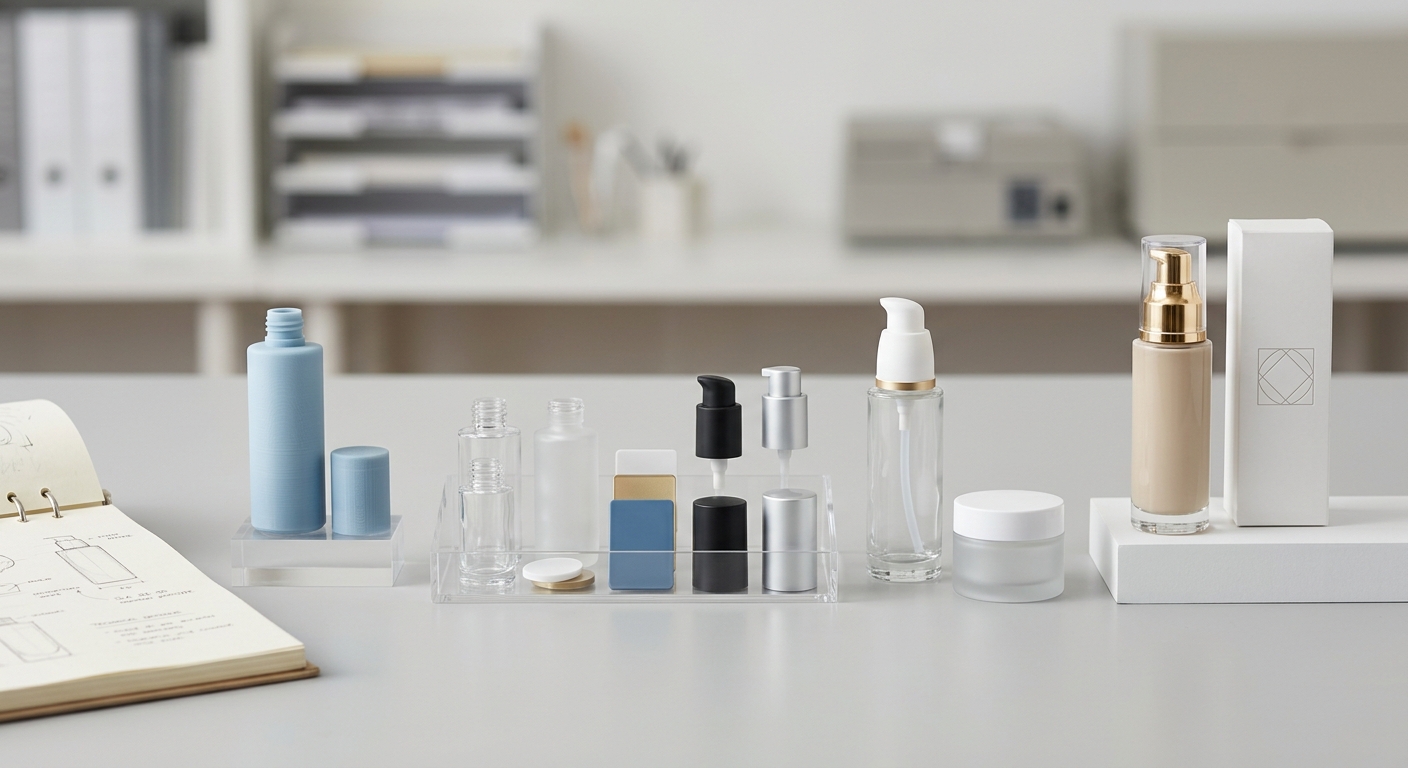
A practical workflow usually follows these gates:
- Prepare the product, brand, and packaging brief.
- Review industrial design and engineering feasibility.
- Select materials, closures, dispensing systems, and decoration.
- Develop an existing-format adaptation or custom mold and prototype.
- Review decoration, assembly, formula compatibility, and filling-line fit.
- Approve the production reference sample before manufacturing and shipping.
The number of revisions and the route selected depend on the design, tooling, quantity, and approval requirements.
Stage 1: Product, Brand and Packaging Brief
Start with the information that determines package fit. State whether the product is a serum, lotion, cream, cleanser, mist, makeup product, or another personal-care format. Include viscosity context, expected dosage, target capacity, dimensions, and whether the product will be filled manually or on an automated line.
Also provide brand references, target market, color direction, artwork status, estimated quantity, destination, and target launch date. If the formula is confidential, a general compatibility description can be used initially, followed by the information needed for technical evaluation.
Stage 2: Industrial Design and Engineering Feasibility
Design review translates the visual concept into a manufacturable package. The supplier should review wall structure, draft angles, parting lines, stability, component interfaces, decoration areas, and the intended production method. For a bottle, the neck finish is the opening and interface dimension that connects the container to a pump, dropper, or cap. It must match the selected component.
An airless package uses a pump with an internal piston or similar system to dispense product while limiting air drawn back into the container. It may suit some formulas, but pump behavior, viscosity, dosage, filling method, and component compatibility must be checked together. A prototype can reveal proportion and handling issues, but it may not represent every production condition.
Stage 3: Material, Closure and Decoration Selection
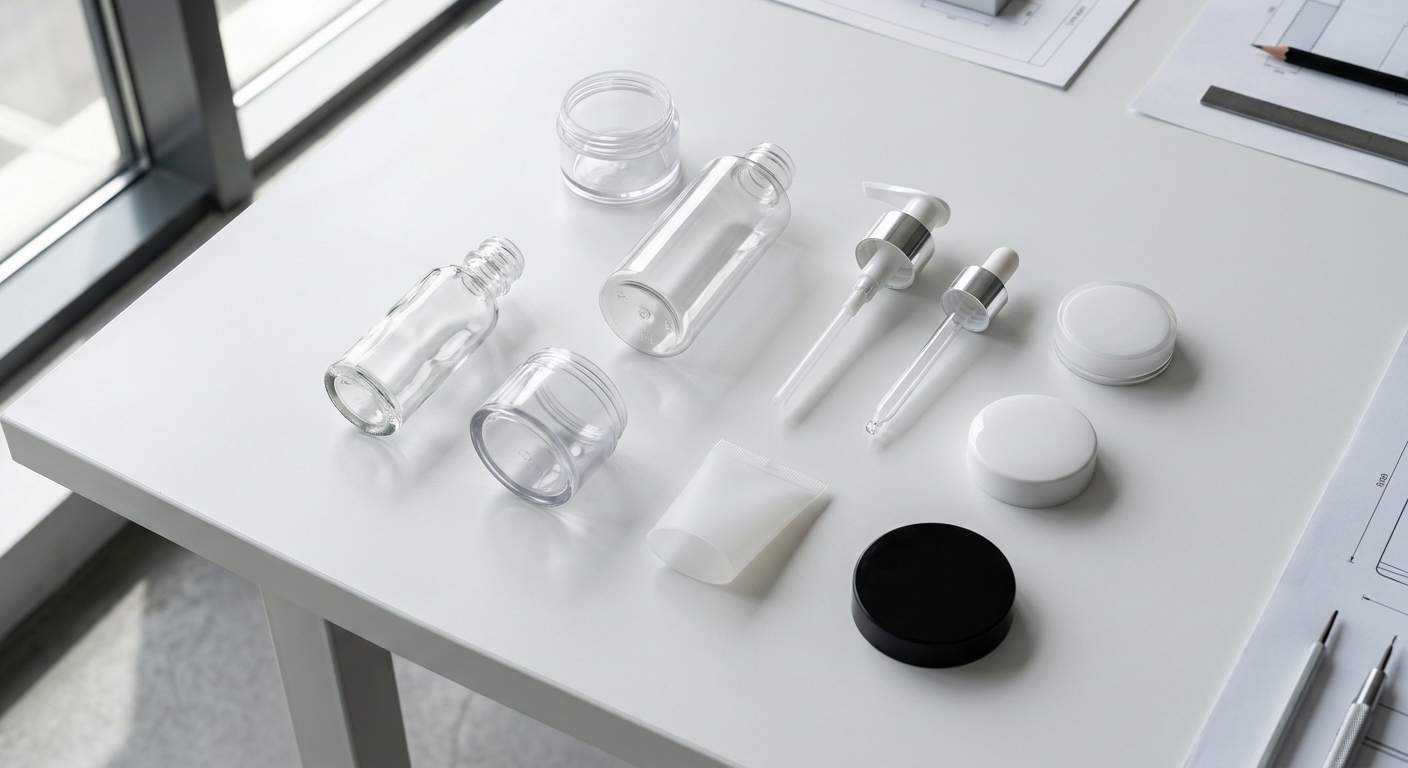
Material selection balances appearance, weight, impact behavior, formula compatibility, filling conditions, and shipping requirements. PETG means glycol-modified PET plastic, while AS means styrene-acrylonitrile plastic. Both may be used where a rigid, clear or premium-looking plastic format is required, but the exact grade and formula compatibility must be confirmed.
| Option | May fit when | Trade-offs to review |
|---|---|---|
| Glass | Premium weight and a substantial hand feel are priorities. | Weight, breakage risk, transport protection, and component fit require review. |
| PETG or AS | A rigid plastic appearance or selected transparency is desired. | Confirm grade, stress behavior, decoration adhesion, and formula compatibility. |
| PP or PE | A lightweight plastic bottle, tube, jar, or component is being considered. | Appearance, flexibility, barrier needs, and closure fit vary by grade and design. |
Then match the closure and dispensing system. A pump is typically evaluated for actuation and dosage, a dropper for controlled drop delivery, and a jar or cap for the intended opening experience. UV coating and hot stamping can create different visual effects, but color, adhesion, rub resistance, and production consistency should be approved on the actual package.
Mold Development, Prototype Review and Sample Approval
Cosmetic packaging prototype development should test both the concept and the production path. Review the three-dimensional appearance, dimensions, component fit, balance, surface quality, decoration area, and filling behavior. An approval sample should be identified clearly, with the approved drawing, material specification, decoration standard, and any accepted deviations recorded.
Do not approve only a computer rendering. Where possible, review a sample that uses the intended materials, components, tooling route, and decoration process. Any change after approval should be documented and reviewed before production.
When an Existing Format May Be Considered
An existing bottle, jar, tube, or component format may be considered when its capacity, profile, neck finish, closure, decoration area, and filling interface are close to the brief. This route may reduce the scope of custom bottle mold development, but it still requires compatibility checks and sample approval.
Ask whether the format can be customized, which components are available, whether the decoration is suitable for the substrate, and whether the exact sample can be used on the filling line.
When a Custom Mold Is Needed
A custom mold is more likely to be needed for a unique silhouette, proprietary dimensions, custom shoulders or base, unusual wall structure, or a brand-specific bottle and closure interface. The usual sequence is:
- Convert the approved concept into engineering drawings and 3D data.
- Review manufacturability, tooling details, parting lines, and component interfaces.
- Confirm tooling scope and project specifications.
- Produce a prototype or tooling sample and record revisions.
- Approve the final reference sample before production release.
Tooling scope, cost, revision requirements, production time, and ownership terms depend on the design and commercial agreement.
Decoration, Assembly and Filling-Line Review
Decoration should be evaluated on the actual material and shape, not only on artwork. Confirm color references, print position, logo size, coating gloss or matte level, foil appearance, and any surface limitations. UV coating uses a UV-curing process to create a surface finish; hot stamping transfers foil with heat and pressure. Both require an approval standard for placement and appearance.
Assembly review should cover component fit, pump or dropper seating, cap alignment, torque where relevant, and leak or actuation checks appropriate to the package. A filling-line review should use the intended formula or a suitable process substitute and confirm orientation, handling, fill accuracy, closure application, and line contact points. Results depend on the formula, equipment, and approved components.
Moving From Approved Sample to Manufacturing and Shipping
Once the cosmetic packaging approval sample is accepted, use it as the visual and functional reference for the cosmetic packaging production process. Release the final specifications, artwork, bill of materials, inspection points, packing method, and approved deviations to the manufacturing team.
- Confirm the production order, tooling, materials, components, and artwork.
- Manufacture the container and components.
- Apply decoration and complete assembly according to the approved specification.
- Perform agreed quality checks and resolve documented nonconformities.
- Pack for the destination and confirm shipping documents and transport requirements.
Production time, inspection scope, packing configuration, and shipping method depend on quantity, tooling, decoration, destination, and approval status.
YBJ Packaging Capabilities Buyers Should Confirm for Their Project
YBJ Packaging states that it provides OEM and ODM cosmetic packaging support from consultation and design through mold development, material selection, manufacturing, assembly, quality checks, and worldwide shipping. The company describes more than 20 years of cosmetic-packaging experience and a 10,000 m² intelligent facility.
YBJ also states that its facility includes a Class 10,000 cleanroom, 12 automated assembly lines, and 23 Toshiba all-electric injection machines. A cleanroom is a controlled production area with specified airborne-particle limits. These are company-provided, facility-level capabilities; buyers should confirm which equipment, room, process, inspection plan, and shipping arrangement apply to each SKU.
Information to Include in a Custom Packaging Inquiry
A complete inquiry helps the supplier assess feasibility and prepare the right sample route. Include:
- Product type and formula or viscosity context.
- Target capacity, dimensions, and fill volume.
- Preferred material or material constraints.
- Closure, pump, dropper, cap, jar, tube, or airless requirement.
- Decoration, color, finish, artwork, and labeling needs.
- Estimated quantity or launch volume.
- Filling application, equipment, and line constraints.
- Destination, target date, sample needs, and any required quality checks.
If a specification is undecided, mark it as open rather than assuming the supplier can confirm it without review.
Related YBJ Product Option: Customizable Glass Cosmetic Bottle for Skincare Packaging
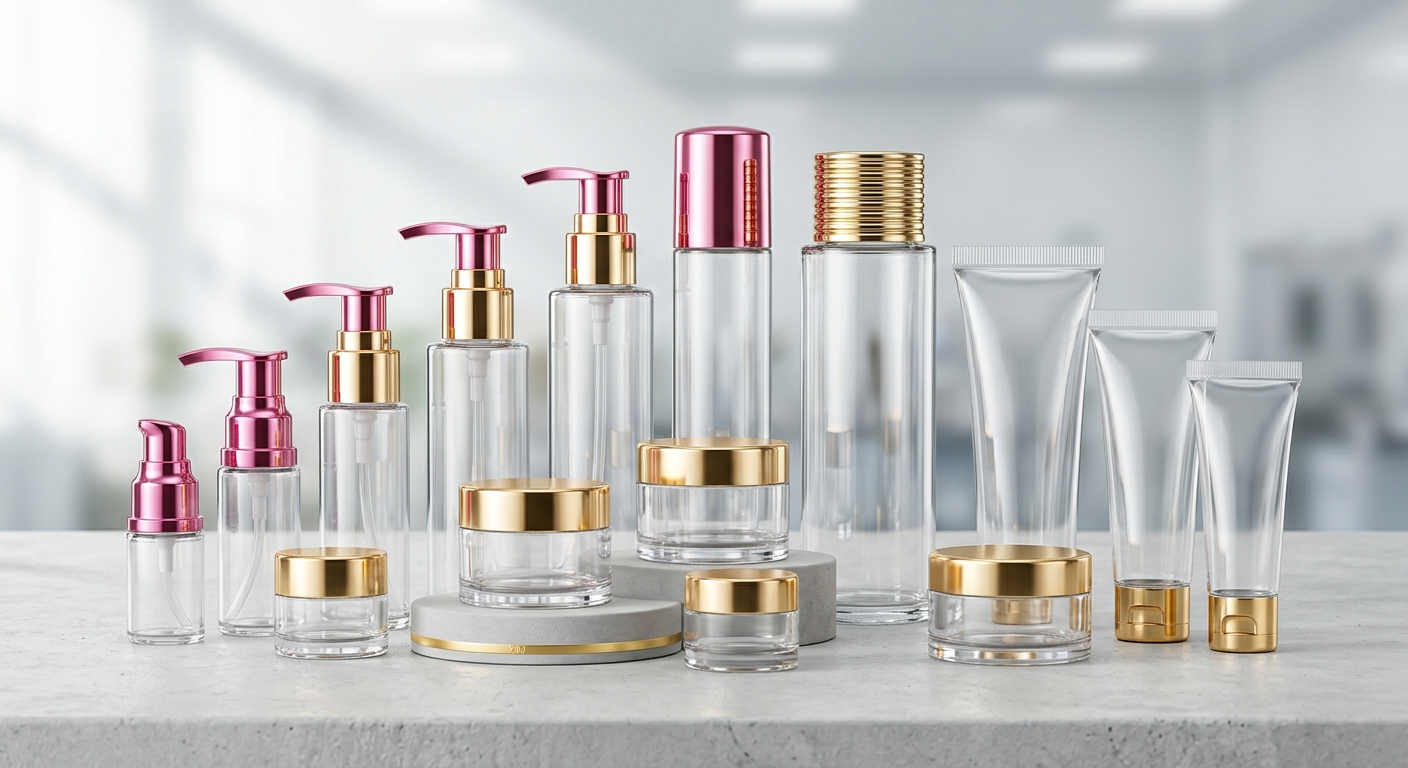
For buyers comparing formats before committing to tooling, these YBJ product pages can support an initial packaging discussion. They illustrate possible bottle styles and finish directions rather than confirming a final specification, capacity, component, or availability.
| Option | Useful starting point for | Confirm before approval |
|---|---|---|
| Custom cosmetic packaging bottles with premium finishes | Bottle concepts where surface appearance is important. | Material, dimensions, closure, decoration, and filling compatibility. |
| Premium custom cosmetic packaging with UV coating and hot stamping | Decoration discussions involving coated or foil-finished surfaces. | Color standard, adhesion, placement, substrate, and approved sample. |
| Cosmetic bottles packaging suppliers | Broader bottle-format sourcing comparisons. | Current product scope, component availability, quantity, and shipping terms. |
For a glass skincare concept, review the customizable glass cosmetic bottle for skincare packaging and ask YBJ to confirm the exact glass, closure, decoration, and filling requirements for your formula.
FAQ: Custom Cosmetic Packaging Development
How long does custom cosmetic packaging development take?
It depends on the design, existing-format or custom-mold route, revisions, decoration, quantity, approval cycle, and destination. A project review is needed before a reliable schedule can be discussed.
Is an existing package always faster than a custom mold?
Not necessarily. An existing format may reduce tooling scope, but component matching, formula compatibility, decoration, filling trials, and approval can still affect the overall process.
What makes an approval sample useful?
It should represent the agreed materials, components, dimensions, decoration, and relevant functional conditions closely enough to serve as the production reference. Any differences should be recorded.
Can YBJ support both OEM and ODM projects?
YBJ Packaging states that it supports OEM and ODM cosmetic packaging. The exact design, tooling, manufacturing, assembly, quality, and shipping scope should be confirmed for each project.
Discuss Your Packaging Concept With YBJ Packaging
Send YBJ Packaging your product type, formula or viscosity context, capacity, dimensions, material, closure or pump, decoration, estimated quantity, filling application, destination, and target date. You can also request a sample or compatibility discussion; any recommendation, quotation, tooling scope, production time, and shipping arrangement will depend on technical review and approval.
Contact YBJ Packaging to begin the project discussion.
FAQ
How long does custom cosmetic packaging development take?
Timing depends on the design, existing-format or custom-mold route, revisions, decoration, quantity, approval cycle, and destination. A project review is needed before a reliable schedule can be discussed.
Is an existing package always faster than a custom mold?
Not necessarily. An existing format may reduce tooling scope, but component matching, formula compatibility, decoration, filling trials, and approval can still affect the overall process.
What makes an approval sample useful?
An approval sample should represent the agreed materials, components, dimensions, decoration, and relevant functional conditions closely enough to serve as the production reference. Any differences should be recorded.
Can YBJ support both OEM and ODM projects?
YBJ Packaging states that it supports OEM and ODM cosmetic packaging. The exact design, tooling, manufacturing, assembly, quality, and shipping scope should be confirmed for each project.
Request a Custom Cosmetic Packaging Development Review
Share your packaging brief with YBJ Packaging for a project-specific discussion of format, material, components, decoration, prototype development, sample approval, manufacturing, and shipping requirements.

 English
  Français
  Español