

Índice
- Which material should a buyer shortlist?
- PET and PETG: terms and comparison table
- Appearance, filling conditions and component fit
- Compare YBJ shampoo and lotion bottle examples
- Steps from material shortlist to approved sample
- What to test with the actual formula and filling process
- Lista de comprobación para consultas y preguntas frecuentes
- Comenta tu envase cosmético personalizado
PET is often a practical starting point for shampoo and lotion bottles, while PETG may be shortlisted when a project calls for different molding, appearance or design characteristics. Neither material should be approved until the bottle, closure, decoration, finished formula and filling process have been evaluated together.
Which material should a buyer shortlist?
Respuesta directa: Shortlist PET first when you need an established bottle format for many conventional shampoo or lotion projects. Add PETG when its appearance, geometry or processing characteristics better support the design brief. Neither material is universally compatible, so approval must depend on samples tested with the finished formula, selected closure and intended filling conditions.
For a useful PET vs PETG cosmetic bottles decision, begin with the complete package rather than resin alone. Capacity, wall construction, bottle shape, neck finish, pump or cap, decoration and filling method can change how a package performs. A suitable material in one design may not deliver the same result in another design.
Buyer shortlist summary
- Choose by application: Review formula composition and viscosity, expected filling temperature, dispensing method and distribution conditions.
- Compare physical samples: Assess clarity, color, surface quality, rigidity, squeeze behavior and decoration on the actual bottle design.
- Approve the complete system: The bottle, gasket, dip tube, pump or cap and decoration require checks as an assembled package.
- Confirm commercial details: MOQ, tooling, pricing, production time and shipping depend on the selected design and project requirements.
YBJ Packaging states that it provides one-stop OEM and ODM support from consultation and design through mold development, material selection, manufacturing, assembly, quality checks and worldwide shipping. Its website also describes more than 20 years of cosmetic-packaging experience, a 10,000 m² intelligent facility, a Class 10,000 cleanroom, 12 automated assembly lines and 23 Toshiba all-electric injection machines. Buyers should confirm which processes, production area and specifications apply to their individual project.
PET and PETG: terms and comparison table
PET is polyethylene terephthalate, a thermoplastic commonly used for clear personal-care bottles. PETG is glycol-modified polyethylene terephthalate; the modification changes processing and forming behavior and can support different shapes or visual requirements. The exact result still depends on the resin grade, bottle design, molding process and decoration.
A shampoo buyer should not interpret PETG as simply a premium version of PET. PET shampoo bottles may offer a practical balance of appearance, availability and bottle weight, while PETG shampoo bottles may be considered for designs that require its particular molding or aesthetic characteristics. Material identity alone does not establish chemical compatibility, heat tolerance, drop performance or closure sealing.
| Decision point | PET | PETG | What the buyer should confirm |
|---|---|---|---|
| Typical sourcing role | Common shortlist for shampoo and lotion bottle formats | Alternative for specific appearance, shape or processing goals | Available stock designs, custom-mold scope and resin grade |
| Appearance | Can provide a clear, glossy bottle and can also be colored | Can provide high clarity and support distinctive molded forms | Approved color, gloss, haze and visual sample under production-relevant conditions |
| Rigidity and handling | Depends on bottle geometry, wall distribution and weight | Also depends on geometry, wall distribution and resin grade | Squeeze feel, paneling, denting, drop behavior and filled-pack handling |
| Filling conditions | Temperature limits must be confirmed for the selected bottle | Temperature limits must be confirmed for the selected bottle | Actual fill temperature, line speed, cooling, capping torque and dwell time |
| Formula compatibility | Requires testing with the finished formula | Requires testing with the finished formula | Changes in bottle, formula, odor, color, mass, seal and dispensing |
| Decoración | Options depend on bottle surface and supplier process | Options depend on bottle surface and supplier process | Ink or coating adhesion, color tolerance, rub resistance and artwork position |
| Commercial impact | Depends on design, quantity, decoration and components | Depends on design, quantity, decoration and components | Current MOQ, tooling, unit pricing and production schedule after review |
Buyers can also review YBJ’s broader PET cosmetic bottle options before selecting formats for samples.
Appearance, filling conditions and component fit
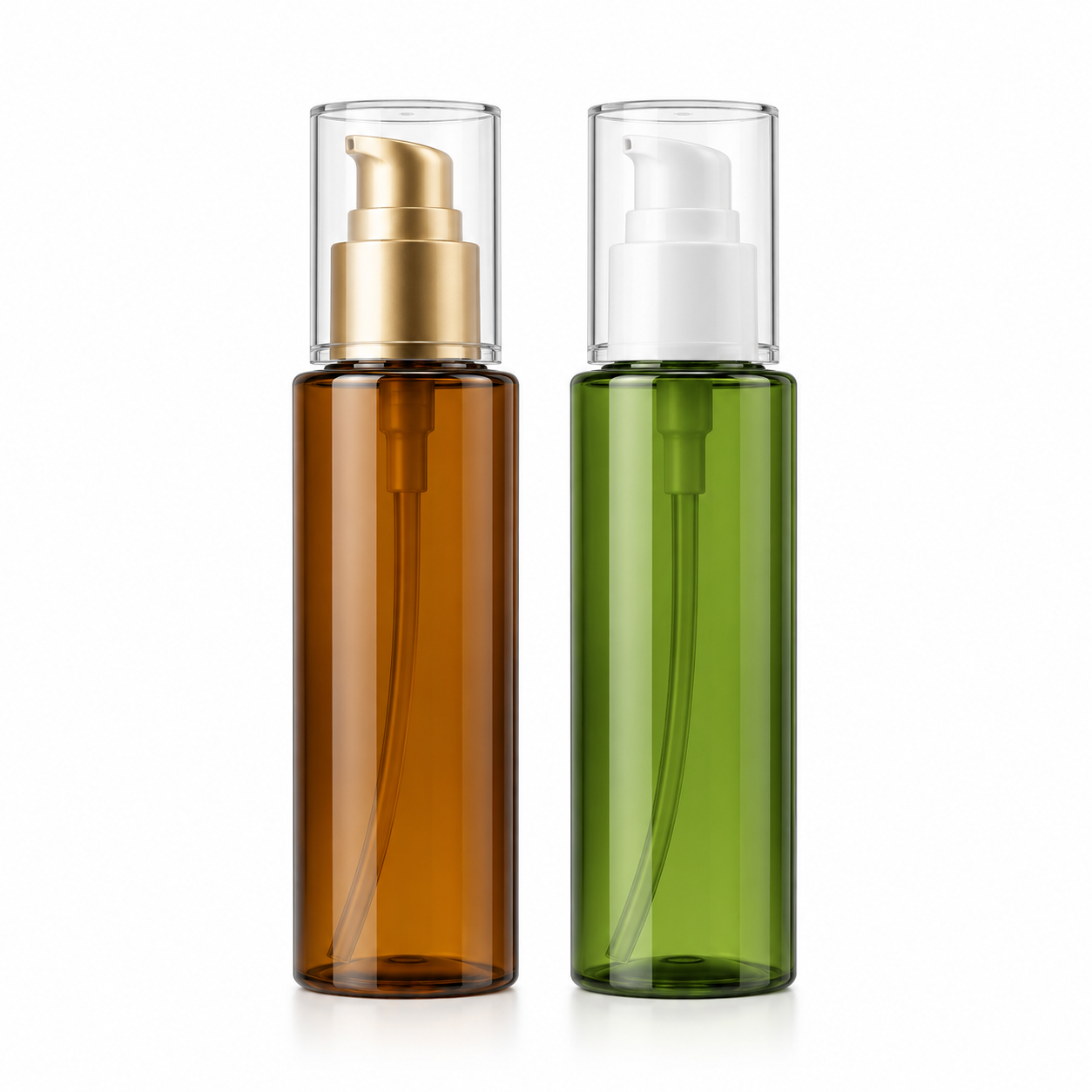
Appearance should be judged on decorated samples, while filling and component fit should be checked on the assembled package. Resin descriptions and renderings cannot show every effect created by colorants, wall thickness, mold polish, labels, printing or coatings.
Tell the supplier whether the formula will be filled cold, warm or hot, and provide the actual target temperature range rather than using those general labels alone. Also disclose whether the filling line uses pressure, vacuum or gravity filling; the expected line speed; capping method and torque; induction sealing or liners; cooling time; and any post-fill handling. These details can affect bottle stability, sealing and line performance.
A acabado del cuello is the dimensional interface at the bottle opening that engages a pump, cap or other closure. Matching a nominal neck description is only the start. The thread engagement, sealing surface, dip-tube length, gasket or liner, pump collar and capping process must work together. The selected pump or cap therefore needs a separate fit and function check on the intended bottle. Review available Opciones de bombas y tapones para productos cosméticos, then request assembled samples rather than approving the closure and bottle independently.
Posología means the amount dispensed per full pump actuation. It should be evaluated with the real formula because viscosity, pump design, dip-tube dimensions and user actuation can affect output and priming.
Compare YBJ shampoo and lotion bottle examples
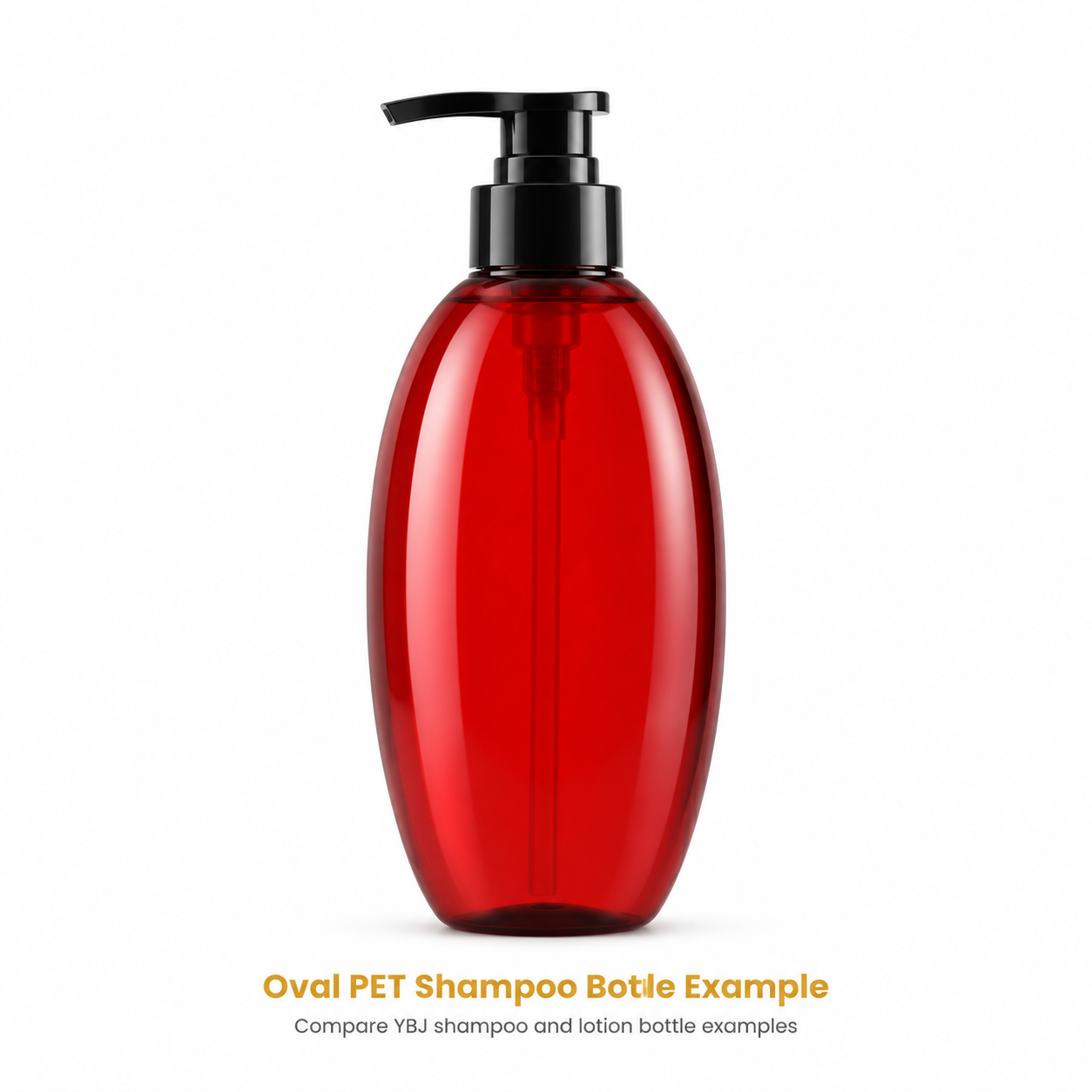
YBJ’s listed PET products give buyers three concrete starting points for a sampling brief: a cylindrical lotion bottle, an oval shampoo bottle and a 450 ml colored shampoo bottle. These listings are PET examples, not proof that the same design is available in PETG. Ask YBJ to identify current PETG bottle references or evaluate PETG feasibility when that material is required.
| Listed example | Potential shortlist use | Points to request or verify |
|---|---|---|
| PET plastic lotion bottles | Lotion, body-care or personal-care brief using a pump format | Available capacities, dimensions, neck finish, pump dosage, dip tube, color and decoration |
| PET oval shampoo bottles | Shampoo or conditioner brief where an oval profile suits shelf and handling requirements | Capacity, filled stability, panel strength, closure options, refill claim basis and compatibility testing |
| PET 450 ml purple shampoo bottle | Larger shampoo or lotion brief with a colored rectangular bottle and pump | Color tolerance, light-transmission requirements, dimensions, pump fit, filled weight and decoration area |
| PETG sample requested for comparison | Project requiring PETG appearance, geometry or material specification | Supplier-confirmed design, resin grade, capacity, tooling status, decoration feasibility and commercial terms |
Use these products as visual and functional references, then ask for current technical details. Product-page images do not confirm the bottle weight, resin grade, neck dimensions, pump output or suitability for a particular formula. Terms such as “refillable” also require a defined refill system and project-specific validation before being used as a consumer-facing claim.
Steps from material shortlist to approved sample
Move from PET or PETG selection to approval through a documented sample process. A visual sample can narrow the choice, but a production decision should reflect the finished formula, dispensing system, decoration and filling line.
- Define the application. State whether the product is shampoo, conditioner, lotion or another personal-care formula. Include viscosity context, relevant ingredients or solvent concerns, fill volume and expected use conditions.
- Set the package specification. Provide target capacity, maximum dimensions, bottle shape, material preference, color, neck finish, pump or cap type, dosage target, decoration and secondary packaging constraints.
- Review stock and custom routes. Compare existing PET and PETG options where available. If a new mold is being considered, confirm mold scope, ownership terms, drawings, development stages and approval responsibilities.
- Obtain representative components. Request bottles with the proposed pump, cap, liner, gasket and dip tube. Samples should reflect the intended resin, color and manufacturing route as closely as practical.
- Run formula and line trials. Fill the actual formula under intended process conditions. Check sealing, dispensing, bottle stability, decoration and handling over a documented period.
- Approve a defined standard. Record the approved bottle, resin, dimensions, weight or tolerance where applicable, color, component set, decoration artwork and agreed quality criteria before production.
Sample availability, custom tooling, MOQ, price and production time cannot be determined from the material name alone. They depend on the design, components, decoration, estimated quantity and approval requirements.
What to test with the actual formula and filling process
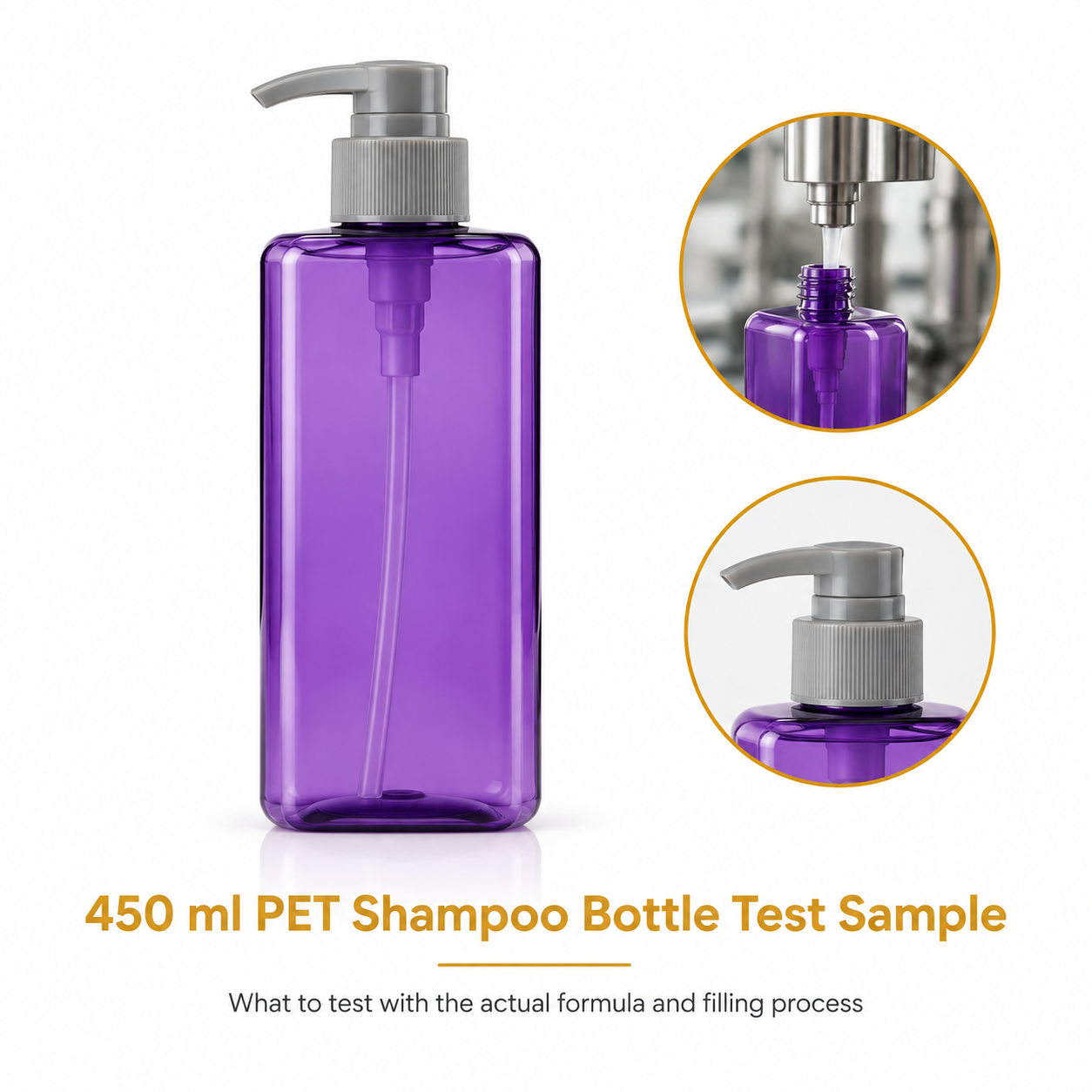
Neither PET nor PETG should be approved for shampoo or lotion without testing the finished formula in the proposed package. Supplier experience and material data can guide the shortlist, but they cannot reproduce every formula, fill process or distribution route.
- Formula contact: Monitor changes in appearance, odor, color, viscosity and package mass, as well as swelling, softening, stress cracking or distortion.
- Seal integrity: Check the neck, liner, gasket, pump and cap in upright, inverted and side orientations as appropriate to the distribution plan.
- Dispensación: Evaluate priming, dosage, output consistency, leakage, clogging, dip-tube reach and evacuation with the actual viscosity.
- Filling-line behavior: Confirm bottle feeding, filling accuracy, deformation, capping torque, label application and handling at the planned line speed and temperature.
- Decoración: Assess print, label or coating adhesion after filling and expected handling. Formula residue and cleaning processes may affect the decorated surface.
- Distribution: Establish project-appropriate drop, vibration, compression and temperature checks based on pack-out and destination.
A sala limpia is a controlled production area designed to limit airborne particles through managed air filtration and operating procedures. YBJ’s website states that the company has a Class 10,000 cleanroom, but buyers should confirm whether their selected components and processes will be produced or assembled there. A cleanroom does not replace compatibility, microbiological or filling controls managed for the finished cosmetic product.
Lista de comprobación para consultas y preguntas frecuentes
A useful PET or PETG sample request identifies the product, formula context, bottle specification, dispenser, decoration, quantity and operating conditions. Complete information helps the supplier recommend relevant samples and identify issues requiring testing or custom development.
Include these details in the inquiry
- Product type and formula or viscosity context, including ingredients of compatibility concern
- Nominal fill capacity, overflow capacity if known, bottle dimensions and shape
- PET or PETG preference and the reason for that preference
- Required color, clarity, finish, printing, labeling, coating or other decoration
- Neck finish, closure or pump type, dosage target and sealing requirements
- Actual filling temperature, filling method, line speed and capping process
- Estimated order quantity and whether a stock bottle or custom mold is being considered
- Sales destination, distribution method, secondary packaging and target date
- Samples or drawings of any component that must fit the bottle
- Required sample stages, test plan and approval contacts
Ask the supplier to separate confirmed specifications from recommendations that still require a formula, filling or decorated-sample trial. This distinction keeps the comparison commercially useful and prevents a resin name from being treated as a performance guarantee.
Comenta tu envase cosmético personalizado
The practical choice between PET and PETG is the material-and-component combination that meets the approved appearance, filling, dispensing and compatibility requirements for the project. Use YBJ’s listed PET bottles as references and request comparable PETG options when needed, but make the final decision from representative samples and documented tests.
YBJ Packaging can review OEM or ODM briefs covering bottle design, material selection, mold development, components, decoration, assembly and shipping. Compatibility, MOQ, tooling, pricing, production time and delivery planning remain project-dependent and should be confirmed after the full specification and approval requirements are reviewed.
Preguntas frecuentes
What is PETG, and how does it differ from PET for a shampoo bottle?
PETG is glycol-modified polyethylene terephthalate. Compared with PET, the modification changes processing and forming behavior and may support different design or appearance objectives. For shampoo packaging, compare actual bottle designs rather than assuming one resin is always clearer, stronger or more compatible. Resin grade, wall distribution, shape, bottle weight, closure and filling process all influence performance.
Can PET or PETG be approved without testing the finished formula?
No material should receive final project approval from its generic description alone. Test the finished formula in the proposed bottle with the intended pump, cap, liner, gasket and decoration. The test plan and duration should reflect formula risks, storage conditions, filling process and distribution route.
What filling conditions should a buyer disclose?
Provide the actual filling-temperature range, filling method, expected line speed, capping equipment and torque, sealing or liner process, cooling time and post-fill handling. Also identify whether the bottle will encounter pressure, vacuum, rinsing, cleaning agents or unusual storage temperatures.
Does the selected pump or cap need a separate fit check?
Yes. Confirm thread engagement, sealing contact, collar fit, gasket or liner, dip-tube length, capping torque and dispensing performance on the selected bottle. A nominally matching neck finish does not establish leak resistance or functional compatibility.
What information should accompany a PET or PETG sample request?
Send the product type, formula or viscosity context, capacity, dimensions, material preference, closure or pump, dosage target, color, decoration, estimated quantity, filling process, destination and target date. Include any required component drawings and explain whether you need a stock package, customization or a new mold.
Comenta tu envase cosmético personalizado
Tell YBJ Packaging what you are filling, the package format and capacity you need, your material and decoration preferences, estimated quantity, destination and target date. Include formula or viscosity context, dimensions, closure or pump requirements and filling application. The team can review the brief, discuss samples or compatibility checks and suggest practical OEM or ODM packaging options for your project. Recommendations, pricing and delivery timing are subject to specification review and approval.

 English
 Français
 Español
