

Índice
- What Makes Up a Custom Eyeshadow Palette?
- Define the Palette Layout and Product Components
- Pan Count, Pan Size and Internal Arrangement
- Mirror, Applicator and Divider Considerations
- Elige los materiales, el cierre y el acabado de la superficie
- Decoration Options for Makeup Palettes
- Custom Palette Specification Table
- Mold Development, Assembly and Quality Checks
- Fit, Hinge, Closure and Appearance Inspection
- Sample Approval and RFQ Checklist
- Preguntas frecuentes
- Start a Custom Makeup Packaging Project
A practical development-stage guide to planning custom eyeshadow palette packaging, including pan layout, materials, closures, decoration, mold development, assembly and sample approval.
What Makes Up a Custom Eyeshadow Palette?
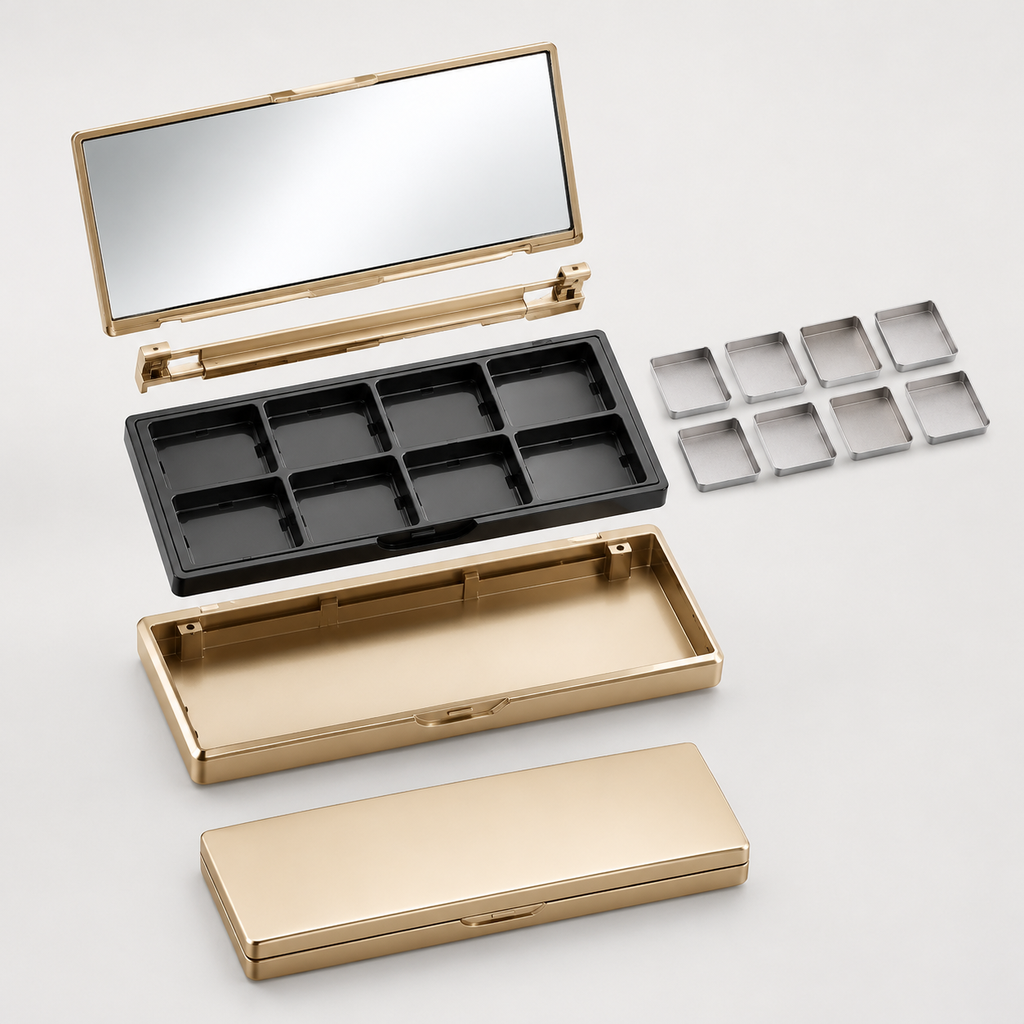
Respuesta directa: Custom eyeshadow palette packaging is normally planned as a coordinated set of an outer case, pan tray or insert, eyeshadow pans, hinge, closure, mirror, optional applicator and decorative surfaces. The correct construction depends on the number and shape of pans, product fill, target dimensions, filling method, user experience and approved decoration.
A palette is more than a printed box. Its internal architecture must hold each pan securely, keep adjacent colors separated and allow the lid to open without contacting the product. The buyer should define the layout before requesting tooling because pan spacing, wall thickness, hinge position and closure geometry affect the mold and assembly process.
Puntos clave
- Start with pan count, pan dimensions and the finished palette footprint.
- Specify whether the palette needs a mirror, applicator, divider or magnetic closure.
- Review material, decoration and hinge choices together rather than separately.
- Require an approval sample before confirming production details.
YBJ Packaging describes its business as OEM and ODM cosmetic packaging support, including design consultation, mold development, manufacturing, assembly and quality checks. Its website also states more than 20 years of cosmetic-packaging experience. Tooling, component fit, minimum quantities, pricing, production timing and shipping remain project-dependent.
Define the Palette Layout and Product Components
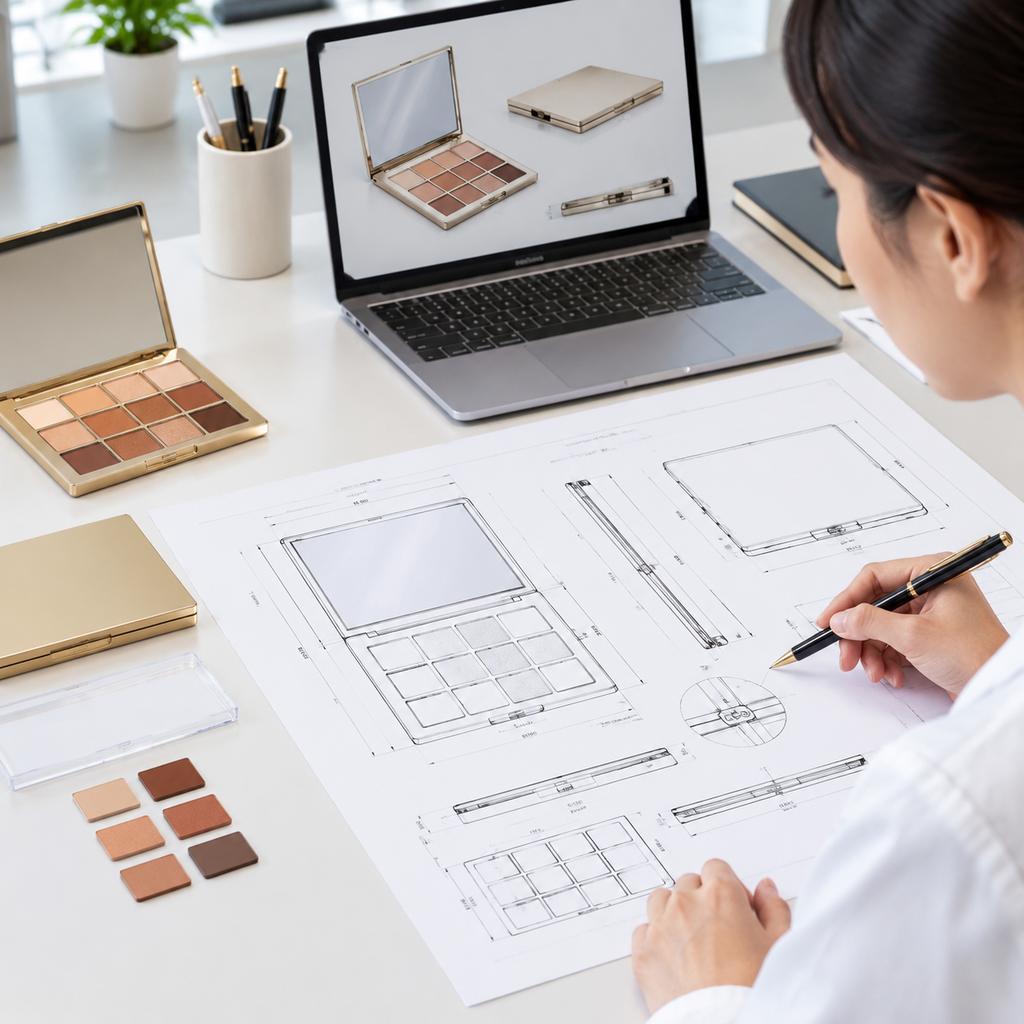
To design a custom cosmetic palette, first create a dimensioned layout showing every pan, border, hinge, mirror and accessory. Provide the artwork team and packaging manufacturer with a top view, side view and cross-section where possible.
- Confirm the product format: Identify pressed powder, loose powder or another makeup fill and provide the pan or fill specification.
- Set the component footprint: Confirm the closed length, width and height, plus the open-lid angle needed for use.
- Map the internal arrangement: Show pan positions, clearances, dividers and any space for an applicator.
- Match the construction: Select a snap, magnetic or other closure only after reviewing wall thickness, hinge space and user force.
- Prepare a review sample: Check physical fit and appearance before final tooling or mass production decisions.
Brands comparing broader private-label eyeshadow palette box packaging should confirm whether the supplied design is a stock construction, a modified component or a fully custom mold.
Pan Count, Pan Size and Internal Arrangement
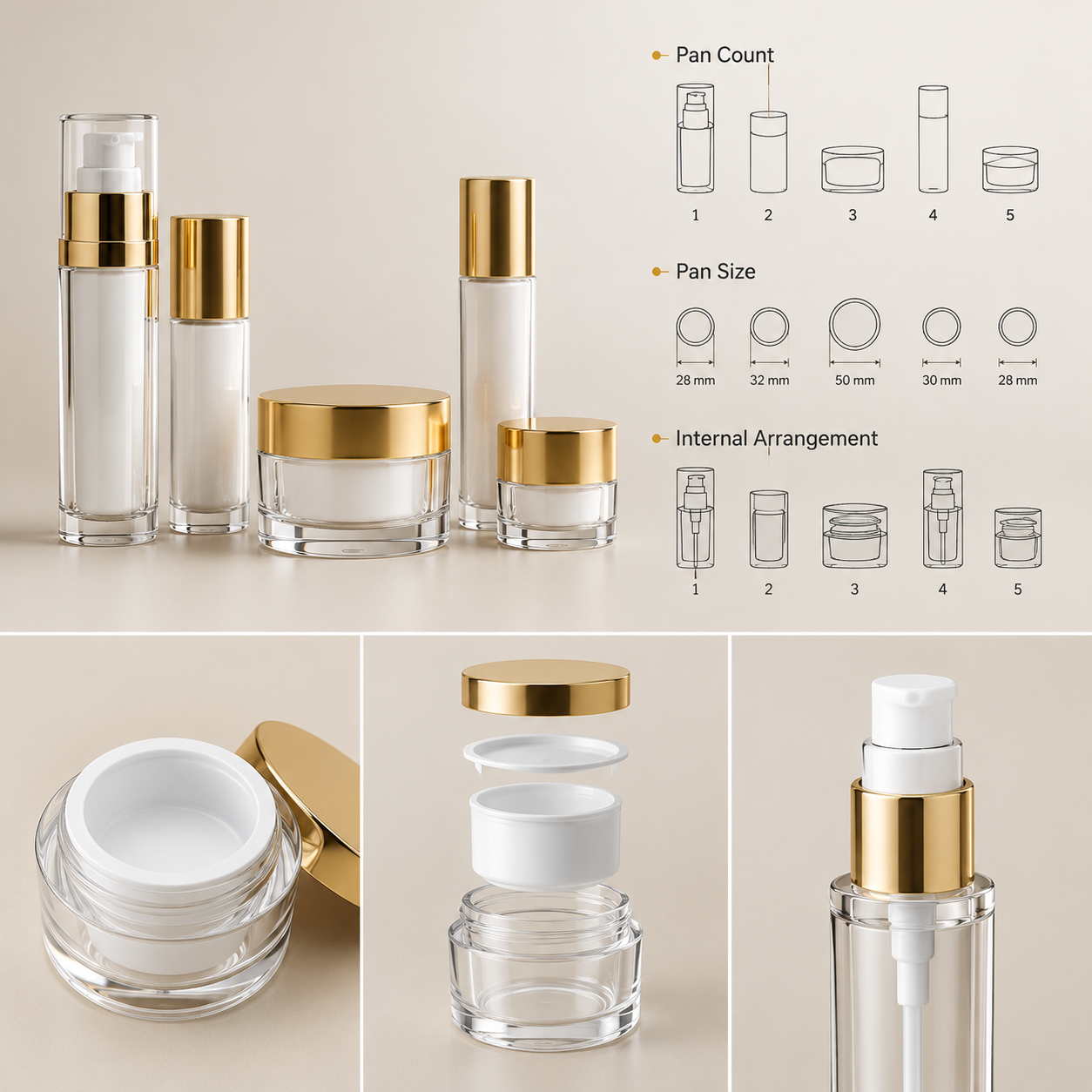
Pan count and pan geometry determine much of the palette’s internal tooling. Round pans can simplify a repeated arrangement, while square, rectangular or custom pans may use the available area more efficiently for a specific color story. More pans can increase capacity, but may also enlarge the case, reduce finger clearance and make the insert more complex.
Give the manufacturer the pan outside dimensions, depth, quantity, spacing, orientation and retention method. State whether pans will be installed by hand, with a fixture or through another filling and assembly process. The final clearance should be confirmed against actual components and the approved sample, not only a drawing.
Mirror, Applicator and Divider Considerations
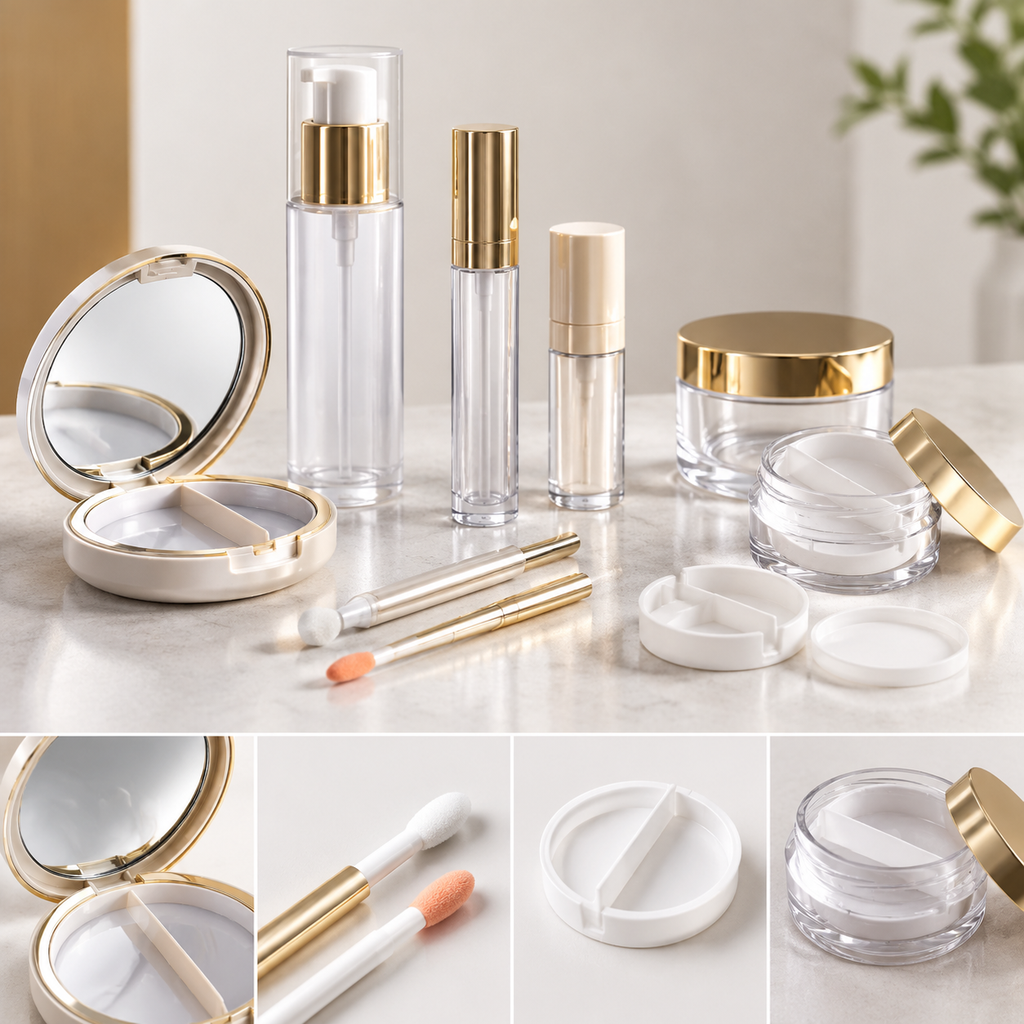
A mirror adds usability but requires a stable mounting surface, edge protection and sufficient lid depth. The mirror should be checked for secure bonding, visible defects and movement during opening and closing. An applicator compartment can improve convenience, but it uses internal space and may require a divider to prevent contact with the pans.
Dividers help separate colors and protect the product from accessory movement. They can also increase the number of assembly steps. Specify the mirror size, backing or mounting approach, applicator dimensions, divider height and whether the accessory is packed inside the palette or separately.
Elige los materiales, el cierre y el acabado de la superficie
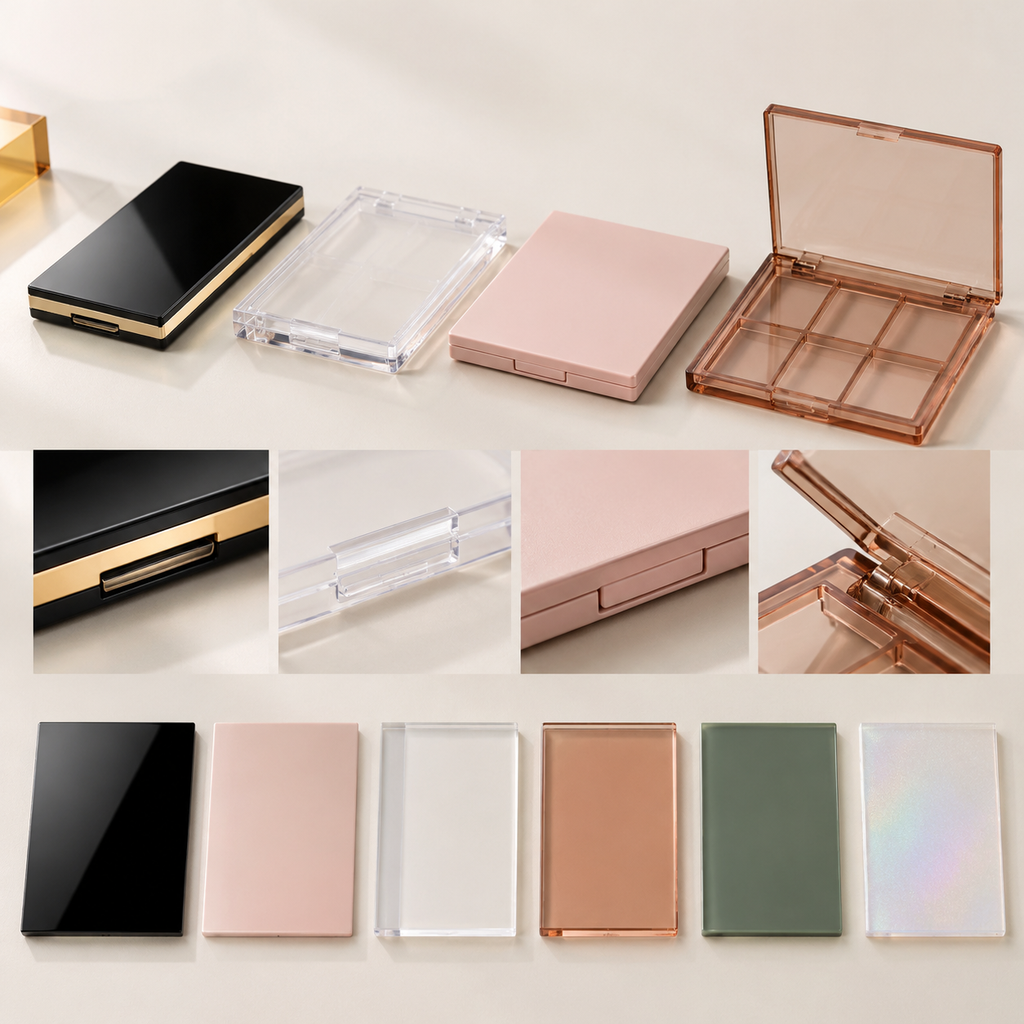
Material selection should balance appearance, rigidity, weight, decoration and assembly requirements. Plastic cases can support molded details and efficient repeat production. AS, a rigid transparent or translucent plastic often used for cosmetic components, may suit a clear or glossy visual direction. Other plastics can be selected for color, opacity or structural requirements. The suitable grade and wall design depend on the approved construction.
For the closure, a snap closure can provide a defined click and compact construction, while magnets can support a different opening experience but require controlled placement and review of the complete assembly. A hinge may be molded into the case or designed as a separate feature. Closure force, hinge life and fit must be checked on samples because they depend on geometry and material.
Matte, gloss, soft-touch or textured surfaces change how fingerprints, color variation and decoration appear. Buyers should compare the finish on the actual material and color rather than relying only on a digital rendering.
Decoration Options for Makeup Palettes
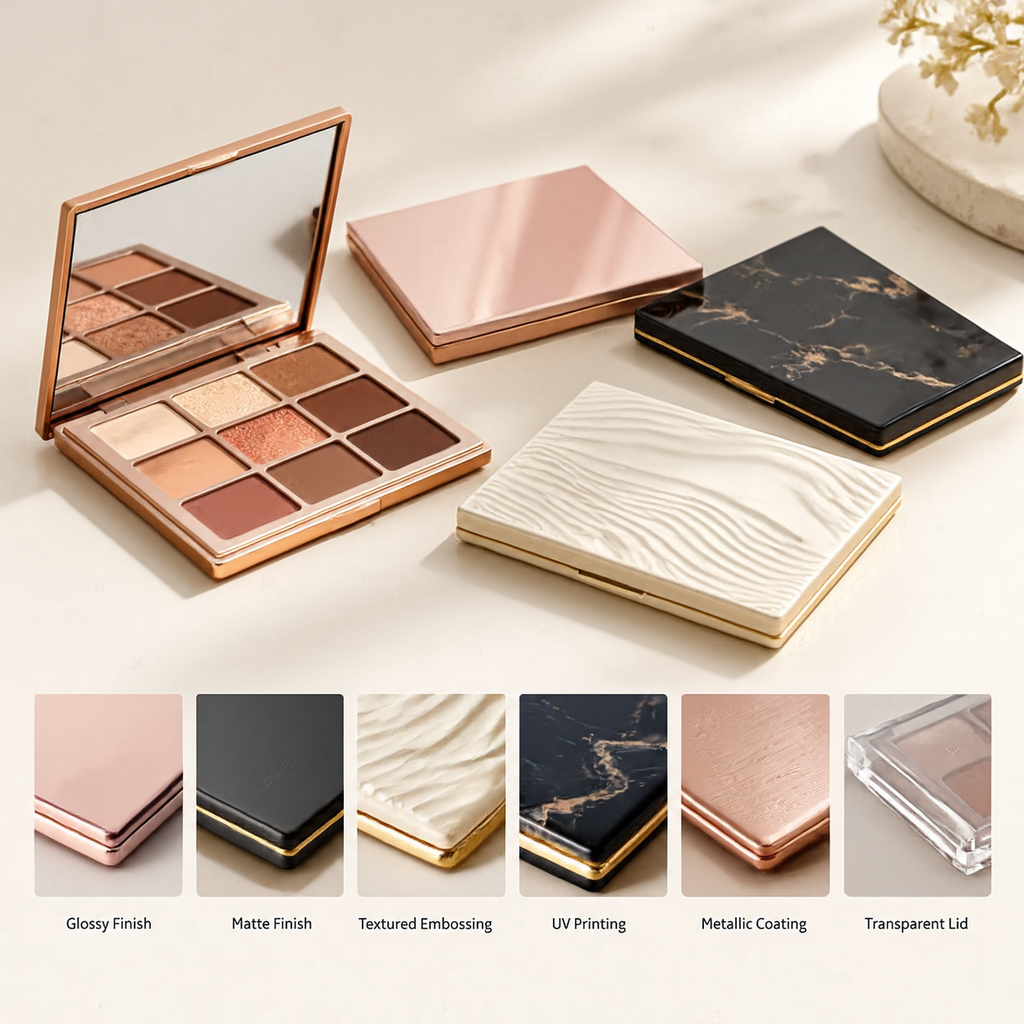
Decoration should be selected after the case geometry and surface are defined. Common directions include molded-in color, printing, hot stamping, metalized effects, labels, coatings and decorative films. Each option affects artwork setup, registration, surface preparation, inspection and possible rework.
Printing can support detailed graphics, while hot stamping or metalized effects can emphasize logos and selected details. A molded color may provide a consistent base appearance but may not reproduce every artwork detail. Complex multi-surface decoration can increase handling and assembly requirements. Confirm the color reference, logo dimensions, print position, finish, allowable variation and approval standard.
Ask the eyeshadow palette packaging reference supplier to identify which decoration is included in the sample and which elements require separate approval.
Custom Palette Specification Table
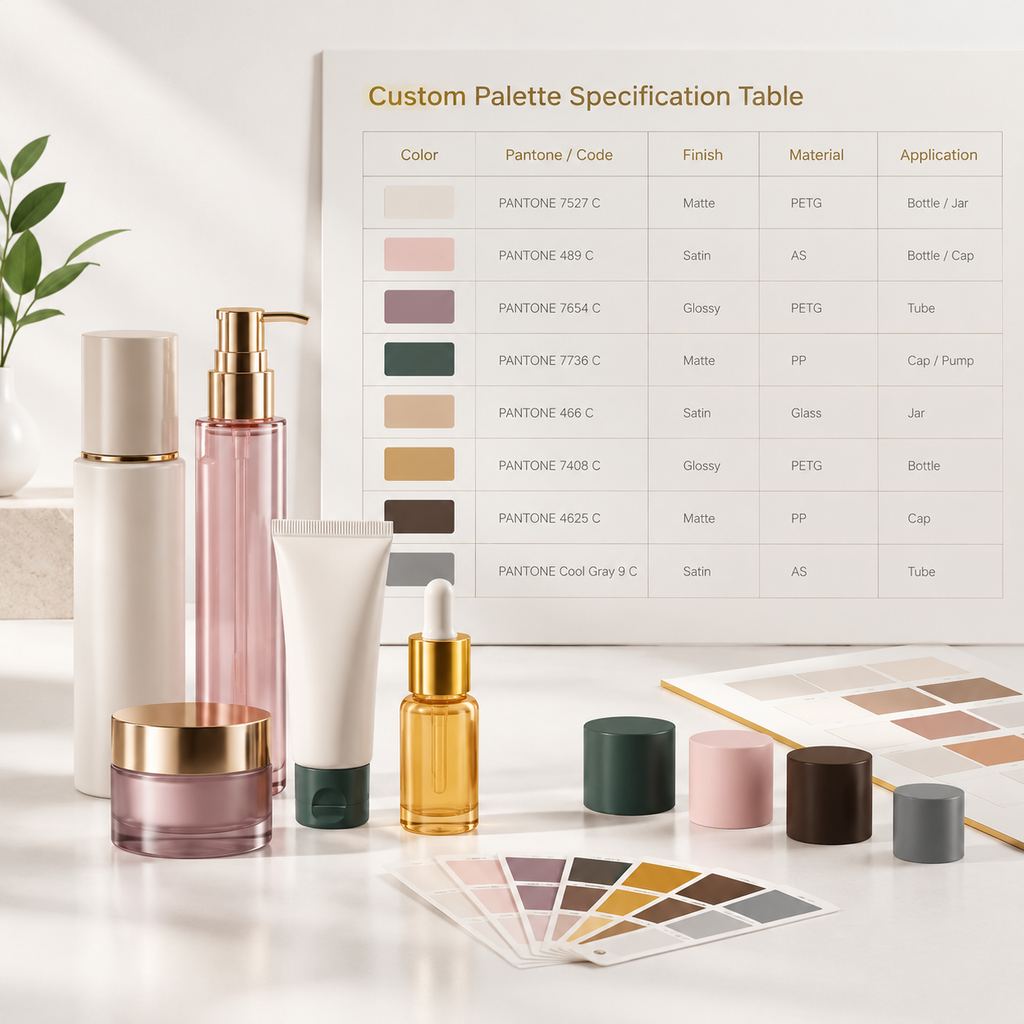
Use this table to organize an RFQ and identify decisions that need confirmation.
| Especificaciones | What to provide | Por qué es importante |
|---|---|---|
| Pan configuration | Count, shape, outside dimensions and depth | Determines insert layout and tooling |
| Finished size | Closed length, width, height and open angle | Controls portability, lid clearance and storage |
| Case material | Preferred plastic or other approved material | Affects rigidity, weight, color and decoration |
| Closure and hinge | Snap, magnetic or other selected construction | Influences opening force, fit and assembly |
| Accessories | Mirror, applicator, divider and mounting method | Adds components and assembly operations |
| Decoración | Color, artwork, coating, print and logo placement | Defines shelf appearance and inspection criteria |
| Quantity and destination | Estimated volume, filling location and shipping country | Supports project review, packing and logistics planning |
Mold Development, Assembly and Quality Checks
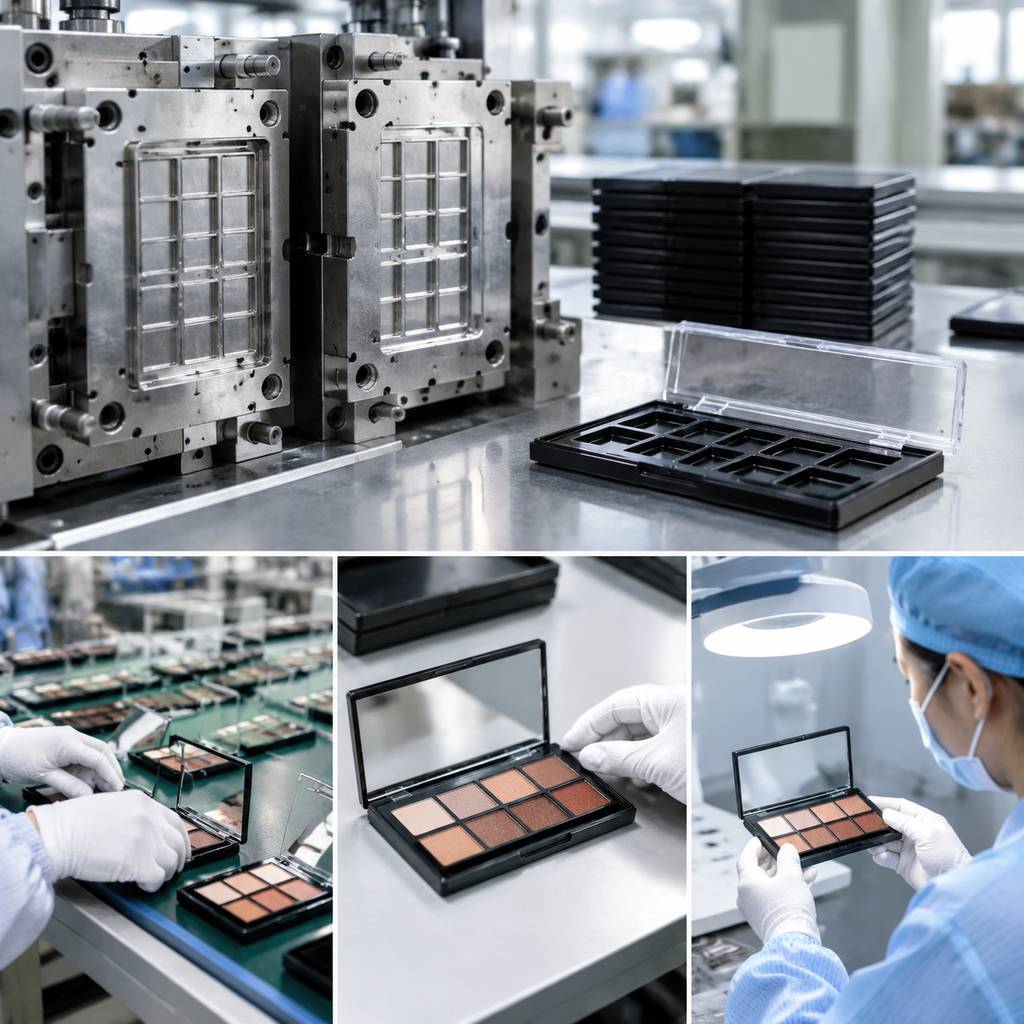
Yes, an OEM packaging manufacturer can develop a custom palette mold when the project includes sufficient drawings, component specifications and approval steps. A typical development sequence is:
- Review the concept, artwork intent, pan dimensions and target case size.
- Develop the 3D structure, draft the component interfaces and identify tooling questions.
- Confirm material, colors, decoration, hinge, closure and accessory requirements.
- Make development samples or tooling samples for fit and appearance review.
- Revise the design where required and approve the production specification.
- Assemble components, inspect the agreed criteria and prepare the order for shipment.
YBJ Packaging states that it provides mold development and manufacturing support. The website also describes a 10,000 m² intelligent facility, a Class 10,000 cleanroom, 12 automated assembly lines and 23 Toshiba all-electric injection machines. These are company-stated capabilities; suitability for a particular palette should be confirmed against the design, quantity and quality requirements.
Fit, Hinge, Closure and Appearance Inspection
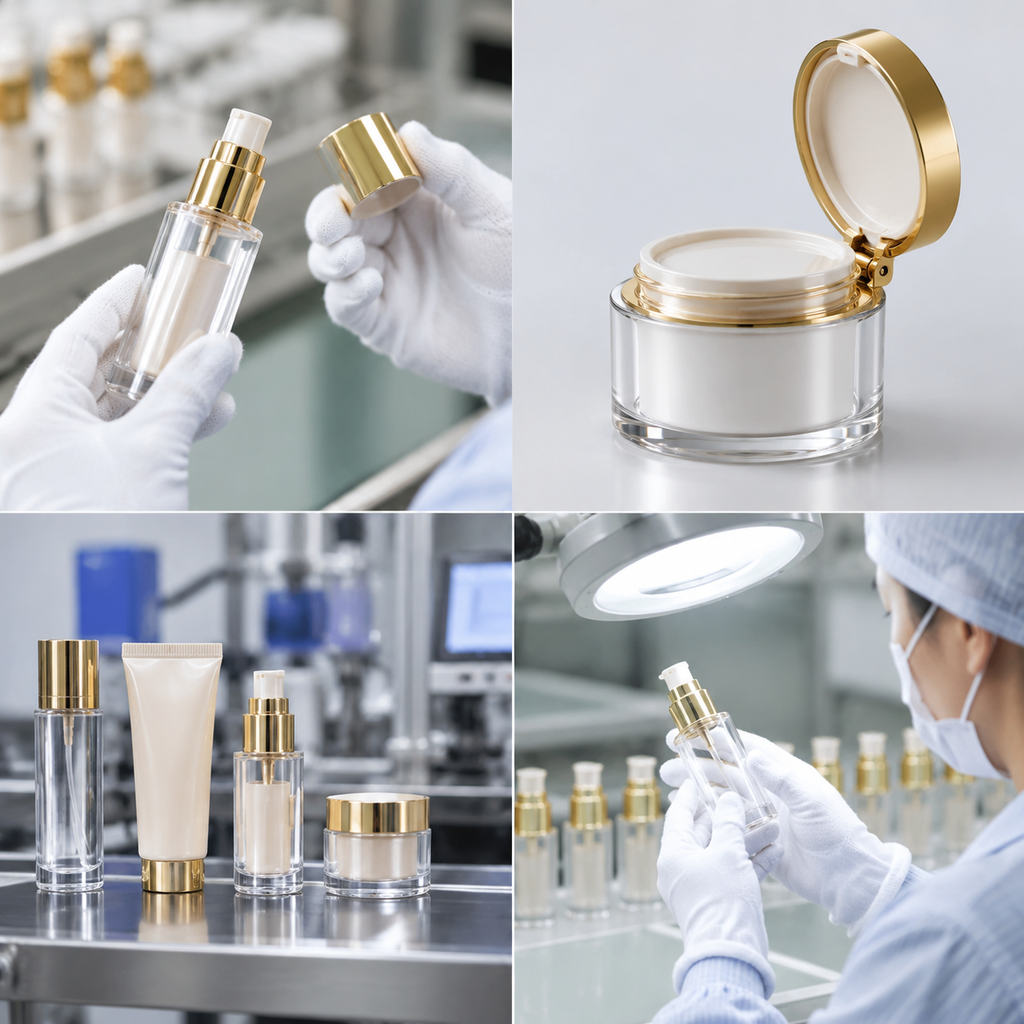
On an eyeshadow palette sample, check both function and appearance. Open and close the lid repeatedly to observe hinge alignment, closure engagement and rubbing. Confirm that pans, mirrors and accessories remain secure, that the lid does not contact the product and that the palette sits level when closed.
Appearance checks should cover color consistency, surface marks, flash, sink or flow marks, print registration, logo position, coating uniformity, mirror defects and adhesive visibility. Also review the assembly sequence with the actual pan, mirror and applicator components. Acceptance limits should be written into the approved specification because cosmetic appearance standards vary by project.
Sample Approval and RFQ Checklist
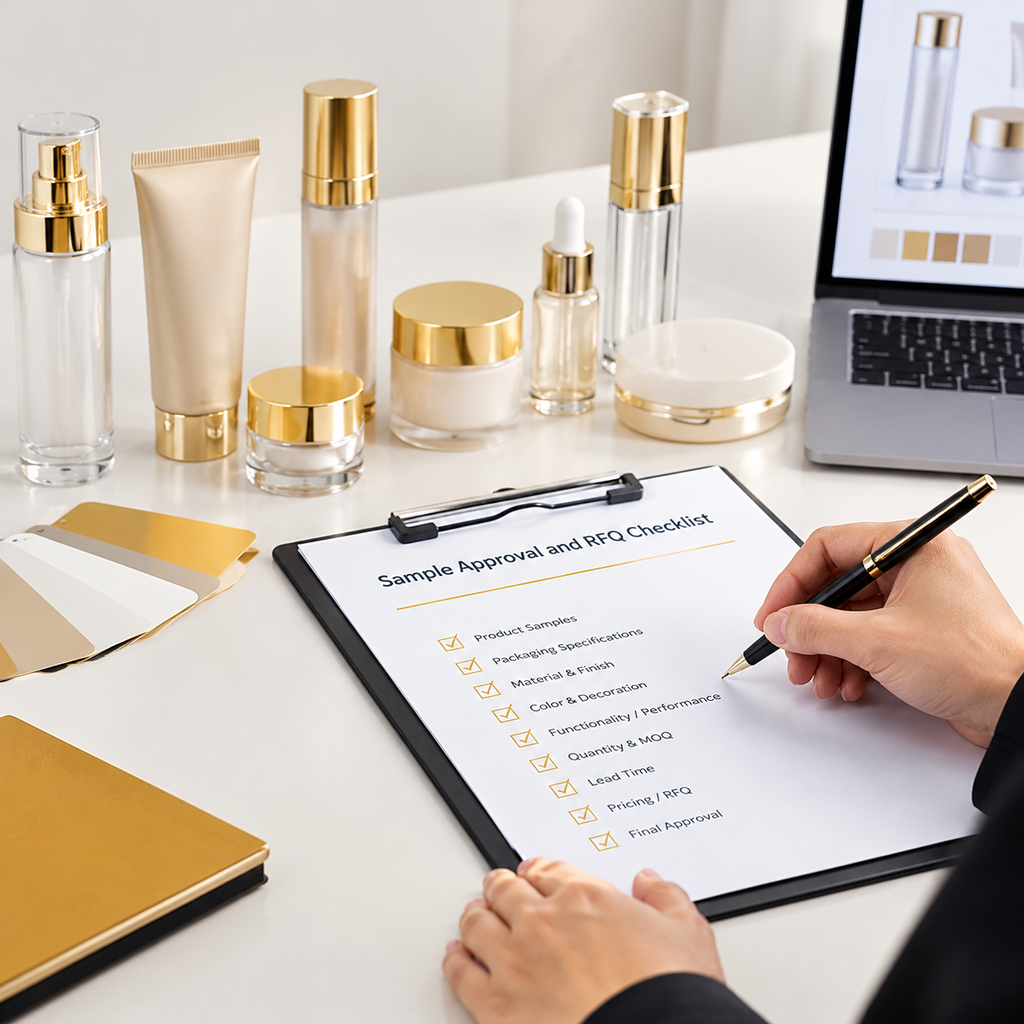
A useful RFQ lets the manufacturer distinguish a standard component from a genuine custom development. Include:
- Product type, pan count, pan dimensions and fill depth.
- Target capacity, closed dimensions and open-lid requirement.
- Case, insert, pan, mirror and accessory material preferences.
- Closure, hinge, divider and applicator requirements.
- Artwork, color references, logo files and surface finish.
- Filling or pan-installation method and any line constraints.
- Estimated quantity, destination, packaging requirements and target date.
- Required samples, inspection points and approval authority.
Before approval, compare the physical sample with the drawing and artwork. Record changes to dimensions, color, decoration, component fit and packing method. Compatibility, tooling scope, minimum order quantity, pricing, production time and shipping should be confirmed after the supplier reviews the complete brief.
Preguntas frecuentes
These questions commonly arise when brands move from a palette concept to a manufacturable packaging specification.
How do I design custom eyeshadow palette packaging?
Begin with pan count, pan dimensions, fill depth and the desired closed footprint. Then define the insert, hinge, closure, mirror, applicator, materials and decoration. Validate the complete construction with a physical sample.
What components are needed for a cosmetic palette?
Typical components include an outer case, lid, base, pan tray or insert, eyeshadow pans, hinge and closure. A mirror, applicator and divider are optional and should be specified with their mounting or retention method.
How are custom makeup palettes manufactured and assembled?
The process generally includes design review, mold development, plastic or other component manufacturing, decoration, component fitting, pan and accessory installation, inspection and packing. The exact sequence depends on the selected construction.
What should I check on an eyeshadow palette sample?
Check pan retention, lid clearance, hinge alignment, closure force, mirror and accessory security, surface appearance, decoration registration, color consistency and the final packing arrangement.
Can an OEM packaging manufacturer develop a custom palette mold?
Yes, an OEM manufacturer may develop a custom mold when the project scope, drawings, component specifications and approval process are defined. Tooling feasibility, ownership, cost and timing should be confirmed in writing for the specific project.
Start a Custom Makeup Packaging Project
Custom eyeshadow palette packaging works best when layout, components, decoration and assembly are developed as one specification. Share your product type, formula or fill context, capacity, pan dimensions, case size, material preference, closure, decoration, estimated quantity, filling application, destination and target date. YBJ Packaging can review the brief and discuss practical OEM or ODM packaging options; final recommendations depend on project details and sample approval.
For another makeup packaging reference, review the custom square palette with mirror format before preparing your inquiry.
Once the physical construction and acceptance criteria are agreed, document the approved sample and specification for production review.
Preguntas frecuentes
How do I design custom eyeshadow palette packaging?
Start with pan count, pan dimensions, fill depth and the desired closed footprint. Then define the insert, hinge, closure, mirror, applicator, materials and decoration. Validate the complete construction with a physical sample.
What components are needed for a cosmetic palette?
Typical components include an outer case, lid, base, pan tray or insert, eyeshadow pans, hinge and closure. A mirror, applicator and divider are optional and require their own mounting or retention specifications.
How are custom makeup palettes manufactured and assembled?
The process generally includes design review, mold development, component manufacturing, decoration, component fitting, pan and accessory installation, inspection and packing. The exact sequence depends on the approved construction.
What should I check on an eyeshadow palette sample?
Check pan retention, lid clearance, hinge alignment, closure force, mirror and accessory security, surface appearance, decoration registration, color consistency and the final packing arrangement.
Can an OEM packaging manufacturer develop a custom palette mold?
Yes, an OEM manufacturer may develop a custom mold when the project scope, drawings, component specifications and approval process are defined. Tooling feasibility, ownership, cost and timing should be confirmed in writing for the specific project.
Comenta tu envase cosmético personalizado
Indica a YBJ Packaging qué producto vas a envasar, el formato y la capacidad del envase que necesitas, tus preferencias en cuanto a materiales y decoración, la cantidad estimada, el destino y la fecha prevista. El equipo analizará el pliego de condiciones y te propondrá opciones prácticas de envasado OEM u ODM para tu proyecto.

 English
 Français
 Español
