

Table of Contents
- What Is Airless Cosmetic Packaging?
- When Airless Packaging Fits a Skincare Product
- Formula viscosity, particulates and filling behavior
- Dosage and consumer dispensing expectations
- Airless Bottle and Jar Components to Specify
- Container material, actuator and closure
- Airless Packaging Comparison Table
- How to Test Compatibility Before Production
- Filling, priming and evacuation checks
- What to Include in an RFQ
- Frequently Asked Questions
- Request an Airless Packaging Sample and Quote
A practical guide to specifying airless skincare packaging around formula behavior, dispensing dose, filling needs, materials and approval testing.
Choose the System Around the Formula
Airless cosmetic packaging is a pump container with a moving internal piston or platform that rises as product is dispensed. It can suit some skincare formulas when the package, dose and filling process are tested together; it is not automatically compatible with every formula. Start by specifying how the product flows, the dose consumers need and how your filling line will load the container.
For a sourcing decision, compare the package architecture, product-contact materials, actuator, nominal dose and fill method. Confirm performance using samples with the actual formula or a representative test material before approving production. The right result depends on the package construction, formula, process, quantity and approval sample.
- Formula: viscosity, particles, separation behavior and sensitivity to air exposure.
- Dispensing: target amount per press, number of presses per use and ease of actuation.
- Production: filling method, priming behavior, decoration and line handling.
What Is Airless Cosmetic Packaging?
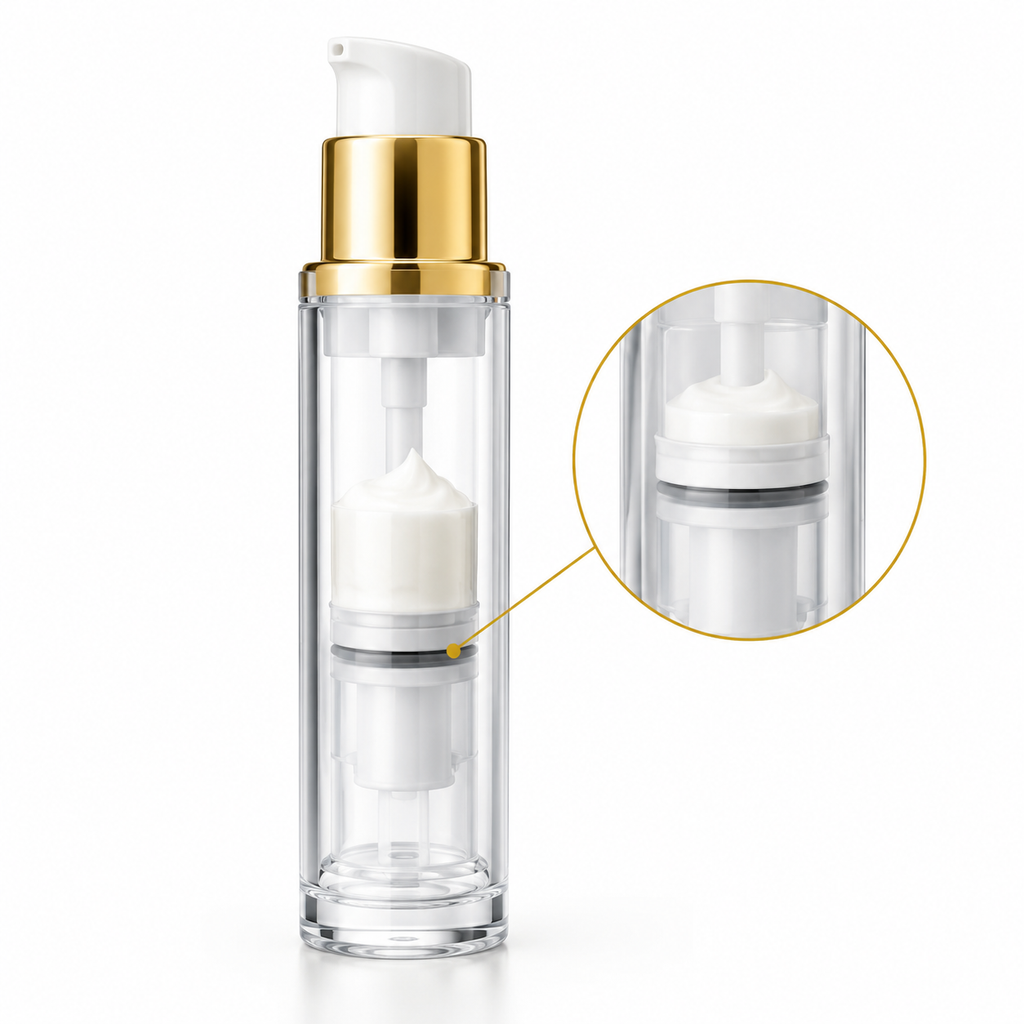
Airless cosmetic packaging uses a pump to dispense product while a piston or movable base inside the container travels upward to take up the space left behind. Unlike a conventional dip-tube pump, the system typically does not rely on a long tube reaching down into the product. “Airless” describes the dispensing architecture; it does not mean the package is hermetically sealed or that all air exposure is eliminated.
The pump, piston, container, seals and product-contact surfaces work as one system. The piston must move as intended, and the formula must flow toward the pump inlet without creating a persistent void or blockage. Buyers comparing airless bottle options should evaluate the complete assembly rather than selecting a container by appearance alone.
Definition: A piston is a movable platform inside the container that rises as product is dispensed. Priming is the initial series of pump presses needed to bring product through the mechanism and establish dispensing.
When Airless Packaging Fits a Skincare Product
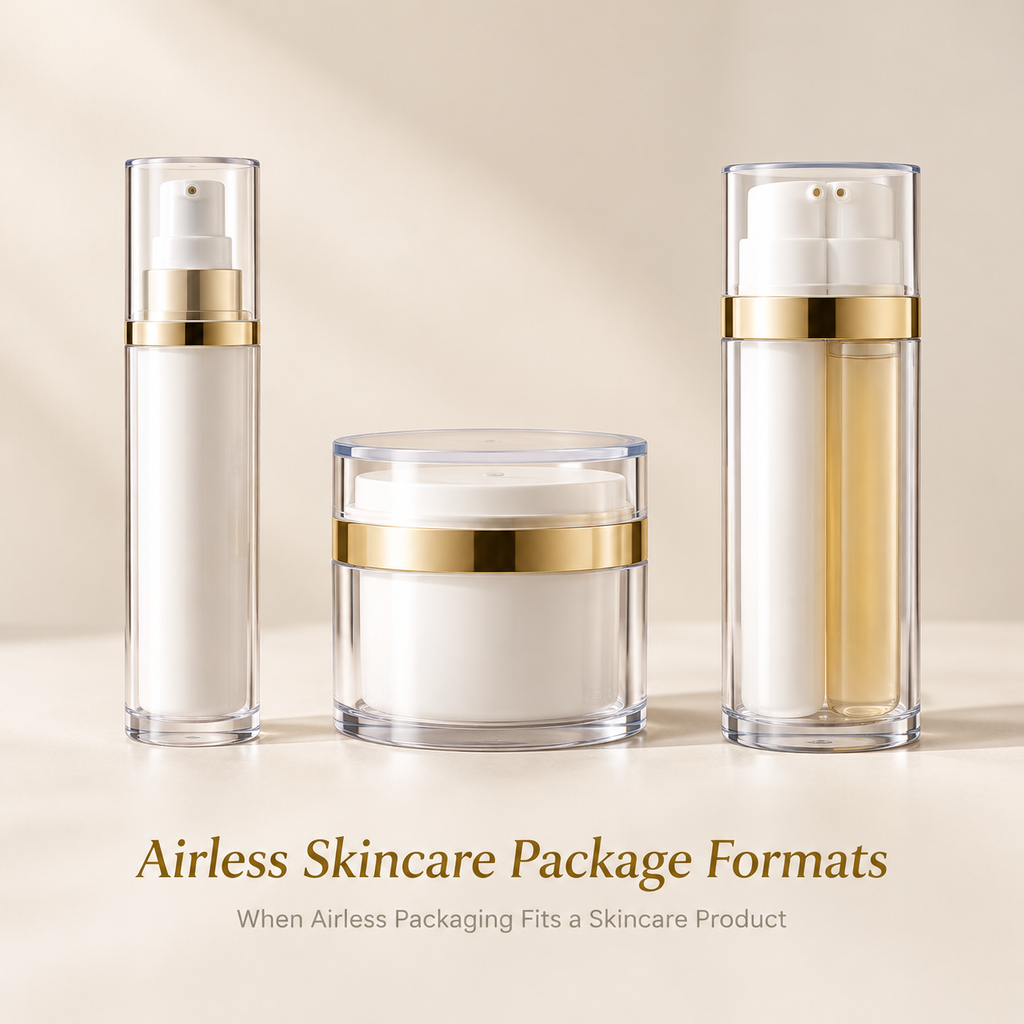
Airless packaging can be a useful format when a skincare product needs pump dispensing, controlled portions or reduced routine contact with outside air during use. It is not suitable for every formula: the package must dispense the product consistently, remain compatible with the formula and work with the intended filling method. Make the decision through application-specific testing rather than assuming that an airless label guarantees suitability.
Consider an airless bottle for products such as lotions, creams or some serums when pump application matches the intended user experience. A very fluid formula may behave differently from a thick cream, and a product with particles or a tendency to separate may obstruct or feed inconsistently through some mechanisms. Packaging does not establish a formula’s shelf life or efficacy; those require separate product evaluation.
YBJ Packaging presents airless bottles within its skincare packaging range and offers OEM and ODM packaging support. The precise container, materials, pump configuration, tooling needs and decoration must be confirmed for each project.
Formula viscosity, particulates and filling behavior
Viscosity describes how readily a liquid or cream flows. A low-viscosity serum, a lotion and a dense cream place different demands on the inlet and pump. Very fluid products may require careful evaluation for leakage or unintended discharge, while thick products may need more effort to feed and dispense. Neither outcome can be predicted from the word “serum” or “cream” alone.
Tell the supplier whether the formula contains visible particles, exfoliating beads, fibers or other solids, and whether it separates or changes flow with temperature. Such characteristics can affect the opening, valve and piston movement. Share the formula’s intended filling temperature and any mixing or settling behavior relevant to filling. The final recommendation depends on representative samples and the selected pump construction.
Dosage and consumer dispensing expectations
Choose pump dosage by starting with the amount users should apply, then test whether the package can deliver it reliably in a practical number of presses. Dosage is the approximate volume dispensed by one complete pump actuation. A larger dose can reduce repeated pressing but may dispense more product than a user needs; a smaller dose offers finer portioning but may take more presses to reach the intended amount.
Do not select dosage solely from the bottle capacity or a pump’s nominal specification. Measure repeated actuations with the actual formula, including the first press after storage and normal use near the end of the pack. Confirm how much variation is acceptable for your application and test actuation force with intended users or an agreed internal method. Pump output depends on the pump design, formula and test conditions.
Airless Bottle and Jar Components to Specify
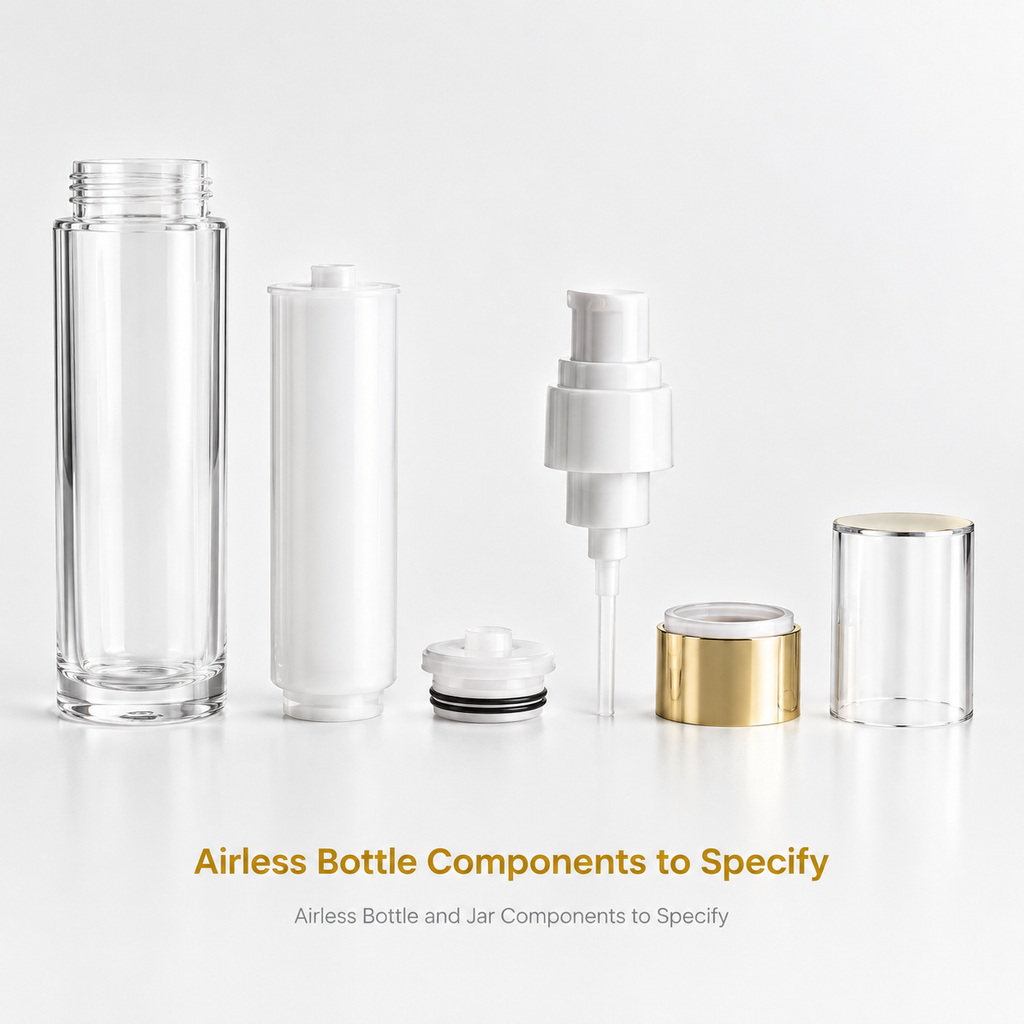
Specify an airless package as a complete assembly: outer container, inner product-contact parts where applicable, piston, pump, actuator, collar and protective cap. Ask which parts contact the formula and what material options are available for the specific design. A decorative outer shell may use a different material from the product-contact components, so request a component-level specification rather than a single material label.
Airless bottles are common when a narrow, upright package and pump format suit the product and filling line. Airless jar-style designs may offer a wider opening or a different presentation, but their mechanism and use experience are not identical to a conventional jar. Compare access, dispensing control, hygiene expectations, pack dimensions and line compatibility before choosing. A sample discussion can help clarify the relevant configuration; no format should be assumed compatible without testing.
Container material, actuator and closure
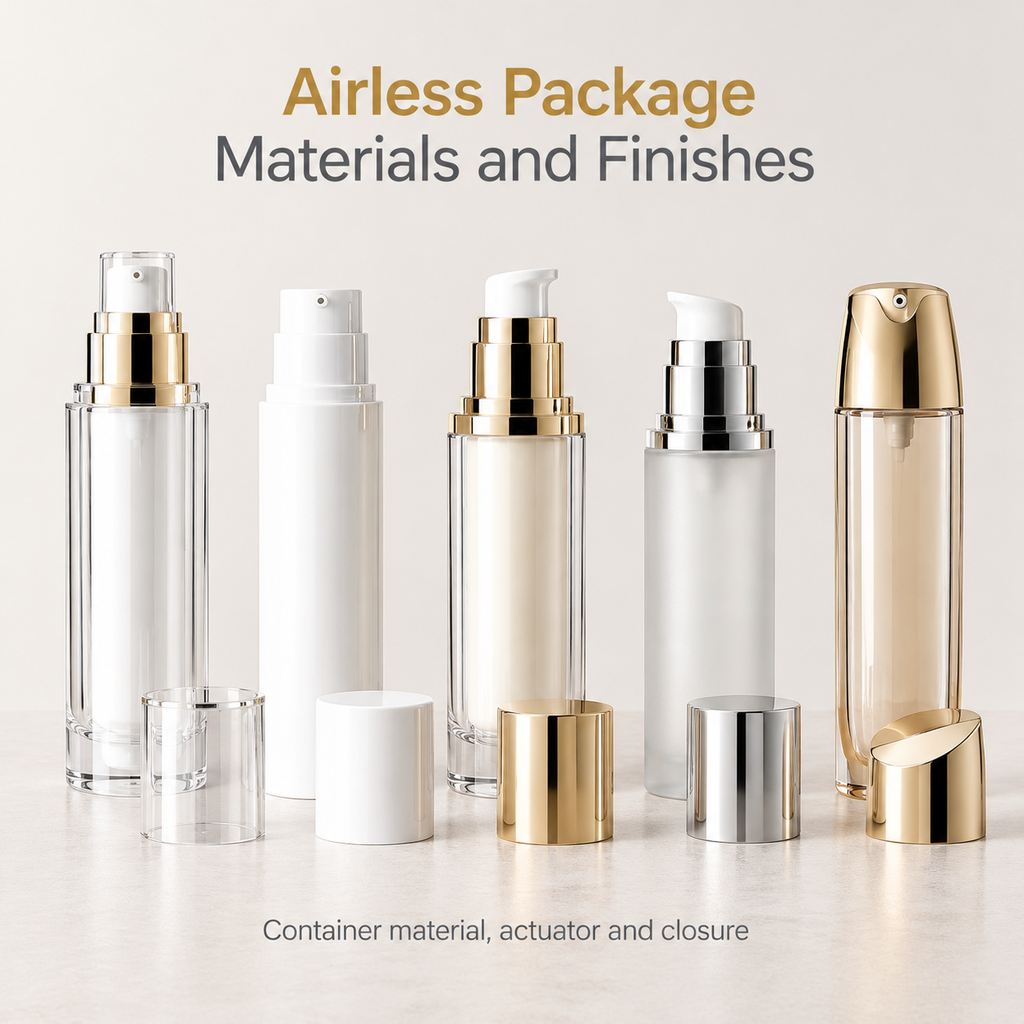
Material choice affects appearance, weight, impact behavior and decoration options, but it must also be considered with the formula and the full construction. YBJ Packaging describes PETG, AS, glass and other material options across its packaging business; availability for a particular airless design is project-dependent. Ask for details on the proposed product-contact surfaces and assess the actual package with your formula.
Specify actuator shape and surface, cap fit, overcap appearance, desired finish and artwork requirements. Decoration choices such as color, printing or coating can affect development steps and sample approval. Request decorated samples when appearance is a purchase criterion, since an undecorated functional sample does not confirm final color or finish. See available cosmetic pump and cap options when comparing dispensing components.
Airless Packaging Comparison Table
Compare formats against the use case and filling constraints, then verify the actual option with samples. The table is a screening aid, not a compatibility guarantee.
| Format | Potential fit | Key trade-off to review | Ask during sampling |
|---|---|---|---|
| Single-chamber airless bottle | One formula dispensed by pump | Capacity, pump dose and overall dimensions must suit use and line handling | Does the formula prime, dispense consistently and evacuate acceptably? |
| Airless jar-style package | Products where a wider package presentation is preferred | Access and dispensing behavior differ from a pump bottle | Does the mechanism suit the formula and user application? |
| Dual-chamber airless bottle | Two components intended to dispense from separate chambers | Ratio, separate feed paths and coordinated use add specification and testing needs | Can both sides dispense as intended with the actual formulas? |
| Conventional pump bottle | Formulas that work with a dip-tube pump system | Uses a different feed architecture; routine air exposure and evacuation behavior differ | Is airless architecture necessary for the product brief? |
For a dual-chamber concept, YBJ lists examples such as a dual-chamber airless pump bottle. Treat listed product descriptions as starting points: confirm chamber capacity, component materials, output behavior, decoration and formula compatibility for the requested project.
How to Test Compatibility Before Production

Before approving an airless bottle, test the actual formula in the proposed production-representative package and agree on acceptance criteria. A useful evaluation checks formula-package contact, dispensing behavior, closure integrity, filling practicality and appearance after the intended handling conditions. Test duration and conditions should be set by the brand’s product and quality teams; a packaging sample alone cannot prove product shelf life.
- Confirm the specification: record the bottle, pump, piston, seals, material details, nominal dose, fill quantity and decoration.
- Fill representative samples: use the intended formula or a documented representative, plus the planned filling method and temperature where possible.
- Evaluate dispensing: track priming presses, output across repeated actuations, actuation effort, interruptions and end-of-pack behavior.
- Inspect the package: check for leakage, visible changes, component movement, damage and decoration concerns under agreed conditions.
- Record approval: retain the approved configuration and sample reference, and document any changes before production.
Results depend on formula, package construction, filling process, test conditions and sample variation. If components, materials, formula or process change, assess whether the approved evaluation needs to be repeated.
Filling, priming and evacuation checks
Confirm how the bottle is filled before selecting the final package. The opening, piston position, fill nozzle access and sealing sequence can affect line setup and handling. Ask the packaging supplier and filling partner to review the intended filling method together; a container that works in a hand-filled trial may not suit the planned production equipment without adjustment.
After filling, check whether the pump primes within an acceptable number of presses and whether output remains consistent during use. Observe the piston as product is consumed and inspect how much product remains when dispensing stops. “Evacuation” means how effectively a package lets users dispense the contents; no package removes every trace of product. Define an acceptable residual amount or practical endpoint for the project, then evaluate it using a repeatable method.
Include orientation, storage, transport simulation or temperature conditions only when relevant to the product plan, and agree the protocol with the responsible quality team. Do not treat an informal sample check as a validated performance or regulatory claim.
What to Include in an RFQ
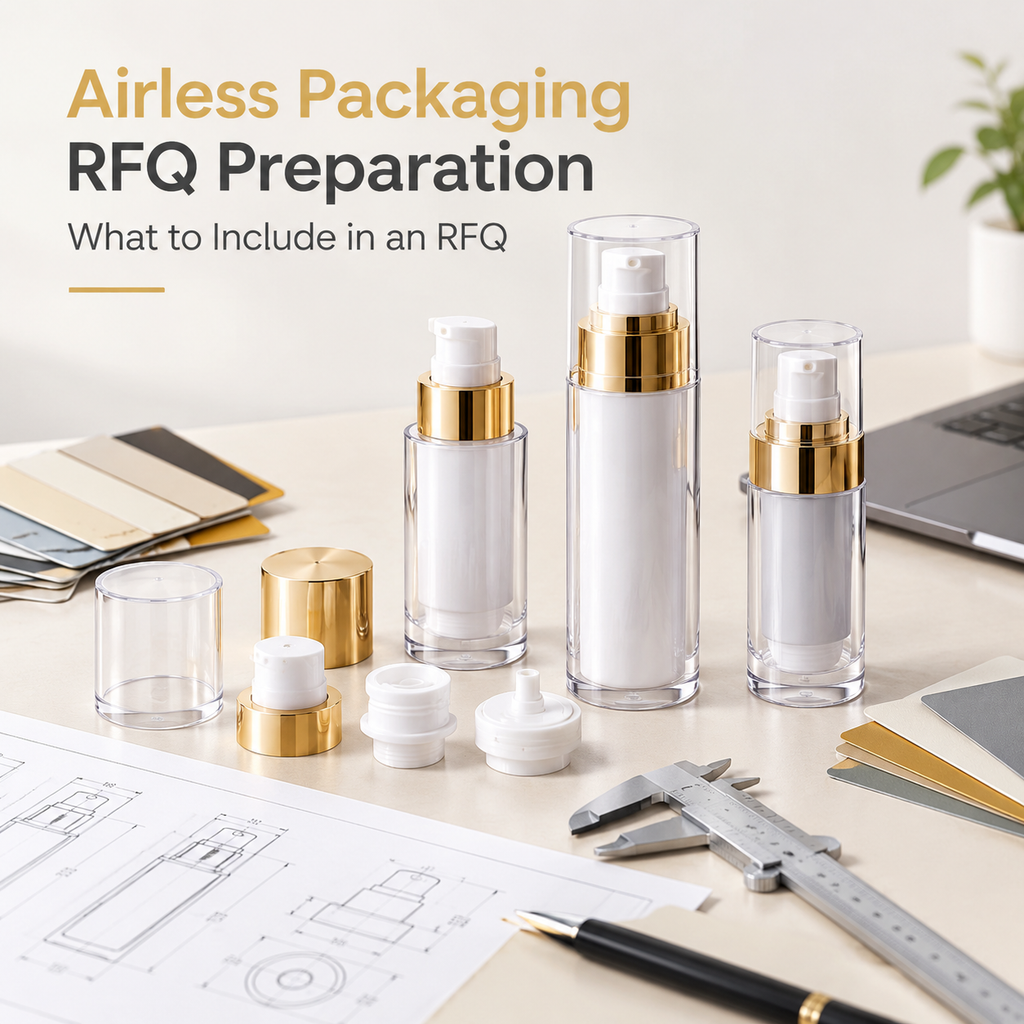
A complete request for quotation (RFQ) helps a supplier assess whether a proposed airless package is practical and what information is still missing. Send the details below, even if some are provisional:
- Product type and formula context, including viscosity, particles and separation behavior where known.
- Target capacity, fill quantity and any required bottle dimensions or space limits.
- Preferred format, material or product-contact material requirements, pump or actuator and cap.
- Target dosage per actuation and how the product should be applied.
- Filling application, equipment or filling partner, and any relevant fill-temperature details.
- Decoration, color, finish, artwork status and whether a custom mold or existing option is under consideration.
- Estimated quantity, destination market and target date.
- Sample needs, formula availability for compatibility checks and your approval criteria.
Compatibility, MOQ, tooling, pricing, production time and shipping depend on project details and approval. YBJ Packaging describes one-stop OEM and ODM support from consultation and design through mold development, material selection, manufacturing, assembly, quality checks and worldwide shipping. The company also states that it has more than 20 years of cosmetic-packaging experience, a 10,000 m² intelligent facility, a Class 10,000 cleanroom, 12 automated assembly lines and 23 Toshiba all-electric injection machines. These are company-stated capabilities; confirm which specifications and processes apply to your project.
Make the Approval Sample Match the Real Use
Choose airless packaging by matching formula behavior, dose, package construction and filling method, then confirm that combination with representative samples. A clear specification and documented dispensing checks make supplier discussions more useful and reduce assumptions during approval. Compatibility is specific to the selected formula and package, so treat changes to either as a reason to review the evidence.
FAQ
What is airless cosmetic packaging?
It is a pump package with an internal piston or movable platform that rises as product is dispensed. This architecture differs from a conventional pump that draws product through a dip tube, but it does not mean the package is hermetically sealed or eliminates all air exposure.
Is airless packaging suitable for every skincare formula?
No. Viscosity, particles, separation behavior, product-contact materials and filling method can affect priming and dispensing. Test the proposed package with the actual formula or a representative sample and agreed acceptance criteria.
How do I choose the correct airless pump dosage?
Begin with the intended amount per application, then compare it with the number of presses users should need. Measure repeated output with the formula, including priming and use near the end of the pack. Confirm actuation effort and acceptable variation rather than relying only on a nominal pump specification.
What should I test before approving an airless bottle?
Check component and formula compatibility, filling practicality, priming, repeated dose consistency, actuation effort, leakage, piston movement, decoration and end-of-pack dispensing. Agree test conditions and acceptance criteria with the responsible product and quality teams; sample checks do not establish shelf life by themselves.
Can YBJ Packaging customize airless bottles and components?
YBJ Packaging offers OEM and ODM packaging support and lists airless bottles among its skincare packaging options. Customization scope, materials, components, mold needs, MOQ, pricing and timing depend on the project. Share your formula context, capacity, pump requirements, decoration, quantity and destination for review.
Discuss Your Custom Cosmetic Packaging
Tell YBJ Packaging what you are filling, the package format and capacity you need, your material and decoration preferences, estimated quantity, destination and target date. Include formula or viscosity context, pump dosage and filling application, and note whether you would like to discuss samples or compatibility evaluation. The team can review the brief and suggest practical OEM or ODM packaging options for your project.

 English
 Français
 Español
